
3D scanning services for serious product development
Our 3D scanning services turn structured-light, laser, and photogrammetry capture into editable CAD, manufacturable parts, and inspection reports. We handle reverse engineering, lost-CAD recovery, and dimensional QC under one engineering roof.
3D scanning turns an existing part or shape into an accurate, editable CAD model you can redesign, tool and manufacture from. Scan-to-CAD and print service.
Operating since 2015 1,000+ products developed Sub-millimeter to room-scale capture
Definition
What are 3D scanning services in product development?
3D scanning services - also called reverse engineering or digital capture - measure a physical object and turn it into a digital mesh or CAD model. In product development they recover lost geometry, verify manufactured parts, and let new designs fit existing hardware on the first try.
Positioning
We are not a scan bureau. We are product engineers who scan.
Most scanning shops hand you a raw mesh and disappear. Useful for visualization. Useless for engineering. You still cannot edit it, manufacture it, or trust the dimensions.
LA NPDT runs 3D scanning services as part of a full product development practice. We feed directly into our CAD services and rapid prototyping teams. Every scan is reviewed against design intent and rebuilt into clean, parametric CAD. The next step is engineering, not cleanup. Deviation reports are framed against ASME Y14.5 GD&T so tolerances are read the same way at the bench and at the supplier.
You get a scan, an editable model, and an opinion on what to do with it.
Who this is for
Who this is for
Built for teams turning physical parts back into design data
Our 3D scanning services support clients across the product lifecycle - from one-off reverse engineering jobs to full digital twins of legacy product lines.
Core explanation

Startup founders
Need to reverse engineer a competitor reference, a hand-built mockup, or a 3D printed concept into clean CAD ready for engineering.
- Hand-built prototype to CAD
- Reference part teardown
- Fast scan-to-print iteration
- Path to manufacturing

Inventors
Have a sculpted, machined, or hand-modified part and need it captured precisely so it can be tooled, molded, or 3D printed.
- Organic geometry capture
- Editable parametric CAD
- Print-ready and mold-ready output
- DFM feedback included

Companies
Need lost-CAD recovery for legacy parts, spare-part regeneration, or dimensional inspection of incoming production runs.
- Legacy and spare-part recovery
- First-article inspection reports
- GD&T-aware reverse engineering
- NDA and IP protection

Funded teams
Need a clean digital twin of a working prototype so the production design can move forward without losing the magic of the hand-built unit.
- Digital twin of working prototype
- Tolerance-aware CAD rebuild
- Bridge to tooling and molding
- Milestone-based delivery
Core explanation
Scanning is a process choice, not a default
Picking the wrong scanner wastes time, money, and accuracy - and worse, it produces a model that lies about how the real part will behave. Good 3D scanning for product development is a deliberate engineering decision per part.
- Match the scanner to the part: size, material, surface, tolerance
- Plan capture: alignment targets, fixtures, lighting, environment
- Decide the deliverable up front: mesh, surface, or parametric CAD
- Carry the geometry forward into manufacturing - print, CNC, mold
- Document tolerances so the rebuilt CAD is trusted, not guessed
Have a part that needs to become CAD?
We will tell you which scanner fits, what it will cost, and how the model should be rebuilt to scale.
Full-cycle capability
Full-cycle capability
Capture, rebuild, and manufacture - one engineering roof
Our 3D scanning services cover the full path from a physical part to a manufacturable design. We choose the right capture per part instead of forcing every job through one workflow.
- Structured-light scanning: high-detail capture of small to mid parts
- Laser scanning: large assemblies, vehicles, and on-site environments
- Photogrammetry: organic shapes, sculpture, monuments, people, pets
- Scan-to-mesh: cleaned STL or OBJ for visualization and 3D printing
- Scan-to-CAD: parametric SolidWorks, STEP, IGES rebuilt from scan data
- Dimensional inspection: GD&T-aware deviation reports against nominal CAD
Process
Our 3D scanning services process
A repeatable 3D scanning services path from a physical part to a model you can actually trust. Each step ends with an engineering decision so you control accuracy, cost, and timeline. Click any step to expand.
01 Intake and feasibility check Confirm 3D scanning is the right answer for this part. +
We review the part, the use case, and the required tolerance to confirm scanning is the right call - or recommend direct CAD modeling, CT, or measurement instead.
Deliverable: Capture recommendation and quote.
02 Scanner and workflow selection Match the scanner to the part. +
We select structured-light, laser, or photogrammetry based on size, material, surface finish, and required accuracy - so the capture is fit for purpose.
Deliverable: Capture plan and target accuracy.
03 Capture and alignment Scan the part, align passes into one model. +
Parts are scanned in our shop or on-site, with markers, fixtures, and reference geometry as needed to align multiple passes into a single high-fidelity dataset.
Deliverable: Aligned raw scan data.
04 Mesh cleanup Hole-fill, decimate, watertight. +
Raw scans are cleaned, hole-filled, decimated, and made watertight - ready for visualization, 3D printing, or as the reference surface for CAD rebuild.
Deliverable: Clean STL or OBJ mesh.
05 Reverse engineering to CAD Rebuild the part as parametric CAD. +
We rebuild the geometry as parametric, feature-based CAD - solids you can edit, dimension, and hand to a manufacturer with confidence.
Deliverable: Editable SolidWorks, STEP, IGES.
06 Inspection and handoff Verify deviation, document, deliver. +
Final CAD is overlaid against the scan to verify deviation. You receive the scan, the rebuilt CAD, and an engineering memo on how the part should evolve next.
Deliverable: Files, deviation report, engineering memo.
Scan the part you need - not just the surface in front of you.
How we approach 3D scanning
Concept development
Concept development
Strategic thinking before strategic scanning
Before any scanner touches the part, we work with you to define what the scan is meant to prove. A visualization, a 3D printed remake, a tooling-ready CAD rebuild, and a first-article inspection are four different jobs - and they need different scanners, workflows, and deliverables.
That alignment is what separates a useful reverse engineering project from an expensive point cloud. Every scan we run earns its place in the development plan.
From scan to part
From scan to part
In-house scanning that feeds straight into prototyping
Because the same team scans, rebuilds, and engineers the next manufacturing step, every scan is reviewed against the production reality it is preparing for. Scanned geometry flows straight into our 3D printing services for same-week prototypes, and into short-run manufacturing when the part is ready to leave the lab. Capture accuracy follows the principles in NIST's dimensional metrology program, so what we measure is what your supplier sees.
- Scan-to-print loops measured in days, not weeks
- Reverse engineered parts that mate to the original assembly
- Tolerance-aware CAD ready for tooling and molding
- Inspection-grade deliverables when the project demands proof
Need a scan-to-print loop on the calendar?
Tell us the part and the deadline. We will scope the capture, rebuild, and print turnaround in one reply.
Why it's different
Why it's different
Scan bureau vs LA NPDT 3D scanning
Same scanners. Completely different deliverable. Here is what changes when an engineering team owns the capture instead of a service desk.
Them
Files over the fence
- Deliverable ✕ Raw mesh, hand-off
- Scanner choice ✕ Whatever is on the bench
- Tolerances ✕ Implicit, undocumented
- Engineering opinion ✕ None included
- Path to manufacturing ✕ Not their problem
- IP & NDA ✕ Generic boilerplate
LA NPDT
Engineered from capture to CAD
- Deliverable ✓ Editable parametric CAD
- Scanner choice ✓ Matched per part
- Tolerances ✓ Documented deviation report
- Engineering opinion ✓ Included with every project
- Path to manufacturing ✓ Designed in from day one
- IP & NDA ✓ Project-grade, contractually backed
One team. One scan. One model the manufacturer will actually accept.
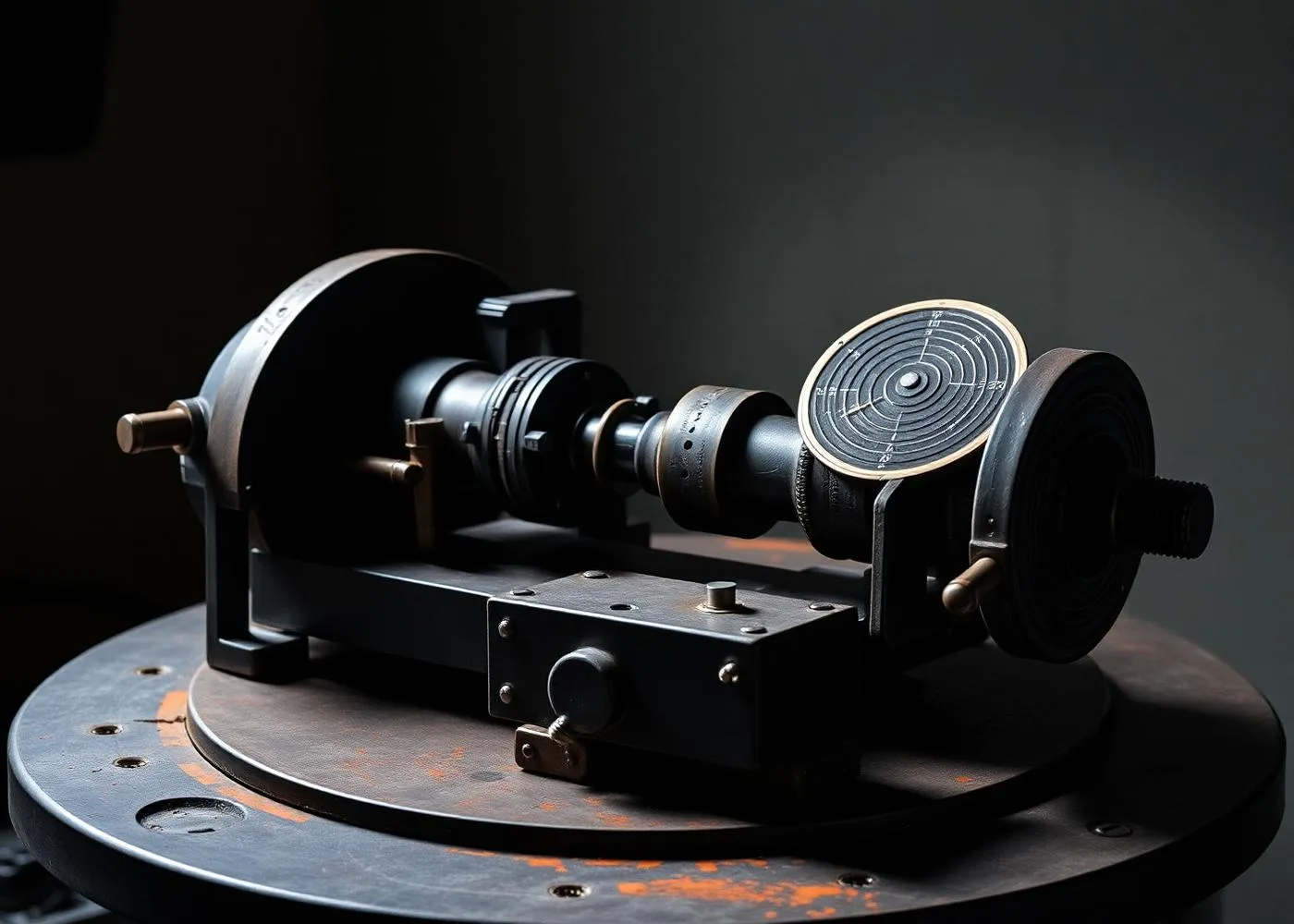
LA NPDT 3D scanning model
Sitting on a legacy part with no CAD?
Lost-CAD recovery is one of our most common projects. Send us the part - we will send back a manufacturable model.
Funding & market entry
Funding & market entry
Captured geometry that unlocks the next round
A clean reverse engineering deliverable is more than a model - it is the artifact that proves a hand-built prototype can actually be manufactured. The render does not. The CAD rebuilt from a real, working unit does.
- Digital twins of investor-demo prototypes
- Tooling-ready CAD recovered from hand-finished parts
- Lost-CAD recovery for acquired or legacy product lines
- Inspection-grade deviation reports for partners and OEMs
Pitching? Bring a manufacturable model, not a mesh.
2015 Operating since
1,000+ Products developed
25 µm Down to micron-level capture
In-house Scanning + reverse engineering
Why it matters
Why it matters
What good 3D scanning actually gets you
Done right, 3D scanning compresses the development cycle, recovers lost design data, and removes guesswork from every part that has to mate with something that already exists.
- 01Faster iteration
Capture, rebuild, print, test - in days. Skip weeks of measurement, redrawing, and trial-fit.
- 02Lower risk
Catch fit, clearance, and tolerance issues on a verified scan - not on a $40,000 mold cut from guessed geometry.
- 03Scale-ready
Every reverse engineered part is rebuilt as parametric, manufacturable CAD - not a dead-end mesh.
- 04Ready to put captured geometry to work?
Whether it is a reverse engineering job or a first-article inspection, we will tell you what is realistic in days, not weeks.
FAQ
FAQ
Frequently asked questions about 3D scanning services
What is 3D scanning in product development?+
3D scanning captures the exact geometry of a physical object as a digital mesh or CAD model. In product development it is used to reverse engineer parts, recover lost CAD, and fit new designs to existing hardware. It also verifies that a manufactured part matches its drawing.
How accurate are your 3D scans?+
Depending on the scanner and the part, we routinely deliver accuracies from roughly 100 microns down to 25 microns. We pick the scanner and workflow per part so the scan is accurate enough for the job and not more expensive than it needs to be.
What can you scan?+
Mechanical parts, consumer products, medical and dental geometry, jewelry, sculpture, vehicles, and full environments. Sub-millimeter detail through room-scale captures, indoors or on-site at your facility.
Simple part scans are typically delivered in 24 to 72 hours. Reverse engineering a scanned part into clean parametric CAD usually takes three to seven business days, depending on complexity and tolerance.
Get a scan that turns into a real CAD model
How much does 3D scanning cost?
A single-part scan with mesh delivery typically runs a few hundred dollars. Full reverse engineering into parametric CAD is usually quoted per part based on complexity and tolerance, and on-site or large-object captures are priced by the day. Send us photos and dimensions of the part and we will return a fixed quote before any work starts.
If you have a part that needs to come back into design data, the next step is a scan engineered for what comes next. LA NPDT provides 3D scanning services, reverse engineering, and a clear path to production. Everything happens under one roof.
3D Scanning Services Process Steps and Deliverables
| Step | Deliverable |
| Intake and feasibility check | Capture recommendation and quote |
| Scanner and workflow selection | Capture plan and target accuracy |
| Capture and alignment | Aligned raw scan data |
| Mesh cleanup | Clean STL or OBJ mesh |
| Reverse engineering to CAD | Editable SolidWorks, STEP, IGES |
| Inspection and handoff | Files, deviation report, engineering memo |
What people ask before sending a part in for scanning
How accurate is a 3D scan, really?
Structured-light scanning on the parts we handle lands in the 0.05 to 0.1 mm range across a hand-sized object, and drift grows with part size unless targets or photogrammetry are used. That is accurate enough to build mating geometry from, and not accurate enough to certify a tolerance-critical feature — those we re-measure with calipers or a CMM and drive parametrically in CAD.
Do I get a solid CAD model or just a mesh?
Both are options and they cost very differently. A cleaned watertight STL or OBJ is the fast, cheap deliverable and it prints fine. A parametric solid — reverse-engineered in SOLIDWORKS with real sketches, fillets and a feature tree you can edit — takes several times longer and is what you need if the part will be modified, tooled or documented.
What kinds of objects scan badly?
Shiny, chrome, black gloss, clear and deeply undercut surfaces confuse optical scanners. The usual fix is a light coat of removable scanning spray plus reference targets. Soft, floppy or wet parts also move between passes, so we fixture them or scan them in a supported state.
What does a scanning job cost and how fast is it?
Scan-and-mesh on a single hand-sized part is commonly $250 to $700 with a two to four day turnaround. Full reverse engineering into an editable solid model runs $900 to $4,000 depending on surface complexity, and larger assemblies or on-site scanning are quoted per job.
Can you scan a legacy part with no drawings and get it manufactured again?
That is one of the most common reasons people call. We scan the survivor, rebuild it as clean CAD, reconcile the worn dimensions against nominal ones, produce a manufacturing drawing, and then quote it out for printing, machining or molding — so you leave with a reproducible part, not just a point cloud.
What founders say after working with us
“Konstantin has been so amazing and his entire team is A+. I researched and interviewed many product development companies across the country and ultimately decided on LA NPDT... and I'm so glad I did. The attention to detail and overall effort has been exactly what I needed and then some. If you are looking for a company to help you bring your product to life, look no further!”
 William EvansCEO, Burple
“This company is awesome. I run a medical device company and we required a number of accessories to be designed and built for our medical device. They delivered a polished design and printed the accessories on time using high-quality materials. I continue to work with them for all of our material needs.”
 Matteo ZiffFounder, Virtual Vision
“I highly recommend the LA New Product Development Team for any of your new product development needs. From the development of my concept to the actual prototype, the process was seamless. I especially loved the quick responsiveness, and I received regular updates during every stage, so I was never left wondering how things were going. The steps were clearly outlined, along with estimated costs.”
 Dr. Sharada DamarajuFounder, Dignity & Empowerment
Three reasons founders keep working with us
- 1
One team from sketch to shipped parts. Industrial design, mechanical and electrical engineering, prototyping and manufacturing sit under one roof, so nothing is lost in a handoff.
- 2
You own the work. Native CAD, drawings and source files are yours at the end of every phase — no lock-in, no re-buying your own design later.
- 3
Fixed scope, fixed price. Every phase is quoted up front with a deliverable list and a date. No hourly meters, no surprise invoices.
If you ever thought of developing a new product, don’t wait any longer. Talk with one of our experts today.
Tell us about your product
Send us the idea, the drawing or the problem. We reply within one business day with the next practical step.
Ready to scope the work? Get engineering support · Request a quote