Best of Ces Technology for 2020
CES2020 (Consumer Electronics Show) the largest technology show in the world, displaying a variety of innovative consumer technology.
February 3, 202012 min read

Written by Ashok Chintagunta, MS Computer Science, Louisiana Tech University
CTO & Software Engineer, AI and Automation
Published February 3, 2020Updated September 2, 2026
Best of Ces (consumer Electronics Show) – Technology for 2020
Every January, tech companies from around the globe converge on Las Vegas for the biggest, baddest tech show of the year.
Presently the CES (The Consumer Electronics Show) brings together over 4,500 different companies, allowing them to showcase their hottest new products. It’s the show where everything is acceptable and the boundaries of innovation are pushed to the max.
Since its beginnings in 1967, CES has been the revealing for a host of products you are familiar with, including the VCR, CD player, HDTV, Blu-ray DVDs, tablets, and 3D printers.
The Consumer Electronics Show (CES) is the largest technology show in the world, displaying a variety of innovative consumer technology. Besides the showroom floor, the conference has keynote speakers, conference sessions, and SuperSessions available for attendees.
Many companies are exhibitors and sponsors of the event, as well as having people in attendance.
Other companies choose to send a representative to attend, and of course, the media is always welcome with the proper registration and credentials.
The show; however, is not open to everyone, and you must be involved with the Consumer Technology industry.
Organized by the Consumer Technology Association (CTA), CES (The Consumer Electronics Show) is the proving ground for startup companies and large corporations alike. Generally, the show is about ideas and execution of those ideas and it isn’t always the large conglomerates that have the best products at the show. With over 180,000 attendees, the show promises something for everyone.
This year’s (The Consumer Electronics Show) products included innovations in the following categories:
- 3D Printing
- Artificial Intelligence
- Audio/High-End/High Performance
- Cyber Security and Privacy
- Drones
- Fitness and Digital Health
And this is only the beginning of the list. The week long show had some fun and creative products, as well as some products that solved real world problems.
Each year at the show, awards are prized in different categories, including the Best of Innovation award in each category, as well as one or more Innovation Honorees.
In fact, companies can enter their products into one or more categories, but the awards are handed out based on strict criteria, and not every product will receive these awards.
Products showcased at this show are often unique, and sometimes a bit outrageous. Living in the digital world we are in, software and hardware are blending to become one in the product, and most of the products recognized during the show had both components. The products give us the means to become more healthy, productive and happy. Here are some of our favorites from this years’ show.
Neon – The Humanoid AI Chatbot
Video Chatbots, that look like people and act like people, these bots are designed to be human companions. They are not smart assistants, and they do not know everything. They can’t play or favorite music or tell you the weather, but they can be your friend.
LIFX Candle Color
This unique light uses polychrome technology to create blended light within the light bulb. But it’s more than just a bulb, it’s Wi-Fi connected and has millions of different color combinations.
StayTouch App
A simple touch of your phone can update meeting information, profiles, and much more. You no longer have to worry about not having a business card handy, or fumbling between calendars, as this app does it all. Available for both iOS and Android.
Impossible Foods Pig-Free Pork
Following the big success with their plant-based burgers, they decided to try pork. At CES, they introduced Impossible Pork, a plant-based pork substitute, that tastes surprisingly like pork. Next up, bacon!
Picnic’s Pizza Making Robot
A Seattle-based company has been selling Pizza made by robots at baseball stadiums, and now they showed up at CES. In fact, they worked with the local catering company to program pizzas into their robot for the convention, and they robots made and cooked the pizza with a precision and accuracy that humans cannot achieve.
Willow Pump
This breast pump hides securely under your clothing, so you can pump while on the go, in a meeting, at the t-ball game, or anywhere else you need to be as a mom. This new model is a life-changer for women everywhere.
Otterbox Antimicrobial Screen Protector
Designed to kill 99.9% of bacteria, this screen protector is the first EPA-registered product on the market. The lightweight screen protectors look and feel like other screen protectors made by Otterbox and Corning, with the added protection.
Pampers Baby Monitor
Lumi takes baby monitors to the next level. Learn your baby’s patterns by tracking their diaper changes, sleep patterns, feeding schedules, and humidity and temperature levels. Moreover, use the information gathered to anticipate your baby’s needs and help set a schedule that works for the entire family.
AI Machine Wash
The ThinQ Washer can tell the difference between jeans and socks, and select the needed laundry cycle automatically, according to LG. The machine can detect the weight and volume of the load, as well as the types of fabric in the machine. The washing machine does have a matching dryer to finish off the set just yet.
Smart Lock
This lock replaces the inside of your regular lock to give your deadbolt smart lock functionality. You can continue to use your old keys, but have smart lock functionality, without advertising it to your neighbors. Level Lock has Bluetooth capabilities and connects to the rest of your home with your home kit.
Wi-Fi Smart Lock
August debuted their fourth generation smart lock at CES. With built-in Wi-Fi, finally you no longer need the August Connect to remotely monitor from your phone. The new, smaller design and easy installation have made this new lock a win.
KitchenHub Microwave
GE has taken their KitchenHub to the next level with their microwave. By packing what is essentially a tablet into the front of the microwave you can look up recipes, video chat, watch Netflix and more while you are in the kitchen.
Smart Beds
Sleep Number introduced the Climate360. The bed can track your heart rate and breathing rate, control the cooling and heating of the mattress based on where you are in your sleep cycle, track your sleep time, and of course you can adjust the firmness on both sides. It’s been shown to provide an extra 100 hours of sleep each year.
Weber Connect Smart Grilling Hub
Weber has long been a pro in the grilling arena, however their smart hub can help anyone grill with the best. It’s a pit thermometer and so much more. It can sense the thickness of your meat, letting you know how long to cook it. It can give you step by step instructions on setting up your grill, seasoning your food, and even tell you when it’s time to flip the food. The perfect grilling companion.
HexaTile Touch
This light is also a decoration for your room. Tiles shaped like hexagons are magnetically tied together into any shape you choose. Light your room simply by swiping or touching the lights. Available in both cool white and warm white colors.
Home Connect Fridge
Bosch partnered with Chefling to make this gem. The fridge has two cameras in it that can view and identify your food, recommending appropriate recipes for you to cook. No more staring in the fridge like it’s a black hole, wondering what to cook for supper!
The sexual technology industry made a move this year at CES. In this case, they were given the opportunity to present products that have made technological advances in their industry. Looking to spark conversations about sexual wellness, industry leaders were pleased with this years’ advances. Here are some products showcased this year.
Lora DiCarlo Female Stimulation Products
Lora DiCarlo products were first introduced earlier at CES 2019, with a rocky start. This year the company were welcomed openly and they shared with us their latest creations, Baci and Onda. Both products use microrobotics and biomimicry to help females reach orgasm. The microrobotics technologies used in these products have eight patents pending. (An LA NPDT Product)
Vesper Touch and Tease Rings
Crave made a splash at CES with their elegant jewelry designs. The stylish rings and necklaces have little portable vibrators discreetly attached to them. Perfect for those on the go. The necklaces are currently available for sale. The rings will be available soon.
Satisfyer Connect
Satisfyer is launching an app that will work across their products that have “air pulse” technology. The primary user of the app can grant access to a remote partner, thus the partner can control the frequency and intensity of a Satisfyer. They can also use their voice or some music to dictate rhythm.
YO Sperm Test
This test allows you to test sperm mobility at home, with a YO device. By downloading an app and using a camera system, men can see their swimmers live. They can also use a Path to Pregnancy app that can help them start or build their family.
Morari Taint Bandaid
This innovation is designed to help men who suffer from premature ejaculation, a condition that affects up to 30% of the male population. The simple bandaid works by “inhibiting the nerves of the penis, thereby delaying an ejaculation,” according to Morari’s website. However its in the prototyping phase, this is not yet available on the market, but expect to see it soon.
Lioness Vibrator
By implementing over 30,000 data points, Lioness Generation 2 vibrator aims to improve a woman’s orgasm. With this purpose in mind the data points deliver AI-driven guidance for your experience. The vibrator has sensors that tracks tension, temperature and pressure and syncs with an app that lets you analyze the health data.
Pets
Inupathy Harness
Langualess has created a dog harness that can tell you how your dog is feeling. The harness measures and analysis the heart rate of your dog and lets you know if your dog is relaxed, excited, happy or more. In addition the harness changes colors based on the mood of your dog.
Property Management
1VALET Software This technology combines a property management system and resident environment into one, in other words its creating a unified experience between property managers, developers, and residents. Without doubt 1VALET is creating safer, smarter residential communities with this app.
Smart Gardens
AGrove Garden Kits These garden kits are perfect for those of us without a green thumb. Pick plants that are suitable for your climate, with the help of AGrove’s sensors, and the kit will take care of the rest. The kit will water your plants on queue for up to 3 weeks. It will also alert you if and when any maintenance tasks need to be performed. No more checking for weeds each day.
Farming
AgriTalk Farming Sensor By providing real-time environmental information, this sensor helps farmers make decisions about planting and fertilizing their fields. Even more, it helps farmers be aware of pest and disease eruption times.
Bassinets
MamaRoo Sleep Bassinets The perfect sleep tool for a little one, this bassinet has five different natural “mom” motions and four different sounds. You can set the bassinet to move using your smartphone. Together with the firm, flat surface and mesh sides it provides exactly what your baby needs to fall asleep and stay asleep.
Wearable
Side Pocket Wireless Bring back the fanny pack! Above all this pack is designed to charge your electronics on the go. Simply tuck your phone inside, zip it shut, and it will charge while you are moving. The updated look from the old fanny packs is making this cool again!
That’s our coverage for the Best of CES (Consumer Electronics Show) in Technology for 2020
Technology can come from anywhere, at any time. Not all ideas come from huge corporations. This means that anyone, including you, can create new technology, and when you do, you may need help with bringing your ideas to life. LA NPDT can help.
Ces 2020 Product Highlights
Product Category | Product Name | Key Feature |
|---|---|---|
AI | Neon | Humanoid AI Chatbot, not a smart assistant |
Smart Lighting | LIFX Candle Color | Polychrome technology, Wi-Fi connected, millions of colors |
Food Technology | Impossible Foods Pig-Free Pork | Plant-based pork substitute |
Robotics/Food Service | Picnic’s Pizza Making Robot | Robot-made and cooked pizza with precision |
Parenting/Wearable Tech | Willow Pump | Wearable breast pump for on-the-go use |
Smart Home/Security | Level Lock | Replaces inside of regular lock for smart functionality |
Frequently asked questions
What is Ces (Consumer Electronics Show)?
CES is an annual technology show in Las Vegas. It brings together over 4,500 companies to showcase new products. The Consumer Technology Association (CTA) organizes it. The event includes keynote speakers, conference sessions, and SuperSessions for attendees. It is the largest technology show globally, displaying innovative consumer technology.
Who Can Attend Ces?
Attendance at CES is restricted to those involved in the Consumer Technology industry. It is not open to everyone. Companies can be exhibitors, sponsors, or send representatives. Media members are welcome with proper registration and credentials. The show is a proving ground for both startup companies and large corporations.
What Product Categories Were Featured at Ces 2020?
CES 2020 included innovations in various categories. These categories included 3D Printing, Artificial Intelligence, Audio/High-End/High Performance, Cyber Security and Privacy, Drones, and Fitness and Digital Health. Awards, including Best of Innovation, were given in different categories based on strict criteria. Many products recognized had both software and hardware components.
What Were Some Notable Products Showcased at Ces 2020?
Some notable products included Neon, a humanoid AI chatbot, and LIFX Candle Color, a Wi-Fi connected light with polychrome technology. Impossible Foods introduced plant-based Impossible Pork. Picnic showcased a pizza-making robot. Other products included the Willow Pump, Otterbox Antimicrobial Screen Protector, Pampers Lumi Baby Monitor, and smart home devices like the Level Lock and August Wi-Fi Smart Lock.
What Ces 2020 Looked Like by the Numbers
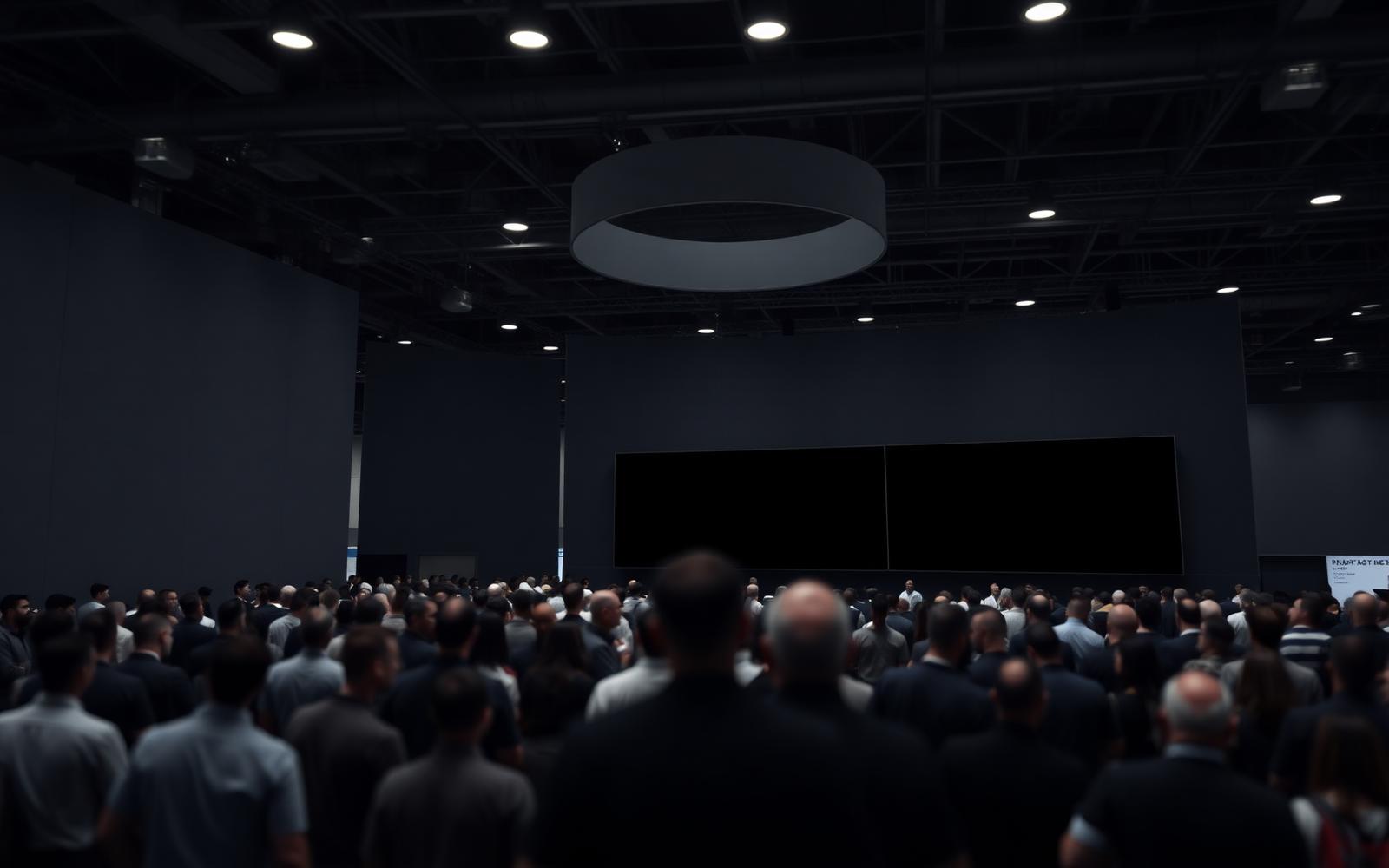
CES 2020 was the last pre-pandemic edition of the show, and its scale is a useful benchmark for anyone weighing an exhibit. Roughly 171,000 attendees walked 2.9 million square feet of floor space across the Las Vegas Convention Center, the Sands and Aria, with about 4,400 exhibiting companies — over 1,200 of them startups in Eureka Park.
Metric | CES 2020 | Why it matters to a hardware team |
|---|---|---|
Attendees | ~171,000 | Media and buyer density you cannot replicate cheaply |
Exhibitors | ~4,400 | Attention is scarce; a plain table gets skipped |
Startups in Eureka Park | ~1,200 | Lowest-cost credible entry point |
Media in attendance | ~6,500 | Coverage is the real deliverable, not orders |
Exhibit space | 2.9M sq ft | Plan two full days just to walk your category |
Caption: figures as reported by the Consumer Technology Association for the 2020 edition.
The categories that actually broke out
Stripped of the concept cars and the novelty robots, four themes at CES 2020 turned into durable product categories rather than press cycles. Each one has a lesson for teams planning their own launches.
Theme at CES 2020 | Representative examples | Where it landed since |
|---|---|---|
Ambient / matter-style smart home | Cross-brand voice assistants, connected appliances | Consolidated into a single interoperability standard |
Digital health at home | Sleep tech, smart mattresses, home diagnostics | Now a regulated FDA-adjacent product class |
Vehicle electrification and cockpit UX | Concept EVs, in-cabin displays | Mainstream; supplier-driven rather than show-driven |
Foldable and rollable displays | Foldable laptops, rollable TV concepts | Shipping, but at low volume and premium price |
Personal robotics | Companion and chore robots | Largely did not commercialise |
Concept Versus Shipped: the Ces Survival Rate
The single most useful discipline for reading any CES is to track which announcements survive contact with manufacturing. In our experience reviewing show-floor concepts against later retail availability, the pattern is consistent: products already tooled and certified before the show ship. Products announced to test reaction usually do not.
Maturity at the show | Typical signal on the booth | Odds of retail within 18 months |
|---|---|---|
Production tooling complete | Working unit, packaging, price and date | High |
Engineering prototype | Working unit, no price or date | Moderate |
Looks-like model | Non-functional shell, video loop | Low |
Render-only concept | Screens and a press release | Very low |
What exhibiting actually costs
Founders routinely underestimate CES by a factor of two or three because they budget for the booth space only. The line items below reflect what a small hardware company should plan for at Eureka Park scale.
Line item | Typical range | Notes |
|---|---|---|
Startup booth space | $2,500-$6,000 | Eureka Park pod or shared table |
Standard 10x10 in main hall | $10,000-$20,000 | Space only |
Booth build and graphics | $3,000-$25,000 | Rental structure vs custom build |
Electrical, internet, drayage | $1,500-$6,000 | Union labour rules apply |
Travel and lodging (team of 3) | $8,000-$15,000 | Las Vegas rates spike show week |
Demo units and spares | $2,000-$20,000 | Bring at least two spares of everything |
PR support | $5,000-$25,000 | Optional but drives most of the coverage |
A pre-show checklist for hardware teams
- Freeze the demo build four weeks out and stop changing firmware after that date
- Bring two spare units plus a bench of consumables; repairs on the floor are effectively impossible
- Test every demo on battery and on a congested 2.4 GHz network before you travel
- Prepare a one-sentence answer to 'what is it and what does it cost' and put it on the wall in large type
- File design and utility applications before disclosure — a public demo starts clocks in many jurisdictions
- Book media briefings six to eight weeks in advance; walk-up coverage rarely happens
- Capture leads with a scanner and a written qualifier, not a business-card bowl
- Plan the follow-up sequence before you leave; leads decay fast after the show
How we use shows like this with clients
For our clients, CES is a validation checkpoint rather than a launch. We aim to have a functional unit produced through rapid prototyping and a manufacturing path already scoped through product engineering before a booth is booked, so that the conversations on the floor are about orders and distribution rather than feasibility.
Frequently asked questions
What Was the Biggest Trend at Ces 2020?
Ambient computing in the home — voice assistants and appliances that interoperate across brands — was the dominant theme, alongside consumer health hardware and vehicle electrification. Foldable displays and personal robots drew the most attention but converted into shipping products far less often.
How Much Does it Cost to Exhibit at Ces?
A startup pod in Eureka Park starts around $2,500 to $6,000 for space alone, and a realistic all-in budget for a three-person team including booth build, services, travel and demo units runs $20,000 to $60,000. Main-hall exhibits scale well past that.
Do Products Shown at Ces Actually Get Made?
Only a portion. Items that arrive with production tooling, a price and a ship date usually reach retail; non-functional concept models and render-only announcements frequently never do. Judge the booth by whether the unit works and whether anyone will quote a price.
Should a Startup Exhibit at Ces or Just Attend?
Attend first. One year of walking the show teaches you where your category sits, which halls matter and what a competitive booth looks like, at a fraction of the cost of exhibiting into a category you have not mapped.
Filed under:EducationInspirationNewsTech
Services related to this guide
- Best product development companiesHow the leading US firms compare, and which one fits your stage and budget.
- Best product design companiesDesign studios compared by scope, industry and what they hand off.
- Product engineering companiesEngineering firms for physical products compared by discipline, rigor and budget.
- Consultant vs firm vs freelancerWhat each option costs, what it delivers and where to find them.