Design Optimization Services: Bootstrapping Tools and Practical Tips
Design Optimization Services like bootstrapping is a daily reality for startups. Tools are available here to help and reap the unforeseen benefits
June 21, 20179 min read

Written by Konstantin Dolgan, Ph.D., NPDP
Founder & CEO, Product Development Engineer
Published June 21, 2017Updated September 2, 2026
Design Optimization Services: Bootstrapping Tools and Practical Tips
During the first qualifier of the 2017 Louisiana Start-Up Prize, founder of LA NPDT, Konstantin Dolgan has shared his knowledge and experience on very important topic for almost any Design Optimization Services, product developers or inventors, “Bootstrapping.” For a concept design company who missed it or wasn’t a part of this great event, we made this article we think you may find very valuable.
Bootstrapping Basics by LA New Product Development Team, Shreveport
What is bootstrapping? It is a term known to represent “to pull oneself over a fence by one’s bootstraps.” In the modern day world, this term is used to represent starting a business with no external capital.
Why would one even want to bootstrap?
While starting a business with sufficient capital sounds ideal, it usually comes with several drawbacks.
In some cases when someone invested in your concept design company, it is possible that you will be pressured to steer away from your primary goal of creating a great product for pleasing your investors or bank.
This can not only become heart-wrenching but can hinder your company’s competitiveness and design optimization services.
Without outside investors or bankers in the early company or product development stages, you can make quicker and better decisions that align with your vision for the company.
On top of that, bootstrapping allows you to start working on your idea instantly since you don’t need to develop and create a full-blown business plan. Such tools as a business model canvas will be sufficient to make your initial goals and direction clear. When does bootstrapping seems to be most effective?
– When it is your almost only option. In this situation, there will be no need for motivational videos; you will be forced to be creative and work hard.
In this situation, you will not grow complacent and will always be on the look-out for new ways to grow and be efficient. Another important aspect of bootstrapping is that you keep the equity and control of your business.
You can reinvest into business and design optimization services to ensure continued growth of your company. Even if you needed further investment, you would have a better leverage negotiating with the investors because you will have a proven track record and a validation of your business model.
Examples of businesses that bootstrapped successfully include TechCrunch, Dell, Facebook, Behance, Envato, Coca-Cola, Microsoft, and other.
What are free tools available for successful bootstrapping?
As a product developer or inventor you may have many challenges on your way to success and one of them may relate to prototyping services Luckily there are several tools that can help you with a range of design optimization services, from keeping the books in order for prototyping services.
There are many helpful options when it comes to prototyping. You may want to access co-working spaces (such as Cohab), maker spaces, and universities for your prototyping needs.
If you need an engineering work done, a good idea may be to approach universities representatives to make your project as a Senior Design project topic for students.
CAD Services
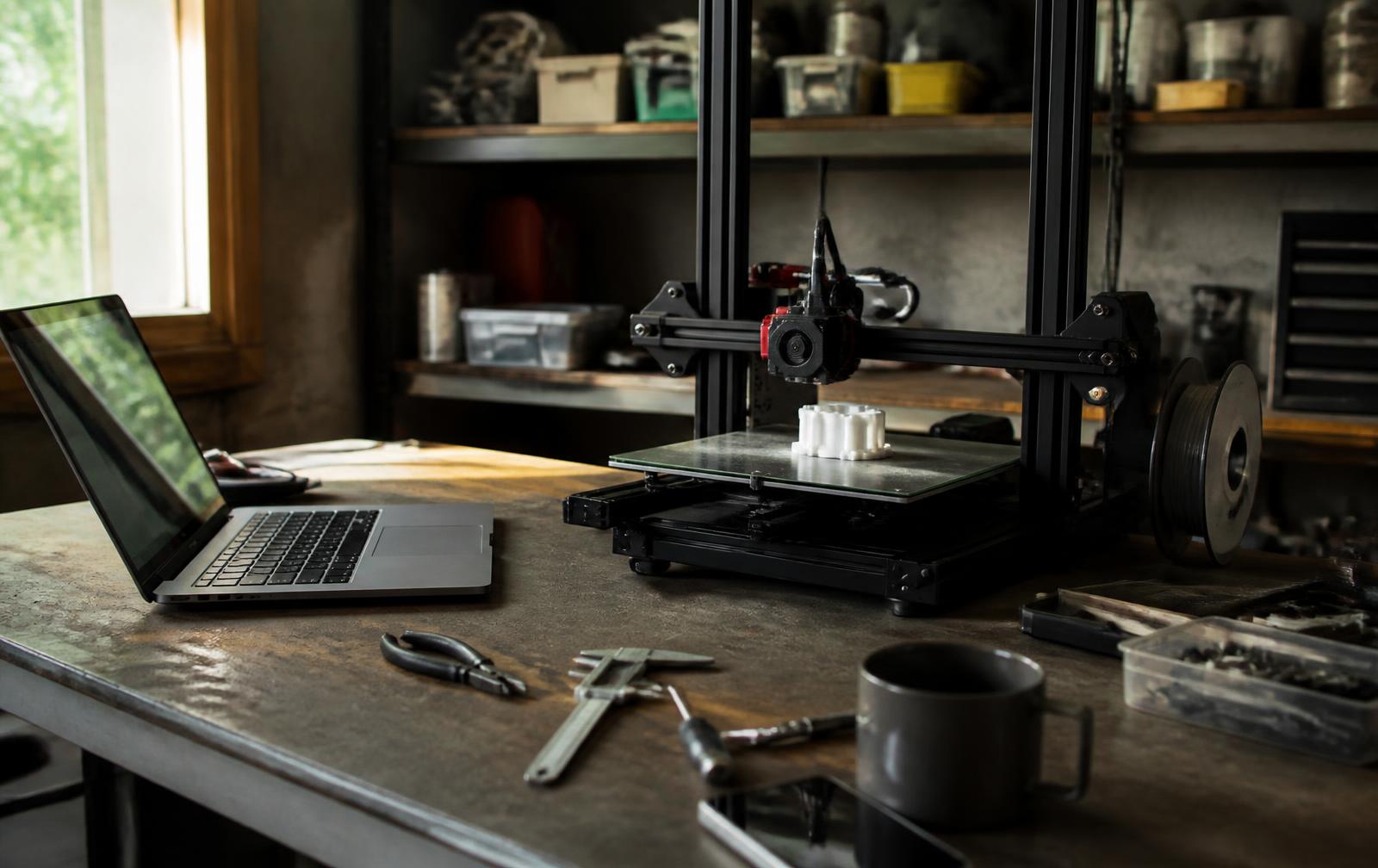
One of our clients had a great success during the Senior Design Project Initiative. Choose a technically savvy partner or advisor that can be heavily involved in the product development process who can share their knowledge and experience with you. There are several free CAD services available such as Fusion 360 or TinkerCAD and inexpensive 3D printers which will allow cutting the cost of your prototyping projects.
An alternative to prototyping services is creating a visual animation or a virtual prototype (3D models or virtual reality renderings). Virtual reality renderings are a great way to demonstrate your product to potential customers and investors.
Set your goals and have a team by your side who are motivated and responsible. If you don’t have a team or unsatisfied with the work they perform, it might be better to outsource design optimization services and focus all of your energies towards other aspects of the business.
Marketing
Marketing your business is an overwhelming task for most. The importance of market research, competition analysis, design optimization services, and customer profile identification cannot be ignored. You can find more information about this topic in our other articles.
When that is done, a good idea may be to conduct a survey. Survey Monkey is widely used to get customer’s feedback to improve your product during the prototyping phase.
Google Trends is a helpful marketing tool that allows you to track consumer behaviors and get the insights you need. Hubspot is the marketing toolkit for any startup.
This software will help you with sales and customer relations management (CRM), along with providing you some free educational material on topics ranging from “How to Make an iPhone Video” to “Basics of B2B Inbound Marketing”. Need to engage and nurture your audience?
You may find Mailchimp handy for creating beautiful newsletters and emails to ensure your outreach efforts are effective.
Consider QuickBooks and Read more on Intuit for managing your company’s finances.
Product Mockups
Even with a low budget, there are several ways to present your idea to others in a professional manner. The most inexpensive route would be creating photo-realistic renderings or mockups of your product idea. Using CAD service, you will be able to convey your product ideas to others.
The 3D models used for making renderings can also be converted into animations or even placed in a short promotional video. CAD models and renderings can give you a wide range of options to move forward with marketing and presenting your ideas.
You can also apply for a provisional patent application to show others that you are taking the proper steps to protect your new technology and design. Patent-pending status may increase the value of your inventions and will provide you with a piece of mind. Willing to go the extra mile?
Take the time to prepare a professional presentation of your product for investors or other interested stakeholders. This includes a short sixty-second elevator pitch as well as a much longer and detailed slide deck about your business.
Taking these extra steps will ensure that you are prepared for any opportunity that comes your way.
Crowdfunding
Crowdfunding (CF) still reigns supreme when it comes to fundraising for products and getting a feeling of the market. The existing CF platforms are easy to use and can help you verify your idea quickly. If your campaign raises enough money – you move forward; if it doesn’t – you either go back to the drawing board or drop the project altogether.
With all of these tools, one can rest assured knowing they have what it takes to bootstrap their business.
Where can I get some support?
There are several organizations and individuals in Louisiana. The first that come to mind are universities and colleges, such as LA Tech, LSU, and Grambling. They’ve been historically helping local entrepreneurs and product developers.
Some great groups that can help fund your project include the Louisiana Economic Development (LED), the U.S. Small Business Administration (SBA), and the National Science Foundation (NSF). There are also several groups that can provide Design Optimization Services and guide your new business in the best direction.
Such organizations in our area include the SCORE Association and the Louisiana Small Business Development Center. We are grateful that we have such a strong network that is more than willing to help local businesses be successful.
If you are in other states, please stop by your chamber of commerce to learn about the options available in your area.
Some Additional Tips and Things to Consider
- Some suppliers can provide credit/financing if needed.
- Your new business can sell its receivables to commercial financial companies such as Fundbox, BLueVine, and HSBC to get some working capital.
- Carefully consider the responsibility of financing a building, equipment, and vehicles you may be for your bootstrapping initiative.
- Web apps might serve as a low-cost temporary replacement to mobile apps
- Offer to barter goods and services with your suppliers.
- Educate yourself on how to use crowdfunding properly
- Don’t forget to ask for discounts and negotiate the quotes.
- Utilize co-working spaces such asCohab(or other local options) to collaborate with others and be entrenched in the local entrepreneurial community.
- Learn valuable skills such as website development and graphic design. They are easy to learn and will be helpful for any business you enter.
- Outsource tasks
- Only leave your full-time job when your business generates enough profit.
- Leverage personal connections to get better deals on necessary items for your business.
- Partner with a co-founder that has a different skill set than you.
- Read books on how to set up a successful business. Lean Startup 7 Habits of Highly Effective People The Tech Entrepreneur’s Survival Guide Scrum One Simple Idea Built to Sell Disciplined Entrepreneurship
And don’t forget about our complimentary services: IoT product design, electronic design services and new product development services! Call us today for some additional information.
Share your thoughts, ask questions, connect with us on social media!
Have a question?
Our experts are happy to help!
Here is a collection of places you can buy bitcoin online right now.
Bootstrapping Advantages
Aspect | Description |
|---|---|
Capital | No external capital needed |
Decisions | Quicker and better decisions |
Vision | Decisions align with company vision |
Equity | Retain equity and control |
Leverage | Better negotiation leverage for future investment |
Where bootstrapped budgets should and should not be cut
Bootstrapping works when the savings come from things that can be redone cheaply, and fails when they come from decisions that get frozen into tooling or into a legal record. Sorting spend into those two categories before cutting is the single most useful exercise for a self-funded hardware project.
Safe versus risky savings
Area | Bootstrap safely? | Reasoning |
|---|---|---|
Brand and visual identity | Yes | Easily revised later |
Website and content | Yes | Iterative by nature |
Concept sketching and CAD exploration | Yes | Cheap to redo |
Photography for early marketing | Yes | Replaceable |
Tolerance analysis and DFM | No | Errors get frozen into steel |
Safety and compliance testing | No | Legal and liability exposure |
Trademark and patent timing | No | Deadlines are unforgiving |
Tooling supplier selection | No | Expensive to reverse |
The practical rule: spend money wherever a mistake would be discovered after tooling or after sale. Everywhere else, do it yourself and improve it as revenue arrives.
Bootstrapping checklist
- Classify every line item as reversible or frozen before cutting it.
- Protect budget for compliance testing and tooling review.
- Use free CAD and design tools for exploration, paid rigor for release.
- File IP on the real deadline schedule, not when cash allows.
- Re-invest first revenue into the items you deferred, in risk order.
Key takeaways
- Cut spend only where a mistake is cheap to reverse.
- Never bootstrap compliance testing, DFM review or IP deadlines.
- Re-invest early revenue into deferred items in order of risk.
Bootstrapping a hardware product and deciding where to spend?
Where product design optimization actually finds money
Bootstrapped teams tend to look for savings in the wrong place, negotiating a few cents off a connector while a wall-thickness decision quietly adds a dollar to every unit. Product design optimization is the discipline of ranking cost drivers before touching any of them, then attacking the top three. On most consumer hardware the ranking is stable: part count, cycle time, material volume, finishing operations, and assembly labour, in that order.
Run the exercise on a spreadsheet with real quotes rather than intuition. A single afternoon of consolidating two brackets and a fastener stack into one moulded part routinely removes more cost than a quarter of supplier haggling, and it removes assembly time as well.
Optimization lever | Typical unit saving | Engineering effort | Risk introduced |
|---|---|---|---|
Part consolidation | 5-15% | 2-4 weeks CAD | Tooling complexity, side actions |
Wall thickness / ribbing rework | 3-8% | 1-2 weeks + FEA | Warp, sink marks |
Material downgrade with equal spec | 2-10% | 1 week + retest | Regulatory re-certification |
Fastener to snap-fit conversion | 1-4% plus labour | 2 weeks | Serviceability, fatigue |
Finish simplification (texture vs paint) | 4-12% | Days | Perceived quality drop |
Packaging volume reduction | 2-6% landed | 1-2 weeks | Drop-test failures |
A bootstrapped optimization sequence
Order matters more than ambition. Each step below only makes sense once the previous one is settled, because optimizing geometry against a bill of materials that is still moving wastes the analysis.
- Freeze the functional requirements so optimization cannot quietly become redesign.
- Get three quotes on the current design to establish a defensible baseline cost.
- Rank cost by part, not by category; the top five parts usually carry 60-70% of unit cost.
- Run a design-for-manufacture review with the moulder before changing a single feature.
- Model the two highest-value changes in CAD and re-quote them against the same baseline.
- Validate with a prototype round; unverified savings are estimates, not savings.
- Lock the change and update the tolerance stack-up and drawings in the same pass.
Knowing when to stop optimizing
There is a point where further optimization costs more engineering time than it returns across the forecast volume. The break-even is straightforward: if a change costs $8,000 in engineering and tooling revision and saves $0.40 a unit, it pays back at 20,000 units.
On a first production run of 3,000, that change is a loss dressed up as prudence. Bootstrapped teams should optimize aggressively for the drivers that scale with every future run and defer the rest until volume justifies the work.
Filed under:Education
Tagged:BootstrappingBudgetConcept Design ServicesCustomerDallasDesignDiyFinanceLafayetteLake CharlesLouisianaNew OrleansNew Product DevelopmentProduct DesignProduct DevelopmentPrototypeSavingsShreveportStartupTexas
Services related to this guide
- Product design servicesIndustrial design and CAD taken all the way to manufacturable files.
- Best industrial design firmsWhich studios take an idea from form to manufacturable hardware, and what they charge.
- Prototype designLooks-like, works-like or pre-production: what each proves and what it costs.
- Product development examplesReal projects we designed, prototyped and shipped.