Product Naming Process: From Positioning to Trademark Clearance
A step-by-step product naming process for physical products, from positioning brief through trademark clearance to packaging.
July 7, 20226 min read

Written by Yelena Rymbayeva, MPhil Communication & Media Studies, BTech Quality Control
Marketing & Product Leader, Technology Commercialization
Published July 7, 2022Updated September 2, 2026
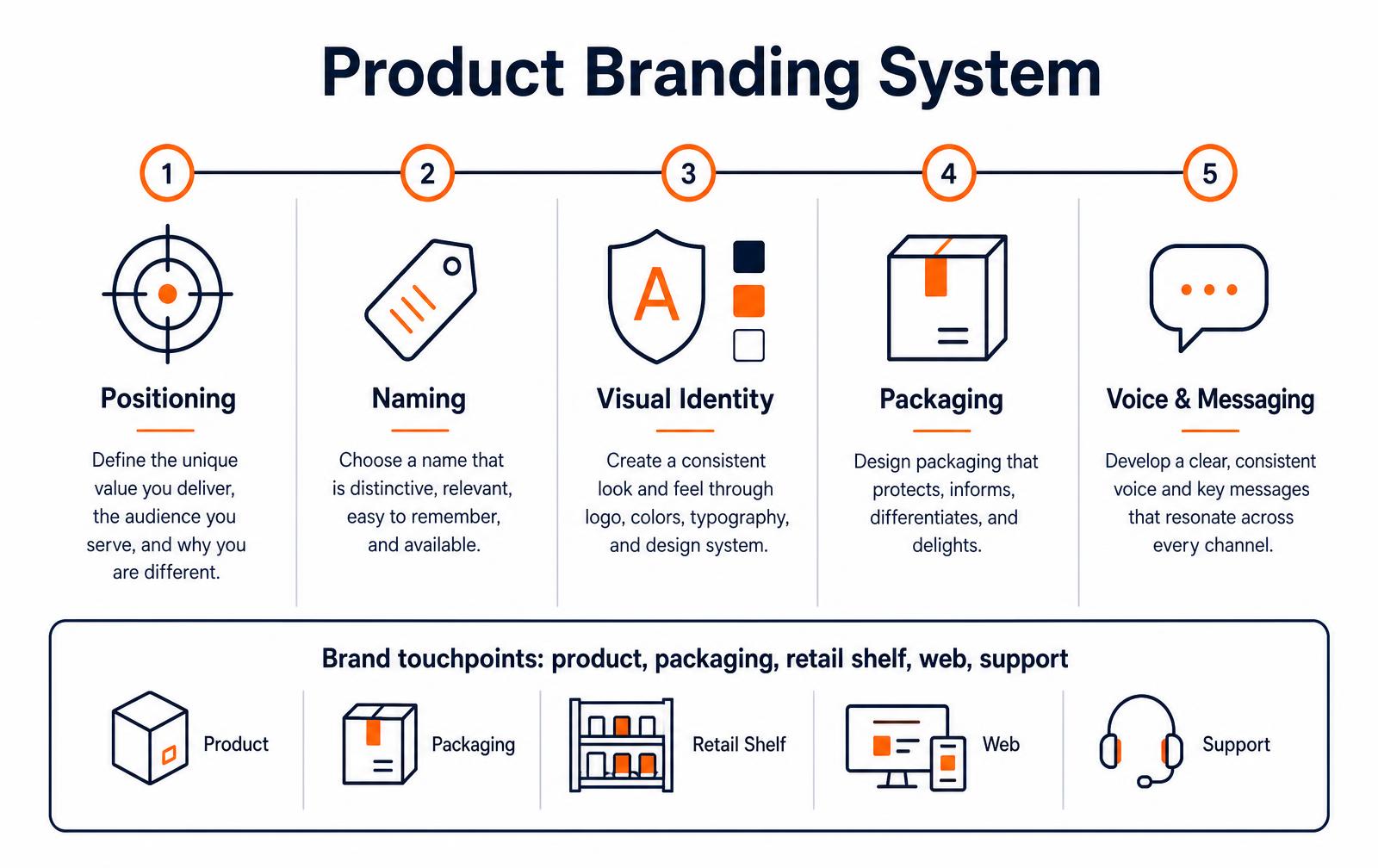
Product branding is not a logo. It is the set of decisions that make a buyer choose your product over an identical-looking competitor and then tell someone else about it. Five pillars carry that work: positioning, naming, visual identity, packaging and voice. Get them consistent and the product earns a price premium; get them scattered and you compete on discount.
The five pillars
- Positioning - one sentence naming the buyer, the job to be done and the reason to believe. Everything downstream is a translation of this sentence.
- Naming - distinctive, pronounceable, clearable for trademark and available as a domain and handle. Check availability before you fall in love.
- Visual identity - logo, color, typography and a design system that survives being shrunk to a 12mm molded-in mark.
- Packaging - for retail products this is the highest-traffic brand asset you own. It must be legible from two meters and honest at arm's length.
- Voice and messaging - a message hierarchy that keeps the website, Amazon listing, manual and support replies saying the same thing.
What product branding costs
Scope | Typical deliverables | Cost | Timeline |
|---|---|---|---|
Starter identity | Positioning, name shortlist, logo, color and type, basic guidelines | $5,000-$15,000 | 3-5 weeks |
Retail-ready brand | Above plus packaging system, photography direction, listing copy | $15,000-$50,000 | 6-10 weeks |
Full brand program | Above plus naming research, trademark screening, brand book, launch campaign assets | $50,000-$150,000 | 3-5 months |
Sequence matters
Branding that starts with a logo produces a logo that nothing supports. Start with positioning, validate it against real buyers, then name, then look. Run trademark screening before the identity work, not after - a knockout search that costs a few hundred dollars can save a full rebrand. And run packaging in parallel with industrial design, because material, finish and package dimensions are cost decisions as much as brand decisions.
Consistency checklist
- Same product name on the box, the website, the retail listing and the support portal - no informal variants.
- Color specified in Pantone, CMYK, RGB and the molded-in plastic equivalent so parts match printing.
- Logo lockups sized for the smallest real application before the largest.
- Photography direction documented, not improvised per campaign.
- A one-page message hierarchy every writer and support agent works from.
- Warranty, manual and unboxing copy written in the same voice as the marketing.
Trademark clearance costs and timing
Step | Typical cost | Timeline | Notes |
|---|---|---|---|
Knockout search (self-serve TESS) | $0 | 1-2 days | Kills obvious conflicts fast |
Full clearance search by counsel | $800-$2,500 | 1-2 weeks | Covers common-law and state marks |
USPTO filing per class | $350-$550 government | Same day | Plus $800-$1,500 attorney fees |
Examination and publication | - | 6-12 months | Office actions add 2-4 months |
Domain and handle acquisition | $12-$5,000+ | 1-7 days | Secure before you announce |
EU / UK / CN filings | $900-$2,000 per region | 6-12 months | File in China early to deter squatters |
Screening a name shortlist
- Say it out loud on a phone call. If it needs spelling twice, retail and support will suffer.
- Check the exact-match .com and the two main social handles before you fall in love with it.
- Avoid descriptive names. They are cheap to conceive and nearly impossible to protect.
- Run a meaning check in your top three export markets. Native speakers, not translation tools.
- Test it at 6 pt on the back of the pack. Long names break packaging hierarchy.
- Confirm room to extend. A name tied to one SKU blocks the second product.
Clearing a name before you fall in love with it
The cheapest branding mistake to avoid is spending six months building equity in a name you cannot own. Clearance is a sequence, and each step kills candidates so the expensive step runs on a short list.
Step | What you check | Cost | Kills a name when |
|---|---|---|---|
Knockout search | USPTO TESS, plain search engines | Free | An identical mark exists in your class |
Domain and handles | Exact-match .com and social handles | Free–$5k | Only awkward variants remain |
Common-law search | Trade press, marketplaces, app stores | Free | An unregistered user has prior rights in your market |
Full clearance opinion | Attorney search across classes | $1.5k–$4k | Confusingly similar marks in adjacent classes |
Linguistic screen | Meaning in target-market languages | $500–$3k | The name means something unfortunate abroad |
Filing | Intent-to-use or in-use application | $250–$750 per class + fees | Examiner refuses on likelihood of confusion |
Which names survive examination
- Fanciful (Kodak, Xerox): strongest protection, highest marketing cost to build meaning.
- Arbitrary (Apple for computers): strong, memorable, easy to clear.
- Suggestive (Netflix): hints at the benefit and is still registrable — the practical sweet spot.
- Descriptive (Cold Beer Co.): weak, needs acquired distinctiveness before registration on the principal register.
- Generic: unregistrable; you are naming a category, not a brand.
Brand assets that have to exist before launch
- Primary logo plus a one-color and a small-size variant that survives a 16 px favicon and a molded-in part marking.
- Color specification in Pantone, CMYK, RGB and — for molded plastic — a resin color match and master chip.
- Two typefaces at most, with licensed web and embedding rights.
- Packaging system: face panel hierarchy, required regulatory marks, barcode zone, and a texture or structural cue that reads as yours.
- Voice guide: three adjectives, five phrases you use, five you never use.
- Product marking plan: engraved, pad printed or in-mold, with durability tested against the cleaning agents the customer will actually use.
Budget expectations
A functional brand system for a first hardware product typically runs $8,000–$35,000 for naming, identity and packaging design, plus $2,000–$6,000 in clearance and filing per class. Full-scope agency work runs several times that, and for a pre-revenue product it rarely earns the premium. What does earn it: packaging that photographs well, a name you can defend, and marks that survive the manufacturing process.
Branding decisions that ignore manufacturing get expensive at tooling. Our design and development team keeps identity, packaging and part marking on the same schedule as the engineering release.
How to test a product name before you commit
Trademark and domain clearance tells you whether a name is legally available. It does not tell you whether the name works. Before you spend money on packaging artwork, tooling for an embossed logo, or a print run, put the shortlist through a week of cheap tests.
The goal is not to find the name everybody loves - consensus favorites are usually the blandest option on the list. The goal is to eliminate names that are misheard, misspelled, already owned in the customer''s mind by another category, or embarrassing in a second language.
Test | How to run it | What kills a name |
|---|---|---|
Phone test | Say the name once, ask the listener to spell it | More than one plausible spelling |
Shelf test | Print labels, photograph them next to competitors | Disappears at two feet away |
Search test | Search the name plus the category | Page one already belongs to someone else |
Meaning test | Native speakers in your top two export markets | Any unintended meaning at all |
Stretch test | Say the name with three future product lines | Only works for the first product |
Run the shortlist through all five tests in the same week, with the same people, and score them on a single sheet.
Names that survive misspelling, a crowded shelf and a second language are rare, and the one that survives is worth locking down immediately - file the trademark application, register the domain and the handles, and secure the retail listing name before the packaging artwork starts.
Renaming a product after tooling, packaging film and retailer paperwork exist typically costs five figures and several weeks, which is why naming belongs early in the program rather than after the design is frozen.
Frequently asked questions
What is product branding?
Product branding is the practice of defining and expressing a product's positioning, name, visual identity, packaging and voice so buyers recognise, remember and prefer it across every touchpoint.
How much does product branding cost?
A starter identity runs $5,000 to $15,000, a retail-ready brand with packaging $15,000 to $50,000, and a full program with naming research and trademark screening $50,000 to $150,000.
Should branding come before or after product design?
Positioning comes first, visual identity and packaging run in parallel with industrial design, and final packaging artwork is released alongside production tooling so dimensions and finishes match reality.
Do I need to trademark my product name?
Run a knockout search before investing in identity work and file an application before public launch. Rebranding after a conflict costs far more than early screening.
The product naming process, step by step
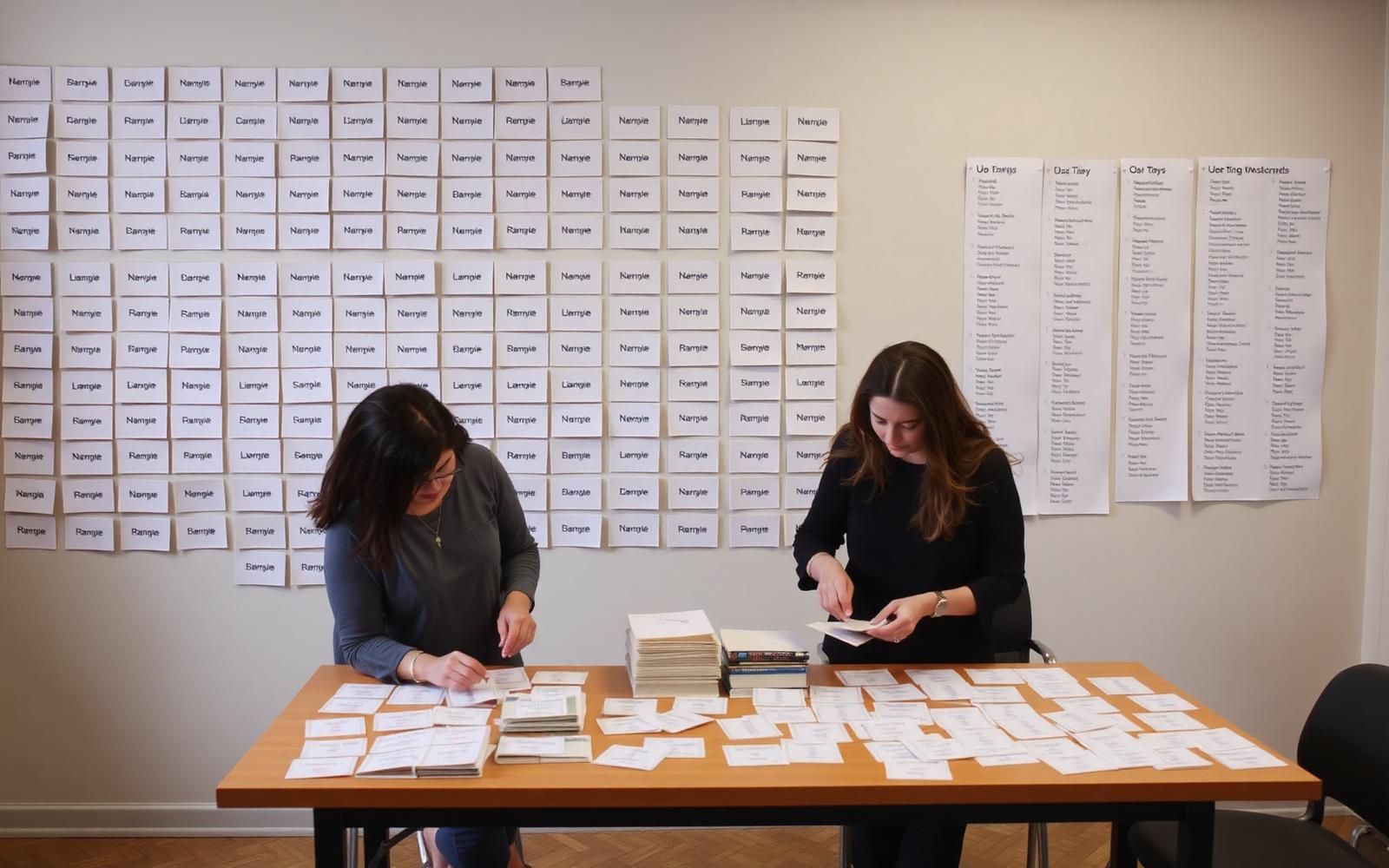
Naming fails when it starts with a brainstorm. It should start with positioning: who the buyer is, what the product replaces, and the one idea the name has to carry. From there you generate broadly, screen for legal and linguistic risk, and only then test with buyers. Most teams generate too few candidates - expect to lose 90% of a list to trademark conflicts and domain availability alone.
Step | Output | Duration | Cost |
|---|---|---|---|
Positioning brief | Naming criteria and tone | 3-5 days | $1k-$4k |
Generation | 150-400 candidates | 1-2 weeks | $3k-$15k |
Internal screening | Shortlist of 30-50 | 3-5 days | Internal |
Knockout trademark search | Shortlist of 8-15 | 1 week | $500-$2k |
Linguistic and cultural check | Cleared list | 3-5 days | $800-$3k |
Buyer testing | Ranked finalists | 1-2 weeks | $3k-$10k |
Full clearance and filing | Registrable mark | 4-8 weeks to file | $1.5k-$5k per class |
Name types and the trade-off each carries
- Descriptive (ClearVent) - instantly understood, weak trademark protection, hard to own in search.
- Suggestive (Riverbed) - hints at the benefit and is registrable; the usual sweet spot.
- Coined (Xerox, Kodak) - strongest protection and cleanest domain, but requires marketing spend to load with meaning.
- Founder or place - credible in industrial and professional categories, harder to license or sell later.
- Alphanumeric (M400) - works inside an established brand family, meaningless on its own.
Trademark clearance without a nasty surprise
Run a knockout search yourself on the USPTO TESS database and the EU register before falling in love with a candidate, checking the classes you will actually sell in. Then have counsel run a full clearance on the top two or three, which covers common-law use, similar-sounding marks and pending applications.
Filing an intent-to-use application early reserves priority while the product finishes development, and it costs far less than rebranding after a cease-and-desist arrives at launch.
- Key takeaway 1: Start from positioning criteria, not from a brainstorm.
- Key takeaway 2: Generate hundreds of candidates - attrition through legal screening is brutal.
- Key takeaway 3: Suggestive names balance meaning against registrability best.
- Key takeaway 4: Knockout search early, full clearance before launch, file intent-to-use to hold priority.
We combine branding, industrial design and manufacturing so the brand you design is the brand you can actually build.
Work with LA NPDT: if you are moving from here to execution, start with our new product marketing or talk to us about market research.
Filed under:EducationInspirationWords
Services related to this guide
- Free trademark searchScreen a product name against the live USPTO register in seconds.
- Idea evaluationAn honest read on whether an idea is worth building.
- Product design servicesIndustrial design and CAD taken all the way to manufacturable files.
- Product development examplesReal projects we designed, prototyped and shipped.