How to Create Product Differentiation in the Market
Are you struggling to attract buyers to your MVP? Check here for product differentiation that will make your product sell fast.
June 8, 20237 min read

Written by Konstantin Dolgan, Ph.D., NPDP
Founder & CEO, Product Development Engineer
Published June 8, 2023Updated September 2, 2026
Apple products are by far one of the most stand-out technology gadgets and software. The company has product differentiation to thank for how easily it is to distinguish the product on the market. You can check out this case study on Apple’s business strategies and product differentiation.
If a product is not distinguished, it is going to get lost in any form of market competition. Product differentiation makes your product more appealing to customers. Hence, your product is the preferred option in the market.
This article is geared towards helping businesses harness the benefits of product differentiation. Here, we have identified some of the most used techniques for differentiating a product. By carefully applying at least one of them, your product can carve for itself a strong market pull.
Technique 1: Product Differentiation by Size and Weight
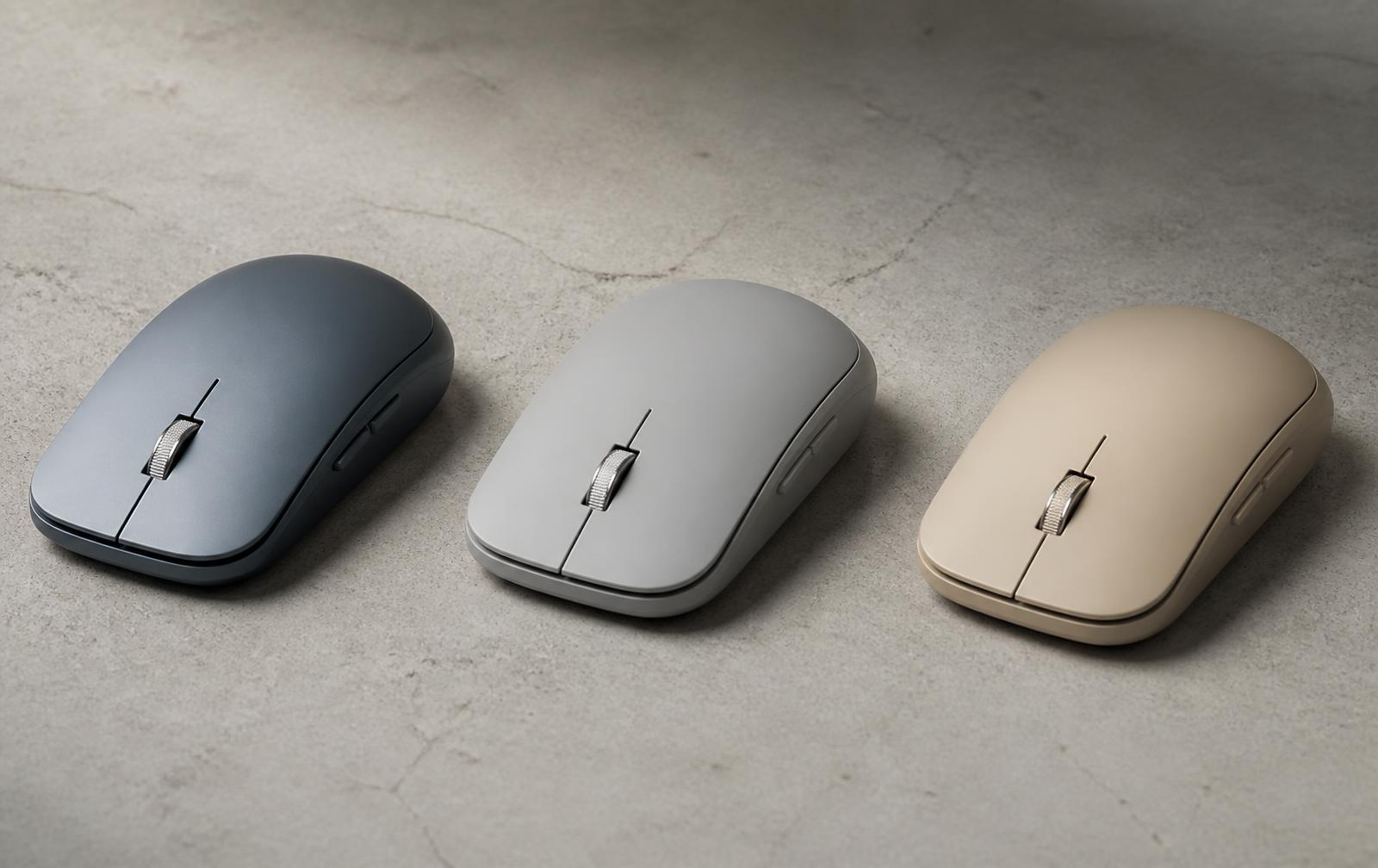
The size of a product is very important for end users. The world’s preference for smart objects is increasing by the day. Hence, a relatively smaller product will be preferred to that of other competitors.
Product size can also be similar to the quantity included in a package. However, customers would prefer a product with more quantity. Akin to size and quantity is the weight of the product.
The least heavy, yet powerful product, will be preferred. Usually, the size, quantity, and weight of the product are determined during production, especially by the production material. However, the packaging can be the defining factor of how this differentiation is perceived by customers. Check out this article on balancing form and function during product design.
The product with the lesser dimension after packaging will attract more customers, especially because of ease of transportation. Also, bigger packaging poses more risk of damage than smaller packages. A PM can choose to go with or against the tide and still achieve maximum product differentiation.
Technique 2: Create Unique Product Quality
Product quality is unusually negotiable. However, luxury brands have shown that customers can choose an even higher class of quality.
Products differentiated by quality are often marketed by word of mouth. Users are likely to recommend such products to their friends and relatives. Also, by checking the review of such a product, it can be easy to choose it over other choices.
The limitation of this technique of product differentiation is often high cost. Creating custom products of high quality requires more resources.
Hence, such products are sold to high-income customers. These groups of end users are highly price insensitive.
Technique 3: Product Differentiation by Price
Every market variable is subject to either production or market cost. For instance, by producing more products, a business can use the advantage of the scope of production to lower its price.
Also, products of the same niche in the market are set at a particular price. Therefore, a product can gain a price point advantage in that market by introducing a lower price. You can check here for how to pick the best pricing strategy.
This method is one of the most important because many customers are drawn to high-quality products. However, they cannot afford the product. A reduced price is a good appeal to this market because similar products for a significantly reduced price are a good bargain for them.
Additional pricing differentiation technique is including a bonus. However, you need to be careful so that your choice of bonus does not eat into your profit margin. The bonus could be a coupon or a newsletter subscription.
Technique 4: Innovation and Adding Features for Product Differentiation
Constant innovation is another key differentiation technique. It is a way of ensuring that customers are being continually served and satisfied. Through constant innovation, customers are gained through market, fashion, and technology trends.
These customers are always looking out for a new product because new improvements will be available. Companies that use this technique of product differentiation have a strong user community. Through this community, they can get feedback on necessary improvements.
New features can also come as a market offering that is sold aside from the main product. You can learn more about user-centered design principles here.
Most Asked Questions about How to Create Product Differentiation in the Market
Check below for some of the favorite questions online on product differentiation.
1. How does Coca-Cola use product differentiation?
In addition, to the widely talked about secret ingredient by the company, it uses a low pricing strategy. Since the product is distinct, setting the price at the same levels as competitors is a move to gain some price-sensitive customers. Also, it differentiates from a company like Pepsi with its packaging.
2. What are the advantages of product differentiation?
Brand differentiation is a means of sustaining brand loyalty. Clients and customers are likely to prefer a brand or product that is unique and meets their needs. Hence, such clients are not price sensitive. With high clients that are not price sensitive, the company can achieve a higher price point. To further save costs, product differentiation will help to narrow down the target audience.
3. What are the types of product differentiations?
A company can choose between vertical, horizontal, or mixed product differentiation. Vertical differentiation appeals to customers that can assign values for price and quality that will be used to choose a product. Hence, the product can be compared with substitutes.
Horizontal differentiation is offering alternative products that are not similar to the market. Usually, clients have to pick per preference because other products in their category cannot be compared with them. Then, mixed differentiation combines horizontal and vertical product differentiation.
4. How can you advertise your product differentiators?
The first adaptation of your differentiator in product advertisement is inclusion in content. Also, when having a promotion or commercial, you can highlight them for your target audience to identify.
5. How does Apple differentiate itself from competitors?
Being innovative has always been a key feature of Apple Inc. since its inception. Hence, they are constantly rolling out new versions of their products with new features. For instance, Apple releases at least one new iPhone version every year for the past 7 years.
It’s a Wrap
The market is saturated with lots of products for customer satisfaction. However, new technologies make it possible for customers to be further satisfied with smart and swift technologies. Hence, this article has helped identify some of the product differentiation techniques your business can use to stand out in highly saturated markets.
If you want your product to have loyal customers, then you need to make it unique. At LA NPDT, we offer the most surreal ideas that will distinguish your product.
We are a consultancy agency that offers premium counsel on how to create custom products. You can reach us via 318-731-9573 or on Read more on Lanpdt.
Product Differentiation Techniques
Techniques for Product Differentiation
Technique | Description |
|---|---|
Size and Weight | Smaller or lighter products are preferred. Larger quantity can also differentiate. |
Unique Product Quality | Creating high-quality or custom products, often appealing to high-income customers. |
Price | Offering a lower price point or including a bonus. |
Innovation and Adding Features | Continuously improving products and adding new features. |
Technique | Description | Typical Customer Focus |
|---|---|---|
Size and Weight | Adjusting physical dimensions, quantity, or packaging for user convenience or perception. | End users preferring smart, smaller, or easier to transport products |
Unique Product Quality | Creating custom, high-quality products that stand out. | High-income customers who are price insensitive |
Price | Gaining an advantage by offering a lower price or including bonuses. | Customers drawn to high-quality products who cannot afford higher prices |
Innovation and Adding Features | Continually serving customers with new improvements or additional market offerings. | Customers looking for new products and improvements |
How to choose a differentiation lever you can defend
Every differentiation technique is copyable; they differ only in how long the copy takes. Price can be matched in a week. A feature can be matched in a quarter. A manufacturing process, a certification or a brand relationship takes years. Choosing how to create product differentiation is therefore a question about time, not about creativity.
The practical method is to list the levers available to your product, score each on defensibility and on cost to achieve, and pick the highest-defensibility lever you can actually fund. Most teams skip the scoring and default to price, which is the least defensible lever available and the one that permanently caps margin. A structured development process forces the question early, while the design is still cheap to change.
Differentiation levers compared
Lever | How fast a competitor can copy it | Cost to achieve | Best for |
|---|---|---|---|
Price | Days | Margin, permanently | Commodity categories with scale advantage |
Size / weight / form | 3-9 months | Medium — tooling and layout work | Portable and space-constrained products |
Feature set | 1-2 quarters | Medium to high | Fast-moving tech categories |
Build quality and materials | 9-18 months | High — supply chain and QC | Premium and professional segments |
Packaging and unboxing | 2-6 months | Low to medium | Retail and gift-driven purchases |
Certification / regulatory position | 12-36 months | High | Medical, safety and industrial products |
Brand and community | Years | Sustained marketing investment | Categories with repeat purchase |
Note that the cheapest levers to build are also the fastest to lose. Packaging is a good example: it is a genuine differentiator at shelf and it is a real part of the product design and packaging workstream, but on its own it buys a season. Combining a packaging advantage with a cost or quality advantage engineered into the part is what makes it stick.
Differentiation checklist before you commit
- Write the claim in one sentence a buyer would repeat to a friend.
- Name the competitor product the buyer is comparing you against, by SKU.
- State how many months it would take that competitor to copy your claim.
- Confirm the claim is visible at the point of purchase — photo, shelf or spec sheet.
- Confirm the claim survives cost reduction; if value engineering kills it, it is not your differentiator.
- Test the claim with ten target buyers before tooling, not after.
Differentiation that only exists in the marketing copy dies at the first customer review. Everything on that checklist is a way of forcing the difference into the physical product, which is where prototype testing and honest cost targets do more for positioning than another round of messaging work. If you want a second opinion on which lever your product can hold, our team reviews positioning as part of product development consulting.
Frequently asked questions
How do you create product differentiation in a crowded market?
Pick a lever your competitors cannot match quickly: a manufacturing process, a material spec, a certification, or a service attached to the product. Verify it is visible at the point of purchase and that it survives value engineering. Levers that are invisible to the buyer, or that disappear when you reduce cost, are not differentiation — they are internal preferences.
What are the main types of product differentiation?
Vertical differentiation means buyers agree which product is better and pay accordingly, usually on quality or performance. Horizontal differentiation means buyers disagree — color, style and taste preferences. Mixed differentiation combines both, which is where most consumer hardware sits.
Is price a good differentiator?
Only if you own a real structural cost advantage such as scale, vertical integration or a cheaper process. Price cuts without a cost advantage are matched within days and permanently reduce category margin, including yours.
How do you test a differentiation claim before launch?
Put a works-like or looks-like prototype in front of ten to twenty target buyers alongside the competing product, and ask them to explain the difference back to you unprompted. If they cannot state the difference in their own words, the claim will not survive a retail shelf or a product listing page.
Filed under:EducationInspirationWords
Services related to this guide
- Product design servicesIndustrial design and CAD taken all the way to manufacturable files.
- Rapid prototypingWorking prototypes in days, from 3D printing to vacuum casting.
- Electronic design servicesSchematic, PCB layout, firmware and bring-up, through to production handoff.
- Product development examplesReal projects we designed, prototyped and shipped.