How to Make the First Step to Develop Your Product: from Sketch to Market
Looking for how to create your product? Then let’s get you started. This article contains practical steps to move you from ideation to getting your products in the market.
December 22, 20228 min read

Written by Yelena Rymbayeva, MPhil Communication & Media Studies, BTech Quality Control
Marketing & Product Leader, Technology Commercialization
Published December 22, 2022Updated September 2, 2026
Has ‘how to create your own product’ been bugging your mind? Then you are at the right place. It matters that you seek to create a change in the world through your product and that you want to make some revenue with it.
We understand that it might seem to be a herculean task. But once you understand the dynamics of how setting up your product works, everything else becomes easy. And more importantly, you would be able to scale up your business in general.
In this article, you will learn how to generate ideas for your product as well as how to develop it. You would also learn about market tests and launching out. Let’s make product development easy peasy for you.
How To Create Your Own Product
Generate a Product Idea
This is where everything begins. The product idea gotten ere determines how the entire development process would go. But how do you generate a product idea that sells in the market?
First, you have to realize that waiting for an ‘aha’ moment might not be a smart model for creating your own product idea. There are several other ways to go about this. And an effective one is by brainstorming and iterating upon a product already in the market.
You could, of course, decide to create something entirely new. But you could also opt for modifying something already in existence. Or incorporating a better experience for the user in your new product.
Further, another good way to come up with a product idea is by analyzing online marketplaces and product descriptions. That way, you would note a need in the market and you could seek to meet that need via the product that you create.
Market Research
Don’t make the mistake of jumping right ahead into production. Take some time to do a feasibility study of your product thriving in the market. This product validation stage would help you to ensure that you are making a product that people would want to spend their time, money, and effort on.
There are a couple of ways you can carry out this market test. You could share with a target market on online forums by creating an outright online survey for feedback. You could also make use of Google Trends to research market demands.
Crowdfunding is another potent way to get the market’s opinion on your idea. The same also goes for posting on a forum like Reddit.
Strategy Phase
This is the stage where you create a clear roadmap on how to make your product. This is essential because product development can be a complicated journey. So, you need a clear path on how to go about it.
At this planning stage, you would clearly spell out the kinds of materials to be used at the prototyping stage. In the same vein, it will help you when you are looking for materials to use for production based on the design.
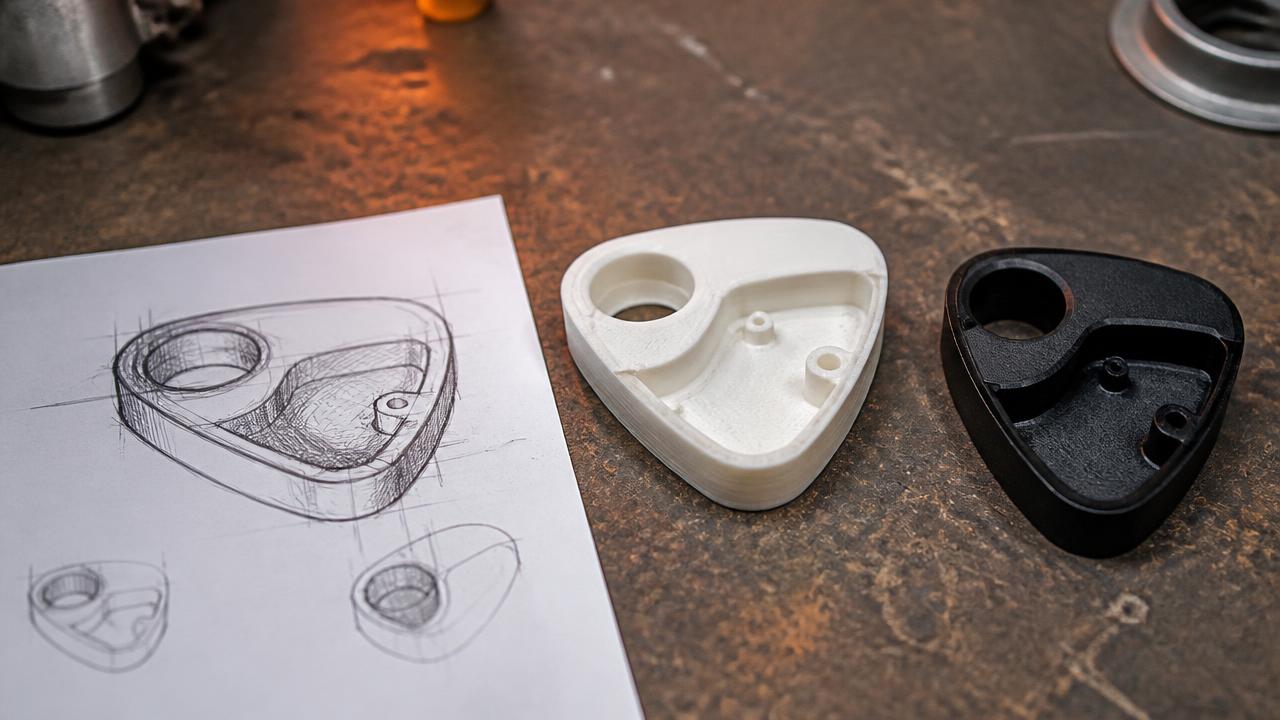
Usually, the bulk of the work here includes sketching and writing down your plans for the product. Make a clear hand-drawn sketch of what the product would look like with as many details as possible.
Create Product Prototypes
This phase involves the creation of a prototype that you would use during full-blown product manufacturing. It is not so sure that you will get a perfect final product at once. So, you need a prototype to show you what the final product might look like.
However, when you want to create your product, check out how well the prototype mirrors your sketched image. At this phase, you can make edits and experimentations as to the looks and designs. Thus, you can remove excesses and improve on the prototype until you get a final sample you are satisfied with.
Prototypes are good assets to have in your pitch deck when reaching out to investors for funding of your innovation and business. So, you should give this your best shot. This means you should try as much s as possible to incorporate low-risk inputs and feedback after doing user testing.
Sourcing Phase
Here, you simply look out for materials and manufacturing partners that can bring out the vision you have in the idea and porotype.
This phase typically involved sourcing the best deals and organizations that fit into your product manufacturing process such as materials, shipping, storage, warehousing, manufacturers, suppliers, etc. Compare costs and make sure to create a backup option in your pool of findings.
In this phase also, you would need to do a bit of costing. That is, you take note of every price detail of each product unit’s journey from production to the hands of the user. This is where you also create budgets based on available capital.
Production
This stage involves bringing the raw materials you have sourced together. Here, you make mass production of the final prototype earlier made.
Sale&Marketing
This is the stage in product development that ensures revenue and profits. Here, you introduce your product to the market and sell to them. You would need a product development team to help you with marketing for the product launch.
At this phase, most of the work would be to generate leads and convert them into customers. A good way to do this is by sending the launch emails to persons who have subscribed to your product or business email list. You could also work with influencers to help push your products via some form of affiliate marketing arrangement. to perfect your craft while on the product journey.
Related video
Biggest Questions about Developing New Ideas
How a new product is developed
Developing a new product can be broken down into a few steps. And they include the ideation stage, research stage, planning stage, prototyping stage, sourcing stage, and costing stage.
What are the five steps in developing a product?
To develop a product, these are five universal steps to take to achieve. The five steps include idea generation, screening, idea evaluation, product development, and manufacturing, then commercialization and marketing.
What are the 3 types of product development?
If you want to create your own product, you could fall within one of these three categories. That is improving an existing product, an extension of a product line, and new-to-the-market categories.
The fact remains that for you to create your own product successfully, you only need to sit down and plan, then go on to execute. The process of a successful product scale has been highlighted above. Check them out and give that blooming idea in your mind a booster today!
If you are asking about “how to make my own products”, LA NPDT has come to your rescue! Our ready team members are master converters of product ideas into profitable businesses. We have many services available for you, including our flagship CAD models and PCB circuits, building prototypes, and a host of others. Reach out to us today through a direct call at 318-243-5789 or via lanpdt.com
Product Development Stages
Stage | Description |
|---|---|
Generate a Product Idea | Identify product concepts, either new or by modifying existing products. |
Market Research | Assess market feasibility and gather feedback on the product idea. |
Strategy Phase | Create a clear roadmap, including sketching and planning product details. |
Create Product Prototypes | Develop initial models for testing, design edits, and investor pitches. |
Sourcing Phase | Find materials, manufacturing partners, and estimate product costs. |
Production | Mass-produce the final prototype using sourced materials. |
The idea to market process, stage by stage
Most first-time inventors imagine two steps: design it, then make it. The distance between a sketch and a product a shop can build repeatedly is where budgets disappear. Knowing the stages in advance — and what decision closes each one — is what separates an 18-month programme from a four-year one.
What each stage costs and produces
Stage | Typical duration | Typical spend | Output | Gate decision |
|---|---|---|---|---|
Discovery and validation | 3-6 weeks | $3k-$15k | Problem definition, target user, competitive scan, price hypothesis | Is there a buyer at a price that leaves margin? |
Concept design | 4-8 weeks | $10k-$40k | Concept sketches, rough CAD, target COGS, patent landscape | Which single concept goes forward? |
Prototype and iterate | 6-16 weeks | $15k-$80k | Functional prototypes, test results, revised requirements | Does the core mechanism work outside the bench? |
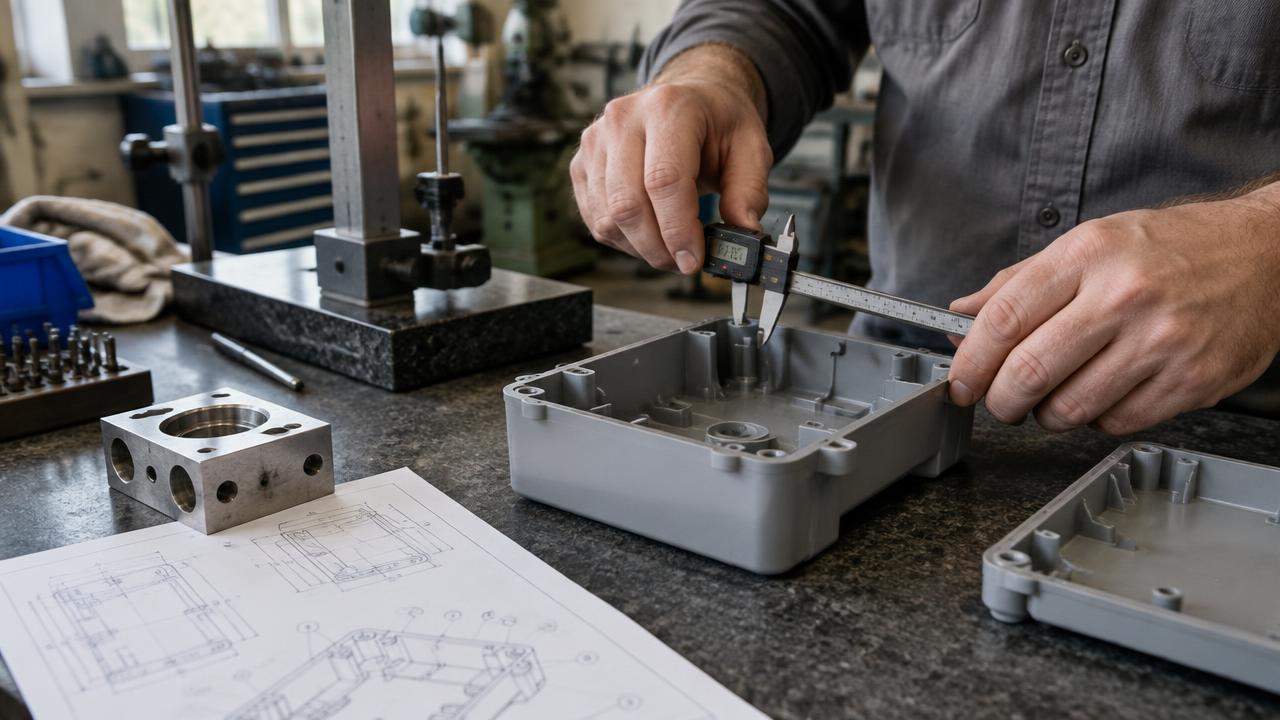
Design for manufacturing | 6-12 weeks | $25k-$120k | Production CAD, tolerance analysis, supplier quotes, BOM | Can it be built at target cost and quality? |
Tooling and pilot build | 10-20 weeks | $30k-$250k+ | Tools, first articles, pilot units, inspection data | Are the parts within spec repeatably? |
Certification and launch | 4-12 weeks | $10k-$60k | Test reports, packaging, listings, first production run | Ship. |
Caption: indicative ranges for a moderately complex consumer or industrial hardware product; regulated categories run longer and cost more at every stage.
Your first 90 days as an inventor
- Write the problem in one paragraph without describing your solution — if that is hard, the idea is not defined yet.
- Find ten people who have the problem and ask what they currently spend to avoid it.
- Document conception with dated records and keep them.
- Run a basic patent and product search; most ideas already exist in some form and that is useful information.
- Sketch three genuinely different mechanisms, not three styles of one.
- Get a rough manufacturing cost estimate on the leading concept before committing to CAD.
- Build the cheapest thing that tests the riskiest assumption.
- Decide your route: build a company, license the IP, or crowdfund — each needs different evidence from here on.
Where schedules actually slip
Three causes account for most of the overrun. Requirements that keep changing after CAD is underway, which invalidates completed work. Cost discovered too late, forcing a redesign after tooling quotes arrive.
And certification treated as a final step rather than a design input, which sends a finished product back to engineering.
Each is preventable by front-loading — the reason our product discovery and design for manufacturing work overlaps rather than running strictly in sequence.
If you are starting from a sketch, the practical next move is a functional prototype that answers the hardest question first. See rapid prototyping for how that stage runs, or get in touch with the drawing you already have.
Key takeaways
- The first step is defining the problem, not drawing the product.
- Validate demand before spending on engineering, and write requirements before spending on CAD.
- Budget for three or more prototype rounds; the first one is meant to be wrong.
- Every stage you skip is a change order waiting at tooling.
Frequently asked questions
How long does the idea to market process take for a physical product?
For a moderately complex product with no heavy regulatory burden, 12 to 24 months from validated concept to first shipment is realistic. Roughly half of that is design and prototyping, the rest tooling, qualification and pilot production.
What is the first thing to do with a new product idea?
Define the problem and confirm someone already pays to work around it, before spending money on design. Document your conception with dated records at the same time, so that early sharing does not compromise later patent filings.
How much money do you need to take an idea to market?
Most straightforward hardware products reach a first production run for somewhere between $80k and $400k all-in, with injection tooling and certification the two largest single line items. Complex electromechanical or regulated products exceed that substantially.
Should you patent an idea before building a prototype?
File a provisional application before any public disclosure, then build. A provisional secures your date inexpensively while a prototype produces the details a full application needs — filing a non-provisional before you know how the product actually works usually produces weak claims.
What skipping a stage actually costs?
Every stage in the idea to market process exists because someone once skipped it. The shortcut usually saves weeks at the front and returns them with interest at tooling, when changes stop being free. The rule of thumb holds across categories: a change costs roughly ten times more at each stage you move it downstream. Correcting geometry in CAD is an afternoon; correcting it in steel is a quotation.
Filed under:EducationInspirationWords
Services related to this guide
- Product design servicesIndustrial design and CAD taken all the way to manufacturable files.
- Rapid prototypingWorking prototypes in days, from 3D printing to vacuum casting.
- Electronic design servicesSchematic, PCB layout, firmware and bring-up, through to production handoff.
- Product development examplesReal projects we designed, prototyped and shipped.