Intellectual Property Protection in Product Development
Do you know that without intellectual property protection, someone else can steal your invention? Learn more here about the benefits of IP.
July 13, 20237 min read

Written by Konstantin Dolgan, Ph.D., NPDP
Founder & CEO, Product Development Engineer
Published July 13, 2023Updated September 2, 2026
Humans across many generations have survived because they were able to defend themselves against hails, harsh weather, predator animals, and even other humans. The same instinct is needed for businesses to thrive. Hence, businesses use intellectual property protection to ensure that they enjoy the benefits of their industry.
When setting up a business, it is vital to attend to possible legal concerns such as intellectual theft. Extended court sessions are some of the reasons small businesses do not last more than 3 to 5 years. To prevent such a debacle, ironclad legal documentation will help your business stay afloat.
Once the business is running, there will be the discovery of novel processes and products. These discoveries also need protection so that their benefits will not be capitalized by a competitor at the originator’s expedience. Hence, they can get intellectual property protection.
In this article, we will discuss further the benefits of intellectual property right. Furthermore, we will see how these benefits impact your business’s product development.
Benefit 1: Security of a Unique Idea during the Development of a Product
Once a product hits the market and its traction is good, many individuals or businesses would like to replicate the product. In the process of replicating the product, they can make claims about the product being a product of their imagination.
While the reason for the lie is not the concern of this article, you need to protect your unique ideas from such people. Furthermore, this protection should come before making the product public because the law applies to only the fastest finger.
Another form of security that IP offers is ensuring that your product does not infringe on the right of another person or business. Law cases filed in this regard will be thrown out if you have any IPR for your product. You can look up these famous IP infringement cases.
Benefit 2: Income Generation through Intellectual Property Protection
There are several income sources that intellectual property protection gives a company offering product development services. For instance, such a company can license the IPR to a third-party company.
Through the license and the agreed contract, the company can enjoy benefits like cash payment, future corporation, shares, or royalties. Licensing IPR is a very lucrative business decision that can yield more than a direct exploration of the idea by the company. The reason is that the business does not need to incur any manufacturing costs.
Another means of generating income using Intellectual property is during negotiations with Angel Investors or Venture Capitals. Usually, they are more willing to invest in businesses protected by prior art patents than those without. In cases of total buyout, private owners with IPR will get paid more than those without.
Benefit 3: Intellectual Property Protection Guarantees Customers of Product Source and Quality
Customers can ascertain the originality of a product by the trademark seal on it. While the seal can be falsified, it can also be verified. Knowing fully well that counterfeit products are dangerous for use, customers will remain loyal to businesses with such intellectual property protection.
IPR creates an image for your business brand that is difficult to replicate. Such uniqueness helps maintain the quality of the product being offered to customers. Hence, you can easily promote your product to your customers.
Benefit 4: Intellectual Property Protection Gives Competitive Advantage in Local and International Markets
Intellectual property protection helps business accelerate their growth. Unprotected ideas can be replicated by competitors. Therefore, such a competitor will be amassing the market share that belongs to you.
Protecting intellectual property during the development of a product gives the business a hiring hedge. It shows that the company supports creativity. Hence, more talent will be attracted to them.
Furthermore, such a company can easily expand beyond the shores of the country. IPR companies can export their products to other countries through franchising agreements. Check out this McDonald’s franchising overview.
FAQs about Intellectual Property Protection in Product Development
Below are the frequently asked questions on the intellectual property protection of product development services.
1. What are the four types of intellectual property protection?
Patents, copyrights, trademarks, and trade secrets are the four categories of intellectual property. A patent is acquired to protect the basic functions, processes, and designs employed in an invention. Copyrights protect artworks and original works.
The trademark is used to protect businesses and brands like logos and slogans. Last of all, trade secrets are intellectual property protection for information and ideas about an invention. Unlike the other three, trade secrets are unknown to the public indefinitely.
2. Who are those protected by intellectual property?
Inventors, developers, and designers are individuals or organizations protected by intellectual property right. They often need more than one form of intellectual property to protect the same intangible assets. This protection gives them sole right over their ideas and the creation of their mind.
3. What is required by a business to file for a product patent?
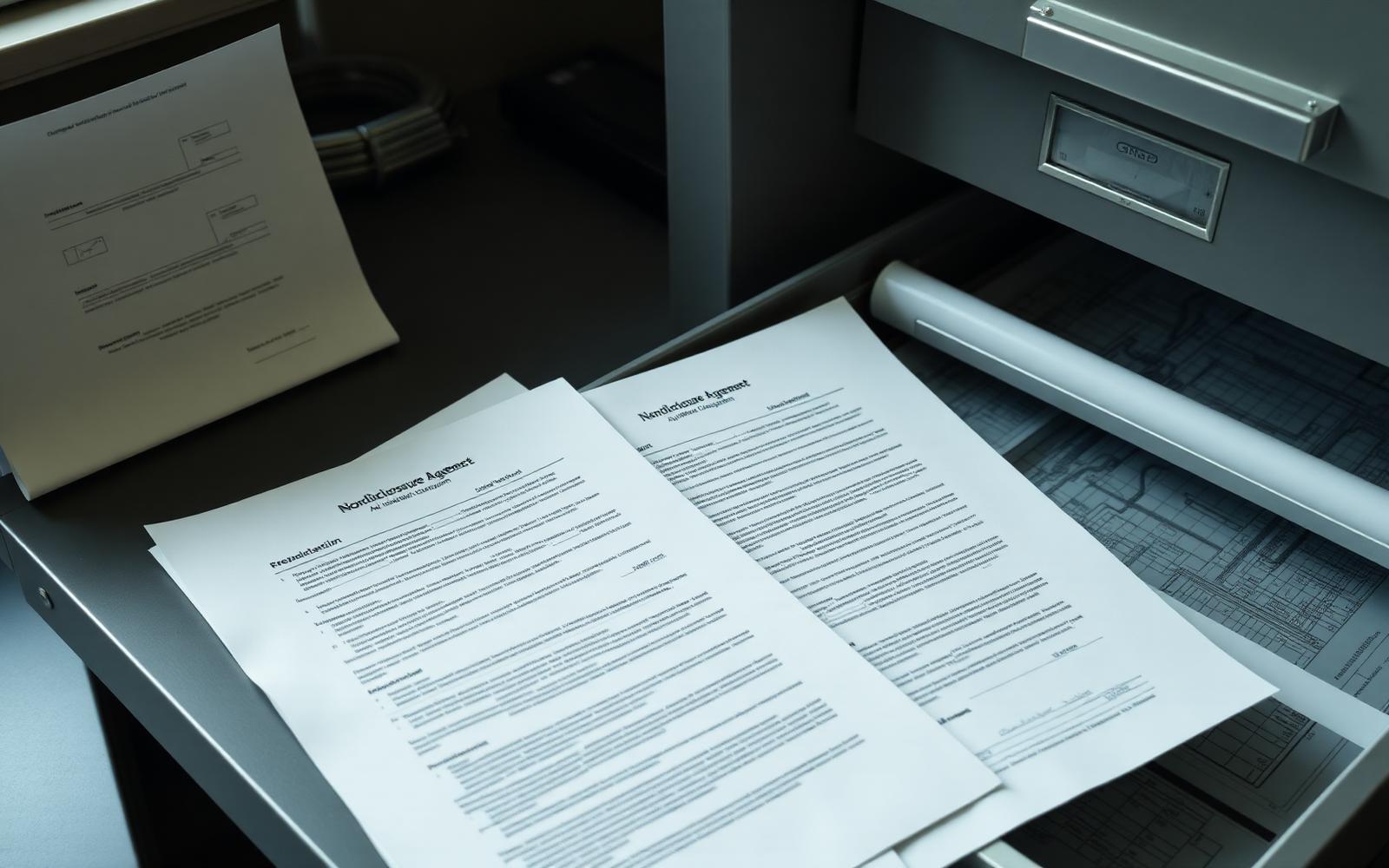
You need to check the validity of the patent by ensuring that it is novel and has not been in public already. The business can go ahead to differentiate the need for the patent both locally and globally. The next process is either to file online yourself or enlist an attorney to file on behalf of your business. The application process requires getting a customer number and digital certificate. An additional requirement is paying other associated bills.
4. How much does it cost to patent a product in the US?
The average cost of a patent application costs about $20,000. This total cost is paid to the patent attorney during the patent application. Patent attorneys are paid about $10,000 for their service. About the same amount is required to fill out your application for a patent.
It’s a Wrap
Intellectual property right has become a must-have for any successful business. It helps such businesses further establish its product in the market. This benefit and many others are discussed in this article about intellectual property protection.
Do you want to boost your ownership right on company invention? Reach out to LA NPDT today for the best intellectual property practice for your company.
Our company specializes in turning ideas into highly demanded products on the market. We also assist companies with intellectual property rights. Contact us on our website Read more on Lanpdt or call 318-731-9573 for more assistance.
Sources and standards
- USPTO — patent basics — Official guidance on provisional and non-provisional filings for new products.
- NIST Manufacturing Extension Partnership — Federal program supporting US small and mid-size manufacturers.
- ISO 9001 quality management — The quality-system standard most contract manufacturers are audited against.
Choosing the right protection for each part of a product
The benefits of intellectual property protection only materialise if the right instrument is applied to the right asset. A product is rarely protected by one filing. A typical connected hardware product carries a utility patent on the mechanism, a design patent on the housing, a trademark on the name, copyright on the firmware and app, and trade secrets around the manufacturing process. Each has a different cost, duration and enforcement reality.
Right | Protects | Typical US cost | Duration | What it does not stop |
|---|---|---|---|---|
Utility patent | How the product works — mechanism, circuit, method | $12k-$25k to grant, plus maintenance fees | 20 years from filing | Independent designs that avoid your claims |
Design patent | The ornamental appearance of the product | $2k-$4k | 15 years from grant | Functionally similar products that look different |
Trademark | Brand name, logo, distinctive trade dress | $1k-$3k per class | Indefinite with renewal and use | Competitors selling the same product under another name |
Copyright | Firmware, app code, documentation, marketing assets | Automatic; ~$65 to register | Life + 70 years (or 95 for works for hire) | Clean-room reimplementation of the same functionality |
Trade secret | Process know-how, tooling parameters, supplier recipes | Internal cost of controls only | As long as secrecy holds | Reverse engineering or independent discovery |
Caption: the five instruments a hardware programme normally combines, and the gap each one leaves.
When to file, relative to the development schedule
Development stage | IP action | Why then |
|---|---|---|
Concept selection | Freedom-to-operate scan | Cheapest moment to design around someone else's claims |
Concept locked | Provisional application | Secures the date before prototypes are shown outside NDA |
Working prototype | Non-provisional drafting begins | Claims can describe what actually works |
Industrial design frozen | Design patent filing | Appearance will not change again |
Pre-launch | Trademark filing, copyright registration | Brand and software are final |
Production ramp | Trade secret controls with suppliers | Process know-how leaves the building |
Caption: aligning filings with programme milestones avoids both premature and late filing costs.
Protection checklist
- Keep dated invention records and require engineers to log conception, not just results.
- Put NDAs in place with every supplier, contractor and evaluator before technical disclosure.
- Run freedom-to-operate before tooling money is committed, not after launch.
- Assign IP contractually from every contractor and employee — default ownership rules vary.
- File a provisional before trade shows, crowdfunding pages or press coverage.
- Register trademarks in every market you plan to sell in, before distributors do it for you.
- Segment supplier knowledge so no single vendor holds the complete process.
- Calendar maintenance fees and renewal dates; lapsed rights are the most avoidable loss of all.
Most IP problems we see are engineering problems in disguise: a claim that cannot be enforced because the mechanism was never reduced to practice, or a design patent filed on a housing that changed during design for manufacturing.
Working the filings alongside the product development process — and validating the mechanism through rapid prototyping before drafting — avoids both.
Our product development consulting team coordinates with your patent counsel on exactly this sequencing.
Frequently asked questions
What are the main benefits of intellectual property protection?
Four practical ones: it stops direct copying long enough to build a market position, it creates a balance-sheet asset that can be licensed or sold, it materially improves valuation in fundraising and acquisition, and it gives you standing to act when a copy appears on a marketplace.
Should a startup patent everything it invents?
No. Patents are public disclosure in exchange for a time-limited monopoly. Patent what a competitor could see by taking the product apart; keep as a trade secret what they could not — process parameters, supplier configurations, tuning data. Patenting an easily reverse-engineered process teaches competitors for free.
How much does it cost to protect a hardware product properly?
A realistic first-year budget for a single product is $15k-$35k covering one utility filing, one design filing and a trademark, excluding international extensions. PCT filings and national-phase entries can double or triple this over the following two years.
What happens if you disclose an invention before filing?
The US grants a one-year grace period after the inventor's own disclosure, but most other countries do not — public disclosure destroys novelty immediately. If you intend to sell outside the US, file at least a provisional before any public showing.
Filed under:EducationInspirationWords
Services related to this guide
- Product design servicesIndustrial design and CAD taken all the way to manufacturable files.
- Rapid prototypingWorking prototypes in days, from 3D printing to vacuum casting.
- Electronic design servicesSchematic, PCB layout, firmware and bring-up, through to production handoff.
- Product development examplesReal projects we designed, prototyped and shipped.