A $12,950 mistake you can avoid
How our invention prototyping company saved almost $13k and how you can reduce your manufacturing upfront costs in the prototyping phase.
July 24, 202012 min read

Written by Konstantin Dolgan, Ph.D., NPDP
Founder & CEO, Product Development Engineer
Published July 24, 2020Updated September 2, 2026
When Choosing the Right Invention Prototyping Company
Every inventor strives for bringing their unique idea to the market in a fastest way possible. They would use some of the effective steps and skip other important ones, like invention prototyping. But, our experience as a prototyping company and inventors has proven time and time again that the methodical approach to product development is the most efficient way to go.
Over the years we’ve seen many inventions that didn’t follow all the steps of the process. And that resulted in an unnecessarily high price on the production tag for the entrepreneur. Like you, and many other inventors, we always aim at reducing the cost of product development and manufacturing. We have identified that you can cut the production costs dramatically during the invention prototyping stage.
That is why, we want to share our take on it. We’ll go into the ways of how we can help you avoid and eliminate these extra expenditures applying our first-hand experience in the process of your invention prototyping. One of our inventions will serve as an example. With it, you can have a clear picture of the practical steps our prototyping company took on the journey to deliver our final product with lower cost than originally intended.
But first, let us introduce you to the approach we follow which makes us unique as a prototyping company.
Reducing Cost Price with Prototype Development
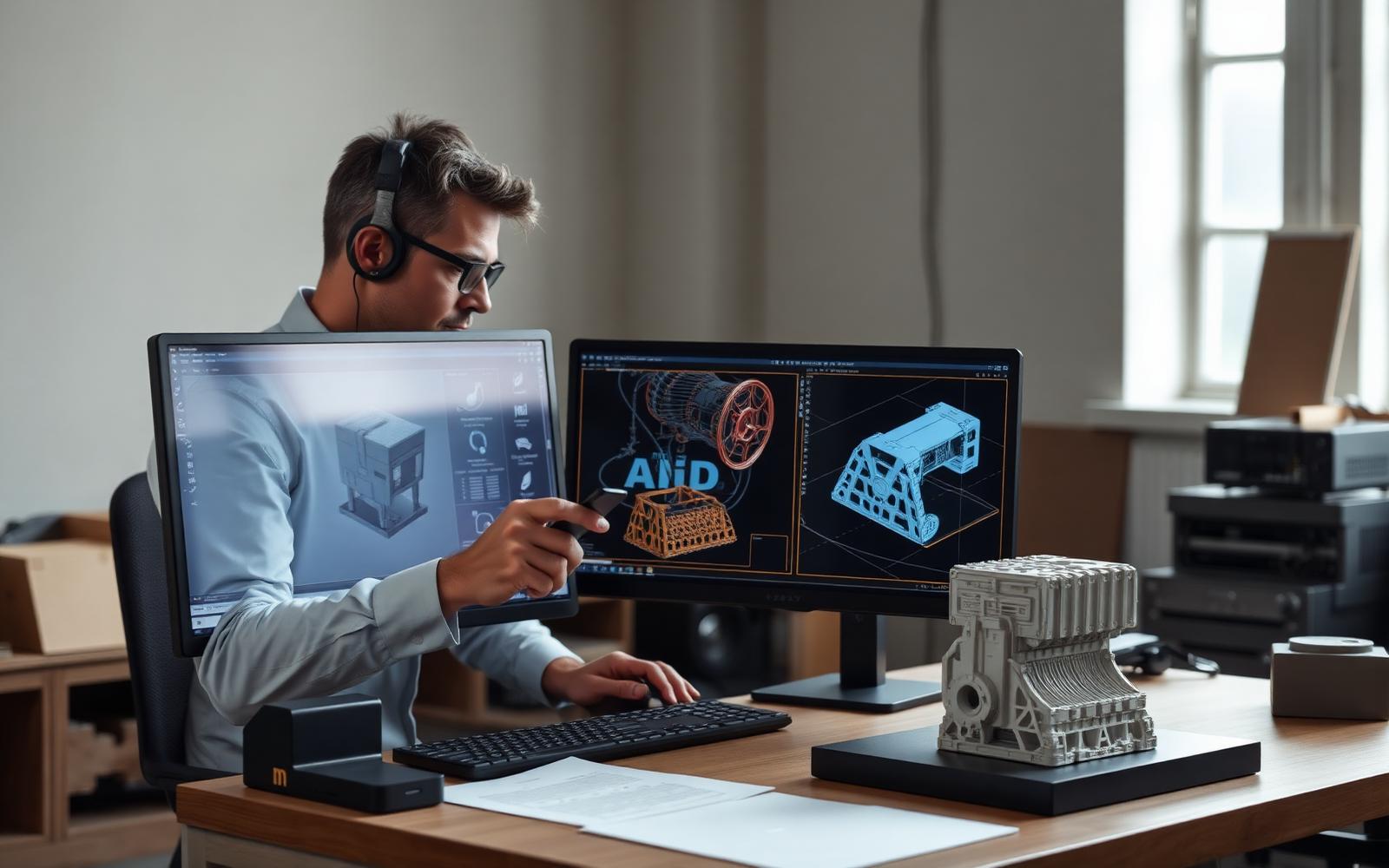
Our team regards prototyping as the most important step for reducing production costs of any invention. Indeed, it is very useful for user experience and functionality testing.
But it also has a priceless ability (or, should we say, price cutting ability) of showing you exact and particular areas for iterations and opportunities for improvement during the process of invention prototyping.
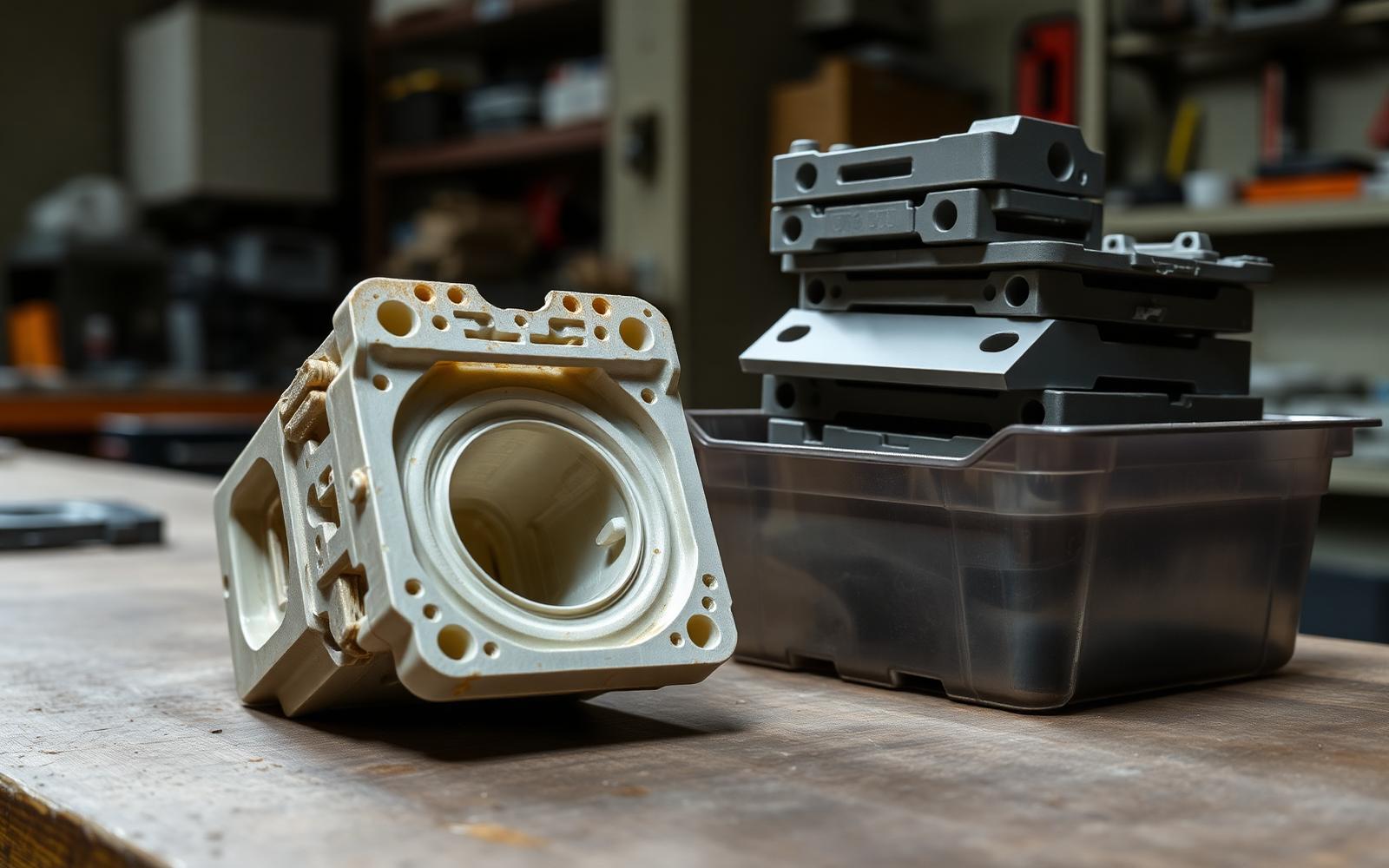
Unlike 3D models, prototypes provide you with tangible characteristics and points to where you should consider applying changes.
When you assemble your product, you can see which part of assembly is more time consuming. Also, which part has more chances to have defects, or requires more material, therefore more resources, for putting it together. That way, it is showing where you can simplify and improve the design which, in turn, helps you cut costs you would have otherwise.
Having said that, let’s look at the product we are going to use to show you how to save costs.
UP dock
The LA NPDT team faced a daily difficulty of uncharged devices, misplaced items, and the workflow challenges that came with that. Sounds familiar? Well, based on our endless conversations with people like us, we found that there are at least three items used during the workday – smartpens, styluses, and remotes.
As we know, these gadgets are vertical, creating quite a mess when charged horizontally with all the cords mixed up. When we searched the market for the product that would charge many devices at once without taking too much space, and would preferably have one cord, there was none available.
So, we took the problem into our own hands and designed an original solution. Our solution fits every office, living room, or work-from-home space. The UP Dock is a charging station with three outlet micro-USB ports made for every type of upright micro-USB device.
These devices include pointers, vape pens, electric screwdrivers, etc., and it comes with a standard USB (Type-A) cable. You can plug it to any wall outlet or into your computer to transmit data while charging. It takes minimum space due to its well-thought design, keeps your workplace neat and organized.
Its sophisticated, sleek, and minimalistic presentation adds a professional tone to any environment.
From that description it’s clear that this product has many parts to its efficiency and convenience. They include built-in power surge protection and rigid construction with balanced weight distribution designed for great stability, even with plugged-in heavy gadgets.
Now, let’s get practical and see what our prototyping company has faced along the process and how we managed to deliver Up Dock with cost efficient results.
Invention Prototyping
When our team made the 14th prototype of the Up Dock, we decided to move to the manufacturing stage and start selling the product. We received the production quote which amounted to $28.00 per unit. That was considered quite high. At this point we knew that there were other creative ways to cut the costs. So, we started exploring different possibilities for reducing them.
“Inventions become perfect by slow improvement, and each step is itself an invention.”
Joseph Jastrow
These words, once said by the psychologist and a great inventor, reflect our approach to product development. We applied his concept specifically with regard to invention prototyping. We took a little more time to simplify and improve the design, which ultimately saved us money.
Moreover, every time we had an improved version of the product in our hands, we were able to play with new ideas and solutions, and refine it even further.
This is what we did in the following couple of weeks.
First of all, we looked at the main feature of the Up Dock – micro-USB hubs. It has three ports on a single station. And at that time they cost us $1.56 each. We were able to negotiate a deal with another manufacturer of these hubs. It provided us with high quality ports for $1.00 a piece by increasing the quantity up to 1000 pcs.
Next step was to look at the design itself, and housing in particular. We made many prototypes and put them together ourselves. Which means we had the opportunity to observe the process of assembly from different angles. The engineers identified the most time consuming areas of the build-up work, and the parts that were creating the issue.
They found a way to simplify casing design by joining previously separate parts – sides and the bottom cover – into one peace. That iteration allowed for a different manufacturing method, therefore reducing costs previously required for it.
Furthermore, they optimized the inner cavity by attaching the board to the top cover. Now the bottom one serves as a clip-on cap, which makes the assembly much simpler and faster.
Initially, we wanted to use anodized finishing for the side plates of the device. But anodizing is not cheap. So, our Industrial Engineer took a different approach and considered using oil painting instead.
After paint durability and resistance testing showed great results, we knew this was the way to go. Not only because it was less expensive. The orange paint added that special contrast, color, and style to the device, matching our brand identity, which anodizing couldn’t deliver.
Changing the way these side plates are attached to housing, we again made the assembly easier.We went from pinning them into the sides to gluing, which keeps the plates firmly on their place.
And only after all these changes were applied throughout the invention prototyping stage, we got to manufacturing.
Now, let’s review our results!
Diligent work and creative thinking of our team, together with gradual iterations to the design saved us $12.950 under two weeks!
The final product resulted in $17.00 per unit (with all works considered), instead of the initial $28.00. Now, there is one of a kind charging station on the market that millions of people can use and appreciate.
Being a prototyping company, we value the importance and practical application of taking some extra time during the invention prototyping stage. That way we deliver your cost effective and high quality product. Given that this is a prototype objective, learn more about its types and goals in our blog article “Why you need to make a prototype”.
And being inventors, we understand the drive to share your idea with the world in the shortest time possible. From experience we know that a rush to manufacture may cost you more than those additional 10-14 days would.
There are always plenty of out-of-the-box solutions to further reduce the cost price of your product. They are literally at your fingertips. It’s because each prototype is your new invention, as Joseph Jastrow brilliantly put in his quote. The time invested perfecting it, will help you save your 12.950 dollars.
Money saved, knowledge gained
Choose us as your Invention Prototyping Company
As inventors, we take pride in making sure your experience doesn’t have expensive mistakes.
What are you waiting for ? contact us and make us your Invention Prototyping Company.
Three reasons why our clients love working with us:
If you ever thought of developing a new product, don’t wait any longer. Talk with one of our experts today.
- 3D (7)
- ecommerce (1)
- Education (230)
- Inspiration (121)
- Market Reports (4)
- Media (17)
- News (50)
- none (61)
- Stories (7)
- Tech (27)
- Tech Talk Podcast (31)
- Time Management (1)
- Uncategorized (109)
- Words (62)
Receive Pdp Example
Please submit your contact info to receive an example of a new product development plan.
Thank you for choosing LA New Product Development Team for your New Product development plan.
If you have any questions or need assistance with your order, please don’t hesitate to contact us.
Thank you for choosing LA New Product Development Team for your Prior Art Search.
Please fill out the form to submit your order.
Upon successful payment, you will receive an email with a Non-Disclosure Agreement (NDA) and a questionnaire regarding your product idea.
Your privacy and security are paramount to us, so rest assured that your information will be handled with the utmost confidentiality.
Step 1: Fill in your contact and billing details.
Step 2: Review your order summary.
Step 3: Submit payment.
After your payment is processed, please check your email for the NDA and questionnaire. Completing these documents promptly will allow us to start your Prior Art Search without delay.
If you have any questions or need assistance with your order, please don’t hesitate to contact us.
Thank you for choosing LA New Product Development Team for your Prior Art Search.
Please fill out the form to submit your order.
Upon successful payment, you will receive an email with a Non-Disclosure Agreement (NDA) and a questionnaire regarding your product idea.
Your privacy and security are paramount to us, so rest assured that your information will be handled with the utmost confidentiality.
Step 1: Fill in your contact and billing details.
Step 2: Review your order summary.
Step 3: Submit payment.
After your payment is processed, please check your email for the NDA and questionnaire. Completing these documents promptly will allow us to start your Prior Art Search without delay.
If you have any questions or need assistance with your order, please don’t hesitate to contact us.
Thank you for choosing LA New Product Development Team for your Prior Art Search.
Please fill out the form to submit your order.
Upon successful payment, you will receive an email with a Non-Disclosure Agreement (NDA) and a questionnaire regarding your product idea.
Your privacy and security are paramount to us, so rest assured that your information will be handled with the utmost confidentiality.
Step 1: Fill in your contact and billing details.
Step 2: Review your order summary.
Step 3: Submit payment.
After your payment is processed, please check your email for the NDA and questionnaire. Completing these documents promptly will allow us to start your Prior Art Search without delay.
If you have any questions or need assistance with your order, please don’t hesitate to contact us.
UP Dock Prototyping Cost Reduction Steps
Component/Area | Original Cost/Process | Revised Cost/Process |
|---|---|---|
Micro-USB Hubs | $1.56 each | $1.00 each (for 1000 pcs) |
Casing Design | Separate sides and bottom cover | Joined into one piece |
Assembly Process | Time-consuming due to separate parts | Simplified by design iteration |
Frequently asked questions
What is the most important step for reducing production costs?
Prototyping is considered the most important step for reducing production costs. It allows for user experience and functionality testing. Prototypes also reveal specific areas for iterations and improvements, which helps in simplifying designs and cutting expenses during the development process.
How can prototyping help reduce production costs?
Prototypes provide tangible characteristics that help identify areas for changes. They show which parts of assembly are time-consuming, prone to defects, or require more material. This information allows for design simplification and improvement, leading to cost reductions that would otherwise be incurred.
What is the UP Dock?
The UP Dock is a charging station designed by LA NPDT. It features three outlet micro-USB ports for upright micro-USB devices like smartpens and styluses. It uses a standard USB (Type-A) cable and can transmit data while charging. The design focuses on minimizing space and organizing workspaces.
How was the cost of the UP Dock reduced during prototyping?
Initially, the UP Dock had a production quote of $28.00 per unit. Costs were reduced by negotiating a lower price for micro-USB hubs from $1.56 to $1.00 each by increasing quantity. Engineers also simplified the casing design by joining separate parts into one, streamlining assembly.
Sources and standards
- ISO/ASTM 52900 additive manufacturing terminology — Standard definitions for additive manufacturing processes.
- NIST additive manufacturing research — Process and material research underpinning 3D printing quality.
- USPTO — patent basics — Official guidance on provisional and non-provisional filings for new products.
What each mistake actually costs
Almost every expensive lesson in inventing has the same shape: money spent to make something look finished before anyone confirmed it should exist. The costs below are what we see independent inventors write off, repeatedly, on first programs.
Mistake | Typical write-off | Why it happens |
|---|---|---|
Tooling before the design is frozen | $8k-$60k | Pressure to quote a unit price |
Skipping the patent search | $3k-$15k in filing fees | Assuming the idea is unique |
Prototyping the easy subsystem first | $5k-$20k | It is the fun part |
Invention promotion company | $5k-$15k | Promise of licensing without work |
Overseas quote without a site visit or audit | $10k-$50k | Lowest quote wins |
Designing to a guessed cost target | Whole program | No BOM before the design |
Certification discovered late | $15k-$80k plus months | Regulation treated as paperwork |
Caption: ranges reflect first-time inventor programs for consumer and light industrial products.
The single most common one: building the pretty version first
A looks-like model photographs well and proves nothing. A works-like rig is ugly, oversized and answers the only question that matters at that stage — does the core mechanism function under real load, for the real number of cycles? Build the works-like first, keep it deliberately crude, and let it fail early while failure is still cheap.
How to spend the first $10,000 well
Spend | Amount | What it buys |
|---|---|---|
Patent and prior-art search | $1k-$3k | Confirmation the idea is open |
Customer interviews | $0-$1k | Evidence the problem is real |
Works-like breadboard | $2k-$5k | Proof the mechanism functions |
Preliminary BOM and cost model | $1k-$2k | Whether the economics can work |
Manufacturing feasibility opinion | $1k-$3k | Whether it can be made at volume |
Red flags when hiring help
- Any firm that promises to license your invention to manufacturers for an upfront fee.
- A quote for "a prototype" with no defined test the prototype must pass.
- A partner who will not discuss manufacturing constraints during concept design.
- No written IP assignment in the contract.
- Estimates without stage gates, so you cannot stop cheaply.
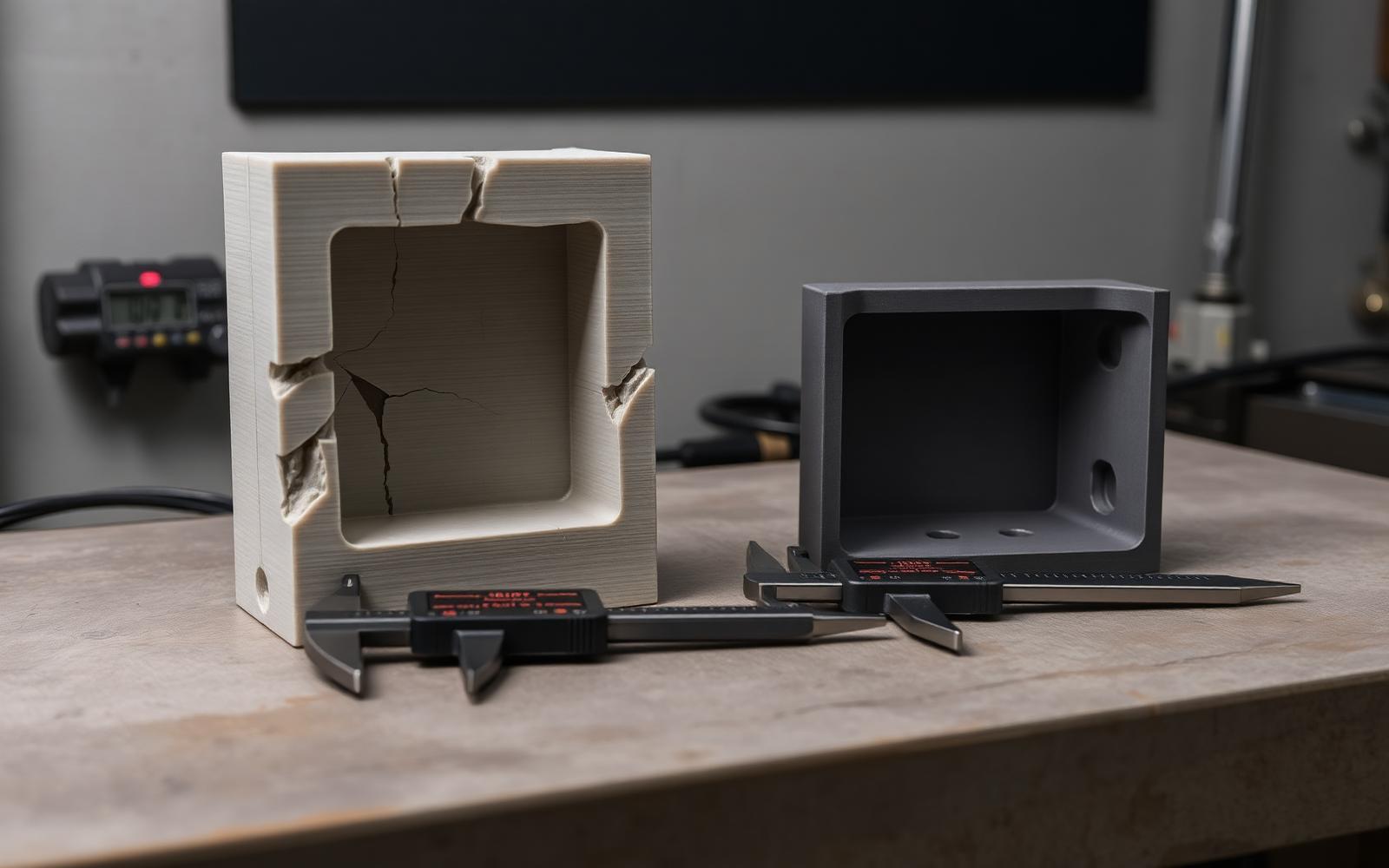
- A supplier that quotes tooling before you have a frozen, reviewed design.
Mistake-avoidance checklist
- Prior-art search completed and reviewed before design spending.
- Riskiest function proven in a works-like rig before any aesthetic work.
- Bill of materials priced by suppliers before the cost target is promised to anyone.
- Regulatory and certification path written down with budget and calendar.
- Design frozen, reviewed for manufacturability, and only then quoted for tooling.
- Every engagement has a defined deliverable and a point where you can stop.
The cheapest correction is the one made before hardware exists. That is why we front-load evidence in product discovery, prove mechanisms through rapid prototyping, and freeze designs in product engineering before anyone cuts a tool.
Frequently asked questions
What is the most common invention mistake?
Building an attractive, finished-looking model before proving the core mechanism works. The looks-like model answers questions nobody is asking at that stage, and it is usually rebuilt entirely once the working version reveals the real constraints.
Should I patent my invention before prototyping?
Run a prior-art search first — it is inexpensive and often changes the direction. Filing usually makes more sense once the working principle is settled, because a provisional application only protects what it actually describes.
Are invention promotion companies worth it?
Almost never for independent inventors. Charging significant upfront fees for licensing promises is the standard pattern, and success rates published under the American Inventors Protection Act are consistently poor.
How much should a first prototype cost?
A works-like breadboard that proves the core mechanism commonly costs $2,000 to $8,000. Spending far above that before any function has been demonstrated usually means aesthetics are being paid for ahead of evidence. The invention mistakes that cost the most money Most first-time inventors lose money to the same handful of errors. Each has a cheap preventive step.
Filed under:EducationInspirationTech
Services related to this guide
- Best prototyping companiesDevelopment firms, instant-quote bureaus and local shops — who fits which job.
- Free prototype cost calculatorFive to eight questions, an instant cost range for a first prototype.
- Prototype development companiesWhich firms take a sketch to a working prototype — and which only fabricate parts.
- Rapid prototypingWorking prototypes in days, from 3D printing to vacuum casting.