License or Manufacture? Deciding What to Do With Your Invention
Licensing trades most of the upside for most of the risk. Here is what each route earns, what licensees require, and a checklist for deciding between them.
November 26, 20165 min read

Written by Konstantin Dolgan, Ph.D., NPDP
Founder & CEO, Product Development Engineer
Published November 26, 2016Updated September 2, 2026
License or Manufacture? How to Decide What to Do With Your Invention
Licensing trades most of the upside for most of the risk. Manufacturing keeps the margin and hands you the capital requirement, the inventory and the returns. The right answer depends on your capital, your category and how defensible the idea actually is.
If you are weighing how to license an invention against manufacturing it yourself, this guide covers what each route earns in practice, the royalty rates and deal terms to expect, what a licensee needs to see before they will take a call, and a scoring checklist for deciding between them.

The economics, side by side
Factor | Licensing | Manufacturing yourself |
|---|---|---|
Typical income | 3–7% royalty on wholesale price | 30–60% gross margin, minus overhead |
Upfront capital | $5,000–$50,000 (IP, prototype, sell sheet) | $50,000–$500,000+ (tooling, inventory, certification) |
Time to first revenue | 9–24 months, if a deal closes | 6–18 months, once you can ship |
Who carries inventory risk | The licensee | You |
Control over the product | Little to none after signing | Complete |
Long-term asset built | A royalty stream that ends with the patent | A company that can be sold |
Failure mode | No licensee takes it; or it is shelved after signing | You fund tooling and inventory that does not sell |
A 5% royalty on a product wholesaling at $10 pays $0.50 per unit. Selling the same product yourself at a $4 gross margin pays eight times more — and costs you the tooling, the warehouse and the customer service. Neither number is the answer on its own.
Licensing is not the easy route. It is the route where somebody else decides whether your product ever ships.
What royalty rates actually look like
Category | Typical royalty on wholesale | Notes |
|---|---|---|
Consumer housewares and gadgets | 3–5% | Crowded shelf, low margin, rates rarely negotiate upward |
Toys and games | 5–7% | Higher rates, very short product lifecycles |
Hardware and tools | 3–6% | Longer product life, values granted patents heavily |
Medical devices | 4–8% | Regulatory burden reduces what a licensee will pay |
Software and digital IP | 10–25% | Marginal cost near zero, so rates are far higher |
- Advance against royalties. Common in the low thousands; treat any advance as goodwill, not income.
- Minimum annual royalties. Essential — without them a licensee can sign, shelve the product and lock up your rights.
- Exclusivity with performance tests. Grant exclusivity only where sales targets keep it alive.
- Field and territory limits. Licence one category or region and keep the rest.
- Termination and reversion. Rights must return to you if the licensee stops selling.
What a licensee needs before they will engage
Deliverable | Why it matters to them |
|---|---|
Filed patent application, ideally granted | Without it there is nothing to licence |
Working prototype | Proves the mechanism is real, not a drawing |
One-page sell sheet | Their internal committee reviews pages, not pitches |
Manufacturing cost estimate | Tells them whether it clears their margin threshold |
Evidence of demand | Preorders, pilot sales, or credible market data |
Clean freedom-to-operate view | They will not inherit somebody else's infringement risk |
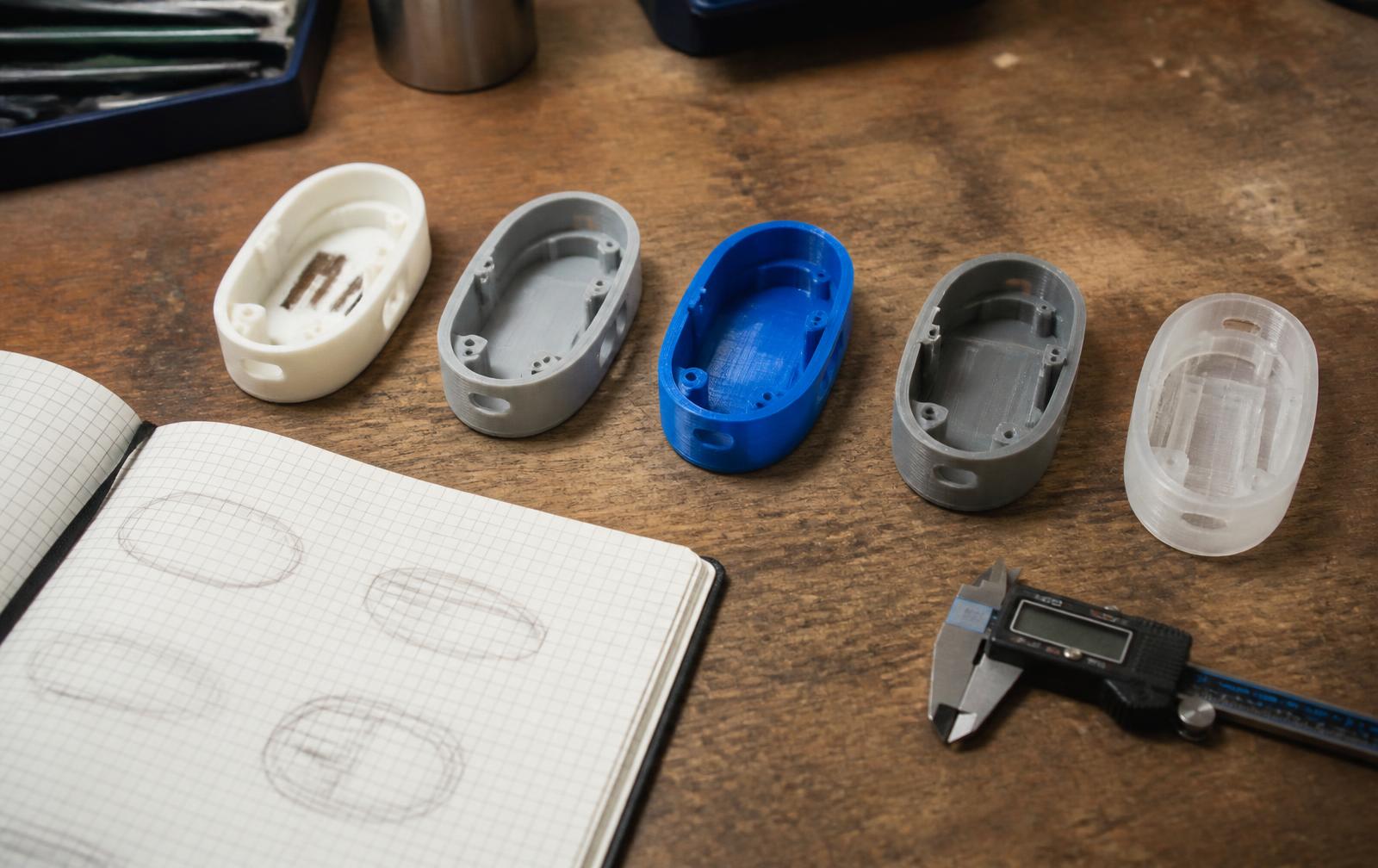
Most licensing rejections are not about the idea. They are about a submission that cannot be evaluated: no prototype, no cost, no protectable claim. Our prototyping guide and product discovery process cover getting to that package efficiently.
When licensing is the better route
- The product fits neatly into an existing company's line and distribution.
- You hold a granted patent with claims that are hard to design around.
- The category is dominated by a handful of buyers with locked-up shelf space.
- You have limited capital and no appetite for inventory, returns or support.
- You expect to keep inventing rather than run one product for a decade.
When manufacturing yourself is the better route
- Your advantage is brand, service or community rather than a defensible mechanism.
- You can reach customers directly online without fighting for retail placement.
- Gross margin at a realistic retail price is comfortably above 50%.
- The product needs iteration in the market that a licensee would never fund.
- You want to build a sellable business rather than a royalty stream.
A scoring checklist
Question | Points toward licensing | Points toward manufacturing |
|---|---|---|
Do you hold a granted patent? | Yes | No, or protection is thin |
Available capital | Under $50k | $150k or more |
Route to customer | Retail shelf you cannot access | Direct online or existing audience |
Gross margin at retail | Below 45% | Above 55% |
Appetite for operations | Low | High |
Product lifecycle | One product, then move on | A line you will keep extending |
Score six clear signals in one direction and the decision has already been made. A split result usually means a hybrid: manufacture in your own channel, and license a category or territory you cannot serve.
Reading a licensing term sheet
The royalty rate is the number everyone negotiates and rarely the number that determines the outcome. Exclusivity, minimums, term and termination decide whether a licence produces income or ties up your invention for years while nothing ships.
Term | Inventor-favorable | Licensee-favorable | Why it matters |
|---|---|---|---|
Royalty base | Wholesale price, no deductions | Net sales after allowances and returns | Deductions can cut effective royalties by 10-25% |
Exclusivity | Non-exclusive, or exclusive by field and territory | Worldwide exclusive, all fields | Exclusivity without performance obligations is a shelf risk |
Minimum annual royalty | Escalating minimums from year two | None, or nominal | The only reliable protection against a product never launching |
Term | 3-5 years with renewal on performance | Life of patent | Short terms create leverage to renegotiate |
Improvements | Inventor retains rights to future work | Automatic assignment of improvements | Can quietly capture your next product |
Termination | Termination for non-launch by a fixed date | Termination at will with notice | A launch deadline converts intent into obligation |
Audit rights | Annual audit at licensee expense if underpaid | No audit or restricted access | Royalties are self-reported by default |
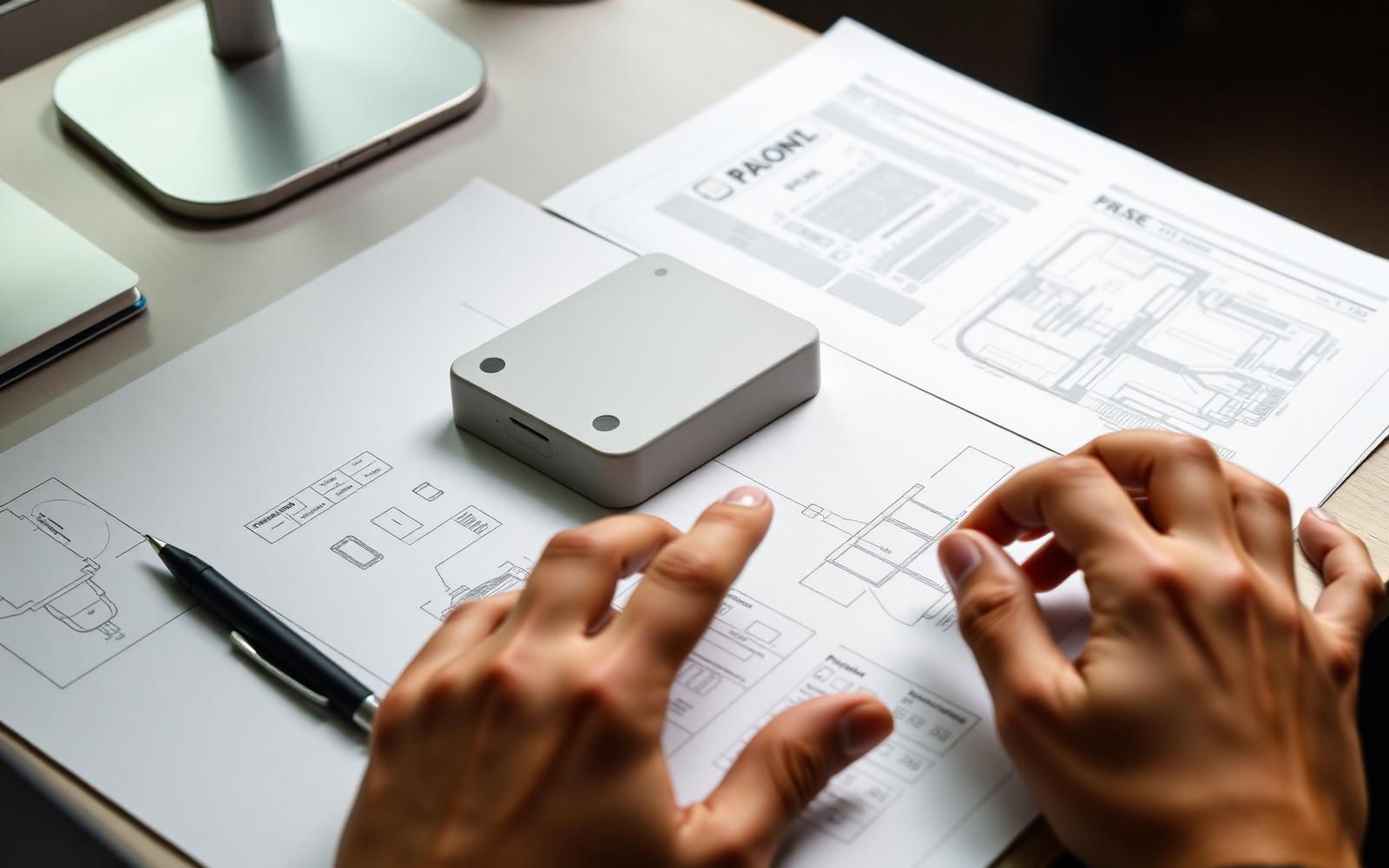
The submission package that gets a meeting
- A filed provisional or non-provisional application, with claims drafted around the mechanism rather than the appearance.
- A one-page sell sheet: the problem, the product image, the benefit, and the contact line - no more.
- A working prototype or a short video of it working, because static renders are read as concepts.
- A realistic manufacturing cost estimate with a named process and a quoted supplier.
- Evidence of demand: pre-orders, a pilot batch sold, a retail buyer letter, or comparable product sales data.
- A clear statement of what you are offering - exclusive by category, by territory, or non-exclusive.
What each route demands of you
Requirement | Licensing | Manufacturing |
|---|---|---|
Upfront capital | $5,000-$50,000 | $50,000-$500,000+ |
Time to first revenue | 9-24 months | 6-18 months |
Ongoing effort | Low after signing | Continuous |
Skills needed | IP, negotiation, presentation | Operations, sourcing, sales, support |
Control over quality and roadmap | Minimal | Complete |
Downside if it fails | Lost filing and prototype costs | Lost tooling and unsold inventory |
Upside if it succeeds | Royalty income, no operations | Full margin and an asset with resale value |
Key takeaways
- Negotiate minimums, term and launch deadlines before you negotiate the royalty rate.
- A licensee buys evidence: protection, a working unit, a cost and demand data.
- Licensing is lower risk and dramatically lower ceiling; manufacturing is the reverse.
- Hybrid routes are legitimate - sell direct in your channel and license the categories you cannot serve.
Protecting yourself in the submission process
Learning how to license an invention includes learning how to disclose it without giving it away. Most established companies refuse to sign a non-disclosure agreement before reviewing a submission, and their submission agreements often say so explicitly. That does not mean you are unprotected — it means your protection has to come from filings and records made before you disclose.
Protection options before disclosure
Option | Cost | Protection provided | Limitation |
|---|---|---|---|
Provisional patent application | $2,000-$5,000 with counsel | Priority date for 12 months | Must file a non-provisional to keep it |
Non-provisional application | $8,000-$20,000 | Examined rights, publishable claims | Slow and expensive up front |
Signed NDA | Legal review cost only | Contractual confidentiality | Many companies will not sign one |
Trade secret discipline | Process cost | Protects undisclosed know-how | Lost the moment you disclose |
Design registration | $1,000-$3,000 | Protects appearance | Not function |
Documented invention records | Minimal | Evidence of conception and diligence | Not a right by itself |
Also watch the public disclosure clock. Showing an invention publicly, selling it or publishing about it starts a limited window in some jurisdictions and immediately forfeits rights in others, so file before the trade show, not after.
Submission checklist
- File at least a provisional before any outside disclosure.
- Read the company's submission agreement fully before sending anything.
- Send what proves the concept, not every manufacturing detail.
- Keep dated records of what was sent, to whom and when.
- Have an attorney review any term sheet before you respond to it.
This is general information, not legal advice. Consult a qualified patent attorney about your specific situation.
Key takeaways
- Most companies will not sign an NDA; file before you disclose instead.
- Public disclosure starts or forfeits patent windows depending on jurisdiction.
- Send enough to prove the concept, not the full manufacturing package.
Frequently asked questions
What is a typical royalty rate for licensing an invention?
Most physical consumer products licence at 3–7% of the wholesale price, with toys and games at the higher end and low-margin housewares at the lower end. Software and digital IP command 10–25% because marginal cost is near zero. Rates above these ranges are rare unless the patent position is exceptionally strong.
Do you need a patent to license a product idea?
In practice, yes. A licensee is paying for exclusivity, and without at least a filed application there is nothing preventing them from producing the product without you. A pending application can be enough to open conversations, but most deals are signed or repriced around what the granted claims actually cover.
Is licensing cheaper than manufacturing?
Cheaper upfront, yes — typically $5,000 to $50,000 for IP, a prototype and a sell sheet, against $50,000 or more for tooling, inventory and certification. But licensing has a much higher failure rate at the deal stage, and even a signed deal pays a fraction per unit of what selling it yourself would.
How long does it take to license an invention?
Nine to twenty-four months is realistic from a finished submission package to a signed agreement, and many products never find a licensee at all. Companies review submissions in cycles tied to their product planning calendar, so a miss can add six months regardless of how good the idea is.
Can you license a product and also sell it yourself?
Yes, if the agreement is scoped carefully. Licences are commonly limited by field of use, territory or channel — for example licensing retail distribution in North America while retaining direct online sales.
Any such carve-out has to be written into the agreement before signing; a broad exclusive licence removes the option entirely. Work with LA NPDT: if you are moving from here to execution, start with our low-volume manufacturing or talk to us about design for manufacturing .
Filed under:Education
Tagged:BossierInnovationLouisianaMarketingMarketing PlanNew Product DevelopmentProduct DesignProduct DevelopmentProduct LaunchProduct MarketingPrototypingShreveport
Services related to this guide
- Product design servicesIndustrial design and CAD taken all the way to manufacturable files.
- Rapid prototypingWorking prototypes in days, from 3D printing to vacuum casting.
- Electronic design servicesSchematic, PCB layout, firmware and bring-up, through to production handoff.
- Product development examplesReal projects we designed, prototyped and shipped.