Medical Device Prototyping

How to Design, and Gain FDA Approval, for New Healthcare Products

Few products are as important to our wellbeing and health as medical devices.

Few products are as important to our wellbeing and health as medical devices. Whether they are used to deliver lifesaving care, aid clinicians during diagnosis, or ease the burdens and increase the comfort of everyday life, thousands of these products are essential to our daily existence, even if we aren’t aware of it.

But creating a new medical device is also among the most challenging tasks an inventor can take on, as the level of responsibility for safety of users is paramount. Significant approval requirements, governed in the United States by the Food and Drug Administration (FDA), mean that inventors need to clear substantial hurdles before their products can reach the marketplace.

These regulatory guidelines are essential for protecting customers, but can be intimidating for an individual to clear. Thankfully, there is a solution provided by partners like LA New Product Development Team (LA NPDT): prototyping for medical devices.

What is a Prototype, and Why is it Important?

As defined by the Merriam-Webster Dictionary, a ‘prototype’ is “an original model on which something is patterned… [a] usually functional form of a new type or design.”[1]

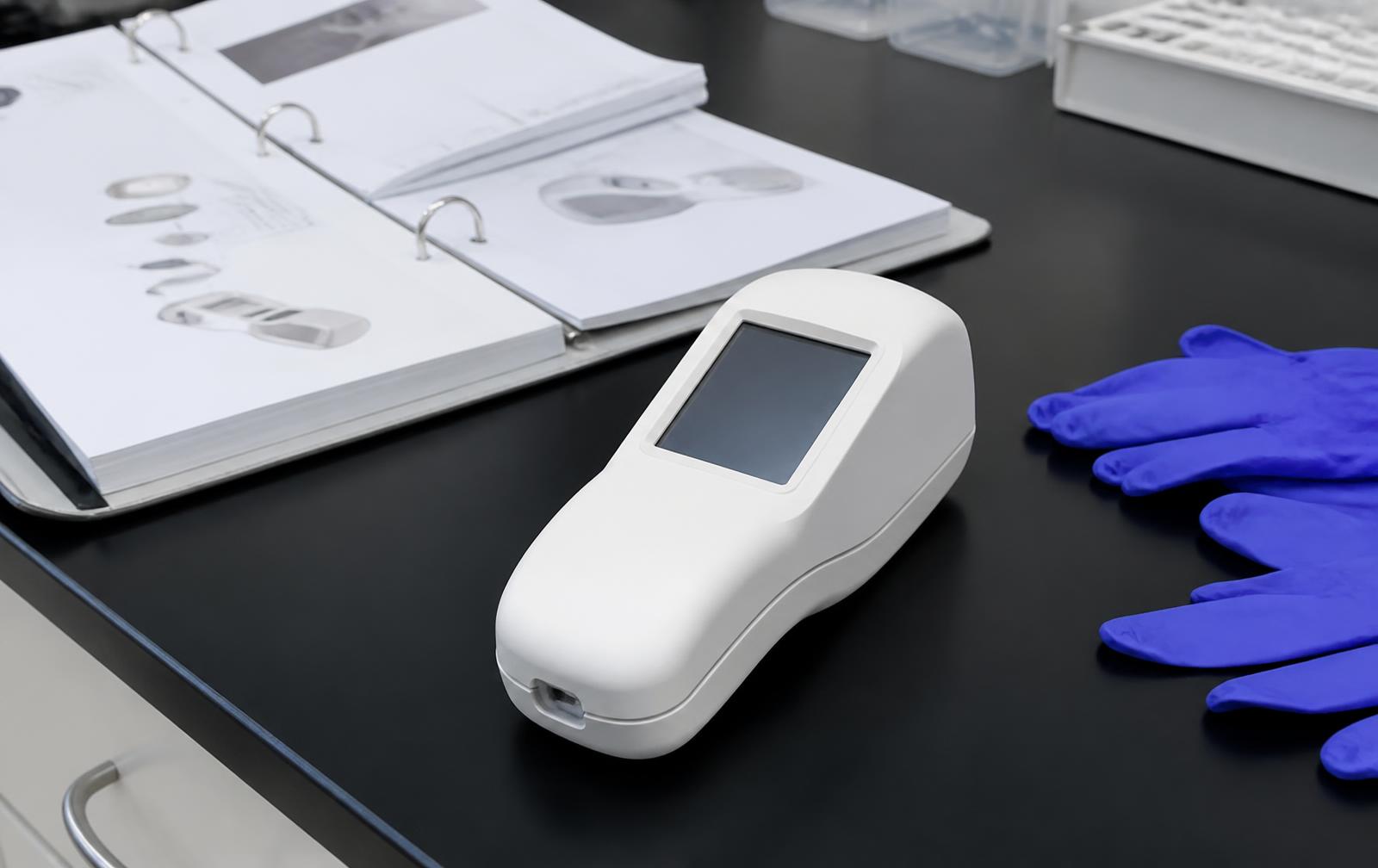
The purpose of a prototype is therefore to understand, in a practical sense, what a design or product will be, and how it will work. As LA NPDT explains it, prototyping is where craft, science, and technology meet to transform an idea or concept into a physical reality.

The reason to do this is to understand, long before the financial, time, and logistical commitments of production are made, whether a product’s functionality is viable, and (critically from a medical device perspective) whether or not the product is safe.

Medical Device Prototyping, How to Design, and Gain FDA Approval, for New Healthcare Products, LA New Product Development Team

However, prototyping does not necessarily always entail building a fully-functional physical version immediately. In fact, virtual prototypes, which are entirely rendered in the computer and tested using software models, are often included as a first step. User-focused products, such as medical devices, also need to be tested for their physical feel before they are fully realized.

For example, knowing how heavy an item will be, or how easy to manipulate, will often dictate other design considerations. This is why prototyping typically is undertaken in stages.

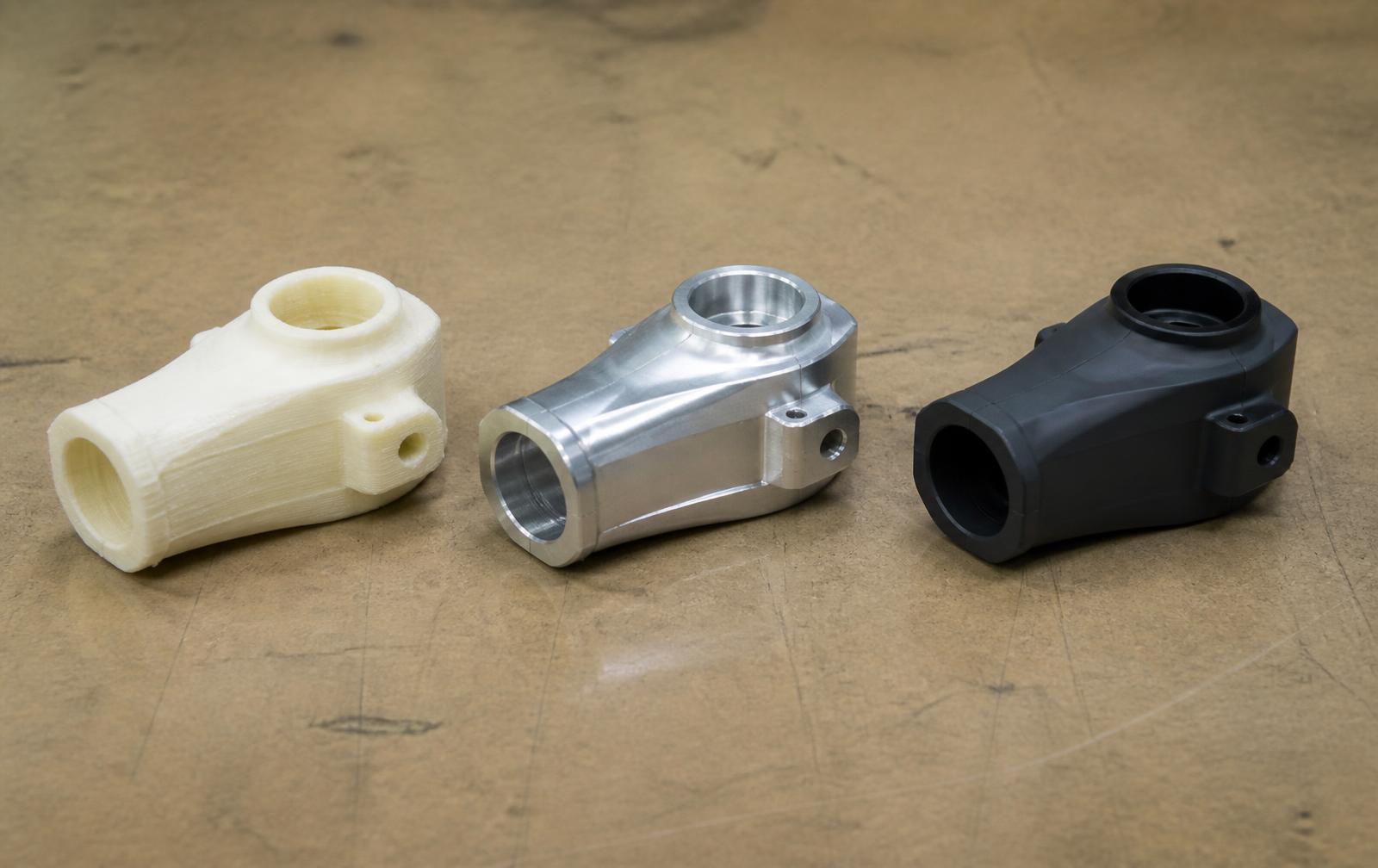
The initial step of the physical prototyping process might be a mockup or cosmetic prototype: something which resembles the final look and feel for testing with a client. In a medical and healthcare setting, this might be the non-functional model that is given to a physician for feedback, before more expensive work is done.

This can be followed by a proof-of-concept prototype: a version which tests the physical functions of the device, but which might not be fully finished in its presentational features. Finally, there is a functional prototype: a version which serves as the finished model for manufacturing at scale.

It is generally advisable, particularly for medical device prototyping, to add each function in a new prototype version, thereby ensuring that each individual functionality works fully before adding another into the equation (and conversely, allowing for easier identification of a potential problem if a working functionality becomes dysfunctional in the latest prototype).

Carefully and rigorously following this process of design-build-test allows for the greatest reliability, and safety, to be ensured in the new device. The LA NPDT offers guidance, and prototyping services, for all these steps.

If all this seems like a lot of work – it is. Prototyping is iterative, and the very intention of the process is to make multiple versions and then refine the results. That is why making prototypes quickly, and inexpensively, is key to success.

3D printing technology, also known as additive manufacturing, has allowed for much more rapid prototyping than prior methods, allowing for more versions to be created and tested than were previously practical.

The point of taking and building upon all these steps, and not seeing one as a shortcut to replace the others, is explained well by Stefen Thomke in an article for the Harvard Business Review: “The ability to experiment quickly is integral to innovation: as developers conceive of a multitude of diverse ideas, experiments can provide the rapid feedback necessary to shape those ideas by reinforcing, modifying, or complementing the existing knowledge.”

In this same article, Thomke urges the prototyping phase to “fail early and often,” because being free to do so at this stage allows the avoidance of expensive mistakes later.

Medical Device Prototyping, How to Design, and Gain FDA Approval, for New Healthcare Products, LA New Product Development Team

For example, making a low-cost cosmetic prototype that is rejected by a physician as impractically large, before the functionalities have been installed within, is infinitely preferable and vastly cheaper than having to return to the drawing board when a functional prototype is rejected for the same look and feel reasons.[2]

Prototyping is thus essential to avoid what Fast Company describes as the number one pitfall of product design: failing to get continuous customer feedback at every step of development. Despite this being a simple and seemingly-obvious step, 62% of prototypes go untested, and even more products lack prototypes at all.[3]

As time-consuming as the work of prototyping is now, it is the measure of much greater time – and money – saved later that makes the process critical.

Medical device prototyping is even more critical than for other product types. To pass the U.S. FDA requirements, a prototype must be developed and tested prior to submitting the device for approval.[4] The prototype is not meant to treat people, but rather to gather the data needed for the FDA to consider the device.

The purpose of the prototype, from the FDA’s perspective, is to reduce the risk of harm to users through iteration and feedback in the development process.

It is therefore essential and required that all medical device creators consider the prototyping process carefully, and use the process to make the design as safe, and close to FDA requirements, as possible prior to manufacturing a working device.

What Are the Requirements of a Medical Device?

Simply put, the most important requirements are the same as for any other product, albeit more so. The product must address and satisfactorily meet a need in a safe manner, and it must be highly usable to encourage its adoption.

For devices which treat conditions or which must be used by highly stressed physicians or potentially compromised patients, usability is more than just a consideration; it is a requirement.

The International Organization for Standardization (ISO)’s IEC 62366 guidelines mandate usability testing for medical devices as a means of determining whether use error can compromise the safe functioning of the device while providing care.

It is extremely important to test and consider these factors because use-related errors are more frequent, and more serious, than design-related errors for medical devices. Moreover, they are frequent, with an average in excess of 140 per year in the United States from 2012-15.[5] Fortunately, the FDA has included extensive guidance relating to use testing.[6]

These guidelines should be considered during the design and prototyping stages, as the start of use testing can occur even with a mockup, and will need to continue after a functional prototype exists.

Medical Device Prototyping, How to Design, and Gain FDA Approval, for New Healthcare Products, LA New Product Development Team

To ensure new medical devices safely and satisfactorily address needs, the FDA has a classification system which sorts devices based upon novelty and risk. There are three classes of devices.

Class 1 devices pose the lowest amount of risk to consumers, and generally consist of devices used to support caregiving, such as surgical tools, oxygen masks, and bandages. The evaluated criteria for Class 1 devices are called ‘general controls’ and are in essence a means by which quality can be regulated (hence, ‘controlled’) to ensure safety.

These general controls include good manufacturing practices, abiding by established standards and reporting any adverse effects to the FDA, registering the device, and maintaining record keeping per the FDA’s requirements.

Class 2 devices are the next step up in the risk category (moderate to high risk) and are subject to the same general controls as Class 1 devices, but also require ‘special controls’ including labeling, mandatory device performance standards, and specific testing requirements related to the device type.

Examples of Class 2 devices include pregnancy tests, blood pressure cuffs, and contact lenses. Class 3 devices are the highest risk, and are defined as devices which support or sustain life; in other words, they must function properly or the patient’s life could be jeopardized. Examples of these devices include pacemakers, HIV diagnostic tests, and high-frequency ventilators.

Class 3 devices require premarket FDA approval (proof from the device provider that they are safe and effective, usually derived from clinical trials), as well as all other general and special control requirements.[7]

Most medical devices created by an inventor or entrepreneur will fall into either Class 1 or Class 2, and therefore not require premarket approval.

That said, all Class 2 and Class 3 devices, as well as a small select of Class 1 devices, need to abide by the FDA’s Design Controls guidance.[8]

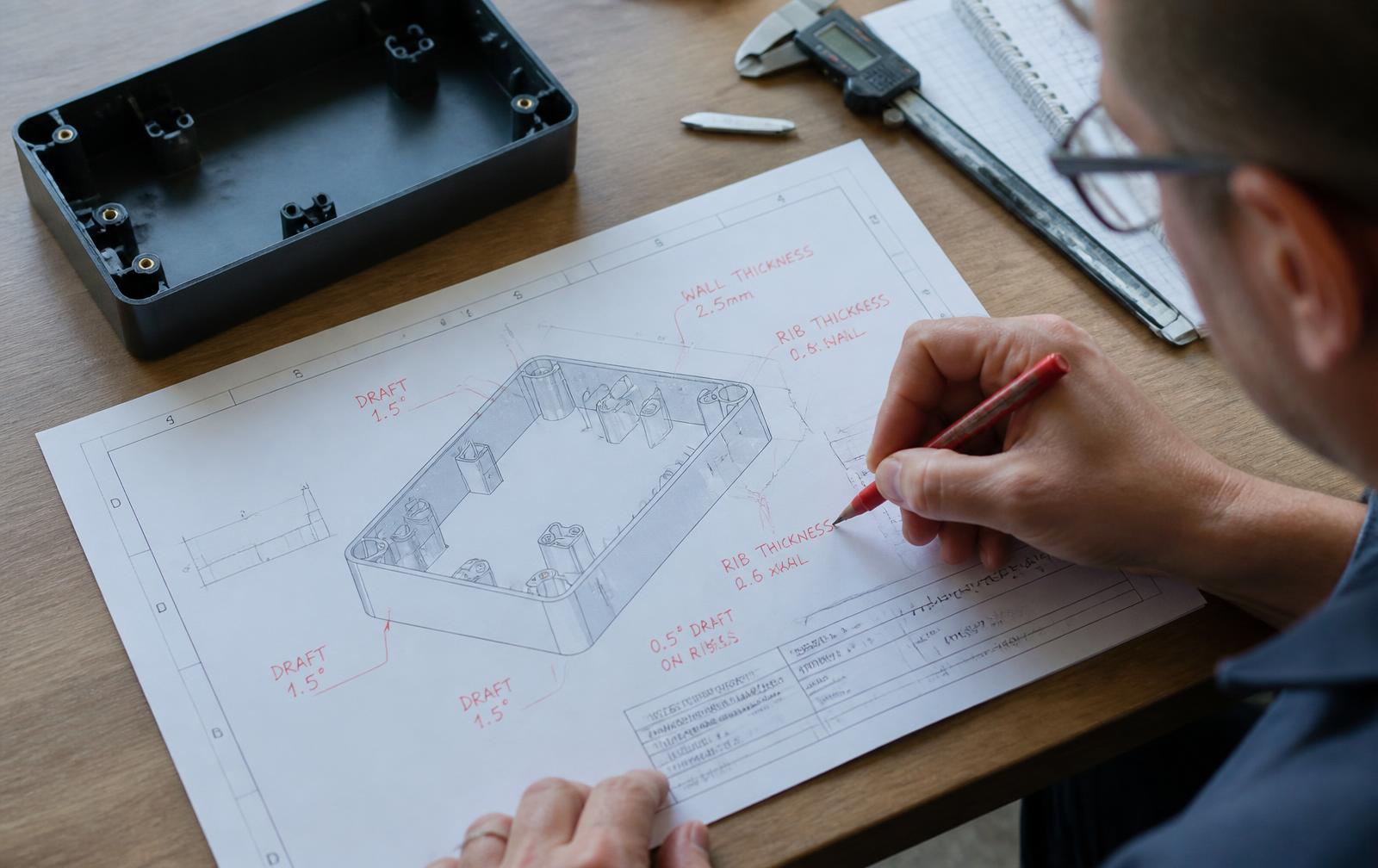
These are flexible guidelines to ensure the maximum number of products possible can comply, and are essential to follow prior to, during, and after the prototyping process. In short, Design Controls ensure that all required steps in a consideration and quality checklist are met, prior to device submission for approval.

Medical Device Prototyping, How to Design, and Gain FDA Approval, for New Healthcare Products, LA New Product Development Team

Finally, before a new medical device is offered for sale, it must be approved by the FDA. This must happen 90 days or more before the product is sold.

For most medical devices which do not require premarket approval (in other words, Class 1 and 2), this is typically done with a 501(k) notification to the FDA, which demonstrates that the device is safe and effective, and that it is substantially equivalent to a preexisting legally marketed device. In these 501(k) notifications, comparisons with existing devices already on the market are required, as is evidence supporting these comparisons.

After the FDA reviews the notification, they can grant approval to the product.[9] In cases where the new medical device is entirely novel, and there are no comparable products already on the market, a De Novo classification request must be made ahead of the 501(k) notification. This permits the FDA to consider the device based upon Class 1 / Class 2 general and special controls.

In general, benchmark performance data of the device is a requirement, and clinical data may also be needed, depending on the device type. Once the De Novo request is granted, the device may be submitted for 501(k) notification.[10]

If the device is categorized as Class 3, it will require premarket approval, which carries substantial data requirements including non-clinical laboratory studies, and clinical trial information.[11] Once the required approval is granted, the device will be authorized for sale and public use.

Looking to the Future of Medical Device Development

Creating medical products is time-consuming, difficult, and costly, but has been made substantially easier thanks to small-batch manufacturing, rapid prototyping, and sophisticated product design engineering services.

Whereas in the past an entrepreneur needed to be either very sophisticated and tenacious to launch a product, or needed to have the backing of an established company, today it is much easier for medical device products to be created by healthcare-minded individuals, often in cooperation with established and experienced designers.

At LA NPDT, we have been proud to participate in the creation of several medical devices and healthcare aids.

These include the MultiNix, a tool for healthcare professionals which combines 15 functions in a single device; the UPShield, a face shield for medical facilities which we produced ourselves during the worst of the COVID-19 pandemic; the Rehabmate, a low-cost communicative aid for patients with verbal and motion impairments; and the LEIA Menstrual Cup, a menstrual care product specifically designed for people with a low cervical position, uterine prolapse, or weakened pelvic floor.

In all four of these cases, the product in question originated with a healthcare provider or supporter who saw a need in the market, and then stepped in to fill it with our help.

Providing support for health and quality of life products is an essential mission for us, and we are eager to provide our expertise, from design guidance and prototyping, user testing and approval, and marketing and launch, to all inventors, entrepreneurs, and caregivers who wish to develop the next generation of beneficial aids and devices.

If you have an idea that can change the future of health and patient care, and you want to make a difference in this world, then don’t be intimidated, and don’t delay. We’re ready, and happy, to help you.

Reach out, and turn your dream into a reality that can help people everywhere.

The three medical device prototype stages

Most programs waste money by jumping straight to a verification-grade build. Each stage answers a different question, and each costs an order of magnitude more than the one before it.

Medical device prototype stages, purpose, materials and cost
StageQuestion it answersTypical materialsCost band
Looks-like modelDoes the form work in the clinician's hand?SLA resin, machined ABS, painted finishes$2k – $8k
Works-like / functionalDoes the mechanism and electronics perform?PC, ABS, PEEK, stainless, custom PCB$15k – $60k
Design verification buildDoes it pass the test protocol, repeatably?Production-equivalent materials and processes$50k – $200k

Materials, tolerances and what regulators expect

A medical prototype is judged on traceability as much as on function. These are the practical constraints that shape the build.

  • Patient-contact materials

    Choose resins and elastomers with an existing ISO 10993 biocompatibility history — USP Class VI silicones, medical-grade PC, PEEK. Substituting late forces retesting.

  • Machining tolerances

    Fluid paths and mating features typically hold ±0.05 mm; printed parts realistically hold ±0.15 mm, which is why verification builds move to machining or tooling.

  • Sterilization

    Decide on EO, gamma or autoclave early. Gamma embrittles some polymers and autoclave rules out most printed resins.

  • Design controls

    Verification builds fall under 21 CFR 820.30 and belong in the design history file, produced under an ISO 13485 system.

  • Electronics

    IEC 60601-1 safety and IEC 62304 software lifecycle expectations shape the architecture before the first board spin.

  • Human factors

    FDA expects usability work under IEC 62366; usability prototypes are cheaper than a post-submission redesign.

Full program scope lives on medical device product development services. Reference guidance: FDA quality system regulation and ISO 13485.

Medical device prototyping: common questions

What is medical device prototyping?

Medical device prototyping builds physical versions of a device to test form, function and safety before design freeze. It runs from early looks-like models through functional engineering builds to design-verification units made from production-equivalent materials and processes, which are the ones regulators care about.

How much does a medical device prototype cost?

A looks-like model typically costs $2,000 to $8,000. A functional electromechanical prototype runs $15,000 to $60,000. Design-verification builds using production-equivalent materials and documented processes commonly run $50,000 to $200,000 because each unit must be traceable.

Which materials are used for medical device prototypes?

Early models use standard SLA and FDM resins. Functional builds move to engineering thermoplastics such as PC, ABS, PEEK and USP Class VI silicones, plus stainless steel and titanium for anything load-bearing or implantable. Patient-contact prototypes should use materials with an existing biocompatibility history so ISO 10993 testing later is not a surprise.

Does prototyping need to follow ISO 13485 or FDA design controls?

Exploratory prototypes do not, and forcing design controls onto early concept work slows learning for no benefit. Once you enter design inputs and verification, the work falls under 21 CFR 820.30 design controls and should be produced under an ISO 13485 quality system with a documented design history file.

How long does medical device prototyping take?

A first functional prototype usually takes 6 to 12 weeks. Verification builds add 8 to 16 weeks because of documentation, supplier qualification and test scheduling. Sterilization validation and biocompatibility testing usually run in parallel and set the critical path.

Related services

What founders say after working with us

This company is awesome. I run a medical device company and we required a number of accessories to be designed and built for our medical device. They delivered a polished design and printed the accessories on time using high-quality materials. I continue to work with them for all of our material needs.
Matteo ZiffMatteo ZiffFounder, Virtual Vision
I highly recommend the LA New Product Development Team for any of your new product development needs. From the development of my concept to the actual prototype, the process was seamless. I especially loved the quick responsiveness, and I received regular updates during every stage, so I was never left wondering how things were going. The steps were clearly outlined, along with estimated costs.
Dr. Sharada DamarajuDr. Sharada DamarajuFounder, Dignity & Empowerment
Partnering with LA NPDT to bring LEIA to life was a game-changer. Their blend of market analysis, design expertise, prototyping, and manufacturing streamlined my vision into a tangible solution. For medical professionals with a product idea, there's no team I'd recommend more.
Dr. Elena DolganDr. Elena DolganFounder, LEIA Cup

Read all client and peer reviews

Three reasons why our clients love working with us:

  • 1

    We solve problems. Coming up with creative solutions focused on achieving your goals is our everyday routine.

  • 2

    Get it all done at one place. We are a "one-stop shop" for developing, prototyping, manufacturing, and marketing new products.

  • 3

    You always know what to expect. No hourly charges. We are paid for the results.

If you ever thought of developing a new product, don’t wait any longer. Talk with one of our experts today.

Related insights

Insights blog

Tell us about your product

Send us the idea, the drawing or the problem. We reply within one business day with the next practical step.

Get in touch

Tell us about your product idea

Send us a few details and one of our product development experts will get back to you within one business day.

Your information stays confidential and is never shared.

Prefer a scoped estimate? Request a quote