
Product naming
NameGenius: AI Product Name Generator & Instant Availability Checker
Describe your product and get a variety pack of names — short, descriptive, coined and evocative — each with a brand preview, live domain availability across seven extensions, and a USPTO trademark screen. Free, no sign-up.
Free tool
Generate product names, then check domains and trademarks
This is a free product name generator that returns six deliberately different name directions for one product brief, then checks domain availability across seven extensions and screens each name against active USPTO trademark records. It is built and maintained by the product development team at LA NPDT, who name and launch physical products for a living.

Written by Konstantin Dolgan, Ph.D., NPDP
Founder & CEO, Product Development Engineer
Updated August 30, 2026
- Six names per run, each a deliberately different direction — short, coined, compound, evocative, expressive and unexpected
- Live .com, .co, .io, .ai, .org, .net and .app availability for every name
- USPTO register screening so you spot conflicts before you fall in love
Watch
See the generator run on a real product brief
Two minutes, start to finish: what a usable brief looks like, how the six directions differ from each other, and how to read the domain and trademark results.
The brief in the video is a physical product with a buyer, a channel and a constraint — the kind of input that produces names you can actually use. Vague briefs produce vague names.
Each run returns one short name, one coined name, one compound, one evocative, one longer expressive option and one deliberate outlier, so you are comparing genuinely different directions instead of six variations on the same root.
Domain and trademark checks run automatically the moment the names appear, so the unusable candidates fall away before you get attached to them.
Effortlessly generate unique product names and verify trademark & domain availability
Choosing the perfect name for your product or business is essential for success, but it’s often frustrating to find great names already taken or trademarked. Our cutting-edge tool tackles this issue head-on by generating creative names while simultaneously checking their trademark and domain availability. Say goodbye to disappointment and embrace a smooth, efficient naming process.
How to use?
- 1. Enter keywords or ideas describing your product or business.
- 2. Our AI algorithm generates a list of unique potential names.
- 3. Instantly view related trademarks and domain availability for each generated name.
Our tool eliminates the risk of falling in love with names that are already taken or trademarked, saving you time and frustration.
Give it a try today and experience the difference of a problem-solving naming solution!
How it works
From a product description to a shortlist of names
Step 1
Describe the product, not the vibe
Start with what the product physically does, who buys it and where it is sold. "Insulated lunch box for construction crews" produces far better candidates than "cool modern brand", because the generator has concrete nouns and use cases to work from.
Step 2
Work in small, varied batches
Each batch gives you six deliberately different directions — short, coined, compound, evocative, expressive and unexpected. Keep only the ones you would be willing to say out loud on a sales call; two keepers from a batch is a good result.
Step 3
Screen for trademark and domain conflicts
Before you get attached, run each finalist through a US trademark search in the same class of goods and check the matching .com. A name that is already registered in your class is not a name — it is a rebrand waiting to happen.
Step 4
Pressure-test the shortlist in context
Set the top three in your packaging layout, on a retail listing title and in a spoken sentence ("Hi, we make ___"). Names fail on shelf and over the phone long before they fail on a slide.
Naming criteria
What separates a usable product name from a clever one
Score every finalist against these six checks. A name that fails two of them will cost you money later — in re-branding, in legal fees, or in customers who cannot find you.
Sayable and spellable
If someone hears the name once and cannot type it into a search bar, you will pay for that friction in every ad, podcast mention and word-of-mouth referral.
Clear of registered marks
Screen finalists against the active USPTO register early. Anything that returns identical or close matches is worth reviewing with a trademark attorney before you invest in packaging.
Room to grow
Names that describe one SKU ("AlumiCup") box you in when the line expands. Leave enough abstraction to cover the second and third product.
Distinct in the shelf set
Line your candidate up next to the five competitors a buyer sees on the same Amazon results page. If it blends in, it is doing no work for you.
Domain and handle reality
An exact-match .com is nice but not mandatory. A clean, short variant you can own consistently across the domain and social handles matters more than the literal match.
Nothing embarrassing abroad
Run the finalists past a native speaker of any language in your target markets. This is a five-minute check that has saved entire launches.
Compare
How a generator compares to the other ways to name a product
A generator is a fast way to get variety and a first screen. It is not a substitute for a clearance search, and it is not the same thing as a brand strategy engagement.
| Approach | Typical cost | Turnaround | What you still have to do |
|---|---|---|---|
| This generator | Free | Under a minute | Pick a direction, then get a full clearance search before you commit. |
| Naming or brand agency | Five figures and up | Four to twelve weeks | Little — clearance and strategy are usually included in the engagement. |
| Freelancer or naming contest | Low hundreds | Days to two weeks | Screen every submission yourself; contest entries are rarely pre-checked. |
| In-house brainstorm | Your team's time | A day, then weeks of debate | Everything: variety, domain checks, trademark screening and a tie-breaker. |
Reading the results
What each availability check actually tells you
A clean result here means our automated search found nothing — not that the name is free to use. This table is the honest version of what each check covers.
| Check | What it looks at | What it does not tell you |
|---|---|---|
| Domain lookup (RDAP/DNS) | Whether the exact domain is currently registered across .com, .co, .io, .ai, .org, .net and .app. | Whether a registered domain is for sale, or whether the owner has trademark rights in the name. |
| USPTO active-record screen | Identical and closely spelled marks on the live federal register. | Classes of goods, likelihood of confusion, pending intent-to-use filings or state registrations. |
| Common-law use | Not checked here. | Unregistered brands can still hold enforceable rights in their region or market. |
| Full clearance search | Done by a trademark attorney across registers, common law and phonetic equivalents. | Nothing — this is the check you need before filing or printing packaging. |
Avoid these
Six naming mistakes we see most often
Every one of these has cost a client a re-print, a re-brand or a legal letter. They are cheap to avoid at this stage and expensive to fix after tooling.
- Naming the first feature instead of the category — the feature changes, the name does not.
- Choosing a spelling that only works written down. If it has to be spelled out on a call, it will cost you.
- Skipping the class check. A clean-looking name can still be registered in exactly your class of goods.
- Buying a hyphenated or misspelled domain to force an exact match, then losing traffic to the real one.
- Falling for a name before anyone has said it out loud in a full sentence.
- Ignoring how it reads next to competitors on the same shelf or results page.
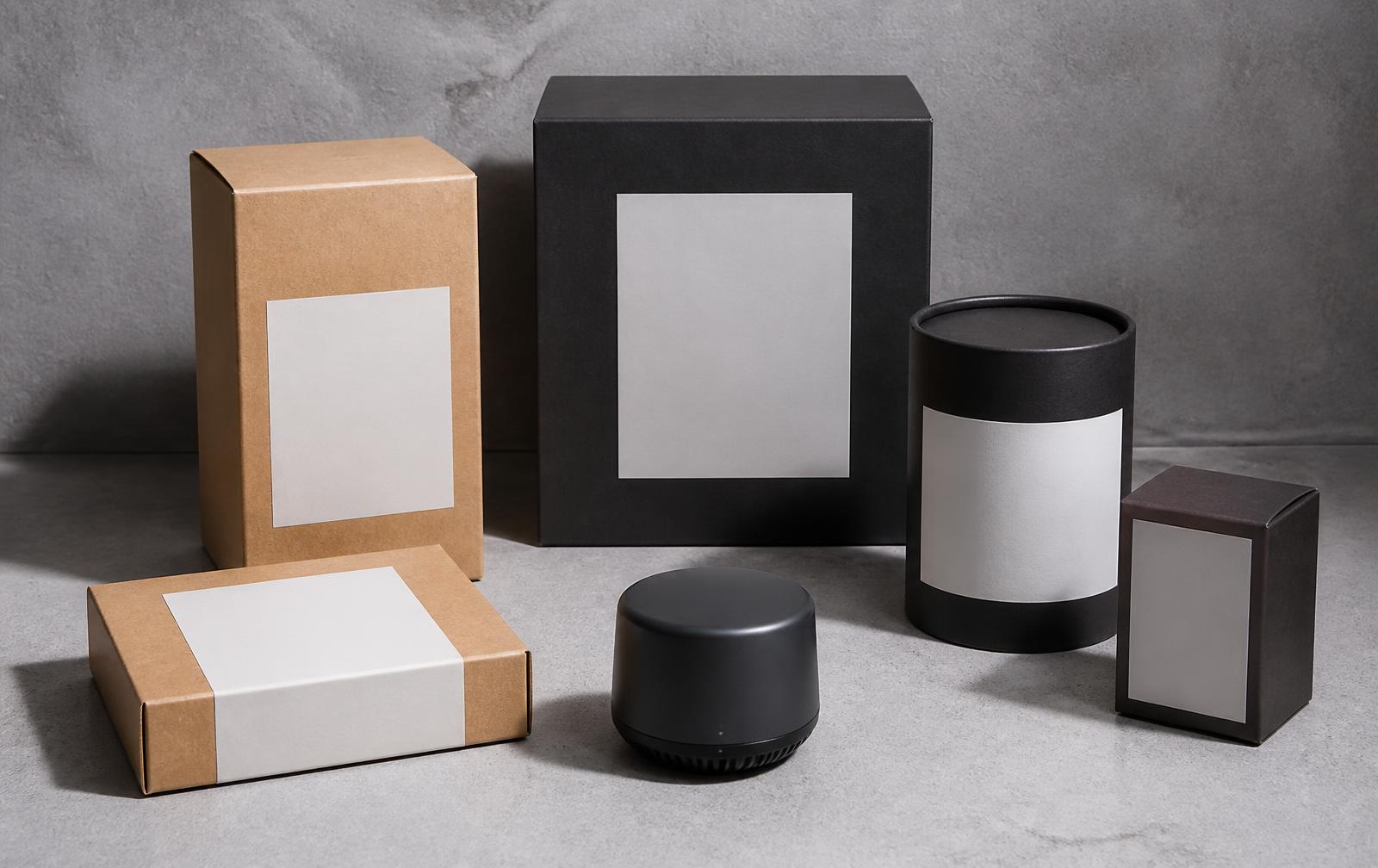
Once a name survives all six, the work moves to the product itself — see how we handle concept design, rapid prototyping and end-to-end product development.
Examples
Names we shipped, and why they held up
Three products our team developed, from the naming brief to the final mark.
Turnkey baby product development — designing safe, market-ready infant products from concept to shelf
Burple
A coined, friendly sound that reads young without being childish. It works in a baby-care category where parents trust warmth and simplicity, yet it is distinctive enough to stand out among descriptive competitors.
See the case studyReusable menstrual cup designed for comfort and sustainable period care
Leia
Short, warm and easy to say out loud in a category where clinical names create friction — it carries the brand rather than describing the product.
See the case studyAI-assisted quality management platform for regulated manufacturing teams
QMS2GO
Names the category buyers already search for (QMS) and adds a promise of speed — literal enough for B2B search, distinctive enough to register as a mark.
See the case studyFAQ
Product naming questions we get asked
Is the product name generator free?
Yes. The first six names are free with no sign-up. A second round of six asks for an email address, which covers the cost of the AI and the domain and trademark lookups.
Is this a trademark clearance search?
No. The tool runs an automated name search against active USPTO records and shows what it finds. It does not analyze classes of goods, likelihood of confusion, common-law rights or state registrations. LA NPDT is a product development firm, not a law firm, and nothing on this page is legal advice. Before you commit to a name, have a licensed trademark attorney run a full clearance search.
What do the trademark results actually mean?
"No matching active record" means our search did not return a hit for that spelling — not that the name is available to register. Listed records mean identical or similar marks exist on the active register and are worth reviewing with an attorney.
How many names should I look at before choosing?
Most teams review several dozen candidates to find three worth defending. Working in small, deliberately varied batches beats scrolling a list of near-identical options.
What if the .com is taken?
Many launched products run on a different extension or a consistent short variant. If typed-URL traffic matters to you, the coined and longer two-word directions in each batch are the ones most likely to still have a free .com.
Should the name describe what the product does?
Slightly suggestive tends to work better than purely descriptive. Descriptive names are easy for competitors to imitate and harder to build a distinctive brand around.
Are AI product name generators any good?
They are good at variety and speed and poor at judgment. A generator will surface directions you would not have written yourself, but it cannot weigh your category, your competitors or your legal exposure. Treat the output as raw material: keep two or three, then screen them against the register and test them out loud before choosing.
What makes a good product name?
It is easy to say and spell after hearing it once, distinct next to the competitors a buyer sees on the same page, clear of registered marks in your class of goods, and broad enough to cover the second and third product in the line. Slightly suggestive beats purely descriptive.
How much does professional product naming cost?
A naming or brand agency engagement typically runs into five figures and takes four to twelve weeks, including clearance work. A freelancer or naming contest costs far less but leaves the screening to you. A generator like this one costs nothing and covers the first pass.
Can I trademark a name this tool generated?
Possibly. Nothing about being machine-generated blocks registration — what matters is whether the mark is distinctive and free of conflicts in your class of goods. Whether a specific name is registrable is a legal question for a licensed trademark attorney, not something this page can answer.
How does the domain check work?
Each name is queried against registry data over RDAP, with a DNS fallback, for .com, .co, .io, .ai, .org, .net and .app. It reflects whether the domain is currently registered at that moment. It does not tell you whether a registered domain is parked, expiring or for sale.
Disclaimer: LA NPDT is a product development firm, not a law firm. The information and automated search results on this page are provided for general guidance only and are not legal advice, a trademark clearance opinion, or a substitute for advice from a licensed attorney.
Sources
Where to verify any of this yourself
Every check on this page maps to a public register you can search directly. Start here before you pay anyone for an opinion.
- USPTO trademark search (TESS successor)
The official federal register search our screen queries.
- USPTO trademark basics
What a trademark protects, and what registration does and does not cover.
- International schedule of classes of goods and services
Marks are registered by class — conflicts only matter within your class.
- ICANN: Registration Data Access Protocol
The registry protocol behind our live domain availability checks.
Free tools
The rest of our free inventor tools
- Free US trademark search
Screen your shortlist against registered marks before you commit.
- AI product idea generator
Still deciding what to build? Explore product directions first.
- Invention idea analyzer
Check feasibility, novelty and commercial fit of the concept.
- US patent search
Look for prior art covering the mechanism behind your product.
See all free tools — every calculator, search and AI tool we publish, in one place.
Next step
You have a shortlist. Here is what actually moves it forward
We are a cross-functional product development team in Ruston, Louisiana — concept design, engineering, prototyping and short-run manufacturing under one roof. Pick the one that matches where you are.
Recommended
Get a development cost estimate
Send us the product behind the name. You get a written scope and a cost range for design, engineering and prototyping — usually back within two business days.
Request a quoteTalk it through first
A short call with an engineer to sanity-check the concept, the shortlist and what the first prototype should prove.
Book a consultationKeep researching
Screen the shortlist against registered marks, look for prior art on the mechanism, or test whether the concept is worth building at all.
Free US trademark searchWhere to go next
- Idea evaluationAn honest read on whether an idea is worth building.
- Inventor FAQStraight answers to the questions first-time inventors ask us most.
- Best invention help companiesLegitimate routes for independent inventors — including the free ones.
- Product development examplesReal projects we designed, prototyped and shipped.