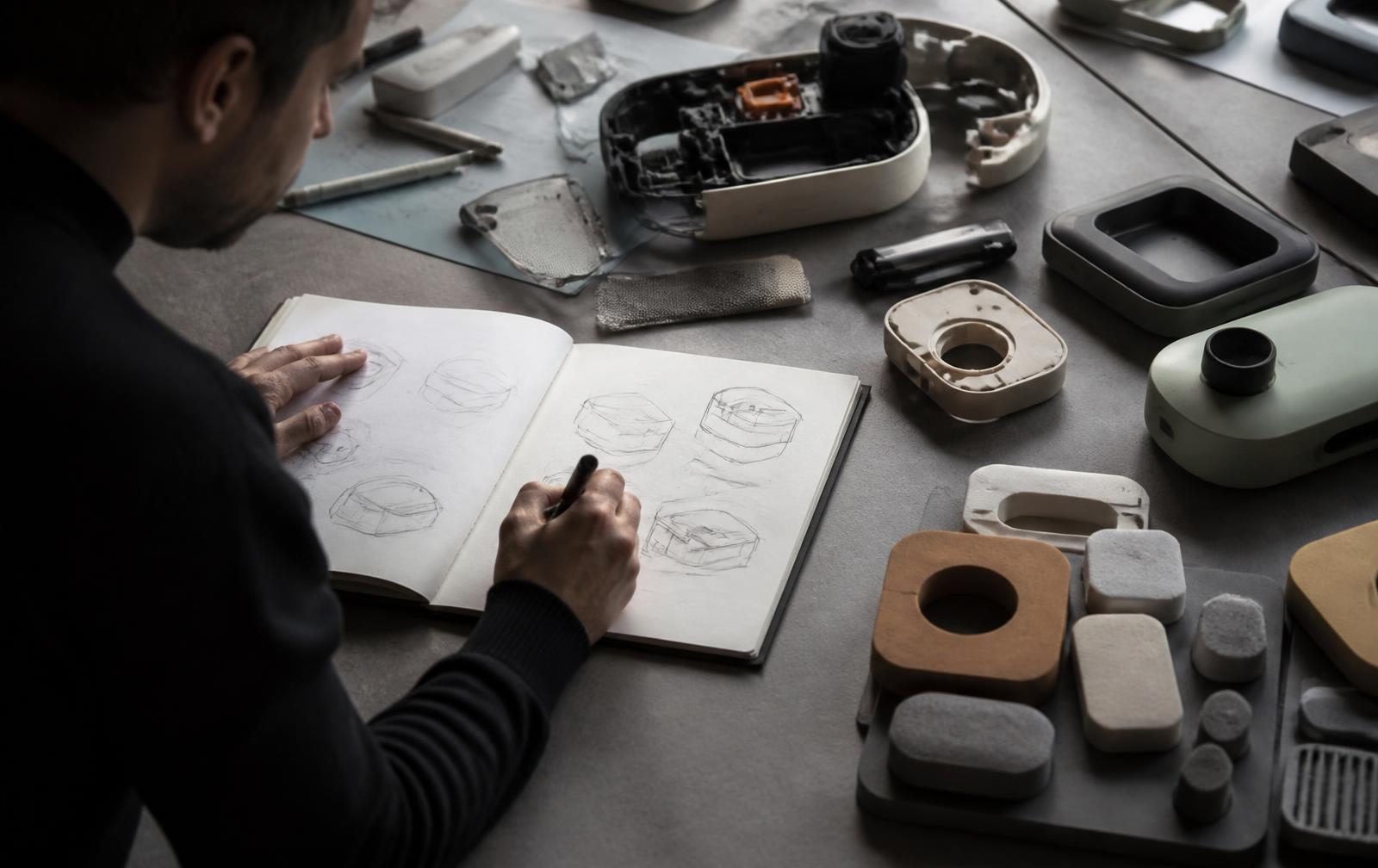
New Product Development Ideas – Top 7 Places to Look For
Lightning Never Strikes the Same Spot Twice – So We’re Giving you the Top 7 places to search for new product development ideas
June 18, 20188 min read

Written by Konstantin Dolgan, Ph.D., NPDP
Founder & CEO, Product Development Engineer
Published June 18, 2018Updated September 2, 2026
It all starts with a new product development ideas! For the last few years, the talk of the town has been how to find new product development ideas. It may seem that the idea generation for new product development is some kind of a mythical quest.
But, in reality, it is way simpler than that. All the day-to-day commodities that we use today, were all once a mere idea. If you are searching for the light-bulb bolt idea for your new product, then you are in luck! Read below and find out how to develop a new product idea.
Of course, if you’re having trouble coming up with your new product development ideas, fear not—You can find it. You just need to know where to look for it.
So—Here are the Top 7 places to search for new product development ideas.
NUMBER ONE: Your Competitors
Imitation is the greatest form of flattery—but you don’t always have to imitate. If competitors in your field are ahead of you, take note of what they’re doing. It’s that simple—and you may find even better new product development ideas popping up in your head. Find out what your competitors are doing right and be inspired for idea generation for new product development.
NUMBER TWO: Artists and Other Art Mediums
Whether you consider yourself an artist or not, it’s always a good idea to check out what artist are doing across all mediums. How is art connecting with the general population? What are people reacting to? Art connect us all, and if you need a special aesthetic for your concept, find inspiration from the art world. This will surely reflect upon your idea generation for new product development.
NUMBER THREE: Your Own Past
Pour yourself a glass of wine and think about what ideas haven’t worked out for you before? It’s healthy to take a stroll down memory lane and visit what parts of your inventive career could have gone better. What caused them to fall by the wayside? How can you improve upon that? It’s tough, but it’s worth it. Learn by your own mistakes and vision a better idea generation for new product development.
NUMBER FOUR: Look at the Political Climate
What are people across the world crying out for? What special concepts and new ideas can help increase their quality of life? Maybe there are components of modern political rhetoric that you can imbue into your design. Perhaps the political climate can help you market your concept in a better way.
NUMBER FIVE: Watch Market Trends
If turning your concepts into cash is important to you—which it should be—you might find inspiration from other companies that are hot right now. If the markets are leaning in one direction, feel free to draw inspiration and become part of the storm.
There are so many businesses and industries that are rapidly changing.
Digital currencies have astounded the world, ‘Fulfilled By Amazon’ is changing the way manufacturers and distributors work, and the internet of things and SaaS are empowering people to work from anywhere in the world. Take your pick and make your mark.
NUMBER SIX: How Can Something Else Be Made Better?
This one is easy. Take a look at what’s already out there and performing well—or, perhaps, not performing too well. You might have an idea that can fix their foibles, and integrate your idea into theirs, or change it enough to make it your own. Sometimes it’s easier to innovate and create something new when you only have to make a few changes to a body of work that someone else has already down—just make sure you make it your own.
NUMBER SEVEN: Embrace Your Childhood Dreams
Along the way, we tend to get side-tracked from what truly inspires. If you’re feeling uninspired, it could be because you’re not being honest with yourself, or investing in what you love. Think back to what made you want to take on the world, and lean into that. If you dig deep and find what truly inspires you, you will be tapping into a burning desire that will not be able to hold back.
Your next brilliant new product development idea is just one thought away. Find your inspiration from any of these places. They’re all great choices.
All you have to do is have the confidence to reach out and explore the world around you. There’s so much inspiration out there. Of course, you have to make a sincere effort.
There’s no sense in sitting in your bedroom and trying to pull ideas out of thin air. Great ideas will come to those who experience the world and find inspiration. To follow up, please see our twitter for more new product development ideas.
Top Places to Find New Product Development Ideas
Source | Approach |
|---|---|
Your Competitors | Observe their actions; identify what they do right. |
Artists and Other Art Mediums | See how art connects with people; find aesthetic inspiration. |
Your Own Past | Reflect on failed ideas; learn from past mistakes. |
Political Climate | Identify public needs; consider modern rhetoric for design. |
Market Trends | Observe successful companies; draw inspiration from market directions. |
Existing Products | Identify flaws in current products; find ways to improve them. |
Childhood Dreams | Reconnect with personal inspirations; embrace core desires. |
Systematising where product ideas come from
Teams that reliably generate viable products do not brainstorm more; they harvest from structured sources on a schedule. Ideas that arrive from a defined source come with context attached: who has the problem, how often, and what they currently pay to avoid it. That context is what allows an idea to be scored rather than argued about.
The practical setup is a standing intake where every source is reviewed monthly and every idea is logged in the same format, with a one-line problem statement, a named customer segment and an evidence link. Within two quarters the intake, not the workshop, becomes the main source of the roadmap.
Source | Effort to mine | Evidence quality | Typical idea type | Refresh cadence |
|---|---|---|---|---|
Customer support and warranty tickets | Low | High | Incremental fixes with clear demand | Monthly |
Marketplace reviews of competitors | Low | High | Differentiated variants | Monthly |
Search and question data | Low | Moderate | Unserved use cases | Quarterly |
Expired patents and prior art | Moderate | Moderate | Adjacent applications | Quarterly |
Materials and component roadmaps | Moderate | Moderate | Cost or performance step-changes | Twice a year |
Field observation with users | High | Very high | Category-creating concepts | Twice a year |
Regulatory changes | Low | High | Compliance-driven redesigns | As published |
Screening ideas before they consume engineering time
An intake without a screen just moves the bottleneck. Score every logged idea on the same six criteria and only the top decile reaches a designer.
- Problem frequency: daily, weekly or occasional for the target user.
- Willingness to pay: is there an existing spend being displaced?
- Manufacturability with processes the team already understands.
- Regulatory load, scored honestly rather than optimistically.
- Defensibility: utility patent, design patent, tooling investment or nothing.
- Channel fit: does an existing route to market carry this category?
From scored idea to a fundable concept
A high-scoring idea is still not a project.
Convert it by spending two focused weeks producing four artefacts: a one-page problem and segment definition backed by evidence, three divergent concept sketches, a rough bill of materials with a target landed cost, and a named riskiest assumption with the test that would falsify it.
Concepts that survive that fortnight tend to survive development, and the ones that collapse cost two weeks instead of two quarters.
Frequently asked questions
Where can one look for new product development ideas?
There are several places to find new product development ideas. Consider what your competitors are doing or explore different art mediums. Reflect on your past experiences, including what has not worked before. Pay attention to the current political climate and observe market trends for inspiration. Think about how existing products can be improved or revisit your childhood dreams.
How can competitors inspire new product ideas?
Observe what competitors in your field are doing. You do not always have to imitate them. Noticing their actions can inspire your own unique product development ideas. This approach helps identify what works well for them and can spark new directions for your concepts. Find out what they are doing right and be inspired for idea generation.
Can personal past experiences help with idea generation?
Yes, reviewing your own past can help. Consider ideas that did not succeed previously. Reflect on why they failed and how they could be improved. Learning from past mistakes can lead to better idea generation for new product development. This self-reflection can reveal overlooked opportunities or better approaches.
What role do market trends play in generating product ideas?
Market trends are important for generating product ideas. Observing companies that are currently successful can provide inspiration. If markets are moving in a particular direction, you can draw ideas from that. Examples include digital currencies, 'Fulfilled By Amazon' models, the internet of things, and SaaS. These trends show rapidly changing industries.
How can existing products be a source of new ideas?
Existing products can be a strong source of new ideas. Look at what is already available, whether it is performing well or not. You might identify ways to fix their flaws or integrate your own ideas into them. Making a few changes to an existing body of work can lead to innovation, as long as you make it your own.
Seven sources, ranked by hit rate
How to come up with product ideas is rarely a creativity problem — it is a search problem. Ideas that survive validation tend to come from the same handful of places, and those places differ enormously in hit rate and in how much effort each idea costs to find.
Source | How to work it | Hit rate | Effort per idea |
|---|---|---|---|
Your own repeated frustration | Log every workaround you build for yourself for 30 days | High — you already know the problem is real | Low |
Competitor reviews (1-3 star) | Read the negative reviews of the top 20 products in a category | High — customers state the unmet need in their own words | Low |
Adjacent industries | Take a solved mechanism from one industry into another | Medium-high — proven technology, new context | Medium |
Regulation and standards changes | Track new rules that force a product change on a deadline | Medium-high — demand has a date attached | Medium |
Trade shows and supplier catalogues | Look for components looking for an application | Medium — component-led ideas often lack a buyer | Medium |
Professionals' hacked equipment | Watch tradespeople modify tools on site | Medium — small markets, high willingness to pay | High |
Your own shelved ideas | Re-test ideas that failed on cost when the enabling tech was expensive | Medium — timing was the constraint, not the concept | Low |
Caption: idea sources ordered by how often they produce a concept that survives customer validation.

Screen every idea in an hour
Idea generation is worthless without a cheap kill mechanism. Give each new idea sixty minutes and five questions; anything that fails two of them goes in the archive rather than the roadmap.
- Who exactly buys it, and what do they do today instead? No workaround usually means no problem.
- What would it have to cost to land, and does that leave a margin at a shelf price people already pay in this category?
- Does something close already exist? Search Amazon, Alibaba and Google Patents before falling in love with it.
- What is the hardest technical unknown, and can it be tested for under $5k?
- Is there a regulatory or liability path that would dominate the schedule?
Red flags that predict failure
- The idea is a feature, not a product — a competitor can add it in a firmware update.
- The buyer and the user are different people and neither is clearly motivated.
- The value proposition depends on changing an established habit with no immediate payoff.
- The category is dominated by three brands with retail shelf lock-in and commodity pricing.
- You cannot describe the product to a stranger in one sentence without analogies.
Ideas that clear the screen are worth spending money on. The next step is a structured product discovery sprint — competitive teardown, cost model and customer interviews — followed by rapid prototyping of the single riskiest assumption.
Frequently asked questions
How do you come up with a good product idea?
Search systematically rather than waiting for inspiration: log your own repeated workarounds, mine one-to-three-star reviews in a category you understand, and look for mechanisms solved in one industry that no one has carried into another. Then screen each candidate against buyer, cost, prior art and technical risk before committing.
Where do most successful product ideas come from?
Overwhelmingly from direct experience of the problem — founders who worked in the trade, used the equipment or lived with the frustration. Second place goes to transplanting a proven mechanism into a new category, where the technical risk is already retired.
How many product ideas do you need before one works?
As a working ratio, expect to screen 20-50 ideas to find 3-5 worth validating, and to validate 3-5 to find one worth tooling. The cost of that funnel is dominated by how quickly you kill weak ideas, which is why a one-hour screen matters more than the brainstorm.
Can I protect a product idea before developing it?
An idea alone is not protectable, but a specific implementation is. Once you can describe how the product works — structure, mechanism or method — a provisional patent application secures a priority date for twelve months while you validate demand.
Filed under:Inspiration
Tagged:Product Development
Services related to this guide
- Product design servicesIndustrial design and CAD taken all the way to manufacturable files.
- Rapid prototypingWorking prototypes in days, from 3D printing to vacuum casting.
- Electronic design servicesSchematic, PCB layout, firmware and bring-up, through to production handoff.
- Product development examplesReal projects we designed, prototyped and shipped.