


Written by Yelena Rymbayeva, MPhil Communication & Media Studies, BTech Quality Control
Marketing & Product Leader, Technology Commercialization
Published August 10, 2026
Photoreal product renderings replace a photo shoot: a CAD model, real material definitions and studio lighting produce white-background listing images, lifestyle scenes and print art before a single unit exists.
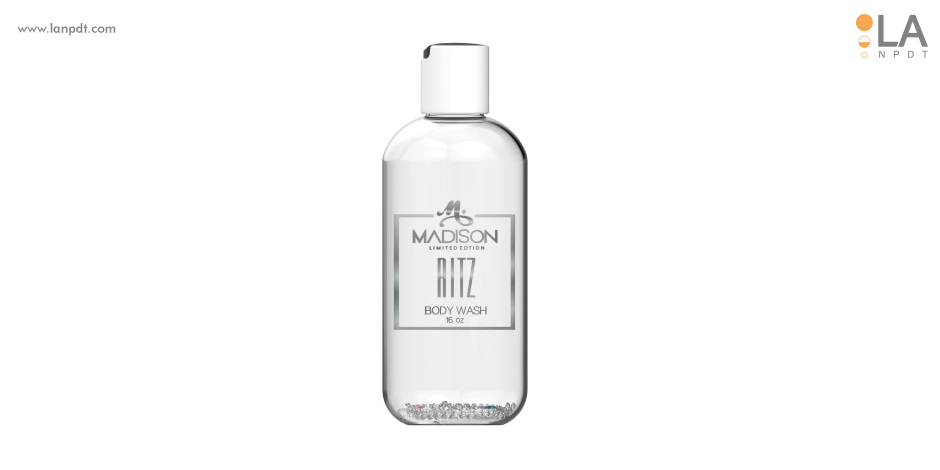
Madison Ritz, a bath and body cosmetics manufacturer, needed images that met Amazon's tightened image requirements. The hard part was the diamonds suspended in the liquid — they rendered dull until we lit them from inside the bottle.
Project at a glance
- Client
- Madison Ritz — bath and body cosmetics manufacturer
- Category
- Beauty packaging visualisation
- Starting point
- A bath and body product line needing listing-grade imagery
- Hard problem
- Diamonds suspended in the bottle rendered dull and lifeless
- What we delivered
- 3D models of the line plus photoreal renderings for e-commerce
- Outcome
- Imagery that met the marketplace's updated product image requirements
The client
Madison Ritz is a bath and body cosmetics manufacturer. The product line was real and the packaging was decided, but the brand had no imagery it could put in front of a marketplace buyer or a retail listing.
The challenge
Marketplace listings have hard image rules — a pure white hero, correct framing, high resolution — and a photo shoot could not produce them on the schedule or the budget available. The bottle also carried a detail that photographs badly and renders worse: cut stones suspended in the liquid, which have to sparkle or the product looks cheap.
Our solution
We built the line in CAD for what the camera actually sees — silhouette, parting lines, cap knurl and label placement — then defined every surface physically rather than by colour: glass with real refraction, the liquid body, a brushed cap, a printed label and the suspended stones.
The stones stayed dull under conventional studio lighting because nothing inside the bottle was feeding them light. We added a spherical source inside the cap and tuned the highlights until they read as gemstones. No Photoshop and no colour correction was applied to the final frames — the images are pure renders, which is what keeps them consistent when a colourway or label changes later.
The result
Madison Ritz received a full set of listing-grade images from one lighting setup: white-background heroes, alternate angles and print-resolution art, all meeting the marketplace requirements that triggered the project. Because the assets are 3D, new scents, label revisions and bundle shots can be re-rendered in hours instead of booking another shoot.
What 3D product rendering services actually deliver
3D product rendering services turn a CAD model into finished product photography without a physical sample, a studio or a photographer. The work is roughly ten percent modelling and ninety percent materials and light — a rendering almost never fails because the geometry was wrong, it fails because glass, metal or liquid was approximated with a flat colour.
The practical advantage is variants. Once the scene is lit, a new colour, a revised label, a bundle of three or an exploded cutaway costs hours, not another shoot with new samples. That is why founders launching a line, and manufacturers maintaining one, keep the renders as an asset rather than treating them as a one-off deliverable.
Capabilities used on this project
Prototype design and engineering
Design for the prototype itself: CAD, tolerance stacks, material choices and assembly detail before anything is built.
How a photoreal product rendering is actually built
Renderings fail on materials and light, almost never on modelling. The sequence below is where the time really goes.
1. Model to the tolerance the camera sees
A rendering model is built for silhouette, parting lines, fillets and label placement. Internal geometry nobody sees is left out, so the file stays fast to light and iterate.
2. Define materials physically, not visually
Glass, liquid, brushed cap, printed label and a suspended solid each need real index of refraction, roughness and absorption. Faking a material with a colour is what makes a rendering look like a rendering.
3. Light for the material that is hardest
On the Madison Ritz bottle the diamonds immersed in the liquid refused to sparkle under conventional studio lighting. We added a spherical light source inside the cap and tuned the highlights until they read as gemstones.
4. Render the set the channel demands
Marketplaces want a pure white hero, several angles and an in-use scene. Print wants 300 DPI and bleed. We render one set of camera angles and export both, rather than reshooting for each channel.
5. Retouch and validate
Final compositing cleans edges, matches the label artwork and checks the image against the marketplace's current rules before delivery — the rules are what forced this project in the first place.
| 3D rendering | Photo shoot | |
|---|---|---|
| Needs physical product | No — CAD is enough | Yes, a finished sample |
| Changing colour or label | Re-render, hours | Reshoot, new samples |
| Impossible shots | Cutaways, exploded views, ghosted interiors | Not achievable |
| Best for | Pre-launch, variants, listings, print | Real texture, human hands, editorial mood |
Questions about this project
Straight answers from the engineers who ran the build. Have a different question? Ask us directly.
Talk to an engineerCan renderings be used as Amazon listing images?
Yes, provided they represent the product accurately and meet the marketplace's image rules — pure white background on the main image, correct framing and resolution. That compliance was the whole reason this project existed.
Do you need CAD to make a rendering?
It helps enormously. If you have CAD we render from it; if you do not, we model the product first, which also gives you a file you can use later for prototyping or tooling.
How many images should a product launch have?
Plan for one white-background hero, three to five supporting angles or detail shots, and at least one in-context scene. Rendering them in one pass costs far less than rendering them one at a time later.


