Our work / Multi-Dispenser Fridge
2x gold medals at IPITEX
Multi-Dispenser Fridge: 3D Product Renderings
Start a project

Written by Yelena Rymbayeva, MPhil Communication & Media Studies, BTech Quality Control
Marketing & Product Leader, Technology Commercialization
Published August 10, 2026
An inventor with a patented multi-dispenser refrigerator needed to license the idea to a manufacturer. We built the 3D model from the patent, produced photorealistic product renderings and an explainer animation, and designed a sell sheet — everything needed to open licensing conversations.
Project at a glance
- Client
- Stillwater Dispensers LLC, Garland, TX
- Industry
- Home appliances
- Starting point
- A patented multi-dispenser fridge concept with no visuals to license from
- What we delivered
- 3D CAD model from the patent, photo-realistic product and in-context renderings, one-page sell sheet, 3D explainer animation
- Purpose
- Marketing materials for licensing conversations with fridge manufacturers
- Outcome
- The invention is presentable to potential licensees and currently available for licensing
The client
The challenge

Our solution
The result
3D product rendering at a glance
| Inputs | CAD models, sketches, samples or reference photos |
|---|---|
| Output | Photoreal stills, 360 spins, exploded views, lifestyle scenes |
| Formats | High-res print, web-optimized, transparent PNG, video |
| Typical timeline | 1-3 weeks depending on scene count |
Renderings sell a product that does not exist yet
Most companies need marketing images before tooling is paid for. Rendering closes that gap: packaging, listings, sell sheets and investor decks can all be produced from the same CAD that engineering is already building, months before the first production part exists.
How we produce them
We prepare the CAD for rendering, apply real materials and finishes, and light each scene to match how the product will be photographed later so renderings and photos can sit side by side. Variants — colors, configurations, exploded assembly views — come from the same setup at a fraction of the cost of a photo shoot.
Frequently asked questions
How much does 3D product rendering cost?
Typically $150 to $600 per image depending on scene complexity; sets are quoted at a lower per-image rate.
Do you need CAD to start?
No. We can model from drawings, sketches or a physical sample, then render.
Can renderings be used on Amazon and retail packaging?
Yes — we deliver at print resolution with transparent backgrounds and marketplace-compliant framing.
Capabilities used on this project
Concept design
Sketch exploration, form studies and CAD concepts that turn an idea into a buildable direction.
How renderings sell a product that does not exist yet
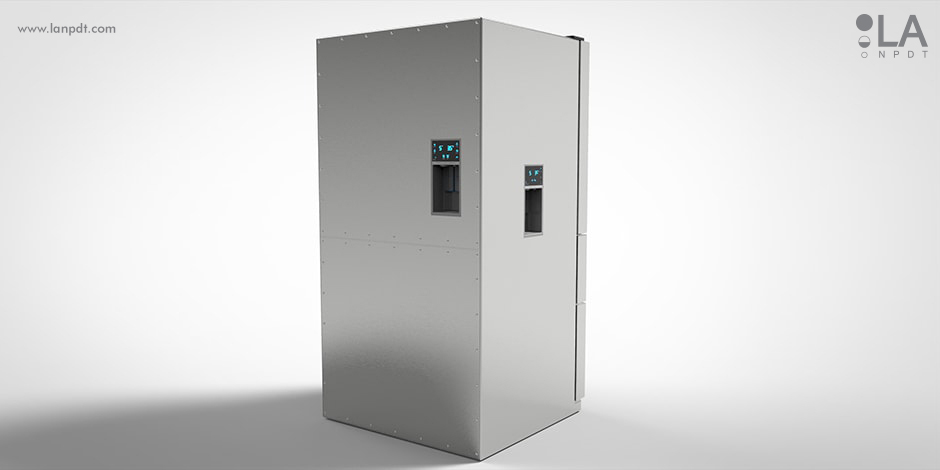
3D model built from the patent disclosure
Licensing a patented idea starts with making it visible. We created the CAD model directly from the patent drawings — the first time the invention existed as something a manufacturer could actually evaluate.
Photoreal renderings in use context
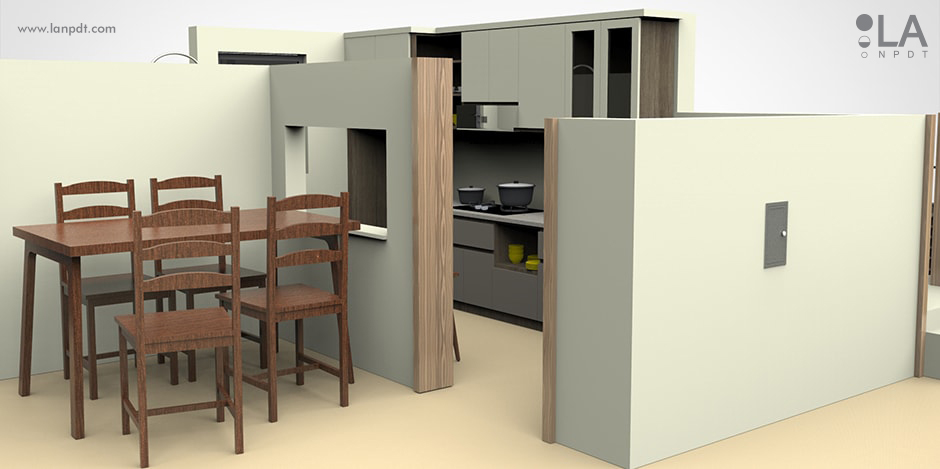
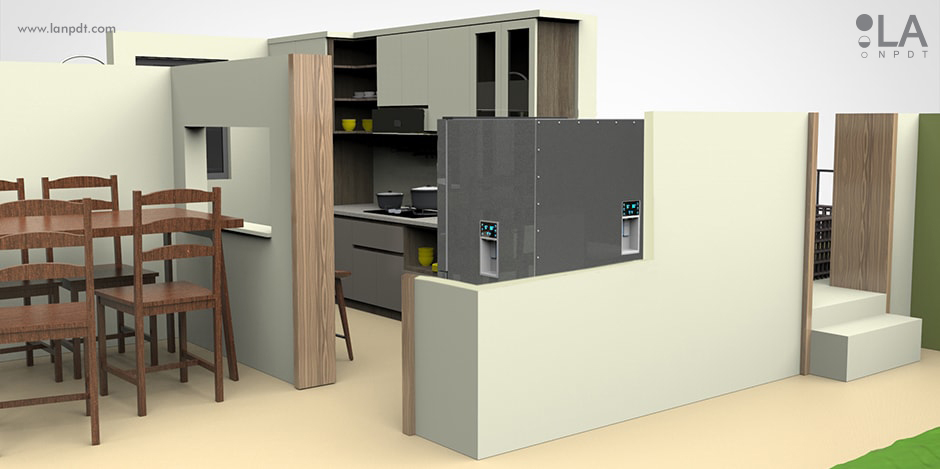
Product shots alone don't sell a license. We rendered the multi-dispenser fridge in the kitchen environments where it would live, so a manufacturer could see the product, not just the geometry.
Sell sheet and explainer animation
A one-page sell sheet laid out the key benefits with owner contact information, and a 3D animation demonstrated the dispensing concept in motion. The full package let the inventor approach licensees with a professional pitch.
| Deliverable | Licensing pitch | E-commerce launch |
|---|---|---|
| Product stills | Hero shots from the patent geometry | Listing images on white + lifestyle |
| In-context scenes | Show the use case to a manufacturer | Show the product in the buyer's life |
| Animation | Explain the mechanism in 30 seconds | Optional — listing video |
| Sell sheet | Essential — the leave-behind | Replaced by the product page |
| Timeline | 1–3 weeks | 1–2 weeks per SKU |
Questions about this project
Straight answers from the engineers who ran the build. Have a different question? Ask us directly.
Talk to an engineerCan I license an invention without building a prototype?
Often, yes — that was the strategy here. Photorealistic renderings and an explainer animation built from the patent let the inventor present the multi-dispenser fridge to manufacturers without paying for tooling or a physical build.
What do you need to create product renderings?
A CAD model, sketches, a patent, or reference photos. For this project the model was built directly from the patent disclosure.
How much do 3D product renderings cost?
Single hero shots run a few hundred dollars; a full licensing package with in-context scenes, animation, and a sell sheet typically lands between $2,000 and $6,000 depending on scene count.
How long does a rendering package take?
One to three weeks for most products. The fridge package — model, stills, animation, and sell sheet — was completed inside that window.