
Our work / 3D Product Renderings for Hardware Resources
Hardware Resources: Interior Design 3D Rendering
3D Product Renderings for Hardware Resources
Start a project

Written by Yelena Rymbayeva, MPhil Communication & Media Studies, BTech Quality Control
Marketing & Product Leader, Technology Commercialization
Published August 10, 2026
Interior design renderings let a manufacturer show a product installed in a real-looking room without building that room — changing a finish in a rendering costs minutes; building and photographing a display kitchen costs tens of thousands.
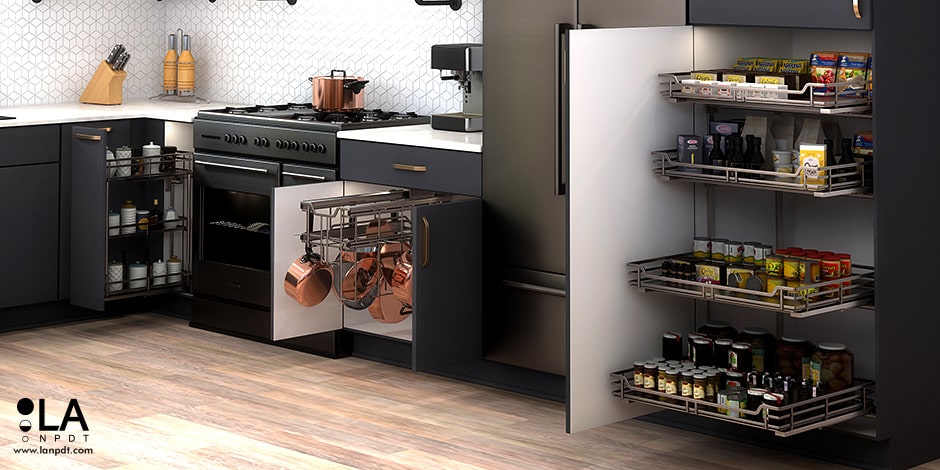
Hardware Resources, a Shreveport, Louisiana home improvement manufacturer, needed marketing images of kitchen organizers and cabinets in context. We built photoreal interior scenes from CAD, matched finishes to physical samples, and saved them roughly $50,000 versus traditional photography.
Project at a glance
- Client
- Hardware Resources — Shreveport, Louisiana home improvement manufacturer
- Products
- Kitchen and bath organizers, cabinet accessories
- What we delivered
- Photoreal product and interior design renderings for web and print advertising
- Inputs
- Physical products and material samples, technical drawings, catalogue images
- Why renderings
- No display kitchen to build, install or photograph; finishes swap in minutes
- Outcome
- Marketing imagery delivered with roughly $50,000 and several weeks saved
The client

The challenge
Our solution
The result

3D rendering project at a glance
| Scope | Photoreal product renders, interior scenes, materials and lighting |
|---|---|
| Inputs | CAD, sketches, dimensions, material and finish references |
| Deliverables | High-resolution stills, alternate colorways, transparent-background cutouts |
| Typical timeline | 3-10 business days per set of images |
Why renders beat photography before tooling exists
You can sell a product months before the first production unit exists. A render shows the exact colorway, finish and environment you intend to ship, with no studio rental, no sample shipping and no reshoot when the design changes. Change a material, re-render, done.
How we build a render set
- CAD cleanup so surfaces read correctly under sharp lighting
- Material authoring: real textures, roughness and edge wear
- Lighting for the destination - white listing shots differ from lifestyle scenes
- Camera angles matched to packaging, web and print crops
- Final passes with alternate colors and transparent cutouts
Frequently asked questions
What does 3D rendering cost?
Simple product stills typically run $150-$400 per image; complex interior or lifestyle scenes generally run $600-$2,000 per view.
What do you need from me to start?
CAD is ideal. If there is no CAD yet, we model from drawings, photos or sketches and quote the modeling separately.
Can you render a product that does not exist yet?
Yes - most of our renders are made before tooling, specifically to support pre-launch marketing and fundraising.
Capabilities used on this project
Concept design
Sketch exploration, form studies and CAD concepts that turn an idea into a buildable direction.
Prototype design and engineering
Design for the prototype itself: CAD, tolerance stacks, material choices and assembly detail before anything is built.
How product renderings replace a photo shoot
1. Handle the real product first
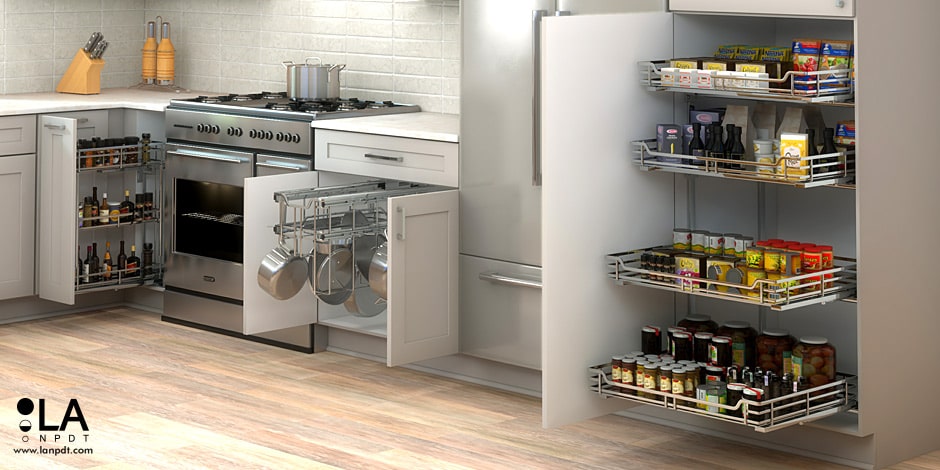
We visited the Hardware Resources facility to examine the organizers and material samples in person. Gloss level, wire-basket reflections and edge thickness are the details that separate a believable render from a synthetic one.
2. Build geometry from drawings, not guesses
Technical drawings and catalogue images set proportions, hardware placement and the approved colour range, so the rendered product matches the part a cabinet shop actually receives.
3. Stage the product in a plausible room
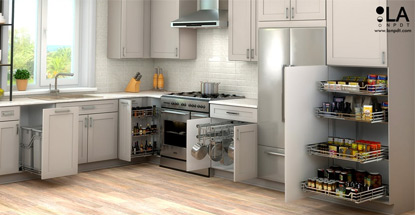
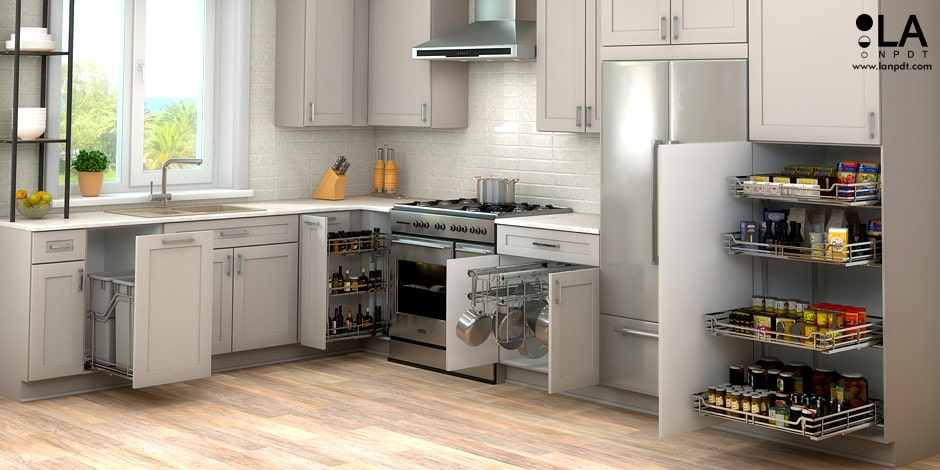
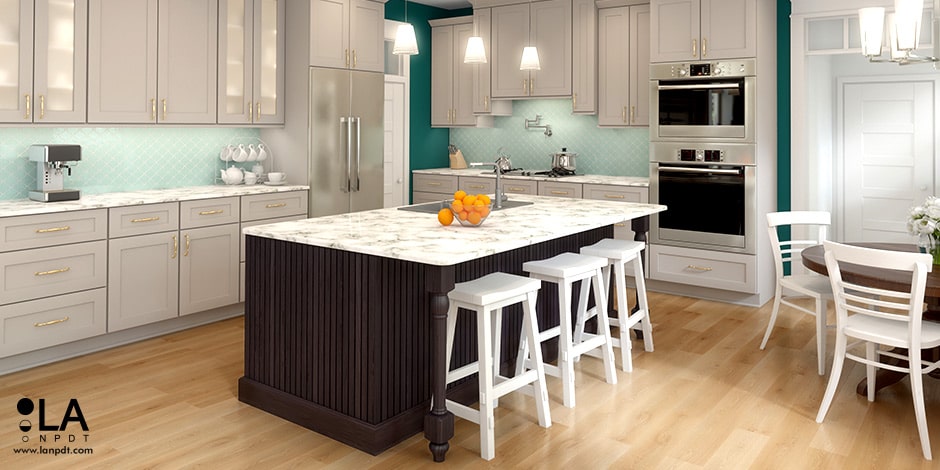
Their buyers are cabinet shops and builders. Each organizer was placed in a kitchen scene with cabinetry, counters and daylight from a realistic window position, so the viewer imagines it in the project they are quoting.
4. Reuse the scene for every variant
Once the kitchen exists in CAD, additional products, colourways and finishes drop into it for a fraction of the first image's cost — and the scene can be re-dressed whenever the catalogue changes.
| 3D renderings | Photography | |
|---|---|---|
| Set required | Modelled once in CAD | Display kitchen built and installed |
| Finish variants | Swap material, re-render | Reinstall and reshoot |
| Lead time | Days per scene | Weeks including build |
| Cost on this project | Saved roughly $50,000 | Build, install, photographer, studio time |
Questions about this project
Straight answers from the engineers who ran the build. Have a different question? Ask us directly.
Talk to an engineerHow much do interior design renderings cost?
A furnished interior still typically runs $500 to $1,500 per view, with additional views of the same room costing less because the scene is already built.
Can I compare two finish options in renderings?
Yes — that is one of the highest-value uses. Swapping a finish in a built scene is quick, and comparing options rendered beats discovering the wrong choice after installation.
What do you need to start an interior rendering?
Floor plan and dimensions, the finish schedule or inspiration images, and any furniture selections you want shown. For product renderings we also want CAD or technical drawings and, ideally, a physical sample.
Are renderings good enough for print advertising?
Yes. The Hardware Resources images were produced for their website and magazine advertising, rendered at print resolution from the same scenes used for web.
Do renderings really save money against photography?
On this project the alternative was building a kitchen, installing the products and hiring a photographer. Renderings saved close to $50,000 and weeks of schedule, and the scenes stayed reusable afterwards.


