
Written by Konstantin Dolgan, Ph.D., NPDP
Founder & CEO, Product Development Engineer
Published August 10, 2026
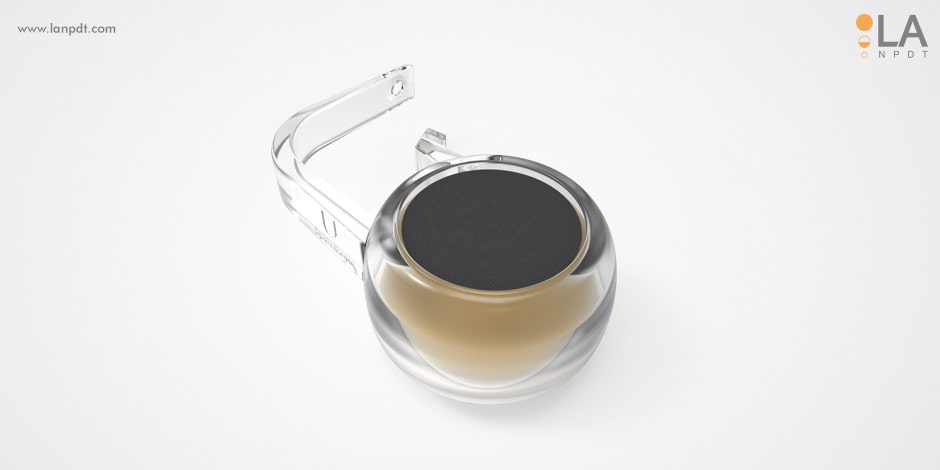
An accessories designer for tech products has to solve two problems at once: a holder that grips a powered speaker snugly but releases it easily, and a part simple enough to mold as one piece so unit cost stays low.
For Fashionit's U Speaker Holder we prototyped in flexible 3D-printed materials until the insertion feel and retention force were right, selected silicone for its texture and decoration options, and connected the brand to a manufacturer we stayed engaged with through optimization.
Project at a glance
- Client
- Fashionit — tech accessories brand
- Category
- Consumer accessory design
- Starting point
- A request for a keychain-style holder for two speaker sizes
- What we delivered
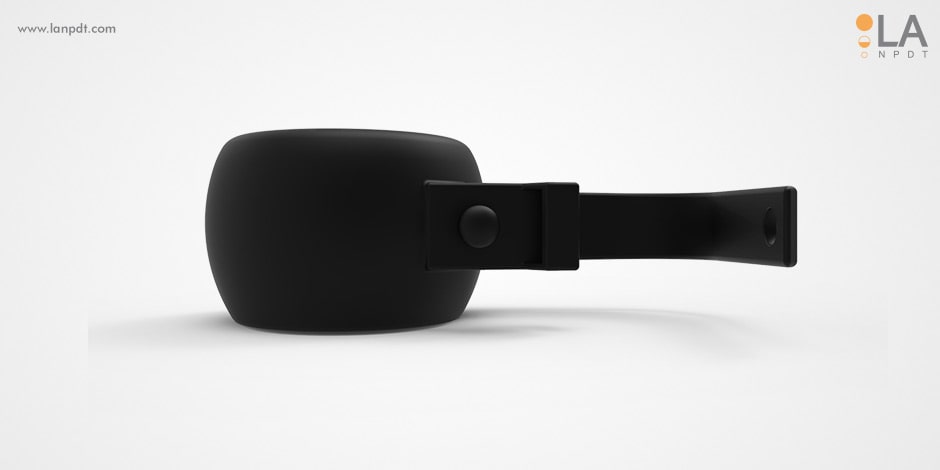
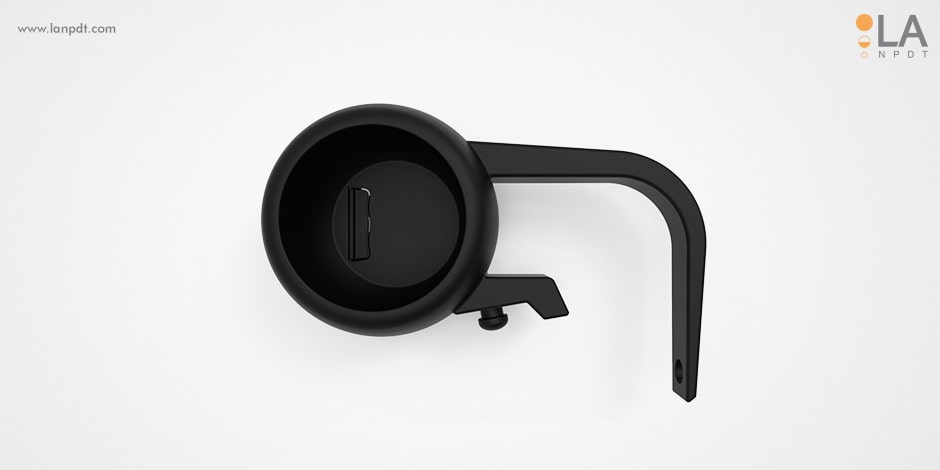
- Accessory design for both large and small U Speakers, single-piece part engineering, 3D renderings for marketing
- Key constraints
- One-piece molding for low cost, secure hold on bags and bikes, easy consumer installation
- Outcome
- A manufacturable holder plus marketing visuals delivered to the brand
What the client said
★★★★★
“Great company to work with. Konstantin is very responsive and very very reliable. Super talented and hardworking people. Would definitely recommend!”
 Annabel WolmanCEO, FashionIt / U SpeakerGoogle review
The client
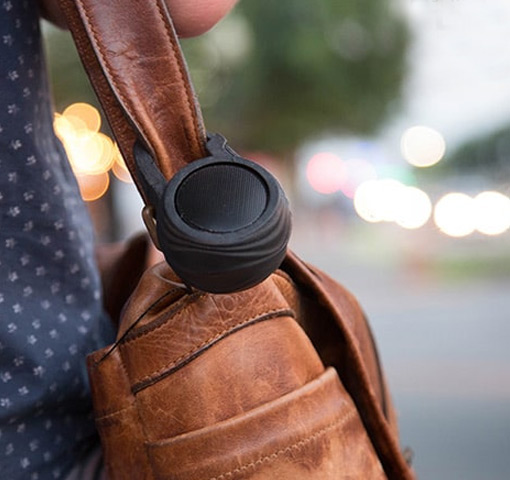
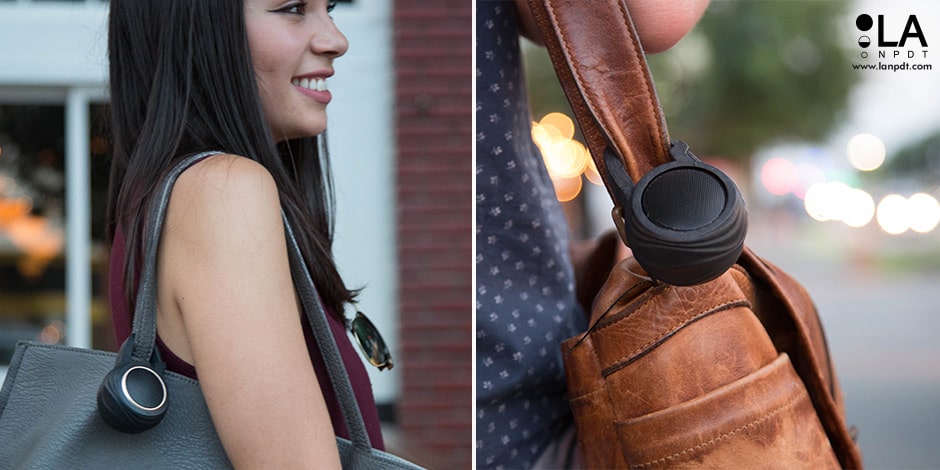
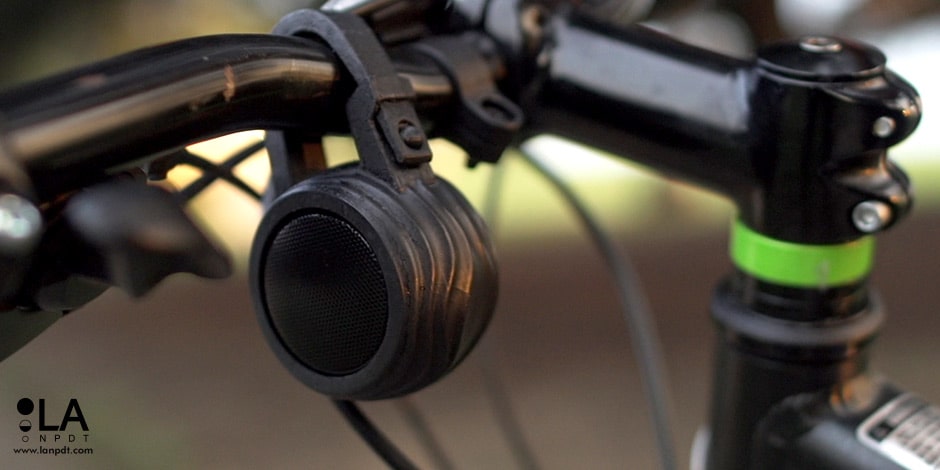
Fashionit is a tech accessories brand that designs audio products people are willing to carry in the open. They already sold the U Speaker in a large and a small size, and they wanted an accessory that let an owner clip the speaker onto a purse, a backpack or a bike frame — a holder that behaves like a keychain and looks like part of the product line.
The brief came to us as an accessory problem and left as a molding problem, which is usually how these projects go.
The challenge
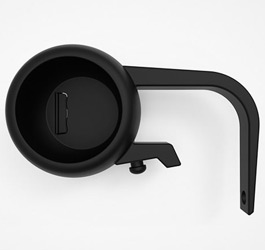
Three constraints ran against each other. The holder had to be a single molded piece, because a multi-part assembly would not survive the unit cost an accessory can carry. It had to accept the speaker one-handed and still hold it firmly enough to trust on a moving bike. And the surface had to feel good and stay open to decorative treatments Fashionit might add later without re-engineering the part.
The marketing side had its own requirement: renderings that matched the real product closely enough to run on packaging and on the website, in different settings, before production units existed.
- One-piece construction to protect unit cost
- Easy insertion with secure retention
- A material that feels right and takes decoration
- Renderings faithful to the manufactured product
Our solution
Insertion force is not something CAD reports back to you. We printed the holder in flexible materials and iterated the cradle geometry physically, adjusting wall thickness and the opening span until a speaker slid in with one hand and stayed put when the holder was shaken. Each round took hours rather than weeks, which is what made the tuning affordable.
Silicone won the material decision: the tactile texture Fashionit wanted, enough flex to make the one-piece snap work, and a surface that accepts decorative designs later in the product's life. We then connected Fashionit to a manufacturer and stayed engaged through the optimization pass, so the moldability assumptions we had designed against were confirmed by the people running the tool.
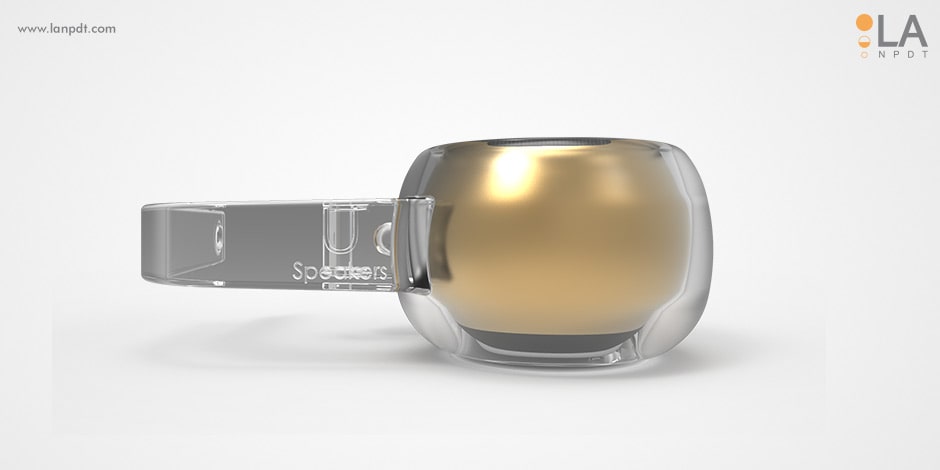
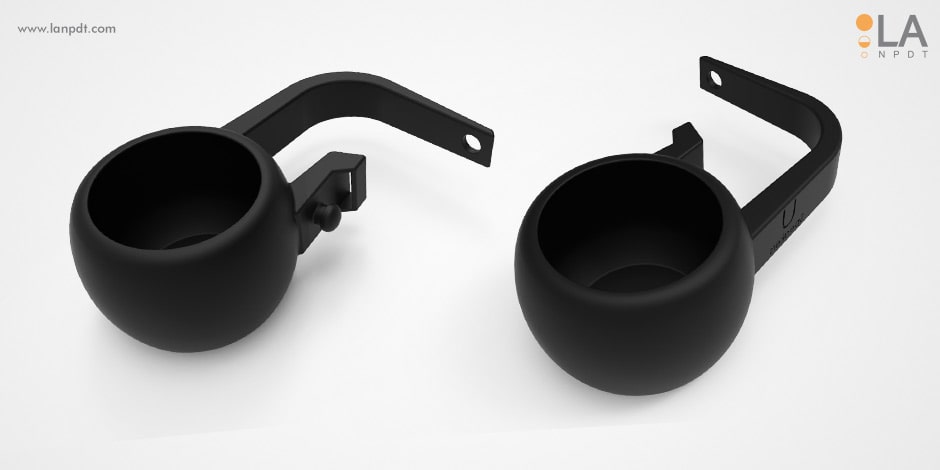
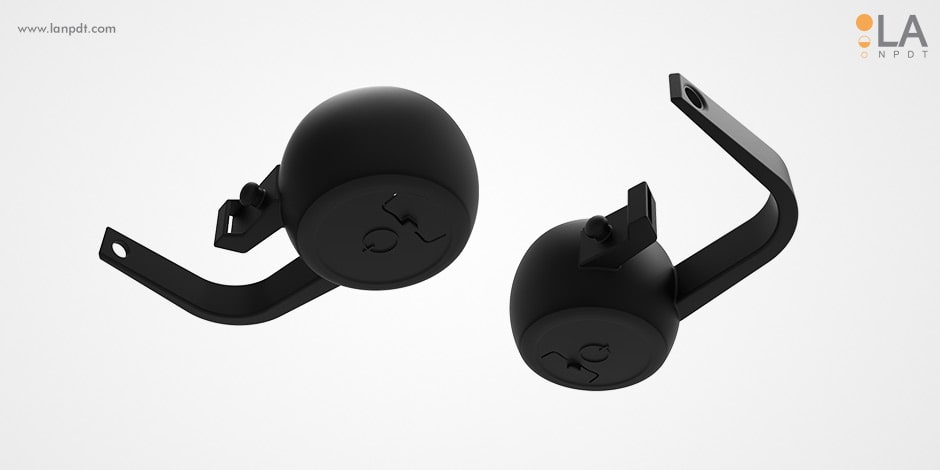
The marketing renderings came out of the same CAD we had engineered, which is why they read as photography rather than approximation. See our 3D modeling services for how that pipeline runs.
The result
Fashionit received a production-ready one-piece silicone holder, a manufacturer relationship, and a set of renderings accurate enough to sell with. Because a single team handled design, prototyping and imagery, the brand never had to re-explain its product to a second vendor — the usual place where accessory projects lose a month and a round of tooling revisions.
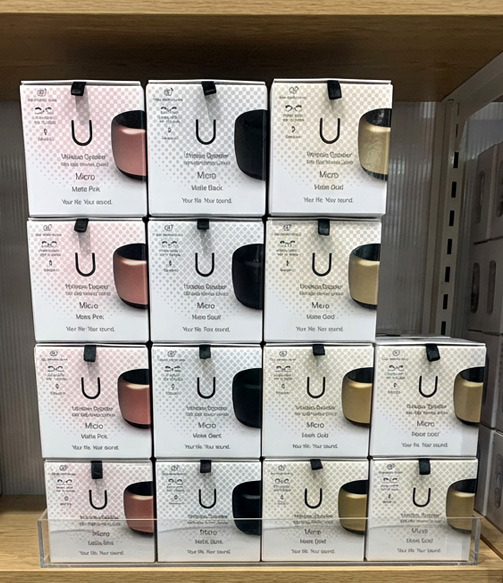
The holder went on to appear in retail settings alongside the speakers it was designed for.
Working with an accessories designer
Accessories look like the easy end of product design and behave like the hard one: the budget is small, the tolerance stack is set by a device you did not design, and the part has to feel right in the hand on the first try a customer gives it. That combination rewards physical iteration over analysis.
If you are developing an accessory for an existing device, our product design services cover fit study through manufacturer handoff, and the Flip Flap design-for-manufacturing study shows the same discipline applied to a molded consumer part. Design, prototyping and CAD are done by our team in Ruston, Louisiana.
Accessory product design at a glance
| Scope | Fit study, industrial design, CAD, prototypes, DFM |
|---|---|
| Constraint | Must fit an existing device family without modification |
| Deliverables | Production CAD, prototypes, molding package, renderings |
| Typical timeline | 6-14 weeks |
Accessories live or die on fit
An accessory has no tolerance budget of its own — it inherits the host product's variation. Designing to nominal dimensions produces a holder that grips one unit and rattles on the next. The work is characterizing real part variation and designing compliance into the geometry.
What we designed
We measured the host devices, designed retention features with enough flex to absorb variation while still holding firmly, and prototyped across multiple units before committing geometry. The final part molds in a simple two-plate tool and ships flat-packed to keep freight and packaging cost down.
Frequently asked questions
Can you design an accessory for a device you do not have CAD for?
Yes. We measure or 3D scan physical units and build a reference model from that.
How do you verify fit before tooling?
Printed prototypes tested across several host units, plus material-adjusted clearances for the production process.
Do you handle packaging for accessories?
Yes — peg-ready retail packaging and shipper sizing are commonly included.
Capabilities used on this project
Rapid prototyping services
3D printing, CNC machining, urethane casting and functional prototype builds with published materials, tolerances and lead times.
Prototype design and engineering
Design for the prototype itself: CAD, tolerance stacks, material choices and assembly detail before anything is built.
Design for manufacturing
Molding-ready geometry, tolerances, production drawings, assembly documentation and DFM review with the tooling vendor.
The tech accessories playbook
One piece, or the economics fail
Fashionit needed the U Speaker Holder molded as a single piece to keep manufacturing inexpensive. That one constraint drove everything: material choice, wall design, and how the snap fit was engineered.
Easy in, hard to fall out
The holder had to accept the speaker with one hand yet hold it securely in use. We used flexible-material 3D printing to test insertion force and retention across rapid iterations until the balance felt right.
Silicone for feel and decoration
Prototyping showed silicone to be the ideal production material: the right tactile texture, and a surface that accepts decorative designs later in development without re-engineering the part.
Renderings matched to the real product
Because we had developed the product ourselves, our marketing renderings replicated its actual features and look, and worked across packaging, the website, and other brand settings.
| Decision | Options | What won and why |
|---|---|---|
| Construction | Multi-piece assembly vs. one-piece molding | One piece — unit cost had to stay low |
| Material | Rigid plastic, TPU, silicone | Silicone — texture, grip, and decoration-ready surface |
| Fit | Loose slip fit vs. tuned snap fit | Tuned snap fit, iterated on printed prototypes |
| Manufacturing | Client-sourced vs. team-recommended | Manufacturer connection plus ongoing optimization support |
Questions about this project
Straight answers from the engineers who ran the build. Have a different question? Ask us directly.
Talk to an engineerHow much does tech accessories design cost?
A one-piece molded holder of this class typically runs $5,000 to $15,000 from concept through a production-ready design and manufacturer handoff, depending on iteration count and rendering scope.
Why prototype a simple holder at all?
Because feel is the product. Insertion force and retention cannot be validated in CAD — only a physical prototype tells you the snap fit is right.
Can a one-piece design still hold a speaker securely?
Yes — that is exactly what the U Speaker Holder does. The snap geometry and material flex are engineered together so one piece does both jobs.
Do accessories designers also handle marketing visuals?
When the same team designs the product, renderings come out accurate. Fashionit's packaging and web imagery were produced from the real CAD, not approximations.