Our work / UV-Clean
UV Controller Sanitizer: Cleaning Product Design
UV-Clean: a UV sanitizing case taken from a written concept to patent drawings
Start a project

Written by Konstantin Dolgan, Ph.D., NPDP
Founder & CEO, Product Development Engineer
Published August 10, 2026
Designing a UV sanitizing device is a containment problem before it is a styling problem: the lamp has to reach the surface being treated while never reaching the user's eyes or skin, and the housing has to survive the chemicals and the cleaning it will live around.
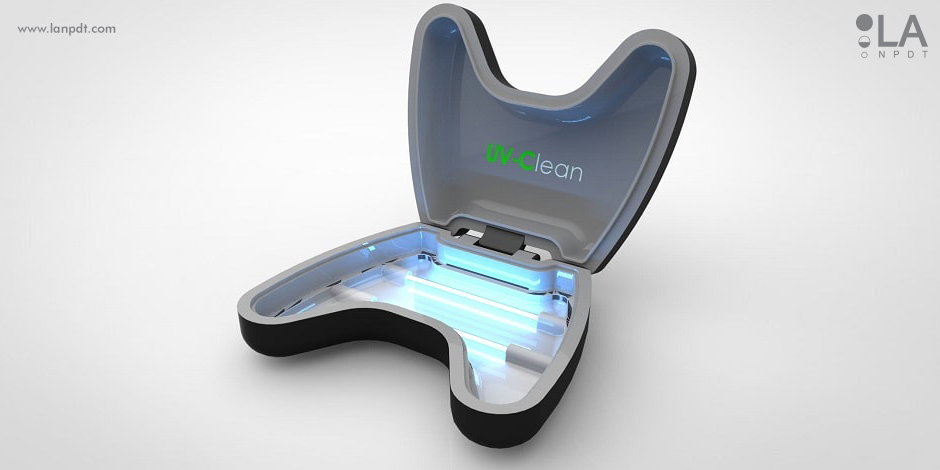
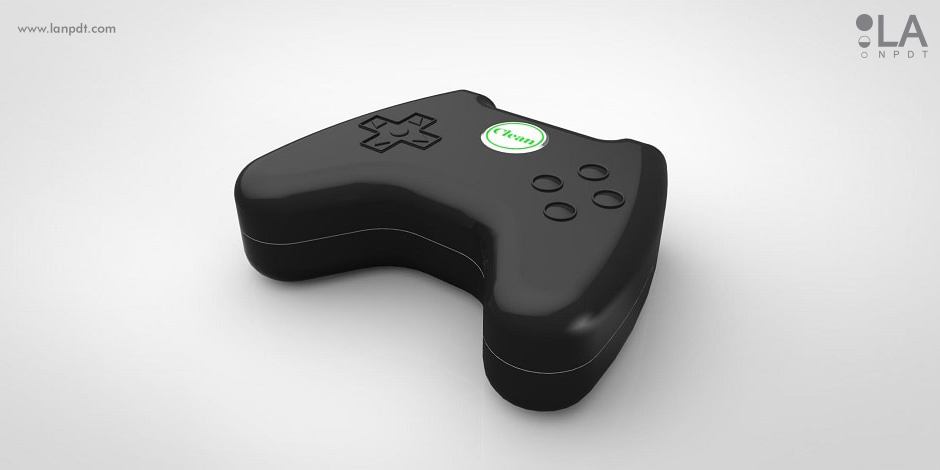
For inventor Brandon Townsdin we turned a written concept description for UV-Clean into a full product design — 3D model, photorealistic renderings for a licensee sell sheet, and 2D drawings used in a patent application.
Project at a glance
- Client
- Brandon Townsdin — product developer and entrepreneur
- Product
- UV-Clean, a UV light cleaning machine
- Category
- Household and commercial cleaning devices
- Starting point
- A written product concept description with reference images, no CAD
- What we delivered
- Concept analysis, industrial design, 3D model, photorealistic renderings and 2D drawings for a patent application
- Outcome
- Renderings used to build a licensee sell sheet and drawings filed with a patent application
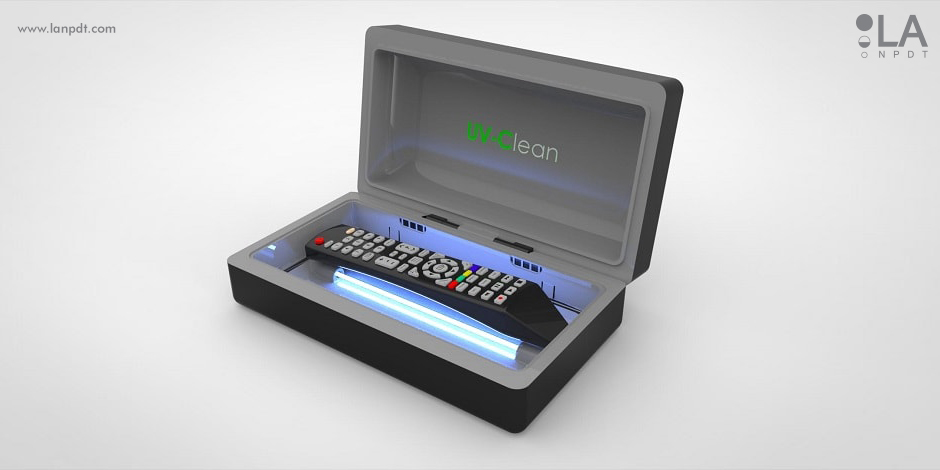
UV-Clean is a sanitizing case for game controllers, remotes and the other high-touch objects that never get cleaned. It arrived as a written concept — no sketches, no CAD, no enclosure — and left as a photo-real product with drawings ready for a patent filing and a sell sheet ready for licensees.
The client
Brandon Townsdin, an independent product developer and entrepreneur building a portfolio of licensable consumer products.
The challenge
Turn a written concept description into a manufacturable UV sanitizing device, then produce the two very different asset sets an inventor needs next: photo-real renderings persuasive enough to open a licensing conversation, and formal 2D drawings correct enough to support a patent application.
Both had to describe the same product, so the industrial design could not be a styling exercise — the enclosure had to hold real UV-C lamps, a real power path and a real user interlock.

Our solution
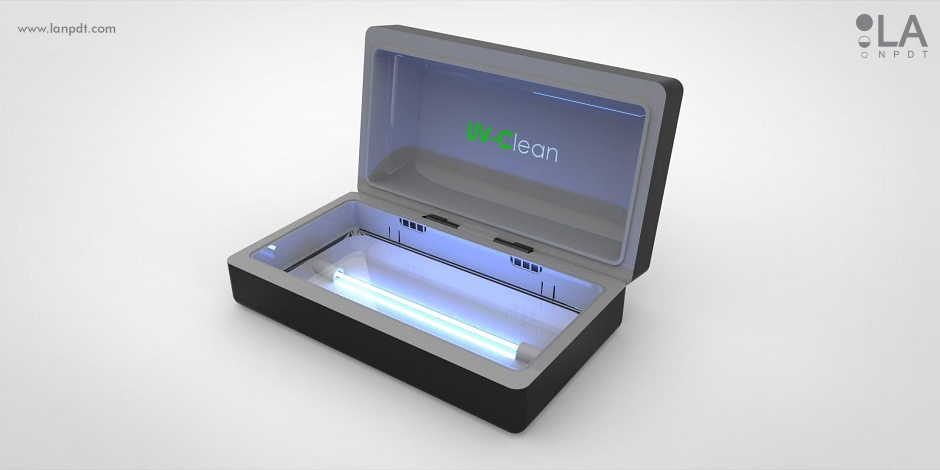
We started from the concept description and the references the client supplied, then made the physics govern the form. In a UV sanitizing device the geometry is the function: what the lamp cannot see does not get treated, so the interior was shaped around exposure paths and reflective surfaces before the outside was styled at all.
- Interior volume sized around the real objects users want to clean — controllers, phones, remotes — with lamp placement set so the exposure reaches the surfaces that matter
- Internal space reserved for the electronics, ballast and wiring, with approximate component sizes and locations blocked in so nothing had to be re-engineered later
- A lid and switch arrangement that shuts the lamps off when the case is opened, because UV-C exposure to skin and eyes is the safety risk that defines this category
- Materials chosen for UV resistance on the inside and for injection moulding on the outside, so the housing does not chalk or crack under repeated exposure
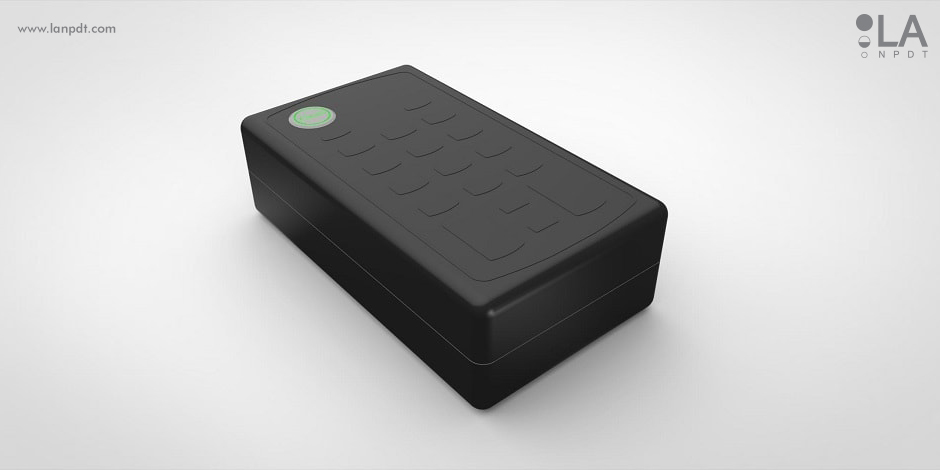
- Photo-real renderings for the sell sheet plus dimensioned 2D drawings prepared to patent-application standards
The result
The 3D model gave the concept a body, the renderings gave Brandon a sell sheet he could put in front of potential licensees, and the 2D drawings supported the patent application. The UV-Clean device is available for licensing — the outcome an independent inventor is usually aiming at, and one that depends on the design and the filing describing the same product. We later applied the same exposure-path thinking to the Purivy UV sanitizer.
The hard parts of designing a cleaning product
Cleaning products look simple and are not. The device holds a chemical, so every material it touches must resist that chemical for years. It gets used wet, one-handed, at awkward angles. It has to hit an aggressive retail price. And it must survive being dropped on a tile floor while full.
How we develop them
- Ergonomics driven by wet-hand grip, not dry showroom handling
- Dispensing or agitation mechanisms sized for real fluid viscosity
- Material selection screened against the intended chemistry
- Seals and threads specified so leaks do not appear in month two
- DFM against a target unit cost from the first concept
Capabilities used on this project
Concept design
Sketch exploration, form studies and CAD concepts that turn an idea into a buildable direction.
How a UV cleaning device gets designed
1. Translate the written concept into geometry
A concept description and reference images become a 3D model that can actually be evaluated. This is where vague requirements turn into dimensions someone can argue about productively.
2. Design the exposure path
UV output is only useful where it lands. Lamp position, reflector geometry and the distance to the treated surface determine whether the device works at all.
3. Interlock the user out
UV-C is harmful to eyes and skin. Shrouds, recessed lamps and switches that cut output when the device is lifted or opened are design features, not warning-label problems.
4. Choose materials that tolerate the environment
Cleaning products live around chemicals, moisture and abrasion. Housing material and seals are picked for chemical compatibility and cleanability, and UV-exposed plastics have to resist yellowing.
5. Produce the assets each audience needs
Licensees want photorealistic renderings and a sell sheet. Patent attorneys want line drawings from the same model. Manufacturers want dimensioned drawings and a bill of materials. One CAD model, three deliverables.
| Constraint | Failure it causes | Design response |
|---|---|---|
| Chemical contact | Housings that craze and seals that swell | Materials selected for years of exposure to the fluid |
| Wet, one-handed use | Slips and awkward angles | Ergonomics driven by wet-hand grip |
| Retail price | A design no one will license or make | Part count and process chosen against the target price |
| Drop while full | Cracked housings and leaks | Structure and wall sections sized for a loaded drop |
Questions about this project
Straight answers from the engineers who ran the build. Have a different question? Ask us directly.
Talk to an engineerCan you design a product from a written description?
Yes — UV-Clean started as exactly that. We review the description and any reference material with the client, agree the requirements, then build a 3D model so the vision becomes something concrete to react to.
What do I need to approach licensees?
A credible visual and a clear claim. Photorealistic renderings from an accurate 3D model let you build a sell sheet that looks like a real product, which is what gets a licensing conversation started.
Can the same model be used for a patent application?
Yes. The 2D drawings for the UV-Clean patent application came out of the same 3D model as the marketing renderings. We produce the technical record; your attorney handles the filing and the legal strategy.
What makes a UV sanitizing device design different from a normal enclosure?
The geometry is the function. UV-C only treats what the lamp can see, so the interior has to be shaped around exposure paths and reflective surfaces before the outside is styled, and the internal materials have to resist UV so the housing does not chalk or embrittle.
How do you handle UV safety in the design?
With a physical interlock rather than a warning label: the lamps switch off when the case is opened. UV-C exposure to skin and eyes is the defining risk of this product category, so the mechanism that prevents it belongs in the enclosure design from the first concept.
Industries this project belongs to
See how we approach development in each of these categories, and the other products we have taken from sketch to production there.