Our work / Johnson Tie Knot Design
E-Commerce Website Development and Launch
Johnson Tie Knot Design
Start a project

Written by Ashok Chintagunta, MS Computer Science, Louisiana Tech University
CTO & Software Engineer, AI and Automation
Published August 10, 2026
E-commerce website development is conversion engineering: product pages, checkout flow and site speed decided by how they move the buy button, not by how they look in a portfolio.
This project was a full e-commerce build — catalog structure, product pages, cart and checkout, and the integrations to run orders end to end.
Project at a glance
- Category
- E-commerce development
- What we delivered
- Catalog, product pages, cart and checkout build
The client
The challenge

Our solution
The result
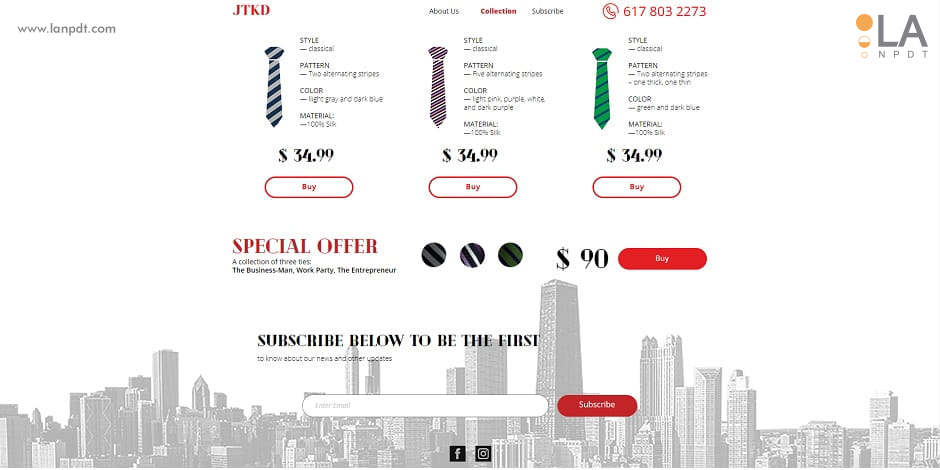
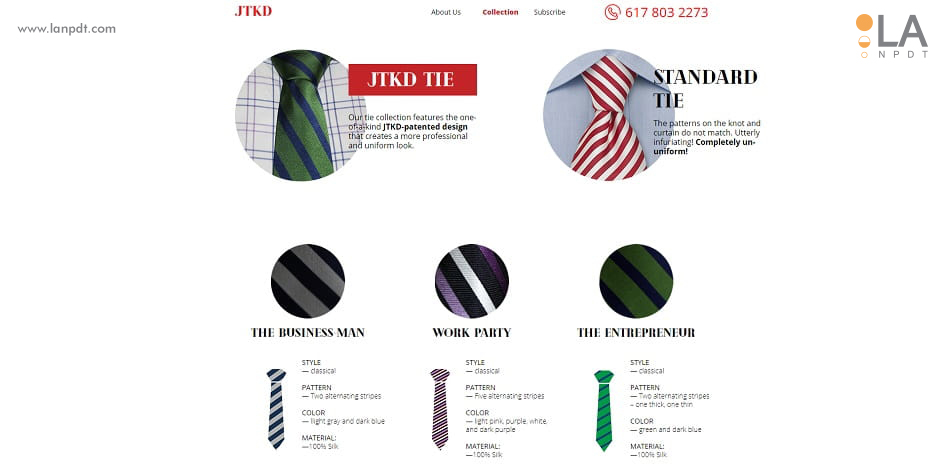
Ecommerce project at a glance
| Scope | Store design, catalog build, checkout, payments, shipping, launch |
|---|---|
| Integrations | Payments, shipping rates, inventory, email and analytics |
| Deliverables | Live store, product data, staff training, reporting dashboard |
| Typical timeline | 6-14 weeks |
Most ecommerce problems are merchandising problems
Traffic that does not convert usually points at unclear product structure, missing information or friction at checkout. We build the catalog model first - variants, options, bundles - then design pages against it, so the store still works when the line grows from six SKUs to sixty.
What the build covers
- Catalog and variant model that scales with the product line
- Product pages with imagery, specs, sizing and reviews
- Checkout tuned to reduce abandonment, with real shipping rates
- Inventory, fulfillment and email platform integrations
- Tracking so revenue can be attributed to channels
Frequently asked questions
What does ecommerce development cost?
Stores typically run $8,000-$45,000 depending on catalog size, custom features and integrations.
Can you sell products you also designed for us?
Yes - many clients come through design and prototyping and then need the store to launch.
Do you handle marketplace listings too?
Yes, including Amazon listing imagery, copy and packaging requirements.
Capabilities used on this project
Rapid prototyping services
3D printing, CNC machining, urethane casting and functional prototype builds with published materials, tolerances and lead times.
What makes an e-commerce build convert
1. Structure the catalog for how people search
Categories and filters follow the words customers use, not the internal product taxonomy. Findability is a revenue feature.
2. Build product pages that answer objections
Photos, specifications, shipping clarity and returns — each unanswered question is an abandoned cart. The page template is designed against the actual objection list.
3. Strip the checkout to essentials
Every extra field and forced account creation step measurably loses orders. Guest checkout, minimal fields and clear shipping costs are defaults, not options.
4. Instrument everything before launch
Analytics, conversion tracking and abandoned-cart capture go in before the first visitor. You cannot improve what you launched blind.
| Approach | Best for | Trade-off |
|---|---|---|
| Hosted platform (Shopify-style) | Most product businesses | Monthly fees, template limits |
| Open-source (WooCommerce-style) | Content-heavy stores | Maintenance burden |
| Custom build | Unique logic or scale | Highest cost, full control |
Questions about this project
Straight answers from the engineers who ran the build. Have a different question? Ask us directly.
Talk to an engineerHow much does e-commerce website development cost?
A hosted-platform store typically runs $5,000 to $20,000 to design and configure; custom builds with unique logic run $25,000 and up.
Which e-commerce platform should I choose?
For most product businesses, a hosted platform wins on total cost. Custom builds make sense when the business logic genuinely cannot fit a platform.
How long does an e-commerce build take?
Six to twelve weeks for a hosted-platform store including product content; custom builds take longer.