Our work / The Original Flip Flap
The Original Flip Flap: Design for Manufacturability
Start a project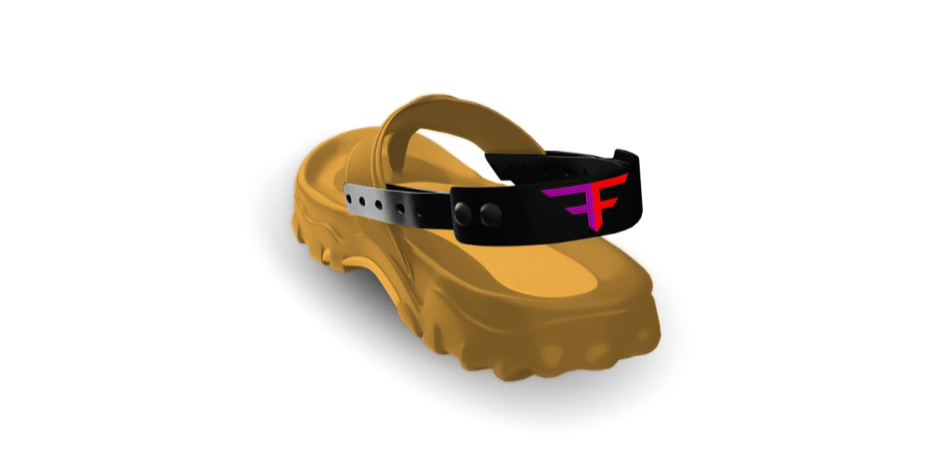

Written by Ralph Hill, Mechanical & electrical systems, 3D manufacturing
Prototyping Engineer
Published August 10, 2026
Preparing a silicone rubber product for manufacturing usually means solving the material before the geometry: elasticity, tear strength and feel are properties you have to engineer, and off-the-shelf compounds often miss at least one of them.
The Original Flip Flap — a detachable strap that turns flip flops into sandals — came to us as a homemade prototype. When no market silicone met the spec, our engineers blended one that did, then built the DFM package that took it to small-batch production.
Project at a glance
- Client
- The Original Flip Flap — Mint Hill, NC
- Product
- Detachable, adjustable strap that converts flip flops into sandals
- Starting point
- Client's own silicone prototype; needed DFM and manufacturing preparation
- Material work
- Custom silicone blend engineered after off-the-shelf compounds failed the spec
- Outcome
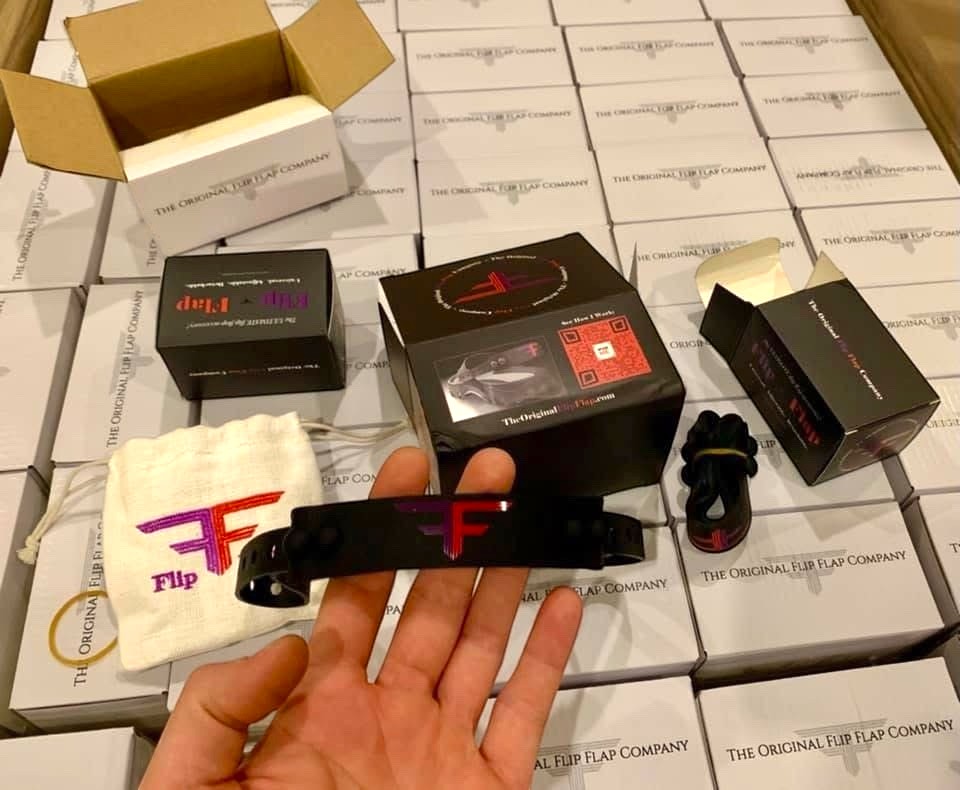
- Small-batch production streamlined; product selling at TheOriginalFlipFlap.com
The client

The challenge

Our solution
The result
When you need help with creating a DFM design for manufacturability or developing your invention from A to Z, contact our experts to discuss your project.


Customer’s review

Design for manufacturability at a glance
| Scope | DFM review, part redesign, silicone rubber prototyping, tooling prep |
|---|---|
| Process targeted | Compression/injection moulded silicone rubber |
| Focus | Wall thickness, draft, parting line, shrink, cycle time, part cost |
| Deliverables | Revised CAD, DFM report, moulded prototypes, tooling-ready files |
What DFM actually changes
Design for manufacturability is where product cost is decided. A part that works perfectly as a 3D print can be impossible to mould, or mouldable but twice as expensive as it needs to be. Uniform walls, correct draft, a sensible parting line and the right number of features per part routinely take double-digit percentages out of unit cost.
What we did on the Flip Flap
We reviewed the geometry against the silicone rubber process, revised features that would trap air, sink or flash, and produced moulded prototypes so the material behaviour could be confirmed before tooling money was committed.
DFM checklist we run on every part
- Uniform wall thickness and no thick sections that sink
- Draft on every vertical face relative to the pull direction
- Parting line placed where it is cosmetically acceptable
- Undercuts removed, or side actions justified against their tooling cost
- Material shrink accounted for in critical dimensions
- Part count consolidated wherever assembly labour exceeds tooling savings
Frequently asked questions
When should DFM happen?
Before tooling is quoted and ideally during detailed design - retrofitting DFM after a mould is cut means paying for steel changes.
How much does a DFM review cost?
A focused review of a single moulded part typically runs $1,500-$5,000, and usually pays for itself on the first production order.
Do you work with our existing manufacturer?
Yes. We regularly translate a moulder''s feedback into the CAD changes that satisfy it.
Capabilities used on this project
Design for manufacturing
Molding-ready geometry, tolerances, production drawings, assembly documentation and DFM review with the tooling vendor.
Rapid prototyping services
3D printing, CNC machining, urethane casting and functional prototype builds with published materials, tolerances and lead times.
How a silicone product gets production-ready
1. Write the property spec in plain language
The strap had to stretch to fit every shoe size, return to shape without tearing, and feel soft against skin. Those three sentences are a material specification — and the test protocol.
2. Test what the market offers, honestly
We ran a series of material sessions on available silicone rubbers. None hit the full set of characteristics, which is a normal result — it is also the moment projects either compromise or engineer.
3. Blend the compound if you have to
Our engineers mixed silicone types in varying ratios until the blend delivered the required elasticity, durability and feel. The material became a project deliverable in its own right.
4. Prototype with the real compound
A prototype in the final silicone validates the mechanical properties and the feel together. Testing in a stand-in material only tells you about the stand-in.
5. Package the whole supply chain
Materials sourcing, a trusted manufacturer and DFM-ready files came from one team. That is what let the client reach a market-ready product with minimal upfront investment — the Flip Flap now sells direct.
| Area | What gets checked |
|---|---|
| Material | Elasticity, tear strength, durometer, skin feel |
| Geometry | Wall thickness, draft, parting line, shrink |
| Process | Compression versus injection molding, cycle time |
| Deliverables | Revised CAD, DFM report, molded prototypes, tooling-ready files |
Questions about this project
Straight answers from the engineers who ran the build. Have a different question? Ask us directly.
Talk to an engineerWhat if no standard material meets my product's requirements?
You blend or specify a custom compound. For the Flip Flap we mixed silicone types in different ratios until elasticity, durability and feel were all met — a material engineering step most projects never plan for.
What does DFM actually include for a silicone part?
Material selection or development, geometry review for wall thickness and draft, parting line and shrink planning, prototype molding, and the revised CAD and report a tooling shop works from.
Can I get to small-batch production without a big tooling budget?
Yes, with the right process choice and supplier. We sourced materials and a manufacturer for the Flip Flap specifically to keep upfront investment low, and the product reached the market on that basis.