
Our work / Can Strainer for Tuna Press
Tuna Press Can Strainer: Food Product Development
Can Strainer for Tuna Press
Start a project

Written by Konstantin Dolgan, Ph.D., NPDP
Founder & CEO, Product Development Engineer
Published August 10, 2026
Developing a kitchen gadget means designing around a task people already do badly: understand the current workaround, remove the steps that annoy them, and keep the part cheap enough to sell at housewares prices.
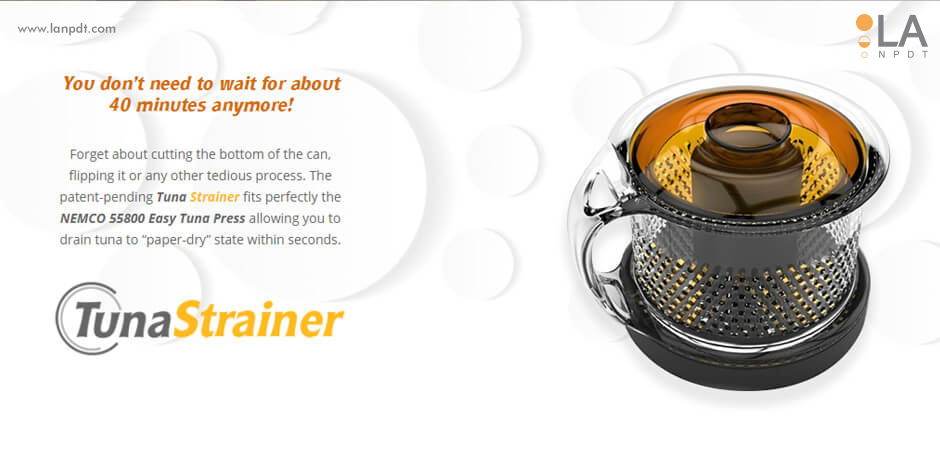
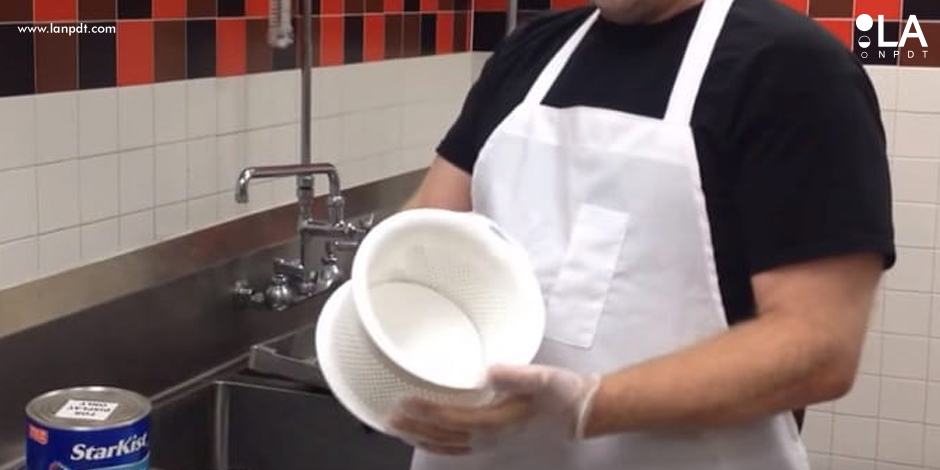
Richard Todd Slavant's can strainer for the tuna press did exactly that. Draining a can previously meant cutting out the bottom, inverting it and waiting around 40 minutes in a press — with unreliable results.
Project at a glance
- Client
- Richard Todd Slavant — inventor and entrepreneur
- Product
- Can strainer for the NEMCO 55800 Easy Tuna Press
- Problem
- Draining a can meant cutting the base, inverting it and pressing for about 40 minutes, with poor results
- Design features
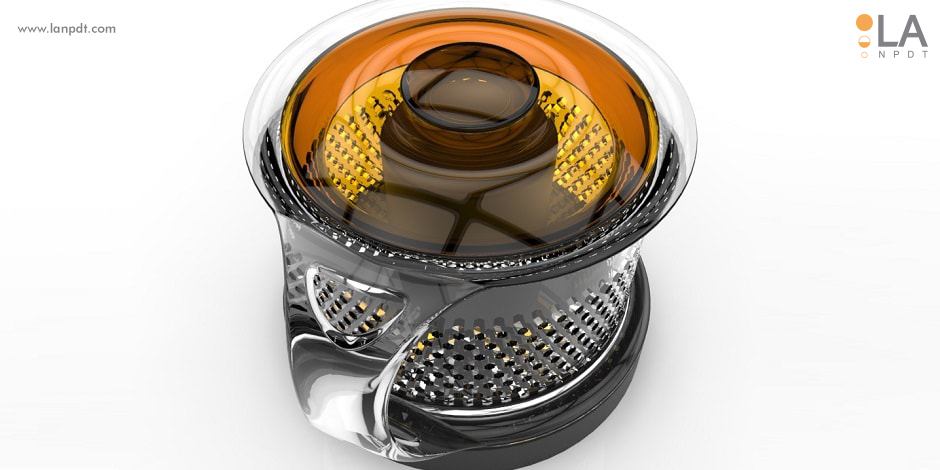
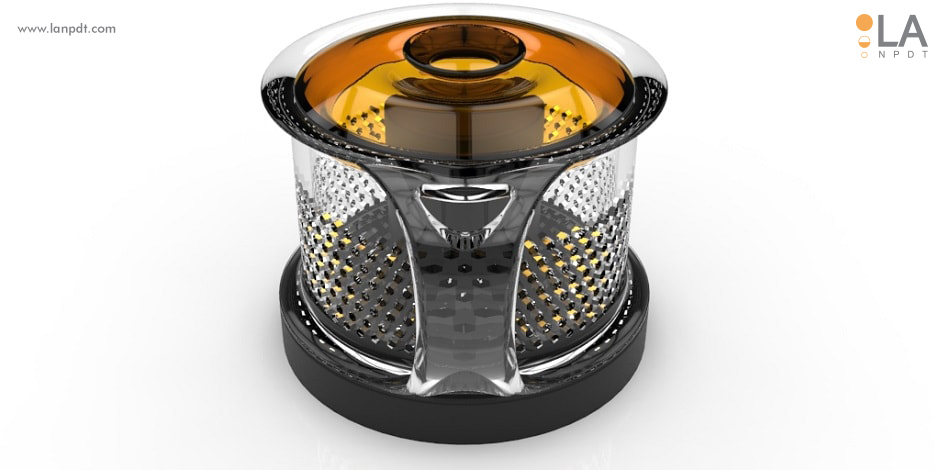
- Evenly spaced hexagonal holes, removable bottom, handle
- What we delivered
- Concept design, 3D printed prototype and a product website with e-commerce
The client
The challenge

Our solution
The result


Food product development at a glance
| Industry | Food and beverage |
|---|---|
| Scope | Product concept, packaging design, equipment and process, branding |
| Constraints | Food-contact materials, shelf life, cleaning, cost per unit |
| Typical timeline | 3-8 months to a shelf-ready product |
What food product development involves
Getting a food product to market is rarely just the recipe. Someone has to design the container, choose materials that are food-safe and survive the supply chain, work out how the product is filled and sealed at volume, and make packaging that earns a spot on the shelf.
Where we help
- Packaging structure and closure design, prototyped and tested
- Food-contact material selection and cleanability
- Custom equipment and automation for filling, forming or dispensing
- Branding, label layout and retail-ready renderings
- Cost engineering against a target shelf price
Frequently asked questions
Do you do recipe formulation?
No - formulation belongs with a food scientist. We handle the product, packaging, equipment and industrial design around it.
How much does food packaging development cost?
Structural packaging design typically runs $8,000-$35,000, depending on how custom the container and closure are.
Can you design the machine that makes it?
Yes - custom food-processing and vending equipment is one of our specialities.
Capabilities used on this project
Rapid prototyping services
3D printing, CNC machining, urethane casting and functional prototype builds with published materials, tolerances and lead times.
Concept design
Sketch exploration, form studies and CAD concepts that turn an idea into a buildable direction.
How a kitchen gadget goes from annoyance to product
The invention is usually a small geometry change. The work is proving it, making it cheap and giving it somewhere to sell.
1. Document the workaround in detail
Before designing anything we mapped the existing process — cut the can, flip it, press, wait. Every step in that list is either a feature to keep or a problem to delete.
2. Change the least you can get away with
We kept the pressing procedure identical and improved only the container. Users keep their habit, the learning curve disappears, and the product works with equipment they already own.
3. Design the features that do the work
Evenly spaced hexagonal holes for drainage, a removable bottom for emptying, and a handle for grip. Each addresses one specific complaint from the old method rather than adding capability for its own sake.
4. 3D print and use it for real
The concept was printed and tested with actual cans. A kitchen product is validated in a kitchen — with wet hands, real food and the mess included.
5. Build the sales channel from the same assets
The CAD and prototype photography fed a product website with e-commerce, so the product had somewhere to convert the awareness it earned.
| Constraint | What it forces |
|---|---|
| Food contact | Food-safe material grade, no crevices that trap residue |
| Dishwasher use | Temperature-stable resin, no glued assemblies, drain paths |
| Wet handling | Grip features and generous radii, nothing sharp |
| Housewares price point | Few parts, no fasteners, tool-friendly geometry |
Questions about this project
Straight answers from the engineers who ran the build. Have a different question? Ask us directly.
Talk to an engineerHow do I know my kitchen gadget idea is worth developing?
Watch people do the task today. If there is a multi-step workaround they all use — like cutting out a can base and waiting 40 minutes — the demand is already demonstrated and your job is to remove steps.
What material should a food-contact product use?
Something with a food-contact grade and a temperature rating that survives dishwashing if buyers will expect that. We select the grade during design because it affects wall thickness and shrink, not afterwards.
Do I need a website as well as the product?
If you are selling direct, yes — the product needs a place to convert interest into an order. We built this one from the same renderings and prototype photography produced during development.
Industries this project belongs to
See how we approach development in each of these categories, and the other products we have taken from sketch to production there.


