Written by Konstantin Dolgan, Ph.D., NPDP
Founder & CEO, Product Development Engineer
Published August 10, 2026
Designing a charging dock is a small problem with strict rules: the device has to seat repeatably, the connector has to align every time, the dock cannot slide or tip when the device is pulled off it, and the cable has to leave without being seen.
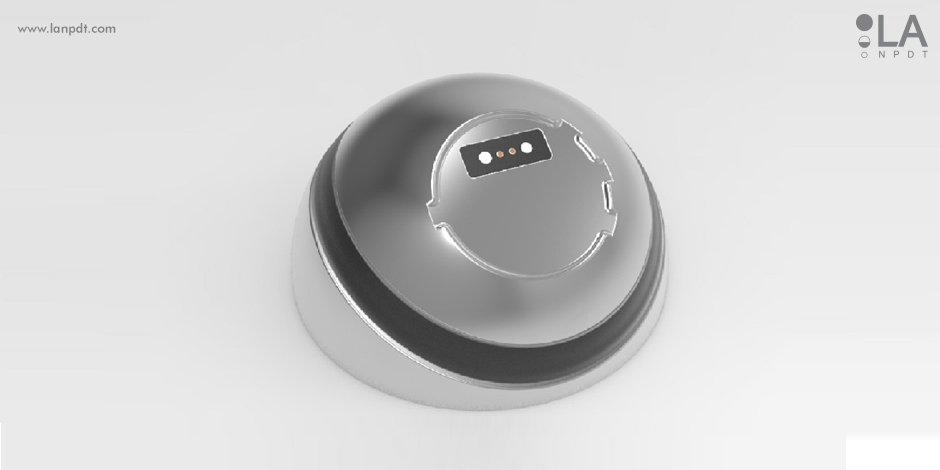
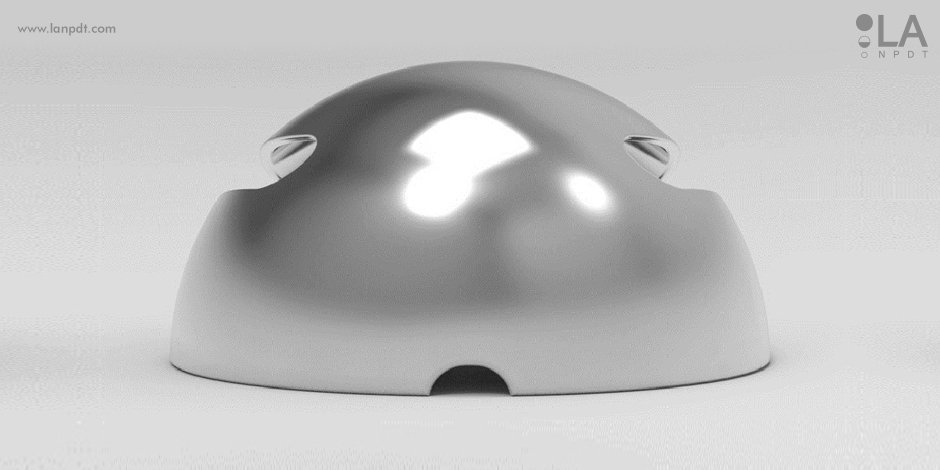
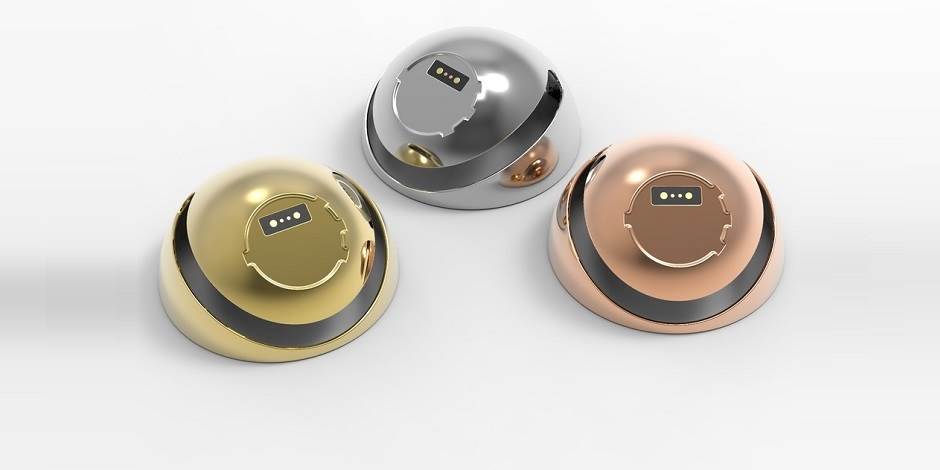
We designed a dock for the Pebble Time Round because the docks on the market for it were bulky next to a very thin watch. Iterating between 3D model and prototype produced something we were happy to use daily — and then to publish as an open design.
Project at a glance
- Project type
- Internal design study by our product design team
- Product
- Charging dock for the Pebble Time Round smartwatch
- Starting point
- Available docks were bulky next to an unusually thin watch
- Approach
- 3D model, rapid prototype, several design-and-test iterations
- What we validated
- Functionality and ergonomics of seating and removing the watch
- Outcome
- A refined dock design we shared publicly
The client
The challenge
Our solution
The result

Product design engagement at a glance
| Scope | Research, concept design, industrial design, engineering, prototyping, DFM |
|---|---|
| Team | Industrial designers, mechanical and electrical engineers, prototypers |
| Deliverables | Concepts, CAD, prototypes, manufacturing package, renderings |
| Typical timeline | 4-9 months concept to manufacturing-ready |
Design-only agencies stop where the hard part starts
Plenty of agencies deliver beautiful concepts and hand you a PDF. The gap between that PDF and a manufacturable product is where most projects die. We keep industrial design, mechanical engineering, electronics and prototyping in the same building, so the concept that gets approved is one we already know how to build.
How an engagement runs
- Discovery: users, competitors, target cost and constraints
- Concepts explored broadly, then narrowed with the client
- Engineering the chosen direction into real CAD
- Prototypes built and tested, design revised on evidence
- DFM and a manufacturing package suppliers can quote
Frequently asked questions
How much does a product design agency charge?
Full programs typically run $30,000-$150,000 depending on electronics content and the number of prototype rounds; smaller scoped projects start far lower.
Do you work with individual inventors?
Yes - a large share of our portfolio started as one person with an idea.
Do you help with manufacturing after design?
Yes. We prepare the quoting package, evaluate suppliers and support production launch.
Capabilities used on this project
Rapid prototyping services
3D printing, CNC machining, urethane casting and functional prototype builds with published materials, tolerances and lead times.
Concept design
Sketch exploration, form studies and CAD concepts that turn an idea into a buildable direction.
Design for manufacturing
Molding-ready geometry, tolerances, production drawings, assembly documentation and DFM review with the tooling vendor.
How a charging dock gets designed
Everything in a dock is decided by one interaction repeated twice a day. Each step below protects that interaction.
1. Model the device first
The dock is a negative of something you did not design. Accurate device geometry — including the charging contacts and any curvature — is the base model everything else is built against.
2. Design the seating, then the shape
One-handed placement without looking is the requirement. A cradle angle, a lead-in chamfer and a hard stop do that; the exterior styling is wrapped around the result rather than the other way round.
3. Solve retention against removal force
A magnetic or friction charger wants to lift with the device. Mass, a soft high-friction base, or a geometry that lets a thumb push down while lifting keeps the dock on the desk.
4. Route the cable and hide it
Cable entry, strain relief and a channel that keeps the run tidy are structural decisions. Docks that look bad on a desk usually failed here.
5. Prototype the ergonomics, repeatedly
This dock went through several design-and-prototype iterations. The angles and clearances that feel right cannot be judged on screen, only by putting the watch on and taking it off dozens of times.
| Requirement | Design response |
|---|---|
| Seats correctly without looking | Lead-in chamfer plus hard stop at the charge position |
| Contacts align every time | Device geometry modelled accurately, single seating orientation |
| Stays put when device is removed | Weighted or high-friction base, low centre of gravity |
| Looks good unoccupied | Cable channel and strain relief designed in, minimal footprint |
Questions about this project
Straight answers from the engineers who ran the build. Have a different question? Ask us directly.
Talk to an engineerHow long does an accessory like a dock take to design?
A simple accessory typically runs a few weeks from brief to prototype-validated CAD. The iteration loop — model, print, handle, adjust — is where the schedule goes, not the initial modelling.
Do you need the device to design an accessory for it?
Ideally yes. Published dimensions rarely capture the curvature and contact geometry accurately enough, and the fit is the entire product.
Can a dock be 3D printed for sale, or does it need a mold?
Printing is viable for very low volume and for testing the market. Beyond a few hundred units the surface finish and unit cost of injection molding usually win, which is why we design accessories to be moldable from the start.
Industries this project belongs to
See how we approach development in each of these categories, and the other products we have taken from sketch to production there.