
Written by Ralph Hill, Mechanical & electrical systems, 3D manufacturing
Prototyping Engineer
Published August 10, 2026
Taking a prototype to production means converting a shape that works into a part a factory can make repeatably: fixing the material, proving durability, adjusting the geometry for the process, and producing the drawings a supplier quotes from.
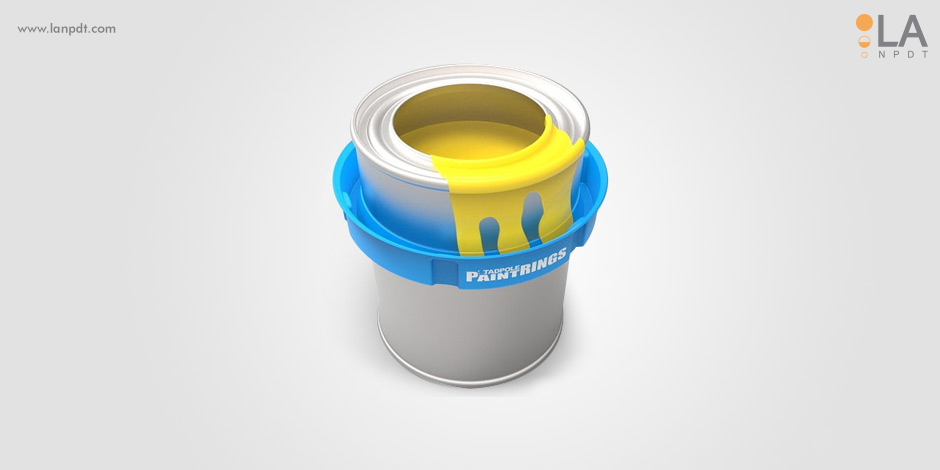
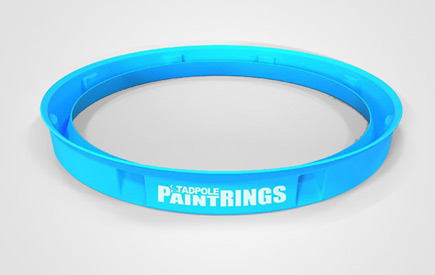
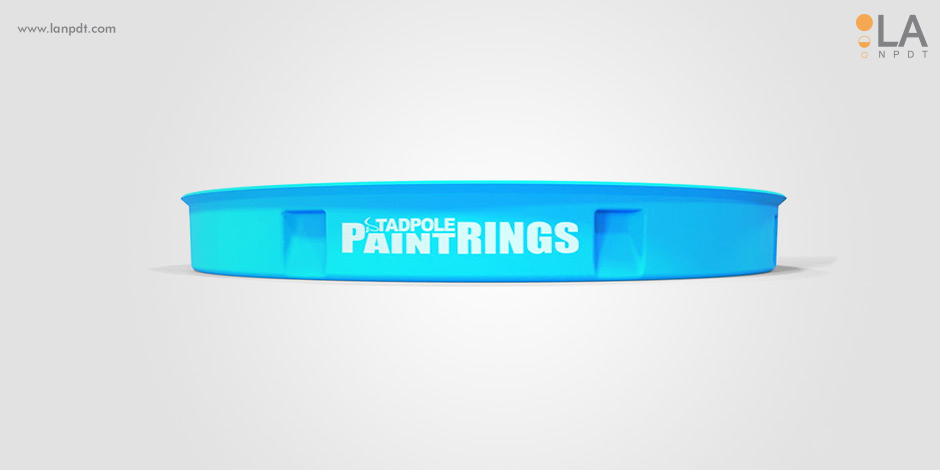
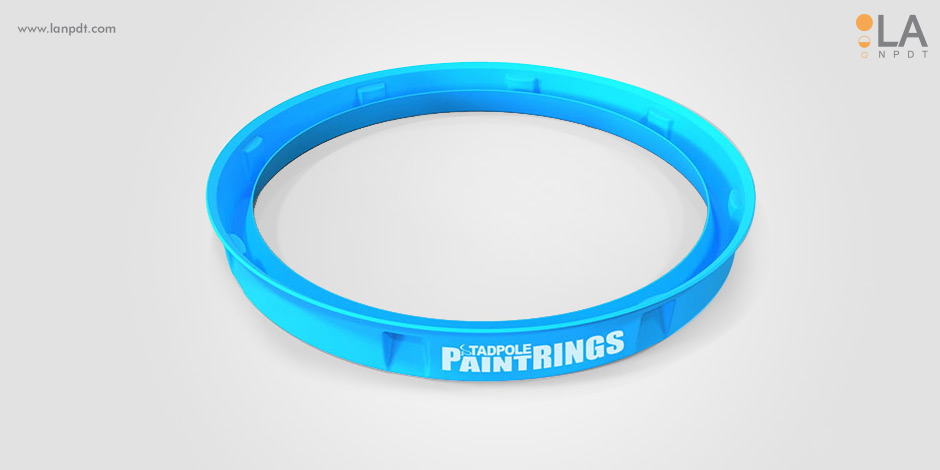
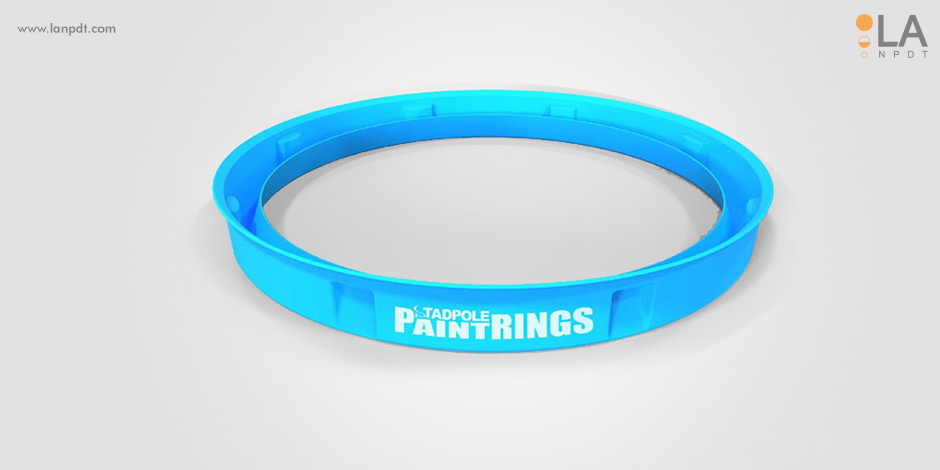
Tadpole's PaintRings started as a sketch. We turned it into concept designs, printed prototypes in TPE and TPU to prove flexibility and wear resistance across can sizes, and took it through to production.
Project at a glance
- Client
- Tadpole — Shreveport, LA, maker of painting, shipping and moving products
- Product
- PaintRings — a ring that catches paint dripping from a can
- Starting point
- A sketch of the invention
- Materials tested
- TPE and TPU, for flexibility and wear resistance
- What we delivered
- Concept design, 3D models, prototypes and the route to production
- Context
- Tadpole's flagship tape cutter sells through Ace Hardware, Walmart and The Grommet
The client

The challenge
Our solution
The result
Prototype production at a glance
| Scope | Prototype builds, short-run production, assembly and finishing |
|---|---|
| Processes | 3D printing, CNC machining, urethane casting, sheet metal, sewing |
| Volumes | One-off prototypes through short runs of several hundred units |
| Typical timeline | 1-4 weeks per build cycle |
Prototypes are built to answer questions
Every prototype should have a job: prove the mechanism, check the fit, test the feel in a user''s hand, or show an investor something real. Building without that question wastes money on parts nobody learns from.
Choosing a process
- 3D printing - fastest path to geometry you can hold
- CNC machining - real materials, real strength, tight tolerances
- Urethane casting - dozens of production-like parts without tooling
- Fabrication - frames, enclosures and machines beyond printer size
Frequently asked questions
What does prototype production cost?
Simple printed builds start in the low hundreds; multi-part functional assemblies typically run $3,000-$25,000 per round.
Can you produce a small batch for market testing?
Yes - short-run production of tens to hundreds of units is often the right step before tooling.
Will the prototype match the final production part?
We design so the answer is as close as your budget allows, and we tell you clearly where prototype and production will differ.
Capabilities used on this project
Rapid prototyping services
3D printing, CNC machining, urethane casting and functional prototype builds with published materials, tolerances and lead times.
Concept design
Sketch exploration, form studies and CAD concepts that turn an idea into a buildable direction.
Low-volume manufacturing
Bridge tooling, short-run production and supplier management for first commercial batches.
The route from prototype to production
Most projects stall in the middle of this list. Each step below has to close before the next one is worth paying for.
1. Sketch to concept design
Tadpole brought a vision of a ring that catches paint dripping down a can. We produced several concept designs, keeping two rules in front of everything: simple to use, easy to manufacture.
2. Model the variants, not just one size
The ring has to fit the range of paint cans people actually own. Several 3D models were built and compared before one geometry was carried forward.
3. Prototype in the candidate materials
We printed in TPE and TPU specifically to check that the ring would flex enough to fit a can and still survive repeated use. Material selection was settled by handling parts, not by datasheet.
4. Adjust the design for the production process
An elastomeric part has its own rules — shrink, demold force, parting line placement on a flexible section. The prototype geometry is revised for the process before tooling is quoted.
5. Produce the manufacturing package
Drawings with tolerances, material and hardness call-outs, finish and a bill of materials. That package is what turns supplier quotes from guesses into commitments.
6. First article, then volume
The first parts off a tool get measured and used before the run is released. Retail-bound products, like Tadpole's, also have to pass packaging and shelf checks at this stage.
| Aspect | Prototype | Production |
|---|---|---|
| Material | Printable analogue (TPE, TPU) | Specified moldable grade and hardness |
| Geometry | Whatever prints | Draft, uniform walls, parting line chosen |
| Tolerances | Implied | Called out on a drawing with a datum scheme |
| Cost per part | High, irrelevant | The number the business plan lives on |
Questions about this project
Straight answers from the engineers who ran the build. Have a different question? Ask us directly.
Talk to an engineerHow long does it take to go from prototype to production?
For a single molded part, expect a few months: design for manufacture, tooling build, first article samples, then the run. Multi-part or electronic products take longer because certification and assembly validation are added to the same path.
What is the most common reason a prototype cannot be manufactured?
Geometry that only a 3D printer can make — undercuts, no draft, wildly uneven wall thickness. Fixing it is routine, but it is a design pass, so budget for it rather than being surprised by it.
Do I need a different material for production?
Usually yes. Printed TPU behaves like, but is not, a molded elastomer. We prototype in the closest analogue and then specify the production grade and hardness before tooling.