Our work / History of Manufacturing Technology
Web Video Production for Product Marketing
History of Manufacturing Technology: thousands of years in a two-minute web video
Start a project

Written by Yelena Rymbayeva, MPhil Communication & Media Studies, BTech Quality Control
Marketing & Product Leader, Technology Commercialization
Published August 10, 2026
Web video production is built for the feed, not the screen — vertical-friendly framing, sound-off legibility, and a hook in the first three seconds because the scroll never stops.
This project produced web-native video content designed for exactly those conditions: short, legible muted, and structured to earn the next three seconds of attention.
Project at a glance
- Client
- LA NPDT in-house production
- Category
- Animated web video production
- Starting point
- No existing short video covering the history of manufacturing technology
- What we delivered
- Research, a 250-word script, an approved storyboard and a two-minute animation
- Key constraints
- Two-minute runtime, attention earned in the first five seconds, legible when played muted
- Outcome
- Used in several of our 3D printing training courses and as a reference piece for client work
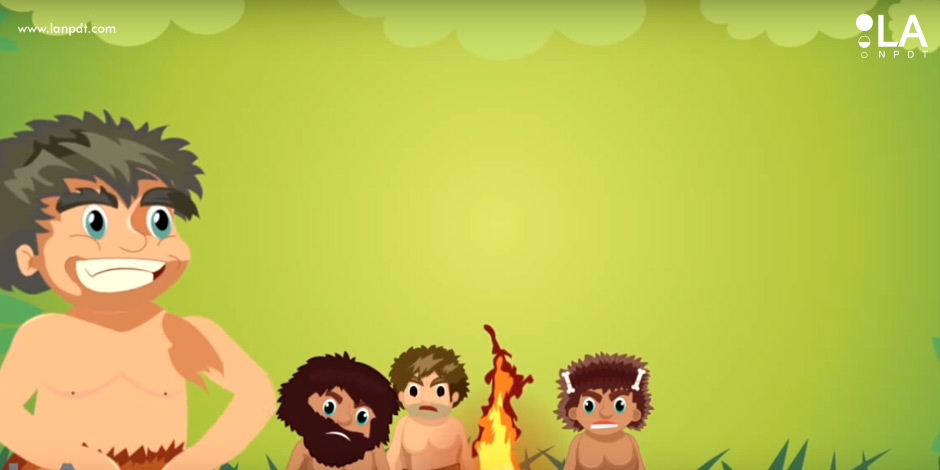
This was our own project. We wanted a short animated video that told the story of manufacturing technology — from stone tools to 3D printing — and after searching we could not find one that existed, so we produced it. It became a standing example of what a web video has to do: earn attention in the first five seconds and finish before the viewer leaves.
The client
An in-house LA NPDT production, later used inside our 3D printing training courses and as a reference piece for clients evaluating animated web video.
The challenge
Compress several thousand years of manufacturing progress into roughly two minutes without turning it into a list. A web video is watched with a cursor hovering over the close button, so the constraint is not how much history exists — it is how little of it survives the edit while the story still makes sense.

Our solution
We researched the subject properly first, then cut it down to the inventions, people and turning points that actually change the story if you remove them. That research became a 250-word script — the real length budget for a two-minute video — and the script became a storyboard that went through several revisions before a single frame was animated.
- Research first, then a ruthless shortlist of events that carry the narrative
- A 250-word script written to the runtime, not trimmed to it afterwards
- Storyboard approval before animation, because changes are cheap on paper and expensive in motion
- Animation, voice-over and sound designed as one pass so pacing matches the narration
- A web-optimised master plus short cutdowns for social and course use
The result
The finished two-minute animation covers the arc from early tooling to additive manufacturing and has since been used in several of our 3D printing training courses. The workflow behind it — research, script to length, storyboard sign-off, then animate — is the same one we run for client web video work today.

Web video production at a glance
| Scope | Script, filming, product footage, editing, motion graphics, captions |
|---|---|
| Output | Website hero videos, product page clips, social cutdowns |
| Deliverables | Web-optimized masters, vertical versions, captioned files, thumbnails |
| Typical timeline | 2-6 weeks |
Web video has different rules than broadcast
Web viewers arrive with sound off, on a phone, deciding within three seconds. That means captions by default, the point stated visually up front, and file sizes small enough not to damage page speed — considerations that never come up in traditional production.
How we produce it
We plan shots that read at small sizes, keep cuts short, and burn or attach captions so the message survives muted playback. Every project is delivered in web-optimized encodings plus vertical variants, so the same shoot serves the website, product pages and social channels.
Frequently asked questions
Will video slow down our website?
Not if encoded and hosted correctly — we deliver compressed variants and poster frames sized for fast loading.
Do you produce product demonstration videos?
Yes, including 3D animation when the product is not yet manufactured.
What does web video production cost?
Most projects run $2,500 to $15,000 depending on shoot days, animation and the number of deliverables.
Capabilities used on this project
Rapid prototyping services
3D printing, CNC machining, urethane casting and functional prototype builds with published materials, tolerances and lead times.
What makes web video different
1. Win the first three seconds or lose the viewer
The opening frame is the headline. Motion, a face, or a provocative statement immediately — logos and slow builds are skipped content.
2. Design for muted autoplay
Most web video plays silently. On-screen text, legible action and captions carry the message; audio is a bonus layer, not the delivery mechanism.
3. Keep it under the platform's patience
Thirty to sixty seconds for feed placements, up to two minutes on your own site. Every second beyond the message costs viewers exponentially.
4. End with one action
A web video asks for one thing — visit, sign up, watch more. Multiple calls to action split a small audience into none.
| Placement | Length | Format |
|---|---|---|
| Social feed | 15–60 sec | Square or vertical, captions |
| Website hero | 20–45 sec | Silent loop |
| Landing page | 60–120 sec | Horizontal, voiced |
Questions about this project
Straight answers from the engineers who ran the build. Have a different question? Ask us directly.
Talk to an engineerHow much does web video production cost?
Short web videos typically run $2,500 to $10,000 each, with series pricing lower per video when shot in a single production day.
How long should a web video be?
As short as the message allows — fifteen to sixty seconds for social, up to two minutes on your own site. Completion rate drops steeply past that.
Do web videos need captions?
Effectively yes — most web video plays muted, so captions or on-screen text are the primary delivery, not an accessibility afterthought.
How many words fit in a two-minute video?
About 250 at a comfortable narration pace. Writing to that number up front is the difference between a tight edit and a script that has to be cut after the animation is already built.
Why approve a storyboard before animating?
Because changes are cheap on paper and expensive in motion. Every pacing, framing and sequencing decision settled at storyboard stage is one that does not become a re-render later.
Other brand, web and video projects
- BNI Lagniappe promo video
Promotional film for a local business chapter.
- Law firm website build
Site design and build for a legal practice.
- Photographer portfolio website
Gallery-driven website for a working photographer.
Looking for physical product work instead? See the product development portfolio.