
Written by Konstantin Dolgan, Ph.D., NPDP
Founder & CEO, Product Development Engineer
Published August 10, 2026
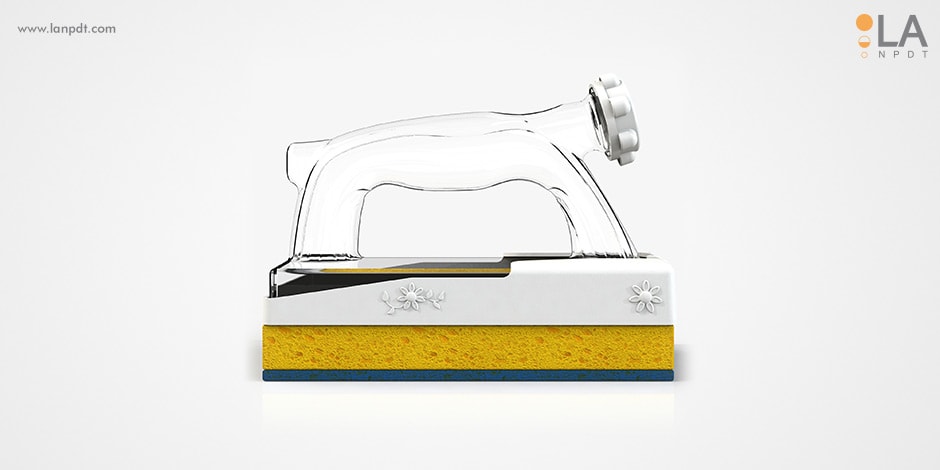
Cleaning-industry veteran Mary Allen envisioned a refillable scrubber with interchangeable pads. We engineered the snap-in attachment, solved the leak-when-standing problem, prototyped it, and connected her with injection molder Raytech Industries for manufacturing.
Project at a glance
- Client
- Mary Allen, inventor, 20+ years in cleaning services
- Industry
- Cleaning products
- Starting point
- A need for a refillable scrubber with an interchangeable pad
- What we delivered
- Original concept, industrial design, engineered snap-in attachment, form-fit prototype, manufacturer sourcing
- Engineering focus
- Attachment tolerances so users can change the sponge by hand, and hole placement so it stands upright without leaking
- Outcome
- A manufacturable design and prototype ready to move into production
What the client said
★★★★★
“This is the place you want and need to bring your idea to fruition. I have and am on my way to success! Thank you LA NPDT!”
 Mary AllenCEO, ZippyGoogle review
The client
The challenge
Our solution
The result
Cleaning product design at a glance
| Scope | Concept, ergonomics, CAD, prototypes, DFM, retail packaging |
|---|---|
| Constraints | Wet grip, fast drying, abrasive retention, very low unit cost |
| Deliverables | Production CAD, prototypes, molding package, packaging artwork |
| Typical timeline | 4-8 months |
Household products are won by pennies
A scrubber sells for a few dollars, so every gram of material and every extra assembly step matters. It also has to grip when wet and soapy, hold its abrasive securely through repeated use, and dry rather than sour between uses — all while staying cheap enough for a multipack.
How we designed it
We shaped the grip for control with a slippery hand, designed retention that holds the sponge without a separate fastener, and opened the geometry so water drains and the product dries. Wall thickness and part count were tuned for a fast molding cycle, and packaging was sized for multipacks and peg display.
Frequently asked questions
Can you design to a retail price point?
Yes. We work backwards from shelf price and margin to a target unit cost, and design to it.
Do you specify materials for wet, abrasive use?
Yes — resin and sponge material selection accounts for detergents, heat and abrasion.
Is packaging included?
Retail packaging, multipack configuration and shipper sizing can be part of the same project.
Capabilities used on this project
Rapid prototyping services
3D printing, CNC machining, urethane casting and functional prototype builds with published materials, tolerances and lead times.
Prototype design and engineering
Design for the prototype itself: CAD, tolerance stacks, material choices and assembly detail before anything is built.
Design for manufacturing
Molding-ready geometry, tolerances, production drawings, assembly documentation and DFM review with the tooling vendor.
Low-volume manufacturing
Bridge tooling, short-run production and supplier management for first commercial batches.
How the Zippie scrubber solved leaks and snap-fit pads
Industrial design from real-world use
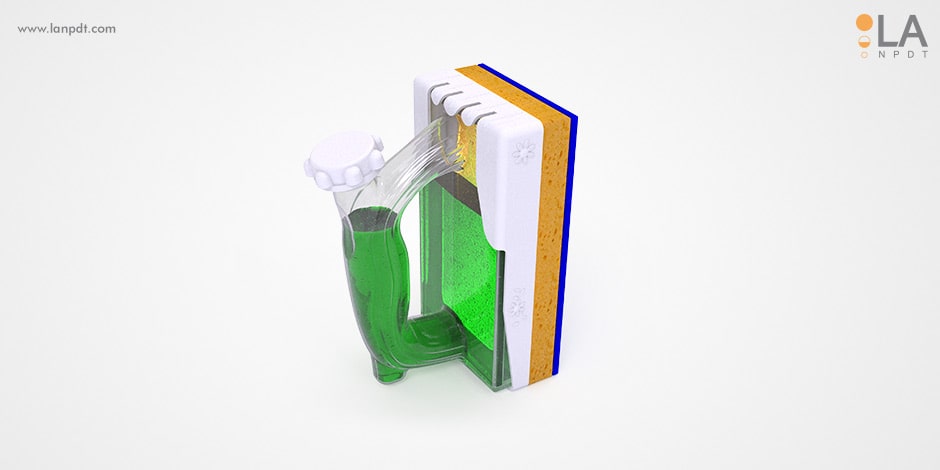
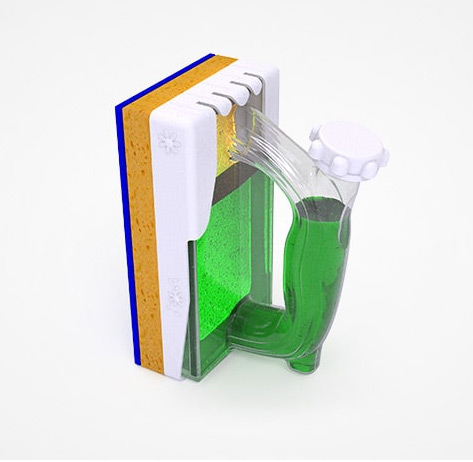
Ms. Allen spent over 20 years in cleaning services and knew exactly what the product had to do: hold any cleaning fluid, stand upright without leaking, and swap scrub pads easily. Hand size, comfort, and standard sponge dimensions drove the initial concept.
The snap-fit attachment and leak geometry
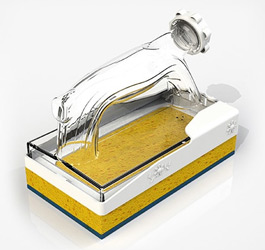
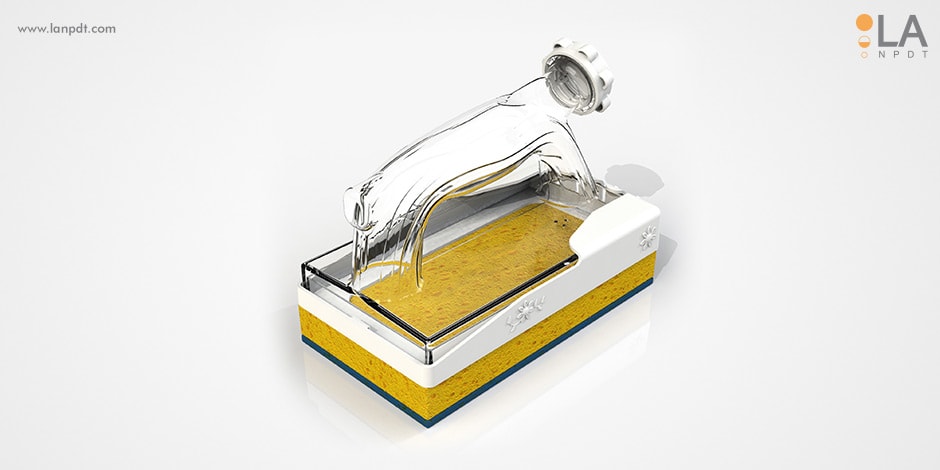
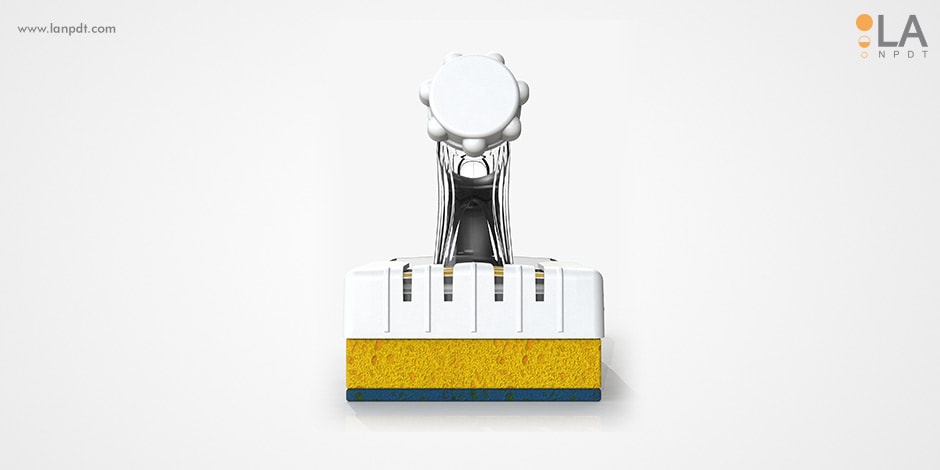
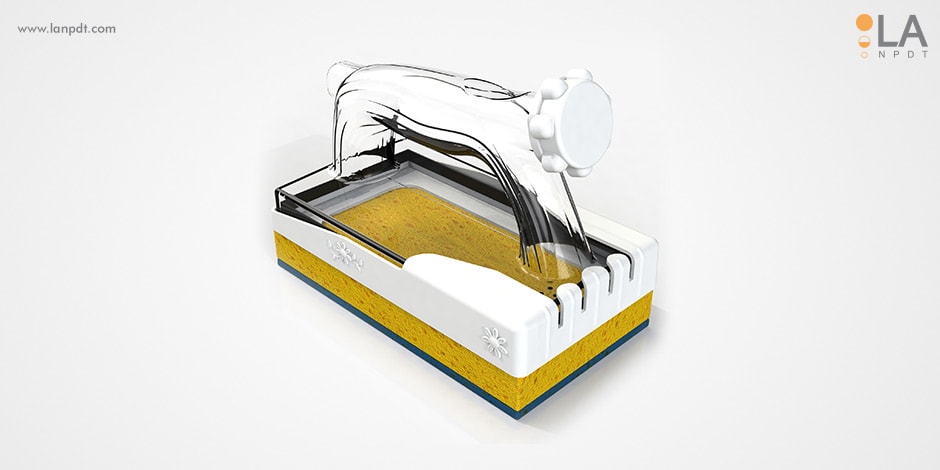
The core engineering challenge was the sponge attachment fitment. We designed a slot with flexible tabs that lock the handle into a snap-in indentation for quick pad changes, and placed the fluid holes toward the front so the scrubber doesn't leak when standing upright.
Prototype to manufacturing partnership
We built the form-fit prototype, then connected Ms. Allen with Raytech Industries, the leading plastic injection molding company in the Shreveport–Bossier City area — a direct handoff into manufacturing.
| Problem | Naive approach | The engineered solution |
|---|---|---|
| Pad attachment | Screws or adhesives | Flexible-tab snap fit — tool-free swaps |
| Leak control | Valves and seals (cost) | Hole placement that can't leak upright |
| Ergonomics | Generic handle | Form driven by hand size and sponge standards |
Questions about this project
Straight answers from the engineers who ran the build. Have a different question? Ask us directly.
Talk to an engineerHow do you design a cleaning product that doesn't leak?
Geometry before components. Instead of adding valves or seals, we positioned the dispensing holes so the fluid physically cannot reach them when the scrubber stands upright — zero added cost, zero failure points.
Can you connect inventors with manufacturers?
Yes. For Ms. Allen we made a direct introduction to Raytech Industries in Shreveport–Bossier City, the injection molding partner that took the Zippie toward production.
What does a snap-fit attachment cost to mold?
Snap-fits are essentially free in production — they're features of the mold, not extra parts. The cost is in the engineering: getting tab flexibility and engagement force right for the chosen resin.
How long did the Zippie take from idea to prototype?
Simple consumer products like this typically run 8–12 weeks from concept to a form-fit prototype ready for manufacturer review.
Industries this project belongs to
See how we approach development in each of these categories, and the other products we have taken from sketch to production there.