Best Inventions that Changed the Way We Approach Summer
Can you imagine summer without inventions like bee or inflatable boats? The best and top summer products changed the way we approach the season.
July 26, 201812 min read

Written by Konstantin Dolgan, Ph.D., NPDP
Founder & CEO, Product Development Engineer
Published July 26, 2018Updated September 2, 2026
The Best Inventions That Changed The Way We Approach Summer
We all know of some of the best inventions. Alexander Graham Bell invented the telephoneand that the Wright brothers invented the airplane… but who invented summer inventions like beer? And what about inflatable boats, scooters, ketchup, grillers, and other creations that make summer so enjoyable? Can you imagine a world without any of the best summer products?
Lewis and Clark would’ve enjoyed their expedition much more in an RV. The Romans could’ve transported their flagons of wine in heavy-duty coolers. If Henry VIII was able to lay in an anti-gravity chair with some potato chips, maybe he wouldn’t have been so salty.
Once upon a time, these top summer products were the ideas of forward-thinking, industrious individuals (like you) who happened to believe in and invest in their ideas thereby changing the way we “do summer” forever. The best summer products have changed our lives for the better, and it’s time that they receive the recognition they deserve.
Anti-gravity chairs
Before men with dad bods took these portable recliners to the beach, NASA had something else in mind. When astronauts travel into space, they sit in a reclined place (with their feet over their hearts) to put as little stress on the body as possible.
Not only do these chairs make relaxing easy, but physicians agree that the zero-gravity position is the healthiest way to sit. Companies eventually took this concept and created chairs that leaned far enough to relieve the stress on the spinal cord while providing a level of comfort never before experienced by anyone. Thank you, NASA for this top summer product!
Sunscreen
Sunscreen is one of the best summer products, but also four different scientists claim they invented it. The first and oldest credited inventor is Australian chemist Milton Blake, who created a sunburn cream in his kitchen.
L’Oreal cosmetics founder Eugene Schueller, also a chemist, created and marketed his cream in 1936, but neither of the chemist’s inventions was too effective.
Austrian Scientist Franz Greiter and Florida Physician Benjamin Green are also thought of as the inventors, but none of their thick, paint-like substances compare to the sprays and lotions that we have today. Still, if it weren’t for the similar ideas of these four men, we’d have to spend a lot more time in the shade. Umbrellas
Speaking of shade, the basic umbrella was invented more than 4,000 years ago! Ancient art and artifacts of Egypt, Assyria, Greece, and China all point to its creation, but today’s umbrellas can be traced back to the Victorian era where Samuel Fox became it’s credited inventor in 1852.
Swimsuits
The first swimsuits were definitely not swimsuits. People simply swam in any clothing they thought was appropriate (or inappropriate, as many still do today). Swimsuits–or rather, swim gowns–were invented in the 18th century, and they left everythingto the imagination. The bikini wasn’t untillater by Louis Reard and Jacques Heim in 1946.
Potato chips
According to the famous tale, George Crum, the head chef at Moons Lake House, New York, invented potato chips. One day, a client had the guts to say that George’s French fries were “too soggy and thick” and also “not salty enough.” The irritated cook decided to take his revenge culinary style.
Crum sliced the potatoes until they were paper-thin, fried them until they were brown, salted the living hell out of them, and dumped them in front of the annoying diner.The client tried one, smiled, and then helped himself to the rest of them. I guess once you pop, you really can’t stop!
Ketchup
The first published tomato ketchup recipe was done by James Mease, a horticulturist who called tomatoes “love apples.” His recipe consisted of tomato spices, pulp, and brandy, and lacked sugar and vinegar. Heinz Henry invented a more familiar version of ketchup by using a Chinese recipe ‘Cat Sup,’ a gelatinous sauce made from starch, tomatoes, and special seasoning.
Grillers
George Stephen is the brain behind the hemispherical grill design, often referred to as “Sputnik.” He got tired of the wind blowing ashes onto his food while grilling, so he decided to weld three steel legs onto the lower half of a buoy and created a shallow hemisphere to be used as a lid.
Thus, one of the best inventions, the griller, was born. He started making similar contraptions for his friends and neighbors who saw and liked his grill. Years later, Weber-Stephen Products Co. was founded, giving consumers access to one of the best summer products.
Mosquito Coils
For centuries, Pyrethrum was used as an insecticide in Europe and Persia. Eiichiro Ueyama, a Japanese business tycoon, made into a mosquito coil sometime in the 19th century. Tree Lights
In 1882, Edward Johnson joined other New Yorkers in decking the halls as Christmas drew closer. After taking care of the usual annual decorating ritual, the 36-year-old decided to add a special touch by stringing the newly-created electric lights on his tree (thanks, Edison!). Although usually reserved for winter, tree lights are pretty in the summer, too, which is why they make our list of top summer products. Heavy Duty Coolers
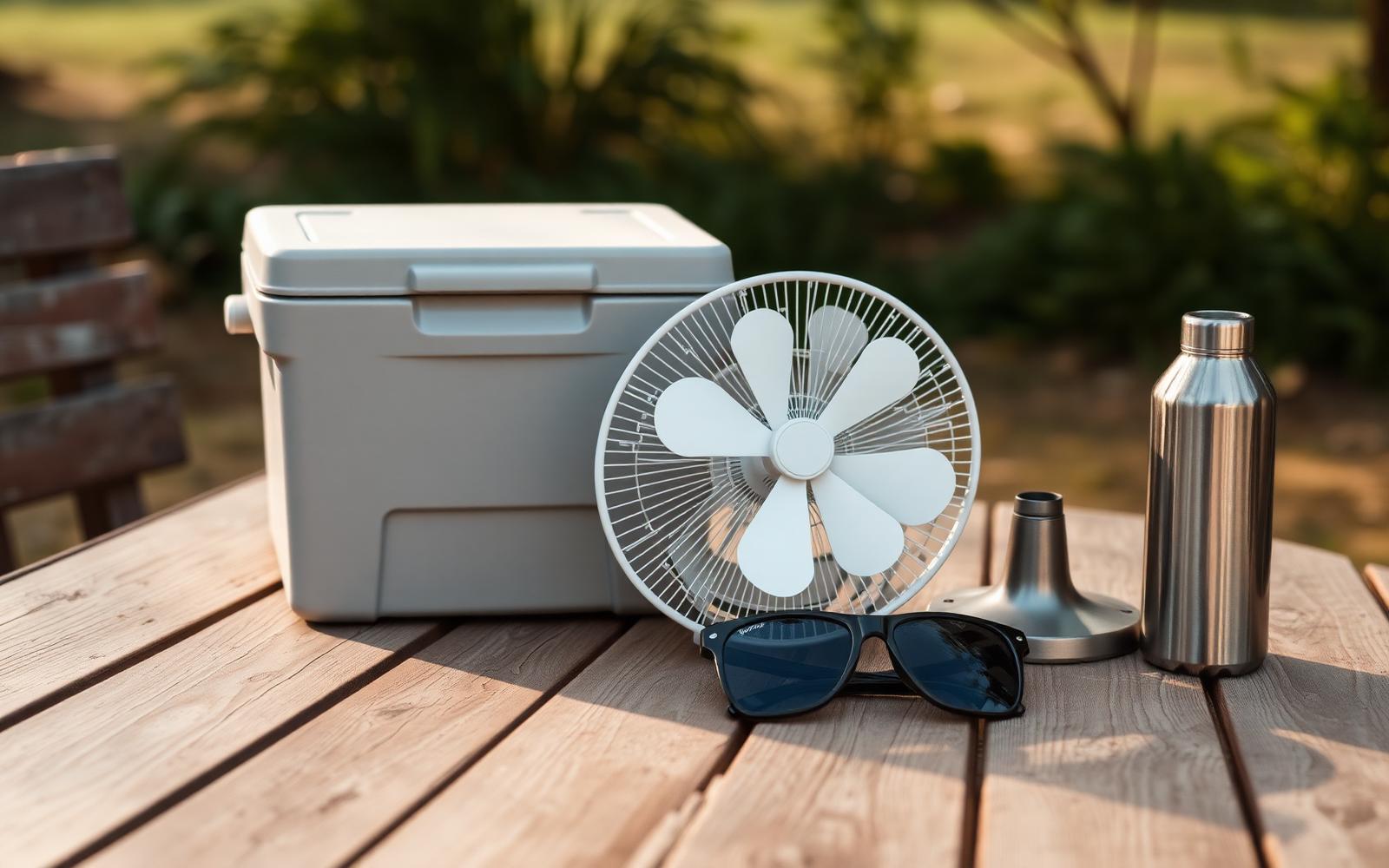
Brothers Ryan and Roy Seiders got frustrated while fishing one day and wanted to stand on their coolers (because, why not?!). They created heavy duty coolers so that they could sit or stand on them without the fear of collapsing, and so that the items inside would remain cold as they went fishing and hunted. The result was one of the best summer products ever, a $300 cooler that they have since turned into a $450 million dollar brand.
Canoes
North American natives invented canoes thousands of years ago. The word ‘canoe’ actually comes from the word ‘kenu,’ which means dugout. No one really knows when or who created modern canoes, but are likely the results of constant, continuous improvements to the original canoe.
Travel Trailers
Pierce-Arrow created the first RV, his touring Landau, in 1910. The Landau had a sink, a chamber pot toilet, and a back seat that folded out into a bed. Like many of the top summer products on this list, the concept was pretty rudimentary, but everything starts from somewhere.
Beer
Finally! Let’s talk about beer! Beer itself has basically existed forever. However, Dr. Alexander Nowell invented bottled beer by mistake 440 years ago. A fishing fanatic and forgetful Church of England rector, Dr. Nowell, forgot a bottle filled with home-brewed ale at the river bank. Upon his return, he found his bottle, open it, and enjoyed the gun-like sound it emitted. The ale had fermented, and thus bottled beer was born!
Beer Koozie
Whether you call it a beer cozy, koozie, drink huggie, or a drink snuggie, the koozie is a strong part of our drink culture. Australians made the original koozie in the 1970’s and called them “stubby holders.”
Outdoor Coolers
Can you imagine fishing trips and picnics without coolers? Thankfully, this alternative to the metal ice box saw it’s first vacation in 1957.
Sunglasses
Sam Foster sold his first pair on the Boardwalk of Atlantic City, New Jersey, back in 1929. By 1930, they were all the rage and mass produced. He didn’t even need a Facebook or Instagram account!
Eugenius Birchhe designed and built the first pier in 1866. Since then–especially with the creation of bank holidays–where friends and families could take a day off to lounge by the seaside, piers have come a staple in our summer lives.
Fishing Rods
When it comes to summer’s best inventions, who can forget the fishing rod? Fishing rods can be traced all the way back to ancient China and Egypt. Today’s fishing rod designs come mostly from the 1960s and 1970s. There’s no one inventor, just thousands of people making modifications on an already essential invention.
Inflatable Boats
Lieutenant Peter Halkett, an officer in the Royal Navy, designed the first inflatable boat in 1845. The Admiralty saw no use for his designs, but explorers liked it and so inflatable boats became one of the best summer inventions. Just make sure you don’t poke holes in it.
Floating Hammock
Of all the “best inventions” on this list, you’d think that the floating hammock’s inventor wanted to relax. Nothing could be further from the truth. German Bernhard Martwitz invented the first floating hammock in 1956 shortly after his daughter almost drowned in an accident in a goldfish pond. Not only did Martwitz’s invention bring him peace of mind, but it brought us peace all summer.
Fishing boats
In Marshall, Texas, in 1948, a fisherman Thurmond Holmes invented a better version of their current boats so that they wouldn’t be pushed around by the wind. Before long, his fast, sleek summer inventions called “Skeeters” were buzzing around rivers and lakes nationwide.
Scooters
Surprisingly, kids in Germany created these over a 100 years ago. Swiss banker Wim Ouboter made the modern version of the scooter. He wanted something to help him get to his favorite sausage shop and claims that it was too close to drive to but too far to walk. That’s how I feel about my kitchen.
Life Jackets
Norwegian seamen first created life jackets as simple blocks of wood or cork. In 808, Norwegian seaman W.H. Mallison tried to get his invention to go mainstream, but it wasn’t until 1765, nearly 1000 years later, before Dr. John Wilkinson patented the cork life jacket.
In his book, Seaman’s Preservation from Shipwreck, Disease, and Other Calamities Incident to Mariners, Wilkinson described the benefits of a life jacket. People still used cork years after, including as the life preservers used on the Titanic.
Summer Inventions, and Inventions in General
They say that necessity is the mother of invention. Inventions are usually organic ideas, and a lot of times they are accidental. Sometimes inventions are modifications to an old concept, and sometimes they are new entirely. However, if this list teaches you anything, it’s that a simple idea can cause a revolution in an industry, and people may be grateful for it for generations to come.
What’s your “crazy idea?” Not sure it’ll catch on? It could be the next big summer invention, but you’ll never know unless you try. Give your idea a chance – invest in developing a summer invention. Clickhere about Contact la new product development teamto contact our experts and we’ll help you take it from idea to Minimum Viable Product!
Frequently asked questions
Who invented potato chips and why?
Potato chips were invented by George Crum, the head chef at Moons Lake House, New York. A client complained his French fries were too soggy and thick. Crum sliced potatoes paper-thin, fried them until brown, and heavily salted them in culinary revenge. The client enjoyed the new creation, leading to potato chips.
Who is credited with inventing the modern hemispherical grill design?
George Stephen invented the hemispherical grill design, often called 'Sputnik.' He grew tired of wind blowing ashes onto his food while grilling. He welded three steel legs onto a buoy's lower half and created a shallow hemisphere as a lid. This led to the founding of Weber-Stephen Products Co.
What was the inspiration behind anti-gravity chairs?
Anti-gravity chairs were inspired by NASA's astronaut seating. Astronauts sit reclined with their feet above their hearts to minimize stress during space travel. Companies adapted this concept to create chairs that relieve spinal stress and provide comfort, offering what physicians consider the healthiest sitting position.
Who are some of the credited inventors of sunscreen?
Several scientists are credited with inventing sunscreen. Australian chemist Milton Blake created a sunburn cream. L'Oreal founder Eugene Schueller marketed his cream in 1936. Austrian Scientist Franz Greiter and Florida Physician Benjamin Green are also considered inventors. Their early versions paved the way for modern sprays and lotions.
When and where were umbrellas first invented?
The basic umbrella was invented over 4,000 years ago. Ancient art and artifacts from Egypt, Assyria, Greece, and China show its early creation. Modern umbrellas can be traced back to the Victorian era, with Samuel Fox credited as its inventor in 1852.
Seasonal invention timelines: what has to happen when
Milestone | Months before launch | Typical duration | Why it is on the critical path |
|---|---|---|---|
Concept and validation | 14-16 | 4-8 weeks | Retail buyers set assortments far ahead of the season |
Industrial design and prototype | 12-14 | 6-10 weeks | Samples are needed for buyer meetings |
Buyer presentations | 10-12 | Ongoing | Orders determine tooling volume and cash |
Engineering and design for manufacture | 9-12 | 8-12 weeks | Tooling cannot start until parts are production-ready |
Tooling | 6-9 | 10-16 weeks | Steel lead time is the least compressible step |
Pilot production and testing | 5-6 | 4-6 weeks | Safety and quality testing precedes mass production |
Mass production | 3-5 | 4-8 weeks | Factory capacity is tightest before peak season |
Ocean freight and customs | 2-3 | 4-8 weeks | Sea freight from Asia plus port and customs variability |
Warehouse and retail delivery | 1-2 | 2-4 weeks | Retailers require stock ahead of the selling window |
Seasonal product readiness checklist
- Fix the ship date first, then work backwards; a seasonal product that lands six weeks late loses most of its year.
- Confirm safety and compliance requirements early — outdoor, water and children's products all carry testing that cannot be rushed.
- Build the buyer sample before the tooling decision, since order volume determines whether the tool should be aluminium or steel.
- Reserve factory capacity in writing ahead of the pre-season rush, when everyone else in your category is also queuing.
- Plan freight with a buffer, and price the air-freight fallback before you need it so the decision is financial rather than panicked.
- Design packaging for the shelf it will sit on, including hanging, stacking and pallet efficiency, before artwork is finalised.
- Decide the sell-through plan for leftover stock, because seasonal inventory that misses the window ties up cash for a full year.
If you are working toward a seasonal window, product discovery keeps the early phase short, rapid prototyping produces the buyer samples, and end-to-end product development holds the schedule together through tooling and production.
A timeline of everyday summer inventions
Most summer inventions look obvious in hindsight, which is exactly why they are instructive. Each began as a specific frustration, was protected early, and then took years to reach the form we recognise today.
Product | Year introduced | Originating problem | Time to mass market |
|---|---|---|---|
Portable ice chest / cooler | 1953 | Keeping catch and drinks cold on the road | ~5 years |
Commercial sunscreen | 1944 | Soldier sunburn in the Pacific theatre | ~10 years |
Anti-gravity / zero-gravity chair | 1990s | Neutral body posture derived from spaceflight research | ~8 years |
Above-ground pool | 1940s-50s | Backyard swimming without excavation | ~10 years |
Water slide / inflatable play | 1960s | Low-cost cooling entertainment | ~5 years |
Portable air conditioning | 1980s | Cooling a single room without a window unit | ~10 years |
What these origin stories have in common
- Each solved a narrow, physical annoyance rather than an abstract market gap
- Each was cheap enough to prototype in a garage or small shop before any tooling existed
- Each was protected by a utility or design filing before wide disclosure
- Each found a distribution partner already selling to the same summer buyer
- Each iterated on materials — foam, plastics, coatings — long after the original concept
The seasonal calendar that governs a summer product
Seasonal products fail on timing more often than on design. Retail buyers for the summer season commit almost a year ahead, which means an inventor working backwards from a June shelf date has far less runway than the calendar suggests.
Milestone | Months before selling season | What must be done |
|---|---|---|
Concept and patent filing | 18-24 | Provisional filed, prior art cleared |
Working prototype | 15-18 | Functional unit, safety issues understood |
Buyer presentations | 12-14 | Line review samples, costed price list |
Purchase order received | 9-11 | Committed quantity and ship window |
Tooling and first article | 6-9 | Production tooling cut, samples approved |
Production and certification | 4-6 | Testing complete, labelling finalised |
Freight and warehousing | 2-4 | Ocean transit plus inland distribution |
On shelf | 0 | Sell-through window is typically 8-12 weeks |
Caption: a missed window pushes a seasonal product a full year, not a quarter — the main financial risk in this category.
Cost realities of a seasonal consumer product
Cost element | Typical range | Comment |
|---|---|---|
Provisional patent application | $2,000-$5,000 | Attorney drafted |
Functional prototype | $3,000-$25,000 | Depends on moulded vs fabricated parts |
Injection mould tooling | $8,000-$60,000 per tool | Drives minimum order quantity |
Safety and materials testing | $1,500-$15,000 | Higher for children's or UV products |
First production run | $20,000-$150,000 | MOQ pressure is severe in seasonal goods |
Packaging and retail-ready display | $5,000-$30,000 | Often required by big-box buyers |
A checklist before you commit to a summer season
- Confirm the category buyer's line review date before you build anything to sell into it
- Model the cost of holding unsold inventory for eleven months, not one quarter
- Test the product in real summer conditions — UV, heat cycling, chlorinated water, sand
- Check the applicable consumer product safety rules early, especially for anything used by children
- Secure a design filing on the visual form; seasonal goods are copied fast
- Have a direct-to-consumer channel ready as a fallback if a retail PO slips
Taking a seasonal idea forward
The gap between a good summer idea and a product on a shelf is almost entirely execution and timing. That is the work we do: turning a sketch into a testable unit through rapid prototyping, then into a costed, tooled product through design for manufacturing in time for the buying calendar.
Frequently asked questions
What are the most important summer inventions?
The portable cooler, commercial sunscreen, the above-ground pool, portable air conditioning and the zero-gravity lounge chair reshaped how people spend summer. Each came from a narrow practical problem rather than a broad market study.
When was sunscreen invented?
A workable commercial sunscreen emerged in 1944, developed from a petroleum-based product created for military use in the Pacific, and was refined into consumer lotions over the following decade as UV protection science improved.
How long does it take to bring a seasonal product to market?
Plan on eighteen to twenty-four months from concept to shelf. Retail buyers commit roughly nine to fourteen months ahead of the selling season, so missing a milestone typically costs a full year rather than a few weeks.
How much does it cost to launch a summer product?
A single-SKU seasonal consumer product usually needs $40,000 to $250,000 to reach a first production run, with injection mould tooling and the minimum order quantity accounting for most of the risk.
Filed under:Media
Services related to this guide
- Product design servicesIndustrial design and CAD taken all the way to manufacturable files.
- Rapid prototypingWorking prototypes in days, from 3D printing to vacuum casting.
- Electronic design servicesSchematic, PCB layout, firmware and bring-up, through to production handoff.
- Product development examplesReal projects we designed, prototyped and shipped.