IoT Hardware Development: Stages, Costs and Timelines
IoT hardware development explained: architecture choices, module vs custom PCB, power budgets, firmware, connectivity and certification, with cost and timeline ranges.
October 29, 20197 min read

Written by Ashok Chintagunta, MS Computer Science, Louisiana Tech University
CTO & Software Engineer, AI and Automation
Published October 29, 2019Updated September 2, 2026
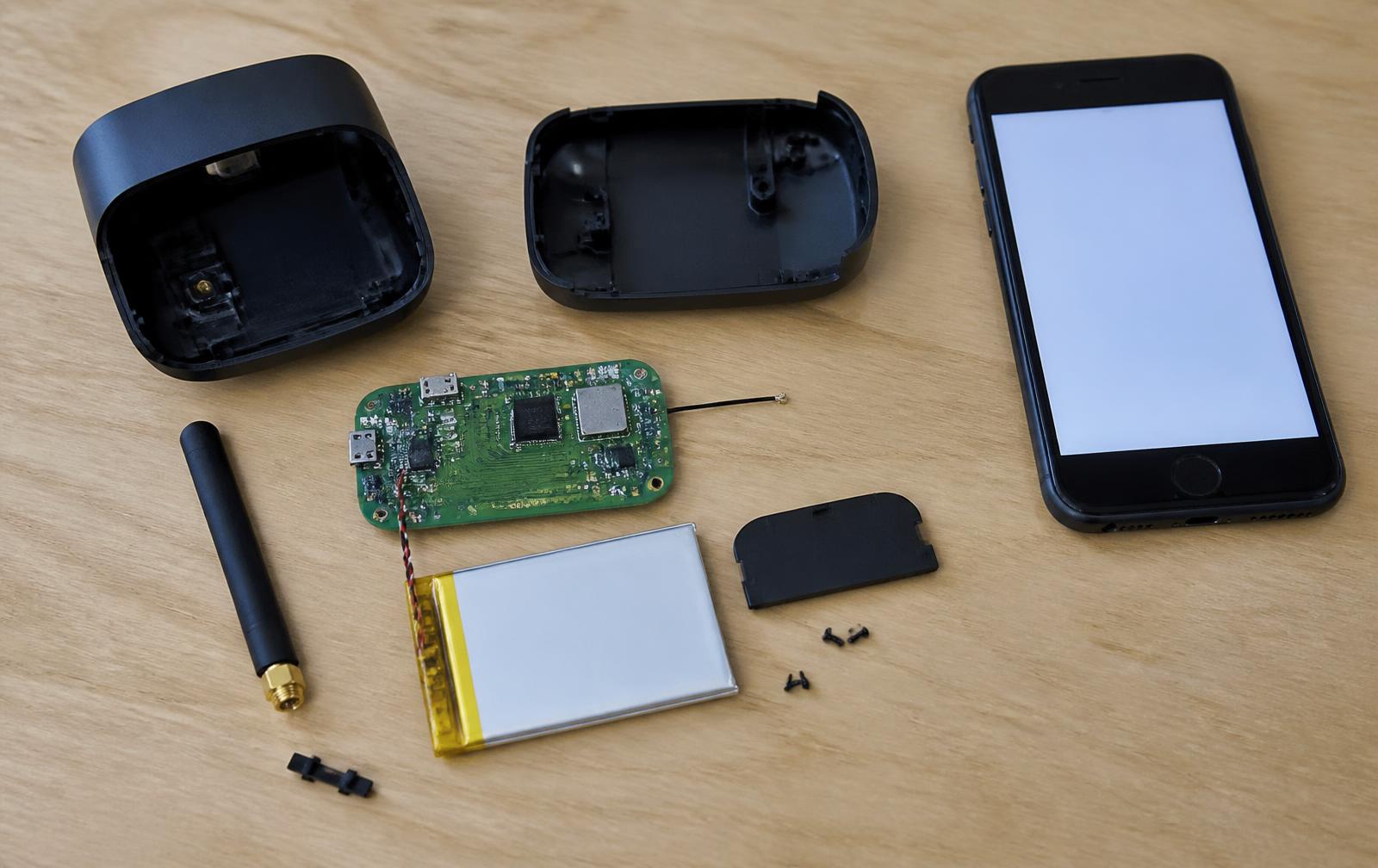
An IoT product is four products in one — an enclosure, an electronics assembly, embedded firmware and a cloud service — and each has its own schedule, test cycle and failure modes. Teams that budget for the board alone are usually the ones that discover, nine months in, that connectivity provisioning and certification were never funded. The stage map below is what a realistic connected-device program looks like when it is planned properly.
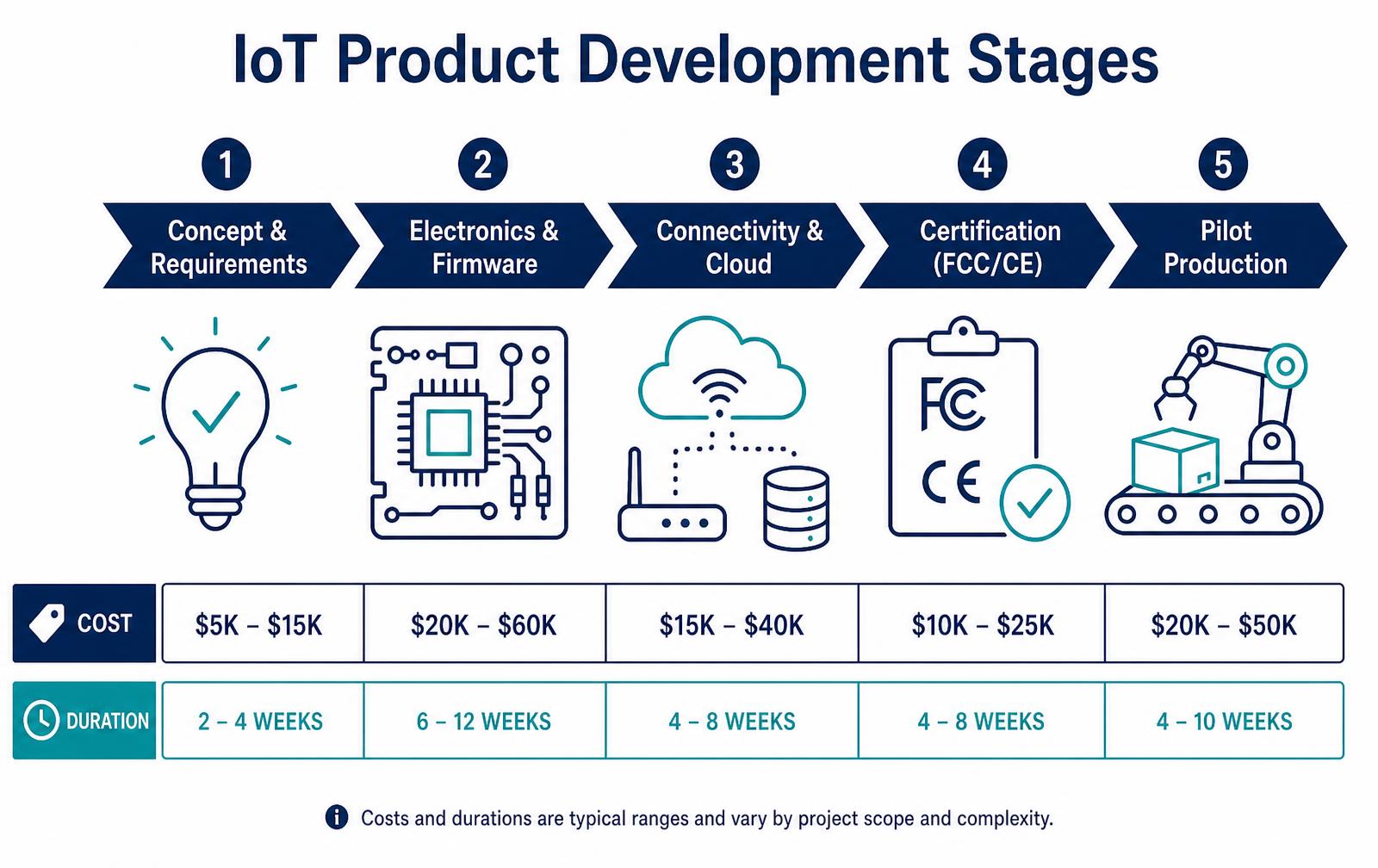
Stages, budgets and schedules
Stage | Typical duration | Typical cost | Main deliverable |
|---|---|---|---|
Concept and requirements | 2-4 weeks | $5k-$15k | Use cases, power budget, connectivity choice, BOM target |
Electronics and firmware | 6-12 weeks | $20k-$60k | Schematic, layout, bring-up boards, working firmware |
Connectivity and cloud | 4-8 weeks | $15k-$40k | Provisioning, OTA update path, telemetry pipeline, app or dashboard |
Certification (FCC/CE, radio module) | 4-8 weeks | $10k-$25k | Emissions, immunity and intentional-radiator test reports |
Pilot production | 4-10 weeks | $20k-$50k | Tooling-ready design, test fixtures, 50-500 verified units |
The three decisions that set the budget
- Radio choice. A pre-certified BLE or Wi-Fi module costs more per unit but removes most intentional-radiator testing and weeks of schedule. A chip-down design saves dollars at volume and adds $15k-$40k of certification and tuning work.
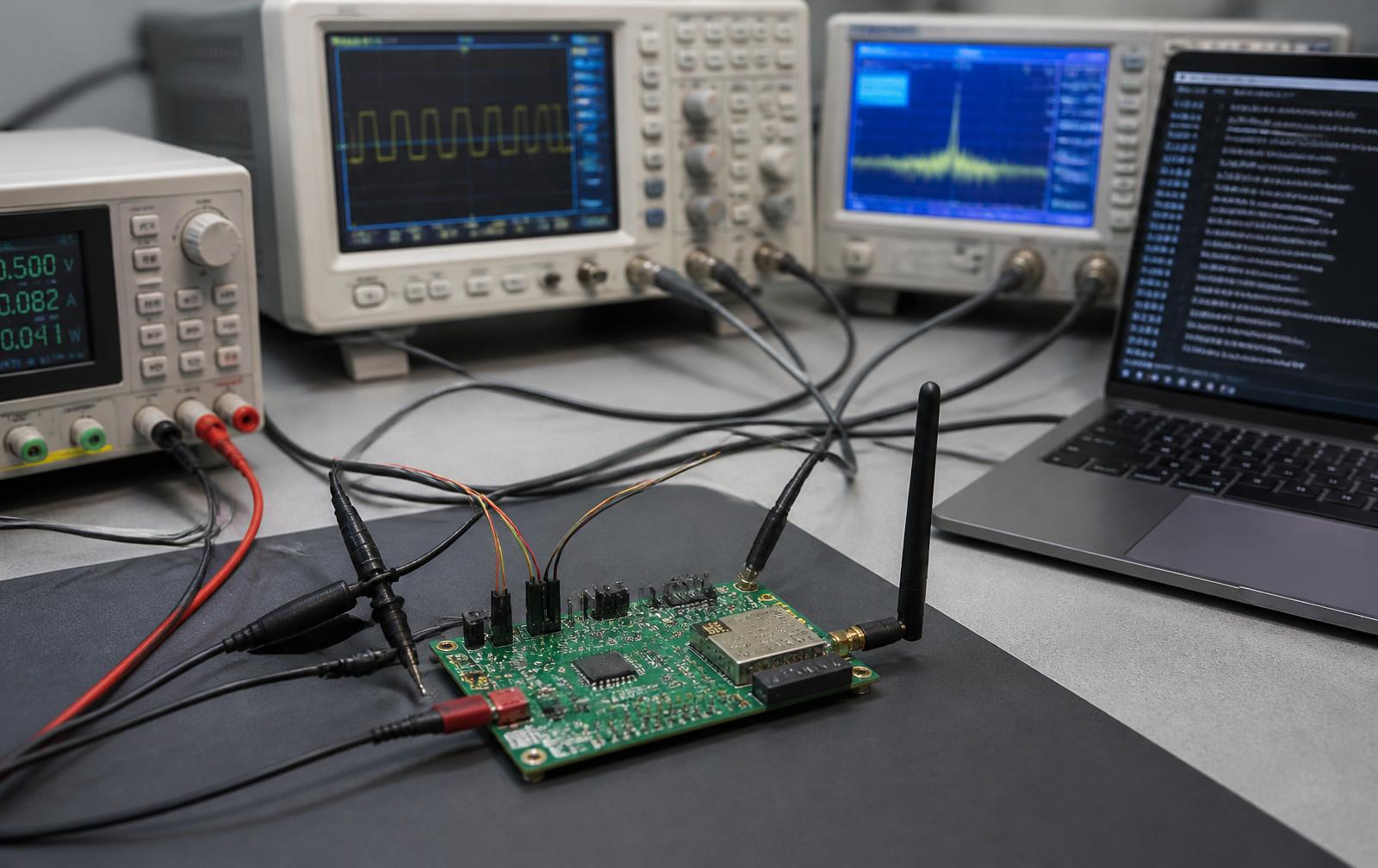
- Power source. Mains-powered devices are forgiving. Coin cell or rechargeable targets force duty-cycle design, low-power firmware and a measurement rig — usually a third more firmware effort.
- Who owns the cloud. Building on a managed IoT platform is faster to launch and predictable to certify; a bespoke backend only pays off when the data model or margins demand it.
- OTA from day one. A device you cannot update in the field turns every firmware bug into a recall. Budget the bootloader and rollback path in the first firmware sprint, not after the pilot.
Where connected-device programs slip
Slips almost never come from the schematic. They come from certification bookings made too late, antenna performance discovered after the enclosure is tooled, provisioning flows nobody owned, and pilot units that fail at the contract manufacturer because no functional test fixture was designed. Each of those is a planning item, which is why we set them as gates rather than as tasks at the end of the plan.
Related reading: electronic product development and electronic design workflow.
IoT hardware development cost by stage
Stage | Duration | Typical cost | Main risk |
|---|---|---|---|
Architecture and radio selection | 3-5 weeks | $15k-$40k | Choosing a module that fails certification in your market |
Schematic and PCB layout | 5-8 weeks | $25k-$70k | Antenna placement and power integrity |
Firmware and cloud integration | 10-20 weeks | $60k-$200k | OTA update path designed too late |
Enclosure and mechanical | 6-12 weeks | $30k-$90k | RF detuning from metal or a tight ground plane |
Certification (FCC/CE/PTCRB) | 6-10 weeks | $15k-$60k | Retests after any board or antenna change |
Pilot production | 6-10 weeks | $25k-$120k | Test fixtures and provisioning not budgeted |
Decisions to lock before layout starts
- Connectivity and carrier (BLE, Wi-Fi, LTE-M, NB-IoT) with a certified module where possible.
- Power budget in mAh per day tied to a real duty cycle, not a best case.
- Provisioning and identity: how each unit gets keys on the factory floor.
- OTA update strategy with rollback, including a bricked-device recovery path.
- Data retention and cloud cost per device per year, which decides your margin at scale.
- Factory test plan and fixtures, designed alongside the board rather than after it.
How the four work streams actually interact
The reason IoT programs slip is rarely a single hard problem. It is coupling.
The mechanical team needs the board outline frozen to finish the enclosure, the RF engineer needs the enclosure geometry to predict antenna detuning, the firmware team needs stable hardware to close timing on the radio stack, and the cloud team needs a provisioning identity that only exists once the factory test plan is written.
Each dependency is reasonable on its own; together they form a loop that a serial schedule cannot resolve.
The way out is to break the loop deliberately. Freeze the board outline and connector positions early and treat them as a contract, even if component placement inside that outline keeps moving.
Build an antenna evaluation unit in the real enclosure material before the tool is cut, because plastic thickness, metal trim and even a decorative coating can cost you several dB.
Give firmware a stable bring-up board that is intentionally one revision behind the cosmetic hardware, so driver work continues while mechanical iterates. Define the device identity scheme in the first month, since it determines how the factory provisions units and how the cloud authenticates them.
Programs that do this run roughly parallel and land in nine to twelve months. Programs that discover the coupling late run serially, and each discovery costs a full board or tool iteration measured in weeks, not days.
Total cost of ownership after launch
Development cost is the visible number; the recurring cost is what decides whether the product has a business behind it. A connected device carries cellular or gateway data charges, cloud compute and storage, certificate lifecycle management, an OTA delivery path, and support staff who can read device telemetry.
At a thousand units these look trivial. At a hundred thousand units, a few cents per device per month is a line item that outweighs the entire engineering budget within two years.
Model it before you commit to an architecture. A device that reports once an hour over LTE-M with a small payload might cost $0.30 to $1.00 per month in connectivity, plus perhaps $0.05 to $0.25 in cloud cost if the data pipeline is designed with retention limits.
A device that streams continuously over Wi-Fi shifts the cost to cloud ingestion and storage instead. Either can be fine; what is not fine is discovering the number after the hardware is tooled, because the fix is almost always a hardware change.
Two design choices dominate the recurring bill: how much you process on the device versus in the cloud, and how long you retain raw data. Edge filtering that sends events instead of raw samples can cut ongoing cost by an order of magnitude, at the price of more firmware complexity and a harder debugging story.
Decide that trade-off consciously during architecture, and write the target cost per device per year into the requirements document alongside the BOM target.
- Connectivity: carrier plan or gateway cost per device per month, including roaming if you ship internationally.
- Cloud: ingestion, storage and query cost modeled at your real reporting interval, not a demo interval.
- Certificates: issuance and rotation over a device lifetime that may exceed five years.
- OTA: bandwidth and staged rollout tooling, plus the engineering time to maintain two supported firmware branches.
- Support: a dashboard your support team can use without an engineer translating logs.
If you are scoping a connected product now, our IoT and consumer product development team handles hardware, firmware and cloud under one schedule, our electronic design services cover schematic through certified board bring-up, and low volume manufacturing gets the first few thousand units built with real test coverage.
Certification: the schedule item teams underestimate
Radio certification is a fixed-cost, fixed-duration event that behaves like a wall, and it is almost never on the first draft of an IoT schedule.
In the United States a device with an intentional radiator needs FCC testing. In Europe it needs CE under the Radio Equipment Directive. Carriers add their own approval program if you use cellular, and PTCRB or equivalent testing can take longer than the FCC work.
Booking a lab is not instant either, and slots in busy quarters run three to six weeks out.
Pre-certified modules remove most of this. If you use a module that already carries a modular grant, you inherit the radio approval and typically need only unintentional radiator testing plus a permissive change filing, which can cut both weeks and tens of thousands of dollars. The trade is unit cost, board area and a small loss of design freedom, which is usually worth it below fifty thousand units a year.
Whatever route you take, run a pre-scan at an accredited lab before the formal test, using production-intent enclosures and cables. Pre-scan failures are cheap to fix; formal test failures cost the retest fee, a board or shielding change, and another lab slot. Budget for one retest as the expected case rather than the exception, and hold the enclosure tool until the antenna has passed in the real housing.
Frequently asked questions
How much does IoT product development cost?
A single connected device from concept through pilot production typically runs $70,000 to $190,000 in engineering, plus tooling. Simple sensors with a pre-certified module sit at the low end; multi-radio, battery-powered or regulated products sit above it.
How long does it take to develop an IoT product?
Nine to eighteen months from requirements to pilot units is normal. Roughly five to eight months is engineering, and the rest is certification, tooling and the two design iterations most programs need after real-world testing.
What certifications does a connected device need?
In the United States, FCC Part 15 for unintentional radiators plus intentional-radiator testing for the radio; in Europe, CE under the Radio Equipment Directive. Battery products add UN 38.3 for shipping, and safety marks such as UL or ETL apply depending on the market and power source.
Planning a connected product?
We take IoT products from requirements through certified pilot production.
Choosing the connectivity stack before anything else
Connectivity is not a feature you add to a board; it sets the power budget, the enclosure geometry, the certification bill and the recurring cost per device for the product’s entire life. Changing it after layout means a new antenna keep-out, a new RF test campaign and often a new battery. Lock it in feasibility.
Radio | Module cost | Typical power | Recurring cost | Fits |
|---|---|---|---|---|
BLE | $2-$6 | Lowest; coin cell viable | None | Phone-tethered wearables, sensors |
Wi-Fi | $3-$8 | High; needs mains or large cell | None | In-home devices with an outlet |
LTE-M / NB-IoT | $10-$25 | Moderate, bursty | $1-$3 per device per month | Asset trackers, remote monitoring |
LoRaWAN | $6-$15 | Very low | Gateway capex or network fee | Dense low-bandwidth sensor fleets |
Sub-GHz proprietary | $3-$9 | Very low | None, but you own the gateway | Industrial telemetry, long range |
Run a written power budget before committing. Take the sleep current, the active current, the transmit duration and the reporting interval, and compute expected battery life at the worst-case temperature. Teams that skip this step discover the two-year battery claim is a four-month reality after tooling is cut.
Firmware update strategy is a launch requirement
A connected device without a reliable over-the-air update path is a recall waiting for a reason. Budget for dual-bank flash so an interrupted update falls back to the previous image, signed images so only your firmware runs, and a staged rollout that pushes to one percent of the fleet before the rest. The flash cost is measured in cents; the alternative is a field service visit measured in tens of dollars per unit.
- Dual-bank flash with rollback — adds $0.30-$1.20 in memory and removes the bricking scenario entirely.
- Signed and encrypted images — required for most enterprise buyers and for any device handling personal data.
- Staged rollout with health telemetry — one percent, then ten, then the fleet, with an automatic halt on crash-rate rise.
- Provisioning at the factory — per-device keys written on the line, not a shared secret compiled into the image.
- Defined end-of-support date — published, so the security posture and cloud cost both have a horizon.
Key takeaways
- Choose the radio in feasibility — it drives power, enclosure, certification and recurring cost.
- Write a numeric power budget before ordering the first prototype PCB.
- Recurring cellular fees change the business model, not just the BOM.
- Ship dual-bank OTA with signed images and staged rollout from day one.
- Provision unique keys on the production line, never a shared compiled secret.
Work with LA NPDT: if you are moving from here to execution, start with our design optimization or talk to us about low-volume manufacturing.
Filed under:Tech Talk Podcast
Services related to this guide
- Product design servicesIndustrial design and CAD taken all the way to manufacturable files.
- Rapid prototypingWorking prototypes in days, from 3D printing to vacuum casting.
- Electronic design servicesSchematic, PCB layout, firmware and bring-up, through to production handoff.
- Product development examplesReal projects we designed, prototyped and shipped.