Tech Talk E10: Lasers Hack Speakers, Facebook Facial Recognition Software, Thank You FireFox
Smart speakers have been subject to issues since they were first introduced. Reports show Facebook is working on facial recognition software.
November 8, 20198 min read

Written by Konstantin Dolgan, Ph.D., NPDP
Founder & CEO, Product Development Engineer
Published November 8, 2019Updated September 2, 2026
Tech Talk Episode 10: Lasers Hack Speakers, Facebook Facial Recognition Software, Thank You FireFox
Lasers Hack Speakers
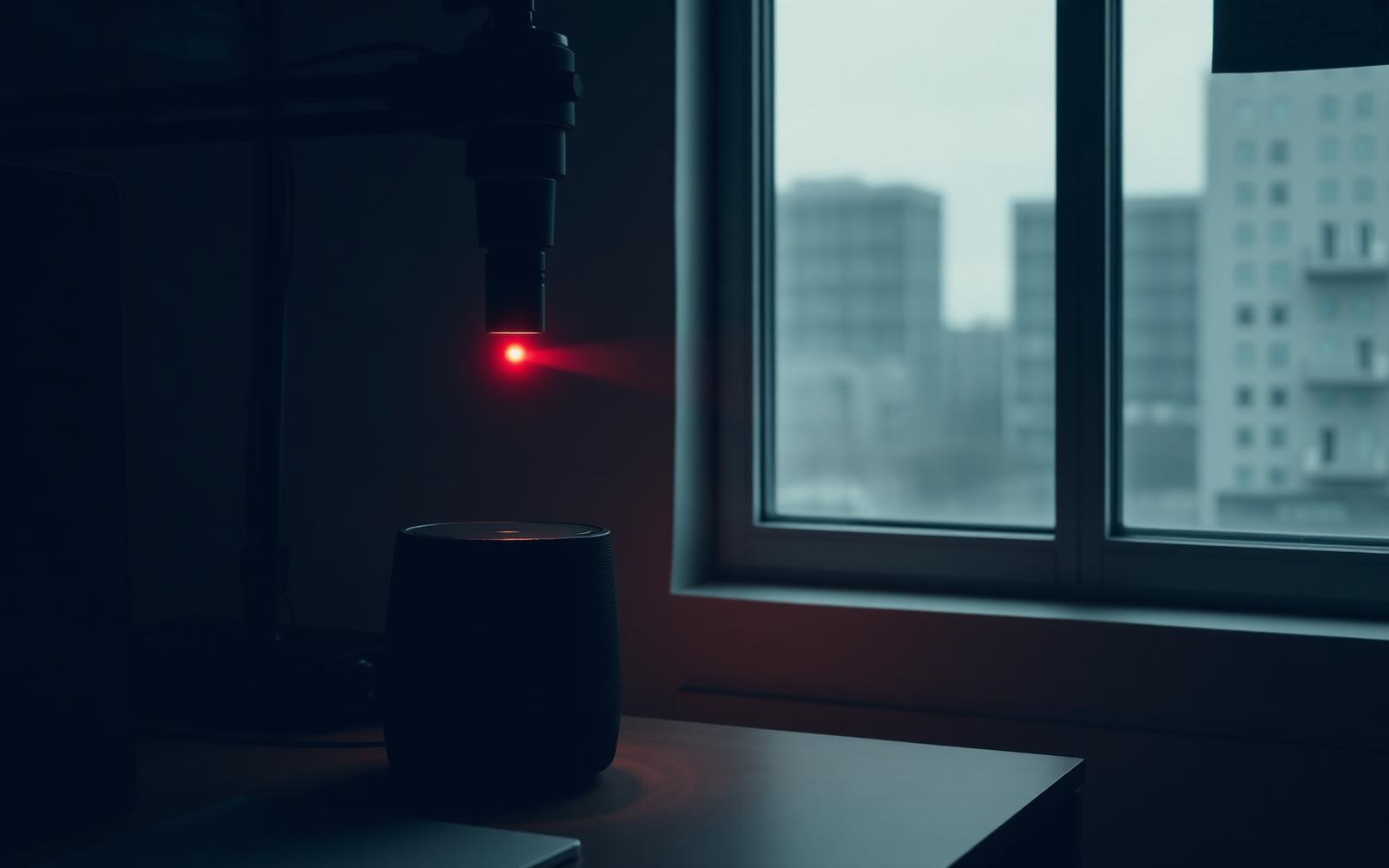
Smart speakers have been subject to issues since they were first introduced. Recently, researchers based in Tokyo and at the University of Michigan found an unexpected vulnerability in these speakers.
Facebook Facial Recognition Software
Reports show Facebook is working on facial recognition software that could be used to verify the identity of someone using the app. This software could be similar to the software they use when users tag another person in the app.
Thank You FireFox
Unless you’ve been hiding under a rock, you’ve been hit with some irritating notification permission requests while browsing online. They usually want to serve up ads or site announcements or subscribe you to something.
Related Product Development Topics
Topic | Description |
|---|---|
Geopolitical Risk | Risk in New Product Development |
Component Lifecycle Management | Designing for Obsolescence |
Material Qualification Strategy | Reducing Risk Before Production |
Bridging | Digital and Physical Prototyping |
Systems Thinking | In Hardware Development |
What connected-product teams should take from this
Risk surface | Real-world example | Design response |
|---|---|---|
Sensor spoofing | Laser injection into MEMS microphones | Add a second sensing modality for critical commands |
Biometric data capture | Facial recognition in consumer apps | Process on-device; never ship raw biometrics to a server |
Silent data collection | Browser and app telemetry backlash | Publish a plain-language data policy in the product itself |
Firmware left unpatched | Fleets shipping vulnerable builds for years | Signed OTA updates from day one, not version two |
Third-party SDK creep | Analytics libraries pulling contacts and location | Audit SDK permissions before every release |
Privacy questions to answer before launch
- What is the minimum data the feature needs? Collect that and nothing else.
- Where is biometric or voice data processed? On-device processing removes an entire class of liability.
- How long is data retained, and who can delete it? Users need a working delete path, not an email address.
- Which regulations apply? Illinois BIPA, Texas CUBI, GDPR and CCPA all treat biometrics differently.
- Can the device be updated in the field? If not, every vulnerability found is permanent.
Frequently asked questions
What recent vulnerability was found in smart speakers?
Researchers in Tokyo and at the University of Michigan recently discovered an unexpected vulnerability in smart speakers. This finding highlights ongoing issues with these devices since their initial introduction. The specific details of the hack involve lasers, which could potentially exploit the speakers' functionalities.
How might Facebook use facial recognition software?
Reports indicate Facebook is developing facial recognition software to verify user identity within its application. This new software could function similarly to their existing tagging software, which identifies people in photos. The goal is to enhance security or identification processes for app users.
What is Firefox doing about online notification requests?
Firefox is addressing irritating online notification permission requests encountered during browsing. These requests typically aim to display ads, provide site announcements, or subscribe users to services. The browser is taking steps to manage or reduce these common interruptions for users.
What common issues do users face with online browsing notifications?
Users frequently encounter irritating notification permission requests while browsing online. These requests often aim to serve up ads, deliver site announcements, or subscribe users to various services. These pop-ups can interrupt the browsing experience, prompting browsers like Firefox to address them.
Sources and standards
- USPTO — patent basics — Official guidance on provisional and non-provisional filings for new products.
- NIST Manufacturing Extension Partnership — Federal program supporting US small and mid-size manufacturers.
- ISO 9001 quality management — The quality-system standard most contract manufacturers are audited against.
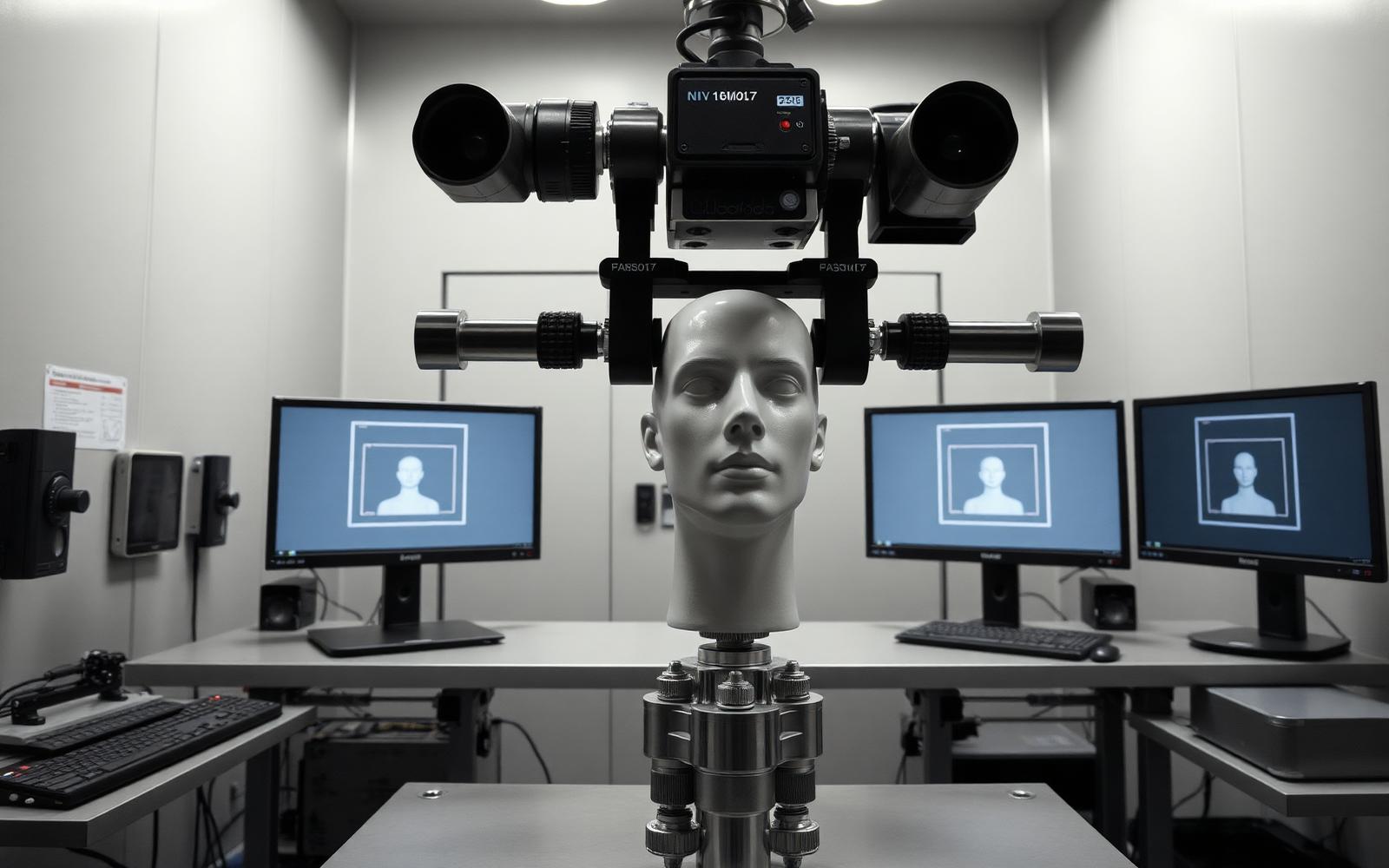
What Facebook facial recognition software changed for hardware teams
The consumer backlash over automatic face tagging did more than reshape one social network's settings page. It set the expectation that any device with a camera has to explain what it detects, where the inference happens and how long the data lives.
If you are building a doorbell, a retail counter, a kiosk or a robot, that expectation is now part of your requirements document, not a marketing afterthought.
The engineering consequence is concrete: on-device inference costs silicon and power, cloud inference costs bandwidth and legal exposure, and the choice has to be made before you freeze the enclosure and the thermal budget.
Biometric privacy laws in Illinois, Texas and Washington attach real damages to collecting a faceprint without written consent, and several municipalities restrict deployment outright. Teams that treat the camera as a generic sensor discover late that their product is regulated in a way their competitors avoided by detecting a body silhouette instead of a face.
On-device versus cloud inference
Approach | Typical BOM impact | Latency | Privacy exposure |
|---|---|---|---|
Cloud inference | $0-$3 (Wi-Fi only) | 150-800 ms | Highest - images leave the device |
MCU with NPU (low-power vision SoC) | $4-$12 | 30-90 ms | Low - frames stay local |
Application processor + accelerator | $18-$45 | 10-40 ms | Low, but thermal and cost heavy |
Non-facial detection (PIR, radar, silhouette) | $1-$6 | instant | Minimal - no biometric data |
Most consumer products land on the second row. A vision SoC that runs detection locally and uploads only an event flag keeps the recurring cloud bill near zero and removes the most damaging class of breach: a bucket of customer faces.
Camera product privacy checklist
- State in the requirements document whether the product identifies people or merely detects presence - the two have different legal footprints.
- Default every biometric feature to off and require an explicit opt-in on first setup.
- Keep raw frames in volatile memory only; write embeddings or event metadata, never images, to persistent storage.
- Add a hardware indicator tied to the sensor rail that cannot be disabled in firmware.
- Publish a retention period and implement automatic deletion in firmware, not just in the privacy policy.
- Log consent with a timestamp and firmware version so you can prove it years later.
- Run a threat model on the OTA path - a camera with a weak update channel is a camera an attacker owns.
Key takeaways
- Facial recognition is a product decision with cost, thermal and legal consequences, not a software feature you bolt on late.
- Local inference is now affordable enough that shipping frames to the cloud is usually the wrong default.
- Ask whether you need identity at all - presence detection solves most use cases without biometric liability.
Biometric law is now a hardware design constraint
Face and voice features used to be a software decision made after launch. They are now a design input: the law in several jurisdictions attaches to the collection of a biometric identifier itself, regardless of whether the data leaves the device. If your product has a camera or a microphone and any recognition feature, the consent flow, retention policy and deletion path belong in the requirements document, not the privacy page.
What the major regimes require
Regime | Scope | Core obligation | Exposure |
|---|---|---|---|
Illinois BIPA | Face, voice, fingerprint templates | Written consent and a public retention policy | Private right of action, per-violation damages |
Texas CUBI / Washington | Biometric identifiers | Notice and consent, deletion timelines | State enforcement |
GDPR (EU) | Biometrics for unique identification | Explicit consent or another Article 9 basis | Percentage-of-turnover fines |
CCPA/CPRA (California) | Biometric personal information | Disclosure, opt-out, deletion rights | Regulatory enforcement |
Sector rules (schools, employment) | Varies | Often stricter consent | Contract loss, injunctions |
The engineering consequence is concrete. On-device matching with templates that never leave the product narrows exposure dramatically compared with cloud enrollment, but it does not remove the consent requirement. Design for deletion too — a user request must actually purge templates from the device, any companion app and any backup.
Requirements to write before layout
- Decide on-device versus cloud inference; it sets your compute, memory and BOM cost.
- Store templates, never raw images, and encrypt them at rest with a device-bound key.
- Build a consent flow into first-run setup, with a record of when and what was agreed.
- Define a retention period and implement automatic expiry, not just a manual delete.
- Provide a hardware indicator or shutter that shows when the sensor is active.
Key takeaways
- Biometric compliance is a hardware requirement, not a post-launch policy edit.
- On-device templates reduce exposure but do not remove consent obligations.
- Deletion and retention must be implemented in firmware, app and backups alike.
Privacy obligations that change your architecture
Biometric data carries statutory obligations that ordinary telemetry does not. Illinois' Biometric Information Privacy Act requires written consent before collecting a face template and allows private lawsuits; Texas and Washington have their own regimes. The EU treats biometric identification as special-category data under GDPR. The practical engineering consequence is that where you store the template matters as much as whether you encrypt it.
The lowest-risk architecture keeps templates on the device in a secure element, never transmits raw images, and offers a non-biometric fallback for every function. That decision belongs in the requirements document, not in a late security review, because it drives the choice of microcontroller and the memory budget. Teams building this into connected products should read it alongside our electronic design approach to secure hardware.
- Store templates, never source images; a template should not be reversible to a photograph
- Keep matching on-device when the use case allows — it removes an entire class of breach exposure
- Provide an equally convenient non-biometric path (PIN, button, app) for every biometric function
- Get explicit, written, revocable consent before enrollment and log the consent event
- Define a deletion path that removes the template within days, not at an unspecified future date
- Test spoof resistance with printed photos, phone screens and a mask before claiming security
- Document your false accept and false reject rates by lighting condition, not as one headline number
Frequently asked questions
Is face unlock secure enough for payments? Only with a depth or infrared channel and liveness detection. RGB-only implementations are defeated by a phone screen showing a photograph, which is why payment-grade systems all carry a depth sensor.
Does on-device inference need a special chip? Not necessarily. Modern application processors with a small neural accelerator run embedding models comfortably; microcontroller-class parts can run quantized detection but struggle with recognition at usable accuracy.
How much data do I need to train? For nearly every product, none — you use a pretrained embedding model and enroll individual users at setup. Training a face model from scratch is a research project, not a product task.
What is the biggest schedule risk? Optics. The plastic window in front of the sensor changes transmission and scatter, and that discovery usually arrives after tooling. Prototype the window with production material early; we cover this pattern in our product development process and in past programs in the portfolio.
Building a connected product with a camera or microphone?
Frequently asked questions
How consumer facial recognition actually works, layer by layer?
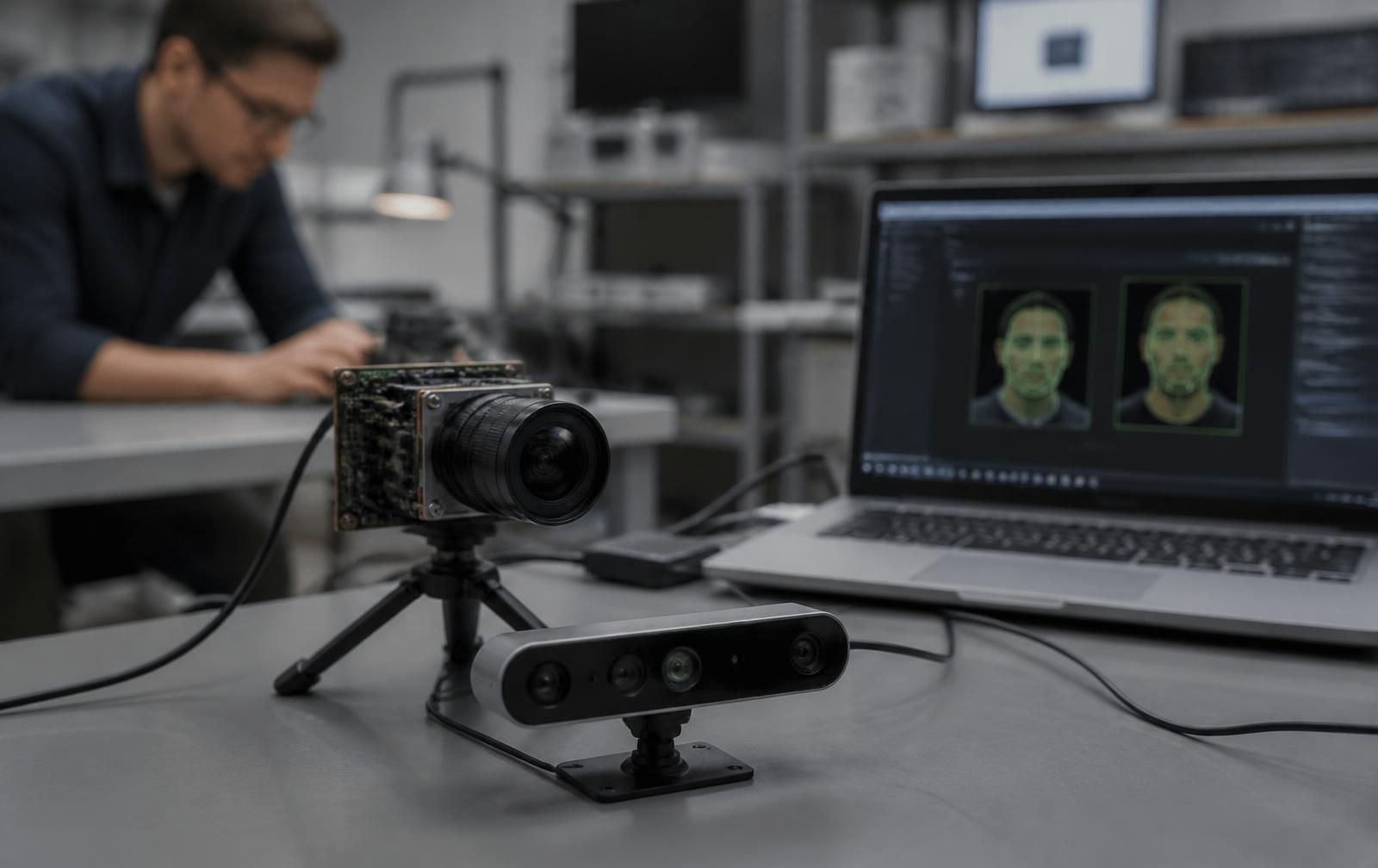
When a consumer platform tags a face, four separate systems run in sequence, and each one has a different failure mode. Detection finds that a face exists in the frame. Alignment normalizes pose and scale so the same face at three-quarter view maps to the same coordinate space as a straight-on shot.
Embedding converts the aligned crop into a numeric vector, typically 128 to 512 dimensions. Matching compares that vector against a gallery and returns a distance score with a threshold behind it. Almost every controversy about facial recognition is really an argument about the fourth step.
The threshold is a business decision, not a mathematical one: lower it and you catch more true matches while generating more false positives; raise it and you miss people. Platforms tune that dial for engagement, security systems tune it for liability, and neither publishes the number.
What this means for hardware you are building?
Founders regularly ask us to add face unlock or face-based personalization to a consumer device.
The feature is straightforward to demo and hard to ship, because the demo runs on a clean image from a good sensor in office light and the shipped product runs at dusk, at an angle, through a plastic window that scatters near-infrared.
The sensor stack, not the algorithm, decides whether the feature survives contact with users. Three choices dominate the bill of materials: whether you use an RGB camera alone or add a depth or infrared channel, whether inference runs on-device or in the cloud, and how you store templates. Each choice moves cost, latency and regulatory exposure in different directions.
Services related to this guide
- Product design servicesIndustrial design and CAD taken all the way to manufacturable files.
- Rapid prototypingWorking prototypes in days, from 3D printing to vacuum casting.
- Electronic design servicesSchematic, PCB layout, firmware and bring-up, through to production handoff.
- Product development examplesReal projects we designed, prototyped and shipped.