Metal 3D Printing Cost: Processes, Pricing and When Machining Wins
How the four production metal additive processes differ, what parts actually cost, and the break-even point where CNC machining wins.
November 13, 20198 min read

Written by Konstantin Dolgan, Ph.D., NPDP
Founder & CEO, Product Development Engineer
Published November 13, 2019Updated September 2, 2026
Metal 3D printing is now a production process, not a curiosity. Aerospace brackets, hydraulic manifolds, surgical instruments and conformally cooled mold inserts are printed in volume every day. The engineering question is no longer can it be printed but which process, at what tolerance, and at what cost per part compared with machining or casting.
The four metal additive processes that matter
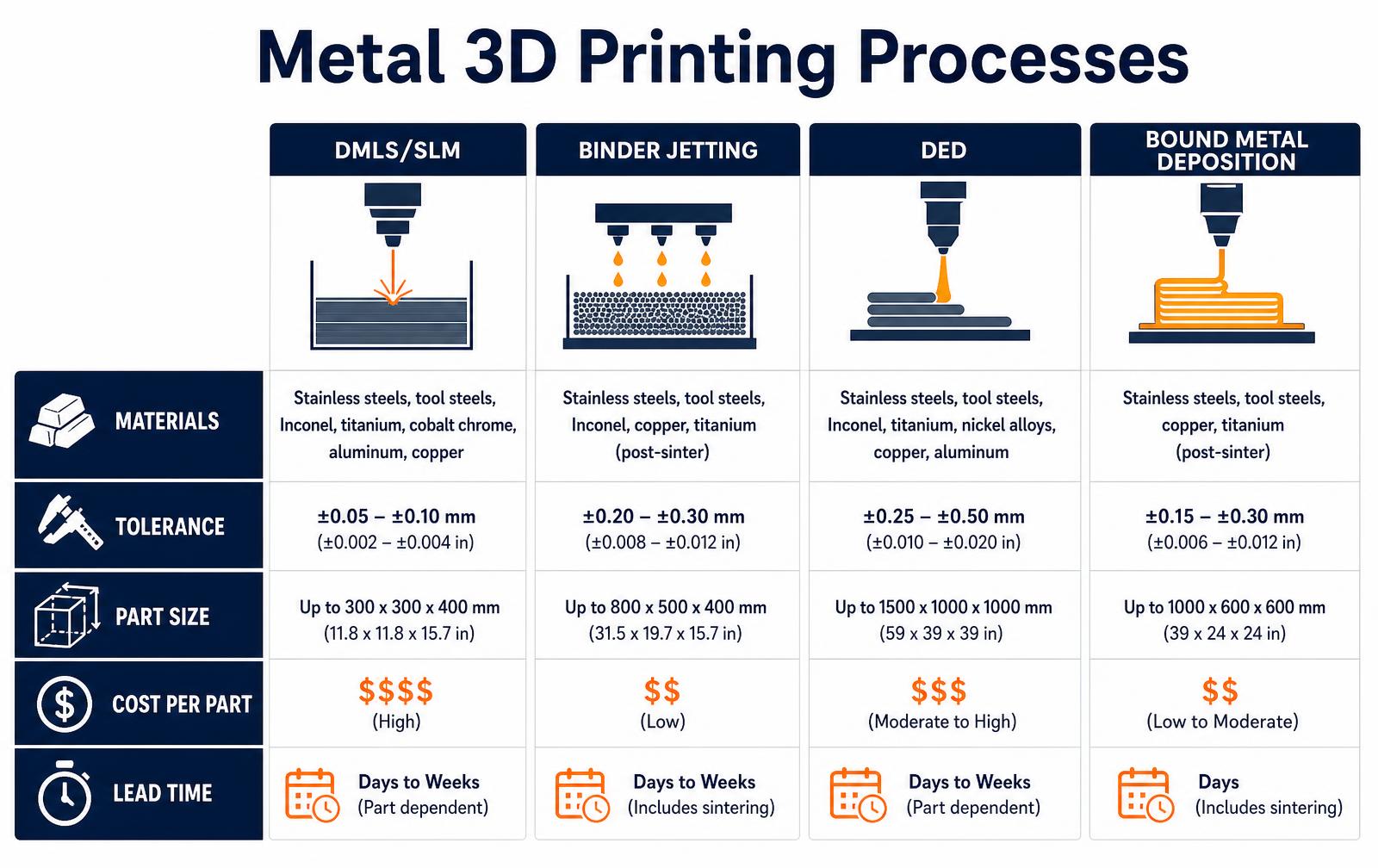
Powder bed fusion (DMLS/SLM) dominates because it holds the tightest tolerances and prints fully dense parts in aerospace alloys. Binder jetting trades tolerance for throughput and is the only additive route that competes with casting on unit cost at volume. Directed energy deposition (DED) builds and repairs large parts. Bound metal deposition is the office-friendly option for jigs, fixtures and low-volume tooling.
Process | Best for | Tolerance | Density | Cost per part |
|---|---|---|---|---|
DMLS / SLM | Complex, high-value, flight or medical parts | +/-0.05-0.10 mm | 99.5%+ | $$$$ |
Binder jetting | Hundreds to thousands of small parts | +/-0.20-0.30 mm | 96-99% after sinter | $$ |
DED | Large structures, cladding, weld repair | +/-0.25-0.50 mm | 98-99% | $$$ |
Bound metal deposition | Fixtures, tooling, prototypes | +/-0.15-0.30 mm | 96-98% | $$ |
What does metal 3D printing cost?
Cost is driven by build volume consumed, not by part complexity. A laser powder bed machine bills roughly $80-$180 per build hour, and a build plate is amortized across every part that fits on it.
That is why nesting matters more than geometry: printing one bracket costs the same machine time as printing eight nested brackets, so the per-part price falls by nearly a factor of eight.
Expect $150-$800 for a fist-sized stainless part in low quantity, plus post-processing that is routinely 30-50% of the total: stress relief, wire EDM removal from the plate, support removal, HIP if fatigue matters, and machining of critical features.
- Powder - $60-$120/kg stainless, $250-$500/kg titanium, $90-$200/kg Inconel.
- Machine time - $80-$180/hour; a dense plate runs 20-60 hours.
- Post-processing - stress relief, plate removal, support removal, blasting: $100-$600 per plate.
- Secondary machining - bearing bores, sealing faces and threads should be machined, not printed.
- Inspection - CT scanning for flight or implant parts adds $200-$1,000 per lot.
When is CNC machining still the better choice?
Printing loses badly on simple geometry. If the part is a prismatic block with a few bores, a 3-axis mill will produce it faster and cheaper at almost any quantity.
Additive wins when the geometry buys you something: internal conformal channels, topology-optimized mass reduction, consolidation of an eight-piece weldment into one part, or a lead time measured in days instead of the ten weeks a casting tool takes.
As a rule of thumb, below roughly 50-100 units of a complex, consolidated part, additive is cost-competitive; above that, casting plus machining usually takes over unless the design cannot be made any other way.
Quantity | Simple geometry | Complex / consolidated geometry |
|---|---|---|
1-10 | CNC machining | Metal 3D printing |
10-100 | CNC machining | Metal 3D printing |
100-1,000 | Machining or casting | Binder jetting or investment casting |
1,000+ | Casting, MIM or stamping | Investment casting from printed patterns |
How should a part be designed for metal printing?
- Keep unsupported overhangs above 45 degrees, or design self-supporting chamfers and teardrop holes.
- Hold wall thickness at 0.8 mm or greater; thin fins warp during the build and during stress relief.
- Leave 0.5-1.0 mm of machining stock on any surface with a tolerance tighter than 0.1 mm.
- Provide powder escape holes for every internal channel - trapped powder is scrap.
- Orient the part so critical surfaces face up-skin, and plan where witness marks from supports will land.
- Specify the heat treatment and, if fatigue-critical, hot isostatic pressing in the drawing notes, not in an email.
Which metals can actually be printed?
The reliable production alloys are 316L and 17-4PH stainless, AlSi10Mg and A6061-RAM2 aluminum, Ti-6Al-4V titanium, Inconel 625 and 718, maraging steel 1.2709 for tooling, and cobalt chrome for dental and medical parts. Copper and tungsten are printable but need green lasers or binder jetting.
If a program depends on an unusual alloy, qualify the powder lot and the machine parameter set before the design freezes - parameter development alone can take months.
Turning a printed part into a production program
Additive parts fail audits for process control, not for strength. A production program needs a frozen build file, a documented powder lot and reuse policy, a fixed post-processing recipe, and first-article inspection against the same drawing you would give a machine shop. Our engineering team builds that documentation package alongside the part so a second supplier can reproduce the first supplier's results.
What drives metal 3D printing cost
Metal additive is priced by machine time and build volume occupied, not by part complexity. Height in the build chamber matters most, because every layer costs the same recoat time whether it covers one part or forty. That is why nesting many small parts into a single build is dramatically cheaper per part, and why a tall thin bracket can cost more than a squat complex manifold of the same mass.
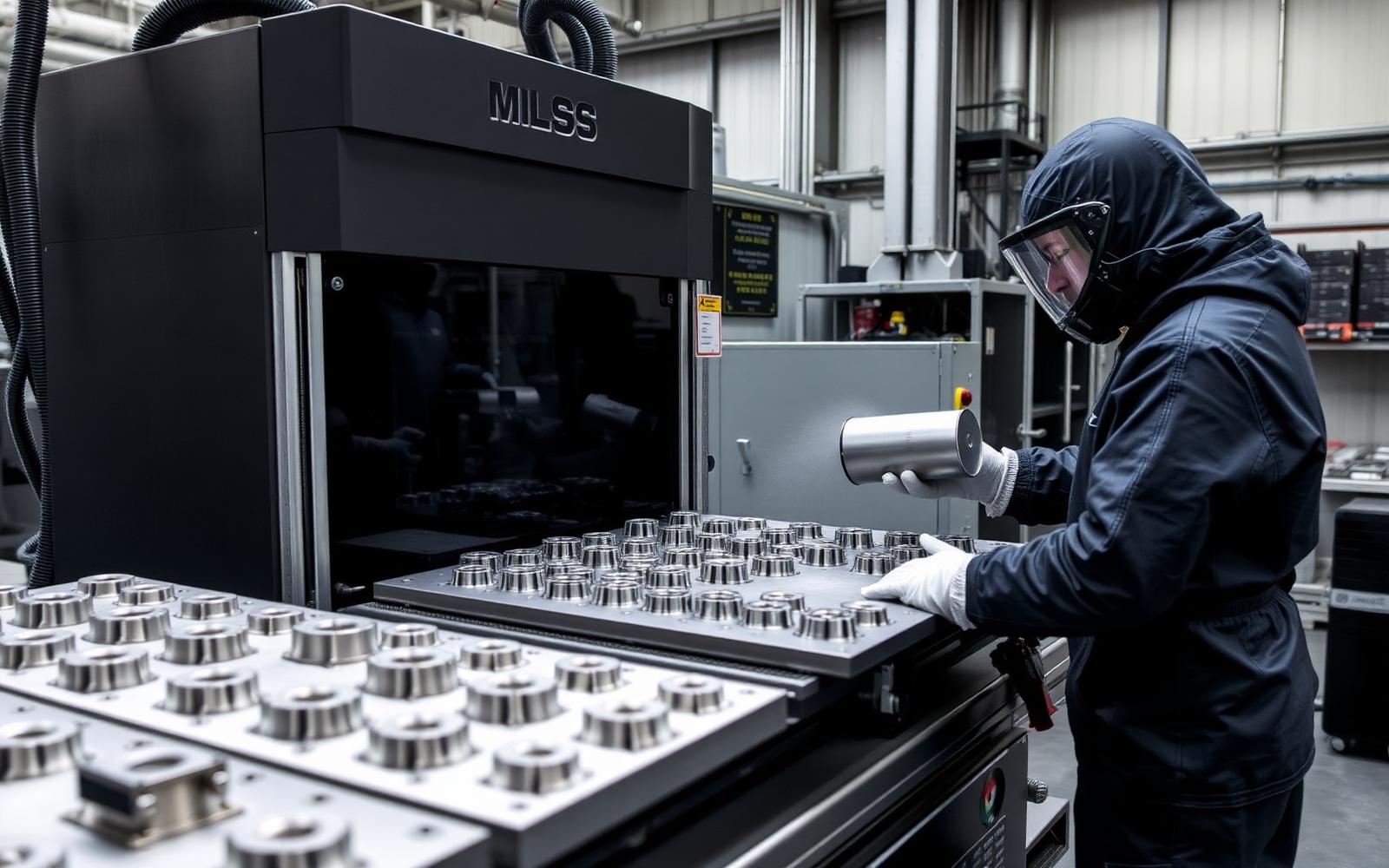
Process | Common materials | Typical part cost | Tolerance | Best for |
|---|---|---|---|---|
DMLS / LPBF | 316L, 17-4PH, AlSi10Mg, Ti64, Inconel | $250-$3,000 | plus or minus 0.1-0.2 mm | Complex, high-value, low volume |
Binder jetting | 316L, 17-4PH | $60-$600 | plus or minus 0.3 mm plus shrink | Hundreds of small parts |
Bound metal deposition | 316L, H13, copper | $120-$900 | plus or minus 0.4 mm | Office-friendly prototypes and tooling |
DED / wire arc | Steel, titanium, Inconel | $400-$6,000 | Machining stock required | Large parts and repairs |
CNC machining (benchmark) | Any billet alloy | $80-$900 | plus or minus 0.025-0.1 mm | Prismatic geometry, any volume |
The costs quotes leave out
- Support removal - manual labour, often 15-30% of part cost on overhang-heavy geometry.
- Stress relief and heat treatment - $150-$600 per build, mandatory for most alloys.
- Wire EDM plate removal - $100-$400 per build.
- Post-machining of critical features - bores, threads and sealing faces still need a machine tool.
- Surface finishing - as-printed Ra is 6-20 microns; bead blast, tumble or polish adds cost.
- Inspection - CT scanning for internal porosity runs $300-$1,500 per part in qualified applications.
When machining still wins
Metal printing pays off for consolidated assemblies, internal conduits that cannot be drilled, conformal cooling in tooling, and part counts under roughly a hundred. If the geometry is prismatic, the tolerance is tight, the material is aluminum, or the quantity exceeds a few hundred, machining or casting is almost always cheaper and faster. The honest test is a side-by-side quote on the same drawing before the design commits to an additive-only feature.
- Key takeaway 1: Build height and nesting drive metal printing cost more than complexity.
- Key takeaway 2: Budget post-processing; it is routinely 30-50% of the finished part cost.
- Key takeaway 3: Additive wins on consolidation, internal channels and conformal cooling.
- Key takeaway 4: Quote the same part both ways before committing to an additive-only design.
Post-processing: the half of the cost that is not printing
Metal parts come off the plate attached to it, full of residual stress, with as-built surfaces around Ra 6–20 µm. Everything that turns that into a usable component is a separate operation with a separate price, and quotes that look cheap usually stop at the print.
Operation | Typical cost per part | Why it is needed |
|---|---|---|
Stress relief cycle | $60–$400 per build | Prevents distortion when parts are cut from the plate |
Plate removal (EDM or bandsaw) | $50–$300 | Separates parts from the build plate |
Support removal | $40–$600 | Manual labor; internal supports can be unreachable by design |
HIP (hot isostatic pressing) | $150–$900 | Closes internal porosity for fatigue-critical parts |
Machining of critical features | $80–$1,200 | Printed tolerances rarely meet bearing or sealing fits |
Surface finishing | $30–$400 | Tumbling, blasting or polishing to a specified Ra |
Inspection (CT or CMM) | $120–$1,500 | Required for aerospace, medical and pressure parts |
Qualifying an additive part for production
- Fix the machine, powder lot specification and parameter set — a change in any of them is a process change requiring re-validation.
- Print witness coupons in every build and test tensile and density against your acceptance limits.
- Define the build orientation on the drawing; anisotropy means orientation is a dimension, not a preference.
- Specify powder reuse limits and oxygen pickup tracking for reactive alloys such as titanium.
- Require a build report per lot: machine ID, powder lot, layer count, any interruptions.
- Agree the inspection method up front — CT scanning internal channels after the fact is expensive and sometimes inconclusive.
Frequently asked questions
How much does a metal 3D printed part cost?
Small stainless brackets typically land between $150 and $600 each in low quantities, mid-size aluminum housings between $500 and $2,500, and large or titanium parts run into five figures. Cost tracks the build volume occupied and the machine hours consumed, plus post-processing, rather than geometric complexity.
Is metal 3D printing cheaper than CNC machining?
Rarely for simple geometry. Machining wins on prismatic parts, plates and anything that starts as bar stock. Additive wins when a part consolidates several machined components, contains internal conduits or lattices, or would otherwise require complex fixturing and five-axis time.
What tolerances can metal 3D printing hold?
Expect roughly ±0.1–0.2 mm on small features and ±0.2% on larger dimensions from powder bed fusion, with as-built surface roughness around Ra 6–20 µm. Bearing fits, sealing faces and threads should be machined after printing.
Which metals print reliably?
316L and 17-4PH stainless, AlSi10Mg aluminum, Ti-6Al-4V titanium, Inconel 625 and 718, and maraging steel are the production-proven alloys. Copper and pure aluminum remain harder and more machine-specific.
What lead time should I plan for?
Five to ten business days for a simple printed and de-supported part, and three to five weeks when HIP, machining, finishing and inspection are in the chain. Certification packages add time beyond that.
Building a quote you can actually compare
Metal additive quotes are hard to compare because vendors bundle different work into the per-part number. One shop quotes the raw print and bills post-processing hourly; another quotes a finished, heat-treated, machined part. The difference can be three times the headline price. Ask every vendor to break the quote into the same five lines — powder, machine time, post-processing, secondary machining and inspection — and the comparison becomes trivial.
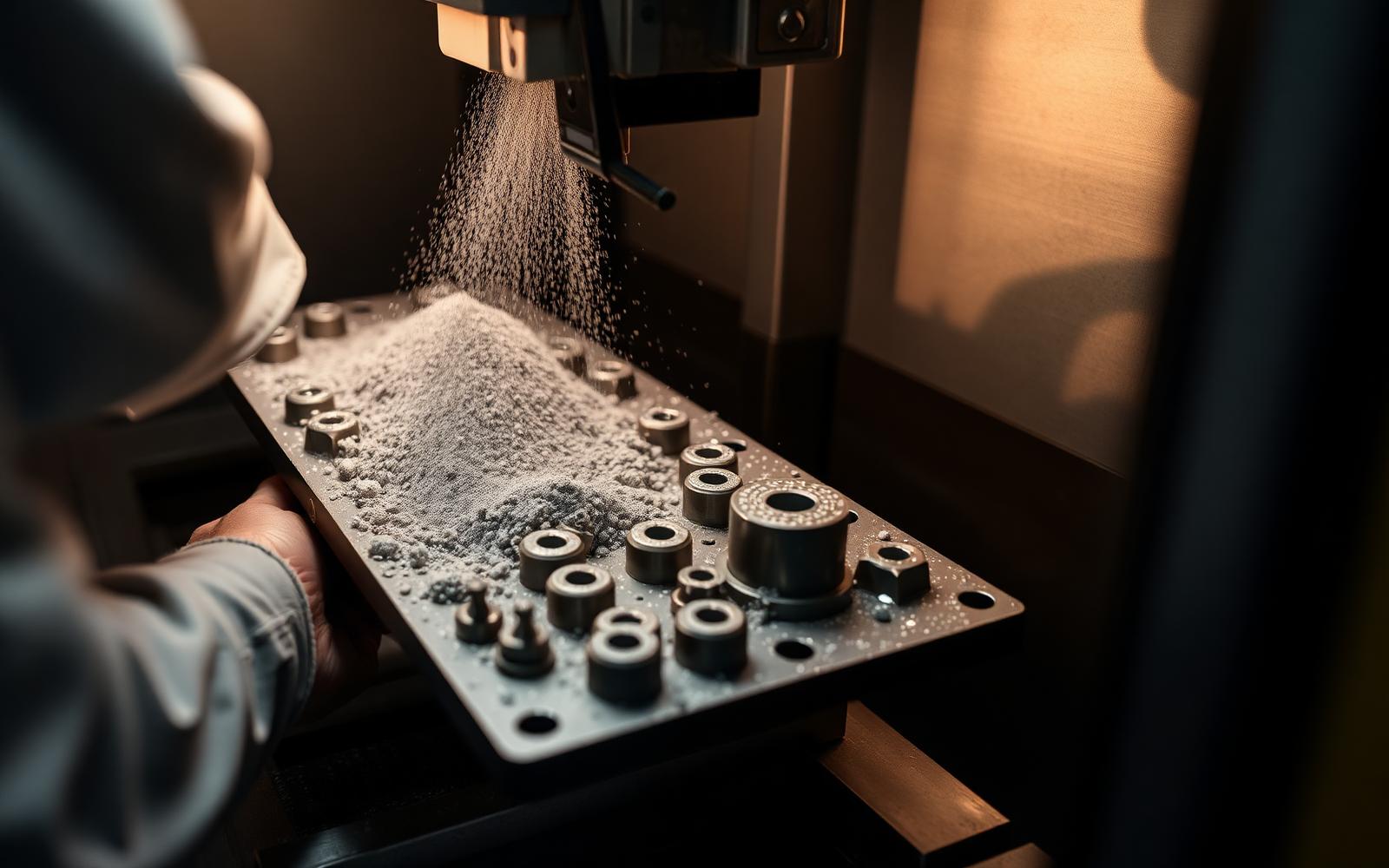
Nesting is the single largest lever you control. Machine time is billed by build height, so a plate holding forty parts costs roughly the same as a plate holding four of the same height. Ordering in build-plate quantities rather than in ones and twos routinely cuts unit cost by half or more, and it is the first question a good vendor will ask you.
Line item | Typical share of cost | Question to ask |
|---|---|---|
Powder consumed | 10–25% | Alloy, lot traceability and reuse policy? |
Machine time | 35–55% | Build height, nesting count, hourly rate? |
Support and plate removal | 10–20% | Manual or wire EDM, and who pays for damage? |
Heat treatment / HIP | 5–15% | Required for this alloy and application? |
Secondary machining | 10–30% | Which surfaces, and is stock left on the model? |
Inspection | 3–10% | Dimensional only, or CT for internal features? |
Qualifying an additive part for production
- Freeze the build file, including orientation and support strategy — reorienting a part changes its mechanical properties
- Document the powder lot and the reuse policy; virgin-versus-recycled ratio affects porosity
- Fix the post-processing recipe as a written procedure, not as shop-floor habit
- Require first-article inspection against the same drawing you would give a machine shop
- Add witness coupons to each build for tensile and density verification on critical parts
- Define the acceptance criteria for porosity and surface finish before the first production order
Additive parts almost never fail on strength; they fail audits on process control. Teams moving from prototype prints into a real production program usually need this documentation set built once and then reused, which is work we fold into low-volume manufacturing planning and into the wider development process.
Frequently asked questions about metal 3D printing cost
Why did my small bracket cost as much as a large one? Because they were the same height on the plate. Machine time follows build height and recoat count, not part mass, so a tall thin part is expensive and a flat one is cheap.
Is titanium always more expensive than stainless? Per kilogram, yes, by roughly four to five times. Per part, not always: titanium parts are usually lighter and smaller, so powder cost can be a minority of the total while machine time dominates.
When should I machine instead of print? Whenever the geometry is prismatic and the quantity exceeds a few dozen. Additive earns its premium only when the geometry buys something — internal channels, topology optimization or part consolidation.
Do printed parts need heat treatment? Nearly always for powder bed fusion. As-built parts carry residual stress that distorts them after removal from the plate, so stress relief is a cost line, not an option. Comparable engineering programs are shown in our portfolio.
Send us the CAD and target quantity. We will tell you whether additive, machining or casting gives you the lowest landed cost - and quote the one that does.
Work with LA NPDT: if you are moving from here to execution, start with our rapid prototyping services or talk to us about prototype design.
Filed under:Tech Talk Podcast
Services related to this guide
- Product design servicesIndustrial design and CAD taken all the way to manufacturable files.
- Rapid prototypingWorking prototypes in days, from 3D printing to vacuum casting.
- Electronic design servicesSchematic, PCB layout, firmware and bring-up, through to production handoff.
- Product development examplesReal projects we designed, prototyped and shipped.