Tech Talk E13: Spacex Launched New Starlink Satellites, 3D Print your Next Car, YouTube Policy Changes
Bringing you the latest developments in car parts and other technology. We'll keep you tuned in the newest gadgets and product innovations across the globe.
November 14, 20197 min read

Written by Konstantin Dolgan, Ph.D., NPDP
Founder & CEO, Product Development Engineer
Published November 14, 2019Updated September 2, 2026
Tech Talk Episode 13: Spacex Launched New Starlink Satellites, 3D Print your Next Car, YouTube Policy Changes
Ever thought about driving a 3D printed car? Well, now is the time to think about it.
LA NPDT Tech Talk is bringing you the latest developments in car parts and other technology. We’ll keep you tuned in the newest gadgets and product innovations across the globe. Join LA New Product Development Team for the most recent, up-to-date tech news each day. Now, let’s get to today’s news.
YouTube Policy Changes
YouTube’s Terms of Service Agreement changes were published recently by Google. The new terms go into play on December 10. The first big change is as follows: “Content is the responsibility of the person or entity that provides it to the Service. YouTube is under no obligation to host or serve Content.” This change makes sense and resolves some hosting issues that YouTube has run into recently.
This next change; however, is causing quite a stir. It reads: “YouTube may terminate your access, or your Google account’s access to all or part of the Service if YouTube believes, in its sole discretion, that provision of the Service to you is no longer commercially viable.” YouTube clarified that they are not changing the way their products work or any settings. They are also not changing how they work with creators or their rights to monetize.
Hopefully, they stick true to their word. We’ll see how this plays out into the new year.
New Satellites in Space
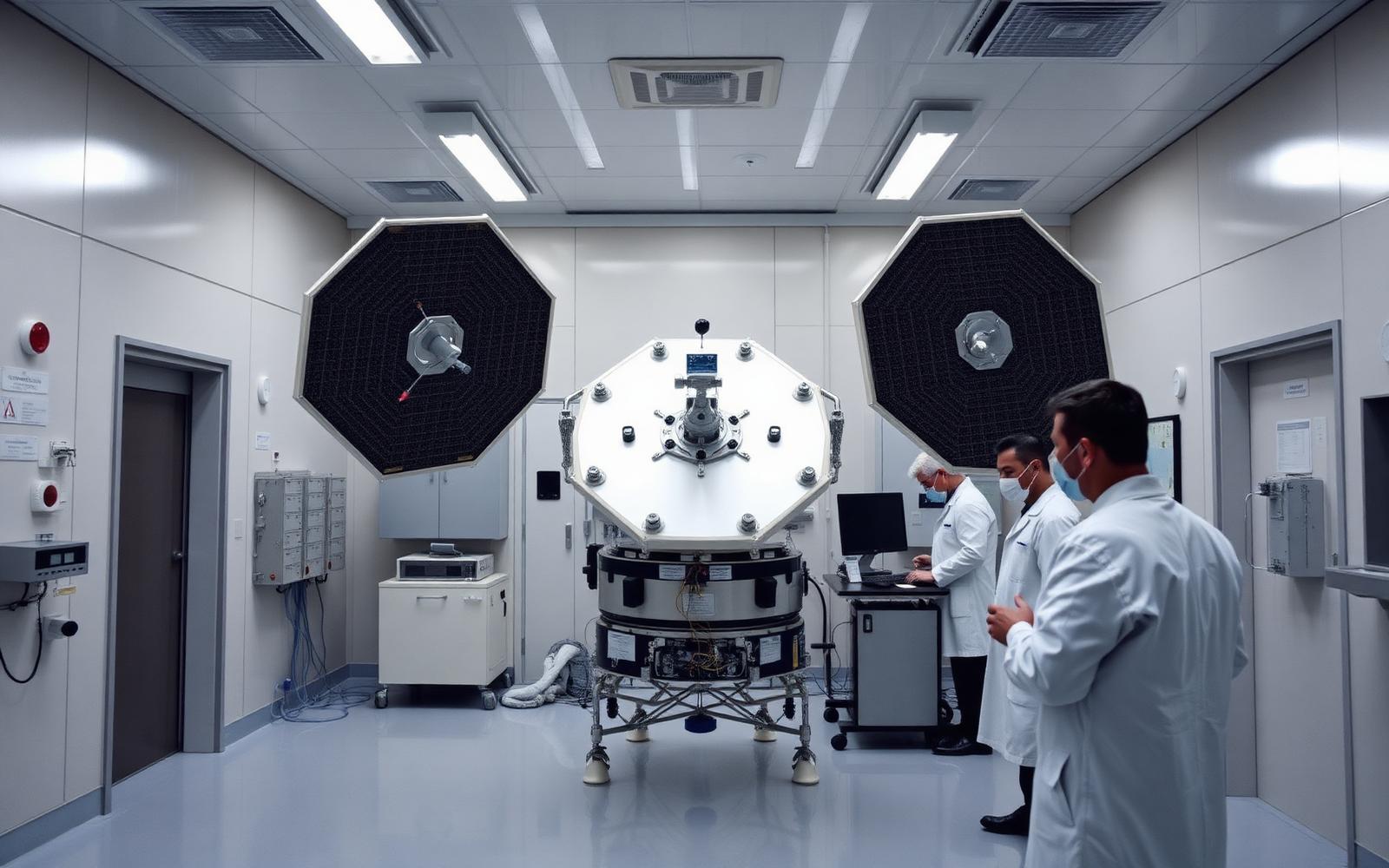
SpaceX launched 60 new satellites into space on Monday. They plan to do this several more times over the next year, working to build a massive broadband-from-space business. The company plans to launch over 10,000 Starlink satellites into space in the next year, slowly adding coverage area throughout the year.
Just last month Elon Musk sent out the first tweet using the Starlink satellites. While there is still a ways to go before the entire broadband service is up and running, SpaceX is excited for the possibilities this project provides.
Print your Next Car
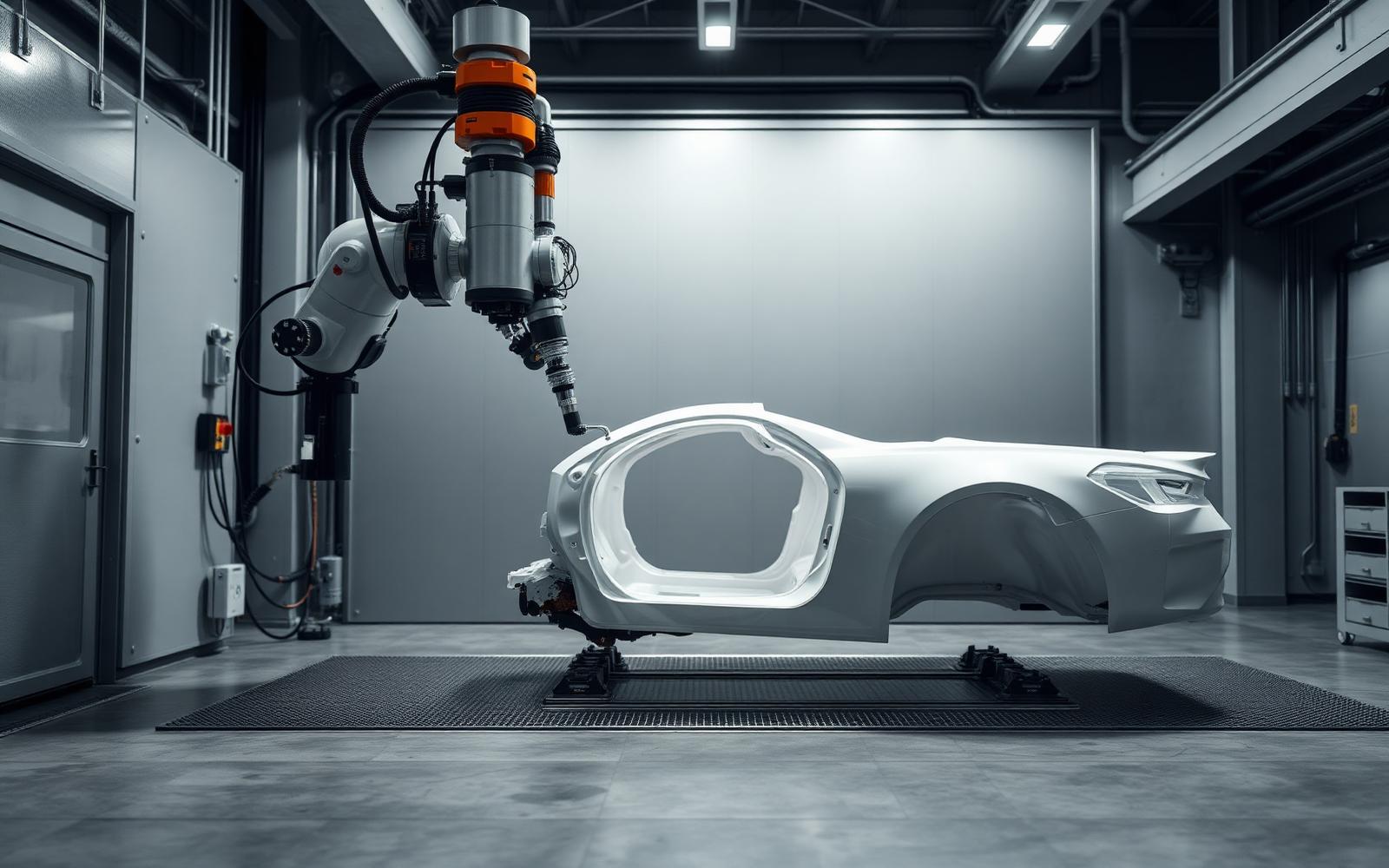
Yep, you heard that right. Volkswagen and HP have linked up, and are working on a project that will eventually lead to 3D printed car parts. HP recently printed 10,000 metal scale models of VW’s electric car ID.3.
Working in phases, they eventually hope to start printing out up to 100,000 parts a year, starting with smaller parts like gearshift knobs and mirror mounts. Eventually, they hope to print out structural car parts for their cars. Thoughts? Would you buy a 3D printed car?
Volkswagen and HP 3D Printing Collaboration Phases
Phase | Action | Target Volume |
|---|---|---|
Initial Stage | Printed metal scale models | 10,000 units |
Next Steps | Print smaller car parts (e.g., gearshift knobs, mirror mounts) | Up to 100,000 parts/year |
Future Goal | Print structural car parts | N/A (long-term target) |
Frequently asked questions
What changes are YouTube making to its Terms of Service Agreement?
YouTube's updated Terms of Service go into effect on December 10. One change states content is the responsibility of the provider, and YouTube is not obligated to host it. Another change allows YouTube to terminate access if providing the service to a user is no longer commercially viable, in their sole discretion.
What is Spacex's goal with its Starlink satellites?
SpaceX aims to build a large broadband-from-space business. They launched 60 new satellites recently and plan to launch over 10,000 Starlink satellites within the next year. This initiative will slowly expand the coverage area for their broadband service throughout the year.
How are Volkswagen and HP collaborating on 3D printing car parts?
Volkswagen and HP are working together to develop 3D printed car parts. HP recently printed 10,000 metal scale models of VW’s ID.3 electric car. Their goal is to print up to 100,000 parts annually, starting with smaller items like gearshift knobs and mirror mounts, then moving to structural car parts.
When do YouTube's new Terms of Service go into effect?
YouTube's updated Terms of Service Agreement will go into effect on December 10. These new terms include provisions regarding content responsibility and YouTube's discretion to terminate access if a service is deemed no longer commercially viable for them.
Sources and standards
- ISO/ASTM 52900 additive manufacturing terminology — Standard definitions for additive manufacturing processes.
- NIST additive manufacturing research — Process and material research underpinning 3D printing quality.
- USPTO — patent basics — Official guidance on provisional and non-provisional filings for new products.
What 3D printing a car really means today
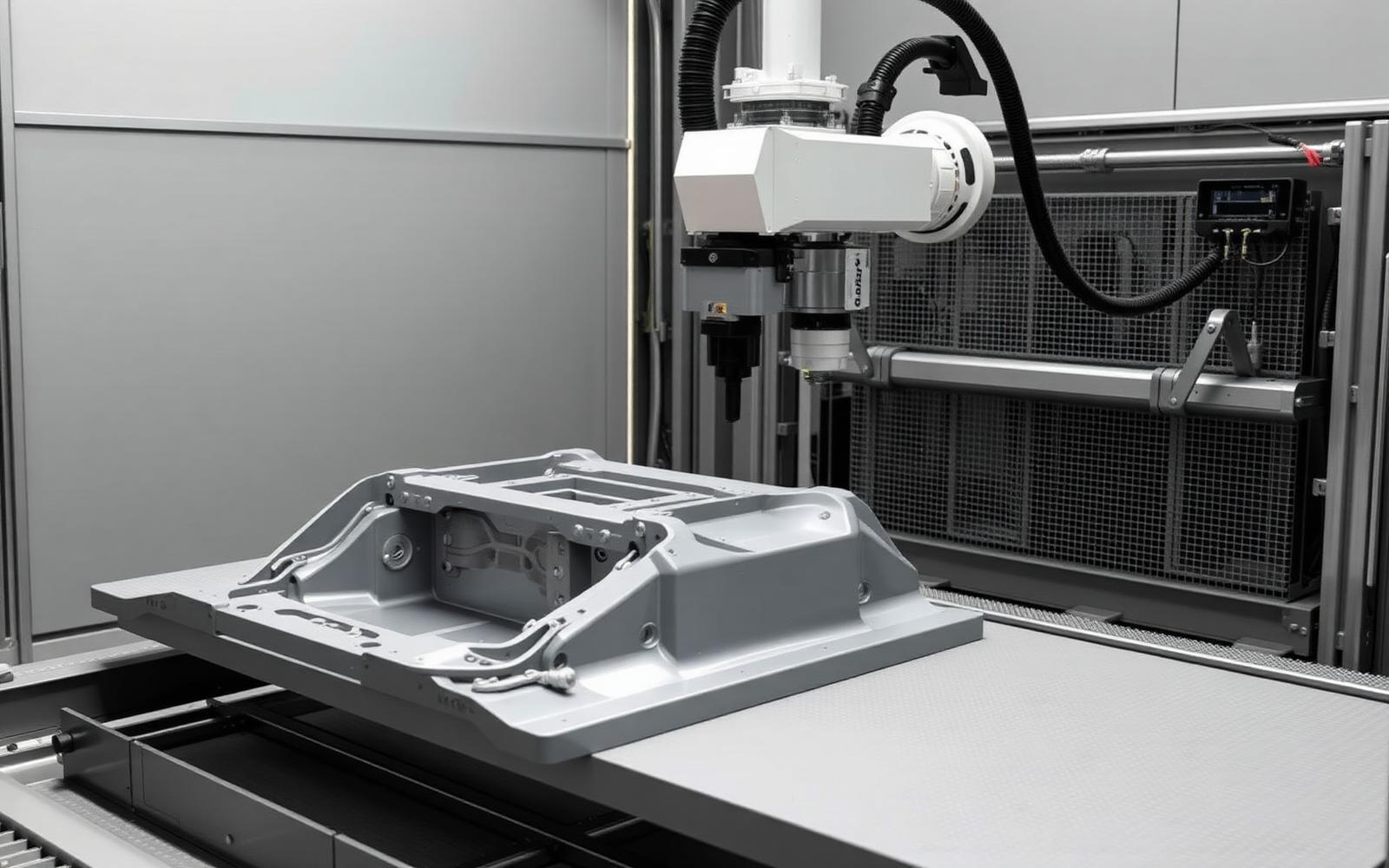
Headlines about printed cars usually describe a printed body or chassis shell around a conventional powertrain, suspension and safety structure. Those systems are not printed, because crash performance, fatigue life and cost all favor stamped steel, extruded aluminum and molded composites at volume.
Where additive genuinely wins in automotive is upstream: jigs and fixtures, low-volume brackets, cooling channels in tooling inserts, and body panels for vehicles built in the hundreds rather than the hundreds of thousands.
The economics are simple. A stamping die costs $200,000-$2,000,000 and stamps a panel in seconds. A large-format printer costs nothing per panel in tooling but takes hours per part. Below roughly 1,000 vehicles the printer wins; above it, the die wins by an enormous margin. Every credible printed-car program lives on the left of that crossover.
Where additive pays in automotive
Application | Volume range | Why additive wins | Typical process |
|---|---|---|---|
Assembly jigs and fixtures | 1-50 | Same-week iteration, no tooling | FDM, large-format pellet |
Conformal cooling tool inserts | 1-20 | Cycle time cut 15-40% | Metal DMLS |
Low-volume body panels | 10-1,000 | No stamping die | Large-format composite |
Motorsport brackets | 1-200 | Topology optimization, mass savings | DMLS, SLS |
Interior trim prototypes | 1-50 | Grain and fit checks in days | SLA, MJF |
Production structural parts | 50,000+ | Rarely - cost per part too high | Not applicable |
Certification is the other wall. A printed structural part in a road vehicle needs process qualification, lot traceability and destructive test data - a documentation burden closer to aerospace than to a prototype shop.
Evaluating an additive automotive part
- Compute the crossover volume against the real tooling quote before assuming additive is cheaper.
- Test coupons printed in the same orientation and batch as the part, not in an ideal orientation.
- Specify build orientation and post-processing on the drawing; they are part of the material definition.
- Plan machining allowances on all sealing and bearing surfaces.
- Confirm fatigue data exists for the process and material - static strength alone is misleading.
- Treat any printer or parameter change as a requalification event.
Key takeaways
- Printed cars are low-volume bodies on conventional platforms, not a replacement for mass production.
- Additive earns its keep in tooling, fixtures and sub-1,000-unit panels.
- Process qualification and fatigue data, not print time, are the hard part of structural additive parts.
Qualifying an additive part for road use
Printing a car body is a demonstration; putting one printed bracket into a vehicle that ships is an engineering program. Automotive qualification asks whether the process is repeatable across machines and lots, not whether one part looked good. That question is what keeps additive concentrated in tooling, fixtures, low-volume trim and motorsport rather than in structural production parts.
Qualification steps for a production additive part
Step | What it establishes | Typical duration |
|---|---|---|
Material allowables from printed coupons | Design-usable strength data | 6-12 weeks |
Process parameter freeze | Repeatability across builds | 4-8 weeks |
Machine and operator qualification | Same result on each machine | 4-8 weeks |
Part-level validation testing | Thermal, vibration, durability | 8-20 weeks |
In-process monitoring plan | Detects build defects | Ongoing |
PPAP submission | Customer production approval | 2-6 weeks |
Cost per part rarely wins against injection molding or stamping above a few thousand units. Additive earns its place where the part count is low, the geometry is impossible to tool, or the time saved on a jig or fixture pays for itself in the same quarter.
Where to use additive in automotive today
- Assembly jigs, fixtures and gauges — the highest-return application by far.
- Low-volume and heritage service parts where tooling no longer exists.
- Conformal cooling inserts in injection tools, which shorten cycle time.
- Interior trim and ducting on limited-production vehicles.
- Prototype hardware for packaging and fit studies before tool release.
Key takeaways
- Automotive additive qualification tests the process, not just the part.
- Tooling, fixtures and low-volume parts are where additive pays today.
- Above a few thousand units, conventional processes still win on cost.
Working on a product like this? We start with a paid discovery that produces a requirements document, a risk list and a phase-by-phase budget you can act on.
Additive in automotive: where it actually earns its place
Every few years a headline promises a printed car. What ships is narrower and more useful: printed tooling, printed fixtures, printed low-volume bodywork and printed service parts for vehicles whose tooling was scrapped a decade ago.
The structural cage, the crash structure and the powertrain are still stamped, cast and machined, because those processes deliver certified material properties at a cost per part that additive cannot approach at automotive volume.
The economics are not subtle. A stamped body panel costs a few dollars in material and seconds of cycle time once the die exists; the die costs six or seven figures and is amortized over hundreds of thousands of units.
A printed panel costs tens to hundreds of dollars and hours of machine time, with no tooling investment at all. The crossover sits in the low hundreds of units for most geometry, which is exactly where motorsport, restoration, specialty vehicles and pre-production validation live.
Application | Volume range | Why additive wins | Watch out for |
|---|---|---|---|
Assembly fixtures and jigs | 1–50 | Days instead of weeks; iterate on the line | Thermal creep in hot paint-shop areas |
Sheet-metal forming tooling inserts | 1–20 | Conformal cooling, fast revisions | Surface finish requires machining |
Pre-production validation panels | 5–200 | No tooling spend before design freeze | Material properties differ from production part |
Specialty and restoration bodywork | 1–500 | Tooling would never amortize | Finishing labour often exceeds print cost |
Service parts for discontinued models | 1–100 | Replaces scrapped tooling | Requires validated digital archive |
Mass-produced structural parts | 100,000+ | Rarely wins | Cost per part 10–100x stamping |
How to evaluate an additive claim before you budget for it
- Ask which part of the vehicle is printed — body skin, tooling or structure — because the three carry completely different certification burdens
- Ask for the material datasheet in the build orientation used, not the isotropic marketing number; printed parts are anisotropic
- Confirm the finishing labour estimate; on large polymer parts, sanding and coating regularly cost more than the print
- Compare against a soft-tooling quote at your real volume before assuming additive is cheaper
- Check whether the part sees load, heat or UV in service, and require tested data for each
- Confirm a repeatable process record exists — machine, material lot, parameters — or the part cannot be requalified later
The same discipline applies to any manufacturing technology that arrives with a headline attached. We apply it during product development consulting engagements and inside low-volume manufacturing planning, where the tooling-versus-additive decision is usually worth more than any other single cost choice on the program.
Frequently asked questions about printed vehicle parts
Can a printed part be structural in a road vehicle? Some can, but they need tested material data in the as-built orientation and a controlled process record. Regulators and insurers care about repeatability, and additive processes drift with powder lot, machine calibration and build position.
What is the realistic cost of a printed body panel? For a large polymer panel, expect hundreds of dollars in machine time and material plus significant finishing labour. It beats tooling below roughly two hundred units and loses badly above that.
Is printed tooling worth it for injection molding? For prototype and bridge tooling, often yes — conformally cooled inserts reduce cycle time and printed inserts can be revised in days. For production tooling running millions of shots, machined steel still wins.
How do I start? Print the fixtures first. They are unregulated, immediately useful and they teach your team the process limits before you risk a customer-facing part. Programs we have run this way are documented in the portfolio.
Filed under:Tech Talk Podcast
Tagged:3D Printer3D PrintingCarsTech NewsTech TalkTech UpdatesTechnology News
Services related to this guide
- Product design servicesIndustrial design and CAD taken all the way to manufacturable files.
- Rapid prototypingWorking prototypes in days, from 3D printing to vacuum casting.
- Electronic design servicesSchematic, PCB layout, firmware and bring-up, through to production handoff.
- Product development examplesReal projects we designed, prototyped and shipped.