Tech Talk S02 E10: Samsung’s New Flip Phone, Mobile World Congress
We’ve got the scoop on the latest flip phone and more on LA NPDT Tech Talk where we bring you the latest in science and technology.
February 17, 20209 min read

Written by Konstantin Dolgan, Ph.D., NPDP
Founder & CEO, Product Development Engineer
Published February 17, 2020Updated September 2, 2026
We think of technology as flip phones and smartwatches, but it’s also being used to stop poachers across the globe. We’ve got the scoop on the latest flip phone and more on LA NPDT Tech Talk where we bring you the latest in science and technology and update you on gadgets and innovations across the globe. If you like our podcast, please take a minute to review us on your favorite platform. Now, let’s get to today’s news.
Flip Phone Winner
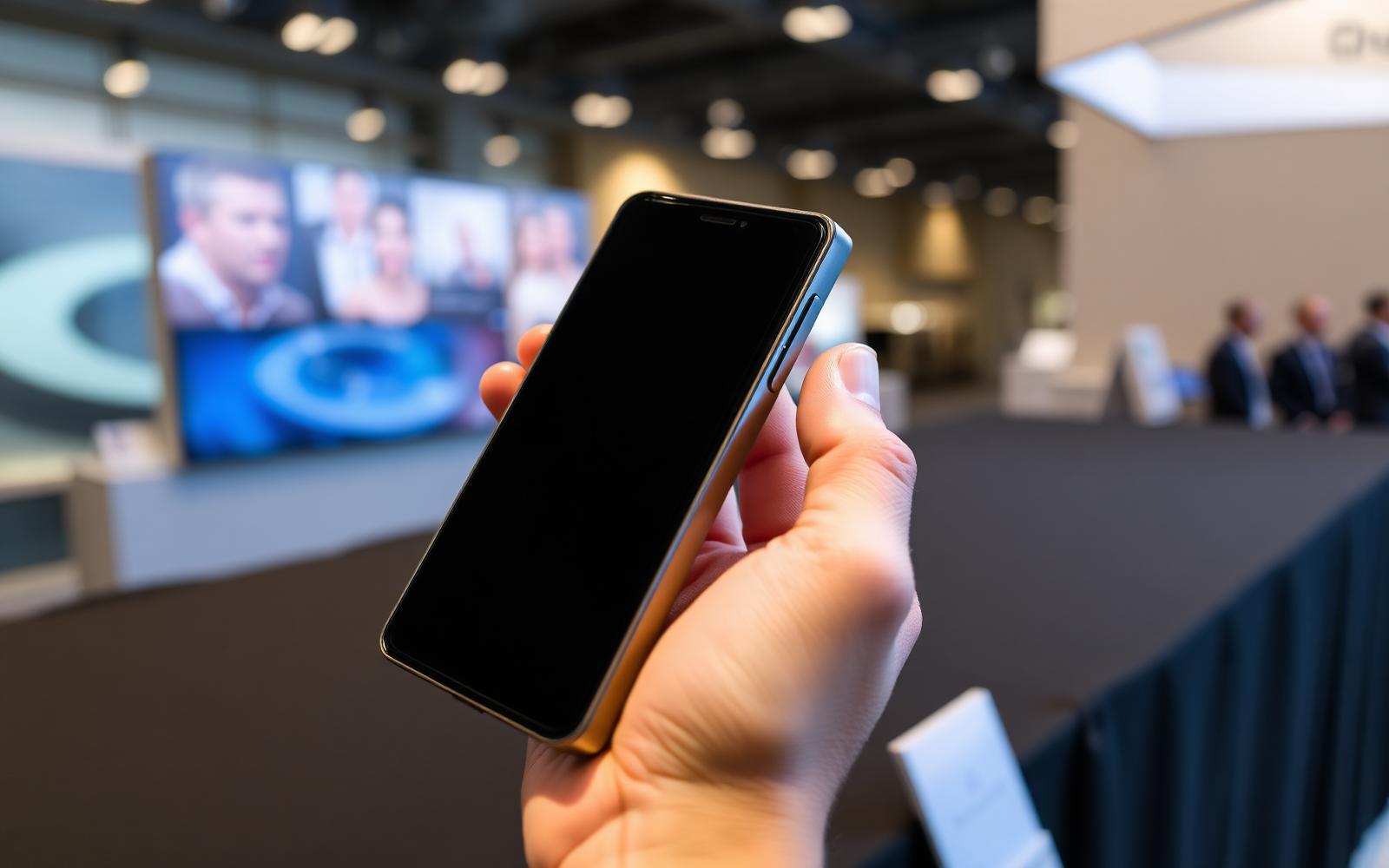
Samsung’s Galaxy Z Flip phone just came out this past Friday, and so far, reviews are pretty favorable. The glass screen holds its own with just a slight, barely visible crease in the center when open. It’s mostly noticeable be running your finger along the screen and feeling it there.
Samsung says the fold is good for 200,000 flips, or approximately 5 years of use. What we don’t yet know is how the fold itself will hold up. Samsung incorporated hairlike fibers to keep dust and debris away from the fold, but eventually, build up of dust will start to hamper the hinge mechanism.
The tiny cover display allows you to view messages and your main phone icons like the Wi-Fi icon, missed call icon, other notifications, and the alarm. At only 1.1 inch diagonal, it isn’t good for much else. The Galaxy Z Flip has two cameras, and the wide angle camera does a fantastic job of making selfies look natural.
The phone has 2 battery cells, working together and the Flip is small enough that the charge could theoretically last all day, but two batteries are less efficient than one, so this may not be the case when you really start using the phone. Time will tell.
Mobile World Congress
The tech show, held in Spain, has been canceled this year amid Coronavirus fears, leaving mobile vendors scrambling. The show had over 2000 vendors that were planning to attend.
Smaller vendors use this conference to showcase their new products, send out press releases, and make deals with the large mobile networks who sell their products.
While the show being canceled won’t hurt larger companies like Samsung and Apple, smaller companies are going to have to find a new way to get deals with the big players like Verizon and AT&T. The conference was scheduled for Feb 24-27.
Technology being put to good use
chnology being used to help guard its beloved animals. Poachers in the region work hard to try to get around what is known as Postcode Meerkat, a solar-powered, camouflaged system of radars, cameras, and sensors. These sensors can tell the difference between a person and an animal and have an infrared sensor attached.
If the system senses a person in the park after dark, it alerts park rangers to their presence. The purpose? To keep out poachers that are looking to hunt the National Park’s Rhinos.
The Rhino horn is a sign of wealth in some counties, and in others, it is believed to have medicinal properties. Poachers get paid good money for these horns; however, Black Rhinos are on the endangered list and White Rhinos aren’t far behind.
Since launching the Meerkat’s there has been an 80% decrease in poaching where the technology is present. There are plans to install more Meerkats throughout the park where needed, and since the technology is portable, it can be moved to the site of poacher activity. Saving the Rhino is helping the tourism industry in the park.
And that brings us to the end of today’s Tech Talk, brought to you by LA New Product Development Team. Stay tuned next week for more developments in the product world, as we keep digging through the maze of technology that floods the web. Don’t forget to drop your rating at the Alexa Skill Store, or your other favorite platform. Keep listening for shout outs as we start seeing your reviews roll in. Thanks for listening!
Samsung Galaxy Z Flip Phone Details
Feature | Description |
|---|---|
Screen | Glass, slight crease |
Fold Durability | 200,000 flips (approx. 5 years) |
Dust Protection | Hair-like fibers |
Cover Display Size | 1.1 inch diagonal |
Cameras | Two, wide-angle for selfies |
Battery | Two cells |
What foldable phone durability actually depends on
The Galaxy Z Flip's ultra-thin glass was the news, but foldable phone durability is decided by a stack of parts working together: the cover layer, the adhesive under it, the display panel, the hinge and the brush or gasket that keeps grit out of the fold. A failure in any one of them ends the product's life, and each is a different engineering discipline. This is the classic hardware problem — the weakest interface sets the specification.
Element | Failure mode | What good design does |
|---|---|---|
Cover layer | Crease, micro-scratch, crack at the fold | Ultra-thin glass laminated to a polymer top coat; hardness traded for bend radius |
Adhesive stack | Delamination after thermal cycling | Low-modulus optically clear adhesive that shears rather than peels |
Hinge | Backlash, grit ingress, torque loss | Cam and gear mechanism with sealed sweeper brushes and a defined torque curve |
Display panel | Trace fatigue at the neutral axis | Route flex traces through the neutral bend plane and avoid vias in the fold |
Battery | Split cells with mismatched aging | Two cells with matched impedance and balanced charge management |
Fold-cycle testing in plain terms
Manufacturers quote 200,000 folds, which sounds like a lifetime and is: roughly 100 folds a day for five years. The number comes from a jig that opens and closes the device at a fixed rate at room temperature. Real use adds pocket lint, cold mornings, sunscreen, one-handed twisting and the occasional drop, none of which the cycle count covers. When you see a fold-cycle claim, read it as a fatigue result for the hinge and panel only.
- Cycle at temperature extremes, not just ambient — adhesives stiffen in the cold and creep when hot.
- Add contamination to the test, because sand and pocket debris cause more field failures than metal fatigue.
- Test partial folds, since a device parked at 90 degrees loads the crease differently from a full cycle.
- Track optical distortion, not only survival — the crease is usually visible long before anything breaks.
Lessons for any product with a moving joint
Very few teams are building a folding phone, but almost every hardware product has a hinge, a lid, a latch or a cable that flexes.
The same discipline applies: define the cycle count from real duty, identify the neutral axis so conductors are not stretched, seal the mechanism against the contaminant that actually exists in the environment, and test the assembly rather than the parts.
A hinge that passes on its own and fails in the product is a systems mistake, not a component defect.
Trade shows like Mobile World Congress used to be the place teams saw these mechanisms in person. When events cancel — as MWC did in 2020 — the substitute is teardown analysis and benchmarking of shipped hardware, which is often more useful anyway because it shows the production compromise rather than the concept.
If your product has a moving joint, a flexible circuit or a sealing challenge, our product development consulting team can define the test plan before tooling is cut — and our prototyping shop can build the fixture that runs it.
Frequently asked questions
What are the features of the Samsung Galaxy Z Flip phone?
The Samsung Galaxy Z Flip phone features a glass screen with a barely visible crease when open. It has a tiny 1.1-inch cover display for notifications. The phone includes two cameras, with the wide-angle camera designed for natural-looking selfies. Samsung states the fold is rated for 200,000 flips, or approximately 5 years of use, and incorporates fibers to keep dust away from the fold mechanism.
What is the Mobile World Congress?
The Mobile World Congress is a technology show held in Spain. It typically hosts over 2,000 vendors. Smaller vendors use this conference to showcase new products, distribute press releases, and secure deals with large mobile networks. The 2020 conference was scheduled for February 24-27 but was canceled due to Coronavirus concerns. This cancellation impacts smaller companies seeking deals with major players.
How is technology being used to combat poaching?
Technology is being used to guard animals against poachers through a system called Postcode Meerkat. This solar-powered, camouflaged system integrates radars, cameras, and sensors. It can distinguish between people and animals and includes an infrared sensor. If a person is detected in the park after dark, park rangers are alerted. This system aims to protect rhinos from poaching.
What is the impact of the Postcode Meerkat system?
Since its launch, the Postcode Meerkat system has led to an 80% decrease in poaching in areas where it is present. The technology is portable, allowing it to be moved to active poacher sites. There are plans to install more Meerkats throughout the park as needed. Saving rhinos through this technology also helps the park's tourism industry.
Sources and standards
- USPTO — patent basics — Official guidance on provisional and non-provisional filings for new products.
- NIST Manufacturing Extension Partnership — Federal program supporting US small and mid-size manufacturers.
- ISO 9001 quality management — The quality-system standard most contract manufacturers are audited against.
Designing and testing hinges for long life
Foldable phone durability is a specific case of a general hardware problem: a joint that moves hundreds of thousands of times over a product's life. The engineering questions are the same whether the hinge is in a phone, a laptop, a medical enclosure or a piece of outdoor gear.
Hinge failure modes and mitigations
Failure mode | Root cause | Mitigation |
|---|---|---|
Torque loss | Friction element wear | Specify torque range across life, not initial value |
Debris ingress | Open mechanism path | Brushes, labyrinth seals, gaskets |
Cable or flex fatigue | Bend radius too tight | Increase radius, use dynamic-rated flex |
Surface wear or squeak | Material pairing | Dissimilar hardness, engineered coatings |
Overtravel damage | No hard stop | Designed end stop with energy absorption |
Fastener loosening | Vibration over cycles | Thread locking, preload specification |
Cycle testing should run to at least twice the specified life, with measurements taken at intervals rather than only at the end. Torque and free-play trends over cycles predict field failures far better than a single pass/fail at the end of the run.
Hinge validation checklist
- Define required cycle count from real usage, not a round number.
- Test to twice the requirement and record data at intervals.
- Include debris and temperature conditions in the cycle test.
- Verify dynamic bend radius for any flex circuit crossing the joint.
- Specify torque as a range across life, with an end-of-life minimum.
Key takeaways
- Moving joints need a life specification, not just a working design.
- Measure torque and free play through the cycle test, not only at the end.
- Flex circuit bend radius is a common hidden failure point.
Why folding mechanisms are hard: the engineering behind the hinge
A folding phone looks like an industrial design achievement and is really a durability engineering achievement. The hinge is the least interesting part visually and the part that decides whether the product survives its warranty period.
Every fold applies bending strain to a display stack, drags a flex cable through a dynamic bend radius, opens a gap that admits dust, and cycles a mechanism that must feel identical on day one and after two hundred thousand operations.
The numbers set the difficulty. A user who opens a device thirty times a day accumulates roughly eleven thousand cycles a year, so a two-year warranty implies a design target near one hundred thousand cycles with margin. Achieving that requires a bend radius the display supplier will guarantee, a flex cable routed with a controlled service loop, and a hinge whose torque curve does not drift as the grease migrates.

Failure mode | Root cause | Test that catches it |
|---|---|---|
Display crease or delamination | Bend radius below supplier minimum | Cycle test with optical inspection every 10k cycles |
Flex cable fracture | No service loop; dynamic bend at a fixed point | Continuity monitoring during cycle test |
Torque drift / floppy hinge | Grease migration, wear in the cam | Torque measurement at 0, 25k, 50k, 100k cycles |
Dust ingress into the fold | Unsealed gap at the hinge | Dust chamber per IEC 60529 after cycling |
Squeak and rattle | Tolerance stack in the linkage | Acoustic check across the temperature range |
Cold-weather stiffness | Grease viscosity at low temperature | Cycle test at -10 °C and +50 °C |
Applying this outside phones
Most teams we work with are not building foldable displays, but many build lids, arms, latches, folding handles and articulating enclosures — and every one of those inherits the same physics. The discipline that matters is defining the cycle target before the mechanism is designed, then testing to it early on printed or machined prototypes rather than waiting for production tooling.
The cheapest cycle rig is a small motor, a cam and a counter, and it can run unattended overnight. Teams that build one in the first month of mechanism design find their torque and wear problems while the geometry is still cheap to change — the sequencing we recommend during prototyping and formalize in our development process.
- Write the cycle target into the requirements document with the environmental conditions attached
- Get the minimum bend radius in writing from the display or cable supplier before geometry is fixed
- Route flex cables with a service loop so the dynamic bend moves rather than concentrating
- Instrument the rig for torque and continuity, not just cycle count
- Cycle at temperature extremes; grease behaviour changes more than metal does
- Inspect at intervals rather than only at the end, so you learn the degradation curve
- Test the assembly path too — a mechanism that cannot be assembled repeatably will fail in production
Frequently asked questions
How many cycles should I design for? Estimate daily use, multiply by warranty years, then add at least fifty percent margin. For a consumer lid opened a few times a day, ten to twenty thousand cycles is realistic; for a folding display, one hundred thousand and up.
Can I buy a hinge instead of designing one? Often yes, and you should try. Catalogue friction and detent hinges cover a large share of enclosure applications at a fraction of the development cost of a custom mechanism.
What does a custom hinge program cost? Typically $40,000 to $150,000 including tooling and durability testing, which is why the buy-versus-design decision belongs at concept stage rather than after industrial design is locked.
How do I stop dust ingress at a fold? Accept that you cannot fully seal a moving gap, and design brush or lip features that shed particles plus an internal path that routes debris away from the mechanism. Related mechanism work appears throughout our portfolio.
Designing a product with a hinge or moving joint?
Filed under:Tech Talk Podcast
Tagged:PhonesSamsungTech NewsTech TalkTechnologyVerizonWireless
Services related to this guide
- Product design servicesIndustrial design and CAD taken all the way to manufacturable files.
- Rapid prototypingWorking prototypes in days, from 3D printing to vacuum casting.
- Electronic design servicesSchematic, PCB layout, firmware and bring-up, through to production handoff.
- Product development examplesReal projects we designed, prototyped and shipped.