The Impact of Globalization on Global Product Development
Are you pumped about taking advantage of economic globalization? Check out these benefits and limitations of global product development.
June 15, 20238 min read

Written by Konstantin Dolgan, Ph.D., NPDP
Founder & CEO, Product Development Engineer
Published June 15, 2023Updated September 2, 2026
The world has fast become a global village where you can be in any part of the world in some hours. Even faster than that, you can reach any part of the world in a matter of seconds or minutes. However, not many know that globalization serves product development in the same way.
Faster means of transportation and communication have helped ease the burden of being and reaching far locations. Similarly, economic globalization has helped ease the challenges in new product development. Check out these reasons for developing new products during a challenge-packed recession.
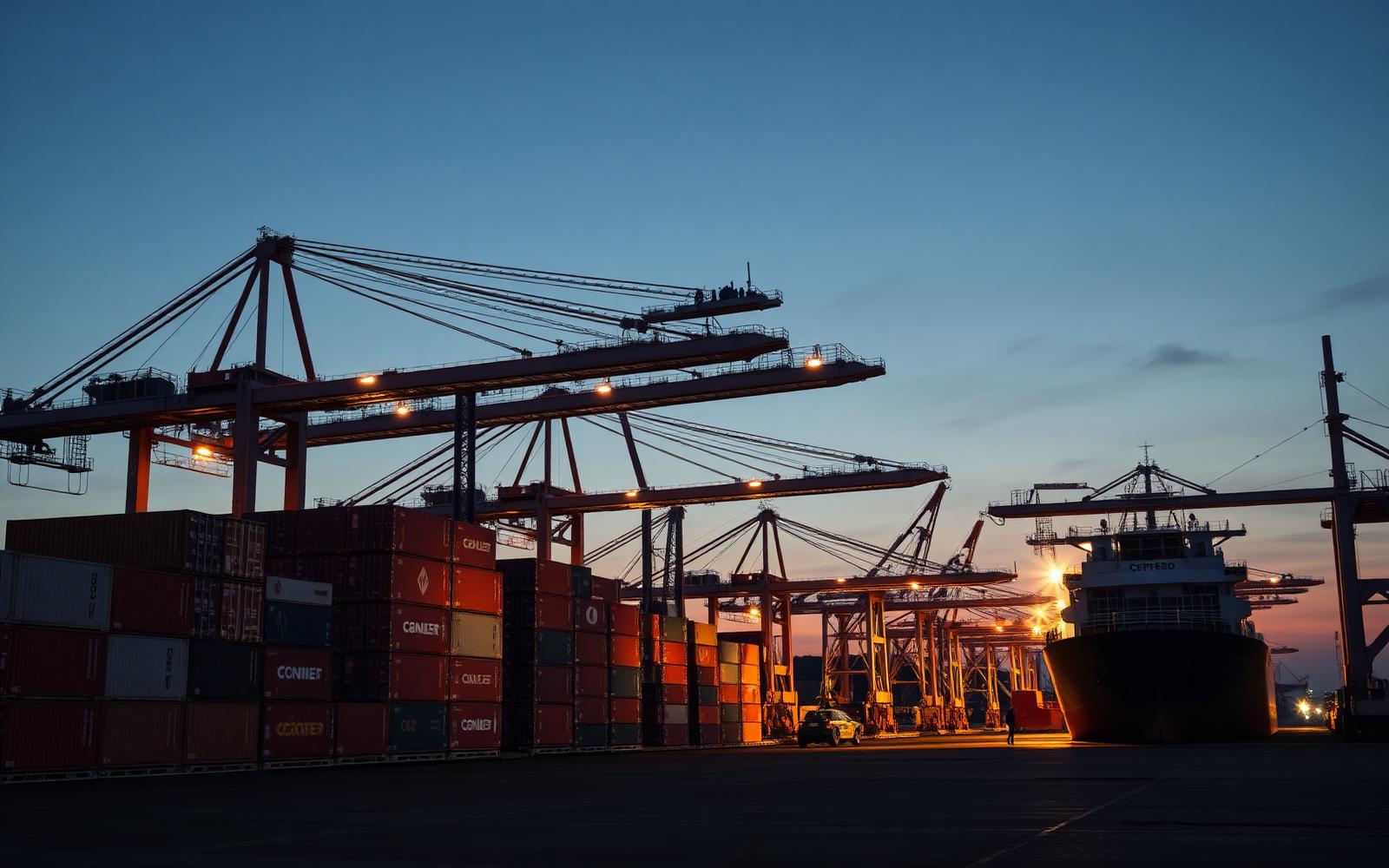
Reaching your next-door neighbor via call will not intrigue you so much. Also, small-scale production would not seem like much of an achievement with globalization. Hence, global product development can best be appreciated in the production of large-scale products.
As beneficial as globalization is to product development, the manufacturing industry, national economies, and nationalities have suffered gravely because of it. Therefore, this article will explore the benefits and the disadvantages of globalization. Altogether, we will be able to identify the impact of globalization on global product development.
Opportunities for Global Product Development
Pros 1: Affordable Products and Better Services
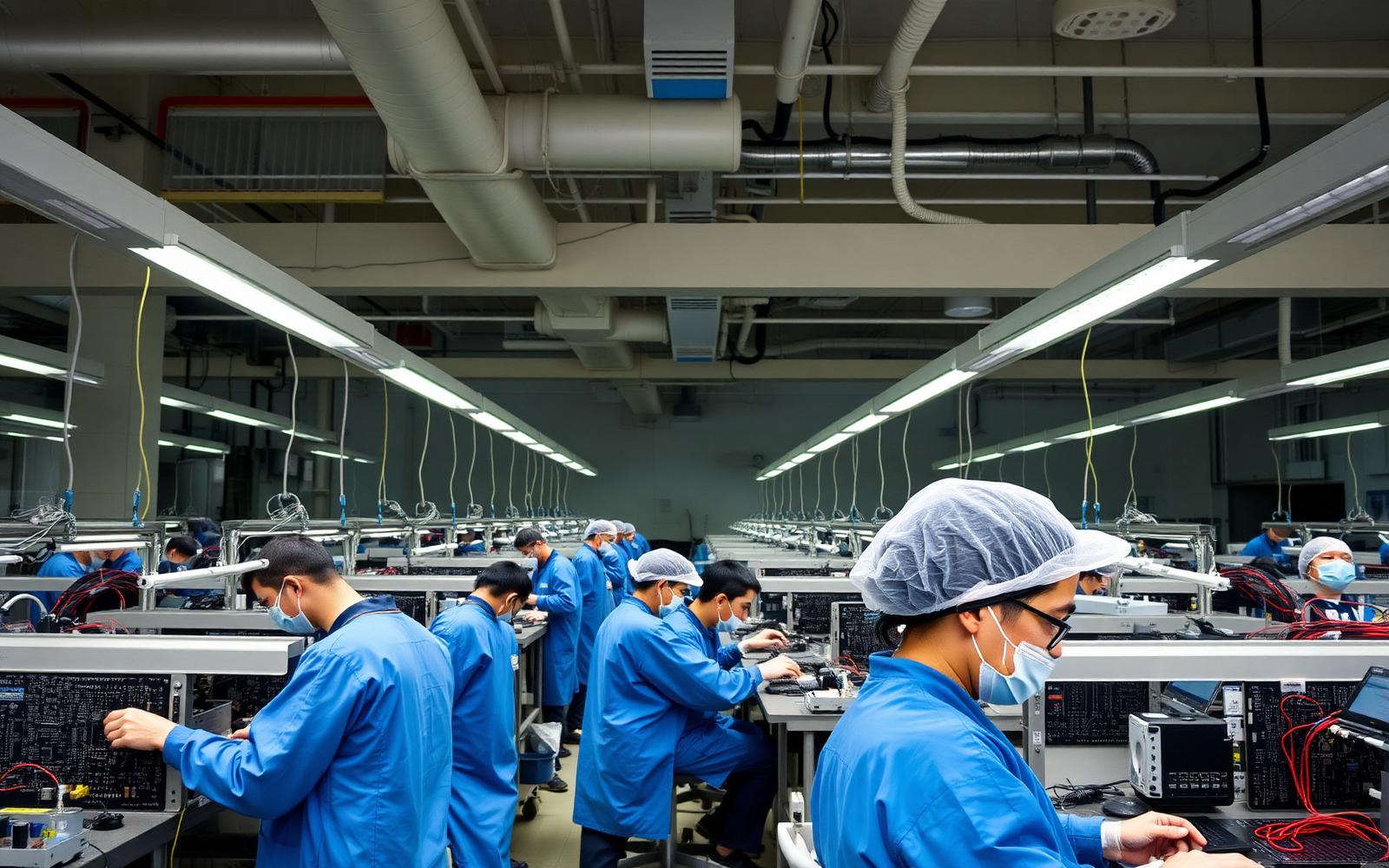
Global products are often easier to produce. One of the main reasons for that is that countries with an abundance of raw materials are the selected location for manufacturing. Hence, such companies can produce goods at low unitary costs.
Through this advantage, companies can offer affordable services without compromising quality. Furthermore, globalization helps to achieve customer supremacy. It means customers can pick the best quality at a low cost.
Globalization forces competing companies to offer better services. Hence, many companies pick a niche and seek to offer unique products to their market scope. Some of these businesses can satisfy their niche through proper product differentiation.
Pros 2: Production Speed and Cost Savings
While globalization drives the best business production, it does it at an even reduced cost. The cost of transportation of raw materials is the most substantial fee being canceled out.
Without the need to import material for production, businesses can use the money to expand their product line. Furthermore, they can fast-track production with raw materials in hand.
Also, globalization reduces challenges in new product development because it brings them close to several markets. When Tesla opened its Gigafactory 4 in Berlin, it has been able to penetrate the European market faster. Likewise, the economy of the production country is improved through employment and accessibility to quality products.
Pros 3: Improve International Relations and Outsourcing
For companies that cannot open their factory in another country, globalization makes it easy for them to still benefit from other countries. Through globalization, they can outsource some of the processes of their manufacturing to companies in another country. Even better, they can outsource the production of parts of their product to companies in another country.
Globalization has helped improve the relationship between international companies so that they can collaborate on different enormous tasks. Furthermore, this bolstering relationship can help these companies share privileged technologies. You can learn how to cut the cost of prototyping in this article.
Challenges against Global Product Development
Con 1: Environmental Concerns and Compliance
One of the side effects of global product development is that some counties can become too concentrated in manufacturing. This concentration would deplete the resources in such counties and leave them barren after their exploration is complete. Hence, there are concerns over the cultural and environmental compliance of globalized companies.
Many of these companies may be hindered from establishing in a foreign country if they do not satisfy certain compliance criteria. Even more, their factories can be shut down by regulators if concerns are raised about them during operation. In such cases, a lot of resources will be left at the factory as waste.
Con 2: Recruitment Difficulty
The prospect of globalization is advantageous to the country’s economy because of increased employment. However, some of these countries do not have the expertise needed to oversee the production cycle of globalized products. Having a factory in a country with little or no technical expertise can be challenging for a business engaging in global product development.
Such businesses would need to bring in foreigners to oversee the operations in the manufacturing country. Regrettably, these countries can have policies against foreigners hiring others. Furthermore, the country might not be in support of hiring foreigners or paying them.
Some countries are more lenient because they provide criteria that must be satisfied before being able to employ a foreigner or before a foreigner can be employed. Check out this article on how to hire foreign employees.
FAQs on the Impact of Globalization on Global Product Development
Check out more questions and answers below on how globalization is impacting product development.
1. What are the main types of globalization?
Globalization can be categorized into economic, political, and cultural. Economic globalization is interdependence in the form of international financial markets and foreign exchange. Political globalization employs the tie of global organizations to prevent conflicts and improve interstate interaction.
Another form employs the use of sister cities to oversee the integration of two different cultures. Through this integration, ideas and values are transmitted between the two nations.
2. What are examples of production globalization?
Asian countries have a lot of manufacturing industries. Hence, Western countries outsource the manufacturing of their products in these countries. For instance, Nike is an American country with several outsourced companies in Asia where its products are manufactured.
3. What is the objective of production globalization for developing countries?
Developing countries can participate in global production networks through manufacturing, trade, and distribution. Through this participation, they can grow their country's economy. Furthermore, their economy can be bolstered and the poverty rate can be reduced through capital flows and movement of labor.
4. What does the globalization of production refer to?
It refers to the diversification of production processes to maximize the factors of production. Hence, goods and services are sourced from various locations around the globe. By employing different sources, the cost and quality of factors of production can be maximized.
It’s a Wrap
The impacts of globalization are both favorable and otherwise. With this article, businesses can capitalize on the pros. Also, it shows what to avoid during global product development.
Does your company need help strategizing how to break into the global production economy? You can get all the help you need from LA NPDT.
We are an international firm that offers consultancy services for production companies. You can reach us at 318-731-9573 or via Read more on Lanpdt for more inquiries.
Impacts of Globalization on Product Development
Category | Opportunity | Challenge |
|---|---|---|
Production | Affordable products | Environmental concerns |
Production | Better services | Compliance issues |
Cost/Speed | Production speed | Recruitment difficulty |
Cost/Speed | Cost savings | Factory closure risk |
Collaboration | International relations | null |
Collaboration | Outsourcing capabilities | null |
Landed cost: the number that decides where you build
Unit price at the factory gate is the least reliable basis for a sourcing decision. Duties, freight, inventory carried in transit, quality escapes and travel all shift the real cost, and they move in different directions depending on region. Build a landed-cost model before choosing a geography, and re-run it annually — tariff schedules and freight rates have swung the answer more than once in the past five years.
Landed cost components to model
Component | Typical share of landed cost | Notes |
|---|---|---|
Ex-works unit price | 55-75% | The only number most quotes show |
Duty and tariffs | 0-25% | Depends on HTS code and origin |
Ocean or air freight | 3-15% | Air is 6-12x ocean per kg |
Inventory carrying in transit | 1-5% | 30-45 days of cash tied up |
Quality escapes and rework | 1-8% | Highest in the first year of a new partner |
Travel, oversight and translation | 1-4% | Underestimated in every model |
Nearshoring often loses on unit price and wins on total cost when a product has volatile demand, heavy freight or high engineering-change traffic. A useful test: if you expect more than four design changes in the first year, keep manufacturing within a time zone your engineers can work in.
Operating rules for distributed development
- One shared source of truth for CAD and BOM revisions — never emailed files.
- A weekly overlap window that both time zones actually attend.
- Written decisions after every call; verbal agreement does not survive translation.
- Dual-language critical drawings and inspection criteria.
- A local quality resource who can walk the line on your behalf.
Key takeaways
- Decide sourcing on landed cost, not ex-works price.
- High engineering-change traffic favors nearby manufacturing.
- Distributed teams need written decisions and one revision-controlled source of truth.
Deciding where to manufacture?
We build landed-cost models and manage distributed development so sourcing decisions hold up in production.
Choosing where each part of the program lives
Global product development stopped being a simple cost arbitrage some time ago. Landed cost, tariff exposure, freight volatility, engineering response time, and intellectual property risk now move together, and a decision that looks cheap on a per-unit spreadsheet can be expensive on a program timeline.
The practical approach is to split the program into activities and place each one where its dominant risk is lowest, rather than sending the whole product to a single geography.
Design authority and test engineering usually belong close to the team that owns the requirements, because those activities depend on rapid, high-bandwidth conversation. Tooling and high-volume assembly often belong where the supply base for that process is deepest. Sub-assembly and final configuration increasingly move near the end customer to shorten lead time and reduce tariff exposure on finished goods.
Activity | Best placed | Dominant risk if misplaced |
|---|---|---|
Requirements and architecture | With the product owner | Slow decisions, misread market |
Detailed mechanical design | Near the tooling supplier | Design not manufacturable as drawn |
Injection mold tooling | Deep tooling supply base | Long tool trials, high revision cost |
Electronics assembly | Established SMT clusters | Component sourcing delays |
Final assembly and packout | Near end market | Freight cost, tariff on finished goods |
Field service parts | Regional warehouse | Unacceptable repair turnaround |
The hidden costs that decide the outcome
Four costs are routinely left out of offshore comparisons. Travel and oversight is the first: a tooling program with no engineer present at first article inspection generally pays for the omission twice.
Communication latency is the second, and it is measured not in hours of time zone difference but in the number of days a blocking question takes to resolve. Inventory carrying cost is the third, since long ocean lead times force safety stock that ties up working capital.
Change cost is the fourth and largest, because a design change that crosses an ocean requires new samples, new inspection, and often new tooling steel.
A defensible sourcing decision prices all four. When we run this comparison for clients, the answer is rarely all-domestic or all-offshore. It is usually a split footprint where the highest-change-risk parts stay close, the stable high-volume parts go where the process is cheapest, and a documented second source exists for anything on the critical path.
Globalization also changed who your competitors are. A small team with a good design can now reach the same contract manufacturers, the same component distributors, and the same logistics networks as an incumbent. That levels manufacturing access and shifts the advantage to the parts that are hard to copy: requirement quality, testing rigour, and speed of iteration.
Building resilience into a global program
Resilience in global product development is mostly a design decision, not a logistics decision. A product that specifies a single-source connector, a proprietary display module, or a microcontroller with one authorised distributor has embedded fragility that no supply chain team can remove later.
During detailed design, every component on the bill of materials should be classified: multi-source and commodity, single-source but substitutable with a layout change, or genuinely locked. The locked items are the program risk, and there should be few of them and a documented reason for each.
The second lever is qualification readiness. If a second supplier has never been sampled, it is not a second supplier; it is a hope. Qualifying an alternate at low volume during development costs a fraction of qualifying one under pressure during a shortage. The third lever is inventory posture, set deliberately rather than by default: strategic buffer on long-lead locked items, lean stock on commodity parts.
Finally, resilience needs a named owner and a review rhythm. In practice a quarterly review of the bill of materials against lead time, tariff classification, and end-of-life notices catches most problems while they are still cheap to solve. Programs that do this treat globalization as an option set rather than a dependency, which is the difference between a footprint that absorbs disruption and one that transmits it straight to the customer.
Filed under:EducationInspirationWords
Services related to this guide
- Product design servicesIndustrial design and CAD taken all the way to manufacturable files.
- Rapid prototypingWorking prototypes in days, from 3D printing to vacuum casting.
- Electronic design servicesSchematic, PCB layout, firmware and bring-up, through to production handoff.
- Product development examplesReal projects we designed, prototyped and shipped.