The Roles of Prototyping in Concept Design Products
Do you know how to create successful concept design products? If no, harness the power of prototyping in this article for top product success.
August 15, 20238 min read

Written by Konstantin Dolgan, Ph.D., NPDP
Founder & CEO, Product Development Engineer
Published August 15, 2023Updated September 2, 2026
Have you ever been on a call with a friend and they tried to describe something to you but you were lost? Now, compare that feeling with when they show you the image of the object described. Or better still, you get to touch it., notice how your mind rests in relief. That, you see, is the power of using prototypes for concept design products.
The Roles of Prototyping in Concept Design
What is a Prototype?
A prototype is an early version of a product from which future versions are developed. And prototyping is the process of creating these models or versions of a product to see where and what can be improved upon. This is what most engineers and product developers do by creating test versions of a new product before pushing the final form into the market.
Prototyping is an integral part of product development. And in this article, you will be exposed to ways to leverage concept design services in making workable prototypes for your product. Thus, below are the benefits and best practices associated with prototyping.
Benefits
A fuller understanding of the concept design products
People are visual by nature. They can relate more to what they see and not just what is described to them. So, if you are a concept design services company and you want to convince people of the viability of your product, you’ve got to show them a sample of it.
Through prototyping, the product development team would also be able to get a full grasp of where the product has gotten to. The slips and flops would be seen better during this product design concept rendering. And that way, possible corrections and adjustments to make would be more definite.
Room for user testing
Prototypes allow users to interact with your concept design products before the final rollout into the market. Thus, users are able to test out the product and see if it is something they want to use in the long term.
Furthermore, this also helps the design team to get feedback that can help the product get better.
Investment
Angel investors and venture capitalists are keen on seeing samples of what they want to invest in before they put their cash down. It makes them assess the viability of the product as well as the quality, usability, and functionality of the invention. Thus, a prototype gives concept design services like you an edge during pitch meetings.
Reduce products manufacturing error
There is always a high possibility of manufacturing error if prototyping is not done. And this is because prototyping allows for periodic checks on the progress of the product. Thus, its occasional fine-tuning is well-targeted and corrections are made as and when due.
The overall functionality and usability of your concept design products are preserved by prototyping. There is sure prevention of fatal flaws on the product this way.
Best Practices for Prototyping
These are the most advised ways to go about the act of prototyping in order to achieve premium results from this product development process. And below are some of the prototyping best practices.
Prioritize feedback
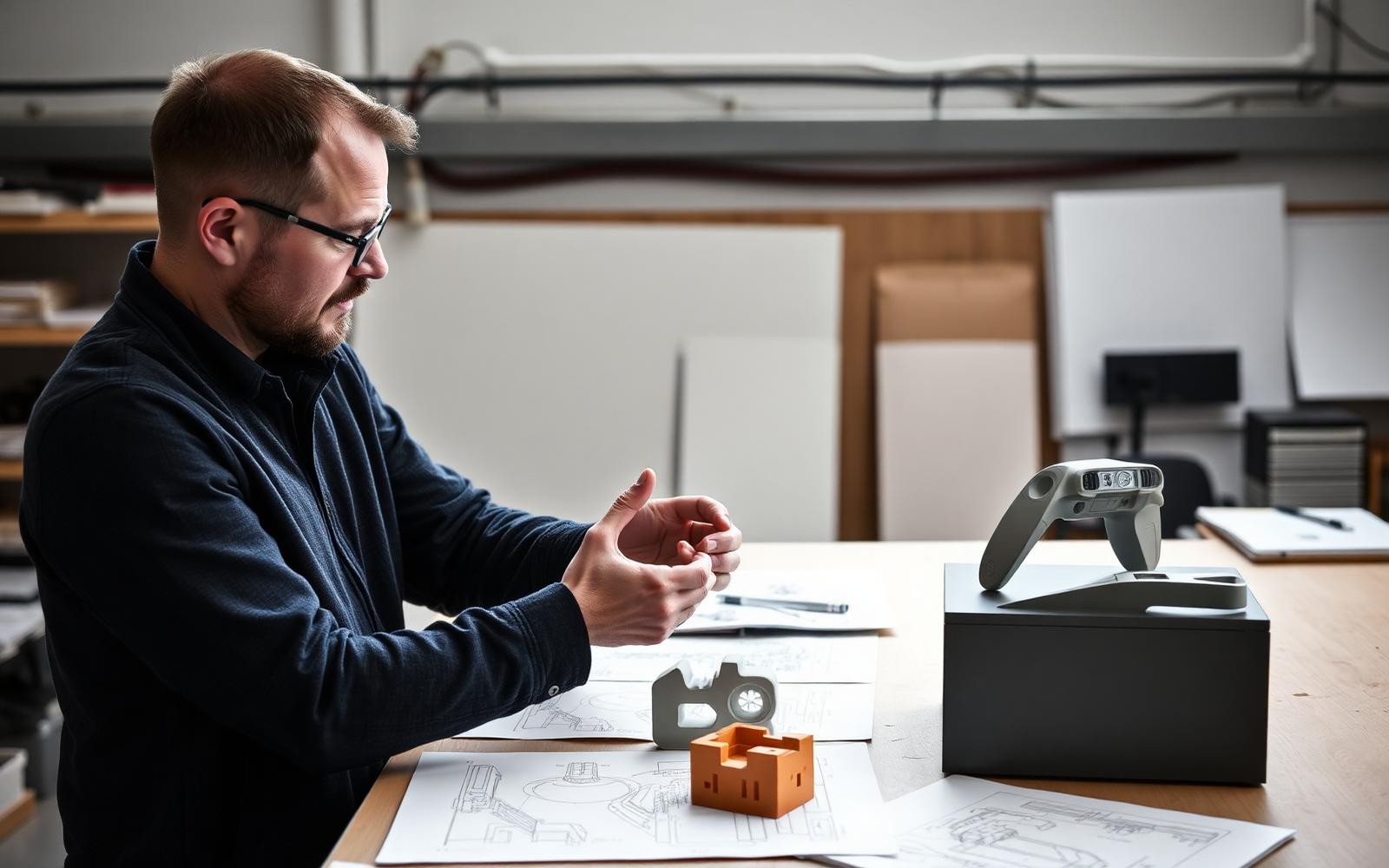
The major goal of prototyping is to see an overall view of the product and check out where corrections need to be made. Thus, this is the stage that requires a lot of feedback. These reviews give a perspective on how the product can get better and the design team should look to prioritize them.
Prototype specific areas
As an inventor, you do not have to prototype every area of your product. You can pick specific areas to review and make better. This is especially if those areas deal directly with the consumers or users of the product.
Get the right users for testing
Defining your target market is one of the core aspects of creating your concept design products. Not only is it useful in marketing, but it is also important during prototyping if you do concept design services. The right users would give you valuable and reliable feedback that can be infused into the product and give it a more excellent kick.
Pick the right prototyping tool
It is important to note that there are different prototyping forms for different kinds of products. For example, a software product has a completely different approach to its prototyping compared to a hardware product. So, pick the one that best relates to your product.
Basically, do not approach prototyping from a one-size-fits-all point of view.
Hottest Questions on the Role of Prototyping in Product Concept Design
● What is the role of prototyping in product design?
Prototyping in product design allows designers to check out new ways to achieve the same functional result with the product. It helps them to see the idea of using 3D models. And with this visualization, they are able to make necessary corrections to the product before its mass manufacturing stage.
● What is the role of a prototype in design thinking?
Design thinking is a cycle of assessment and reassessment of design concepts. That is, the designer seeks to align the product design with the expectations and ease of use for the users. Thus, prototyping is the path through which the designer picks what works and reassesses his thought process until he is satisfied with the final product.
● What are the 4 benefits of prototyping?
The major benefits of prototyping are four-fold. Many see it from the perspective of solving problems, production process management, consideration of raw materials, and quality assurance.
Final Words
Prototyping is an edge. It is a great option to explore in your product concept design stage. Not only would it give you an opportunity to reduce error, but it would also give your users the opportunity to be a part of the production process. And that wins their heart. So, you should leverage it today.
Is your company keen on transforming an idea into a product? For your product concept ideation stage, do you need full-on concept prototyping?
LA NPDT is a product development company that relishes assisting you in converting your concepts into commercial products. Our staff is ready o give you all the support you need towards achieving your goals with your customers. For any concept design needs, you may contact us at 318-243-5789 or at our website, lanpdt.com.
Three reasons why our clients love working with us:
If you ever thought of developing a new product, don’t wait any longer. Talk with one of our experts today.
- 3D (7)
- ecommerce (1)
- Education (230)
- Inspiration (121)
- Market Reports (4)
- Media (17)
- News (50)
- none (61)
- Stories (7)
- Tech (27)
- Tech Talk Podcast (31)
- Time Management (1)
- Uncategorized (109)
- Words (62)
Receive Pdp Example
Please submit your contact info to receive an example of a new product development plan.
Thank you for choosing LA New Product Development Team for your New Product development plan.
If you have any questions or need assistance with your order, please don’t hesitate to contact us.
Thank you for choosing LA New Product Development Team for your Prior Art Search.
Please fill out the form to submit your order.
Upon successful payment, you will receive an email with a Non-Disclosure Agreement (NDA) and a questionnaire regarding your product idea.
Your privacy and security are paramount to us, so rest assured that your information will be handled with the utmost confidentiality.
Step 1: Fill in your contact and billing details.
Step 2: Review your order summary.
Step 3: Submit payment.
After your payment is processed, please check your email for the NDA and questionnaire. Completing these documents promptly will allow us to start your Prior Art Search without delay.
If you have any questions or need assistance with your order, please don’t hesitate to contact us.
Thank you for choosing LA New Product Development Team for your Prior Art Search.
Please fill out the form to submit your order.
Upon successful payment, you will receive an email with a Non-Disclosure Agreement (NDA) and a questionnaire regarding your product idea.
Your privacy and security are paramount to us, so rest assured that your information will be handled with the utmost confidentiality.
Step 1: Fill in your contact and billing details.
Step 2: Review your order summary.
Step 3: Submit payment.
After your payment is processed, please check your email for the NDA and questionnaire. Completing these documents promptly will allow us to start your Prior Art Search without delay.
If you have any questions or need assistance with your order, please don’t hesitate to contact us.
Thank you for choosing LA New Product Development Team for your Prior Art Search.
Please fill out the form to submit your order.
Upon successful payment, you will receive an email with a Non-Disclosure Agreement (NDA) and a questionnaire regarding your product idea.
Your privacy and security are paramount to us, so rest assured that your information will be handled with the utmost confidentiality.
Step 1: Fill in your contact and billing details.
Step 2: Review your order summary.
Step 3: Submit payment.
After your payment is processed, please check your email for the NDA and questionnaire. Completing these documents promptly will allow us to start your Prior Art Search without delay.
If you have any questions or need assistance with your order, please don’t hesitate to contact us.
Benefits of Prototyping
Benefit | Description |
|---|---|
Fuller Understanding | Helps the product development team grasp product status and identify corrections. |
User Testing | Allows users to interact with products and provide feedback. |
Investment | Provides a sample for investors to assess viability, quality, and functionality. |
Reduced Manufacturing Error | Enables periodic checks and fine-tuning to prevent fatal flaws. |
Prototyping in Product Design: The Fidelity Ladder
Prototyping in product design is not a single step, and each rung of the ladder answers a different question. Building too high too early wastes tooling money on a concept that has not earned it; building too low for too long produces confident opinions about a product nobody has held. Choose the lowest fidelity that can still answer the open question.
Fidelity | Method | Question it answers | Typical cost | Lead time |
|---|---|---|---|---|
Sketch model | Foam, cardboard, tape | Is the proportion and posture right? | $50-300 | 1-2 days |
Appearance model | CNC or SLA plus paint | Does it read as the intended product? | $1,200-4,000 | 1-2 weeks |
Works-like rig | Off-the-shelf mechanics, breadboard | Does the mechanism or circuit work at all? | $800-5,000 | 1-3 weeks |
Looks-like/works-like | SLS or MJF housings, custom PCB | Can a stranger use it unaided? | $6,000-25,000 | 3-6 weeks |
Engineering pilot | Soft tooling or bridge molds | Will it survive assembly and shipping? | $20,000-80,000 | 6-12 weeks |
Production pilot | Hard tooling, first article | Is the process capable and repeatable? | $60,000-250,000 | 10-20 weeks |
Cost of Skipping a Rung
The classic failure is jumping from an appearance model straight to tooling because the concept looked finished. Appearance models hide wall thickness, draft, snap-fit stress and assembly sequence. The rework cost of a tooling change is roughly 10 to 40 times the cost of the works-like prototype that would have exposed the problem, and it lands on the critical path where schedule slip is most expensive.
What Each Prototype Round Must Produce
- A written question the round exists to answer, agreed before the build starts.
- A pass/fail threshold, not a subjective impression.
- A test protocol, even if it is three users and a stopwatch.
- A dated photo set of the failure modes found.
- A decision: advance, iterate at the same fidelity, or kill the concept.
- An updated cost model, because every prototype changes the bill of materials estimate.
Teams that document the question and the threshold complete concept design in fewer rounds, because they stop building prototypes to make themselves feel finished and start building them to close specific risks. That is the entire role of prototyping in concept design: converting opinion into evidence at the lowest cost that the evidence allows.
Filed under:EducationInspirationWords
Services related to this guide
- Best prototyping companiesDevelopment firms, instant-quote bureaus and local shops — who fits which job.
- Free prototype cost calculatorFive to eight questions, an instant cost range for a first prototype.
- Prototype development companiesWhich firms take a sketch to a working prototype — and which only fabricate parts.
- Rapid prototypingWorking prototypes in days, from 3D printing to vacuum casting.