Top Product Development Methods for Design Products Company
Products Design Company: Check this article for exceptional practices for the best working policy for your team.
September 7, 20236 min read

Written by Konstantin Dolgan, Ph.D., NPDP
Founder & CEO, Product Development Engineer
Published September 7, 2023Updated September 2, 2026
You may be aware that every product design company, as much as every concept design company, contributes immensely to the furtherance of effective living. Their inventions have shaped how the populace communicates, transacts, learns, and more. In fact, some successful product design companies have high rates of success.
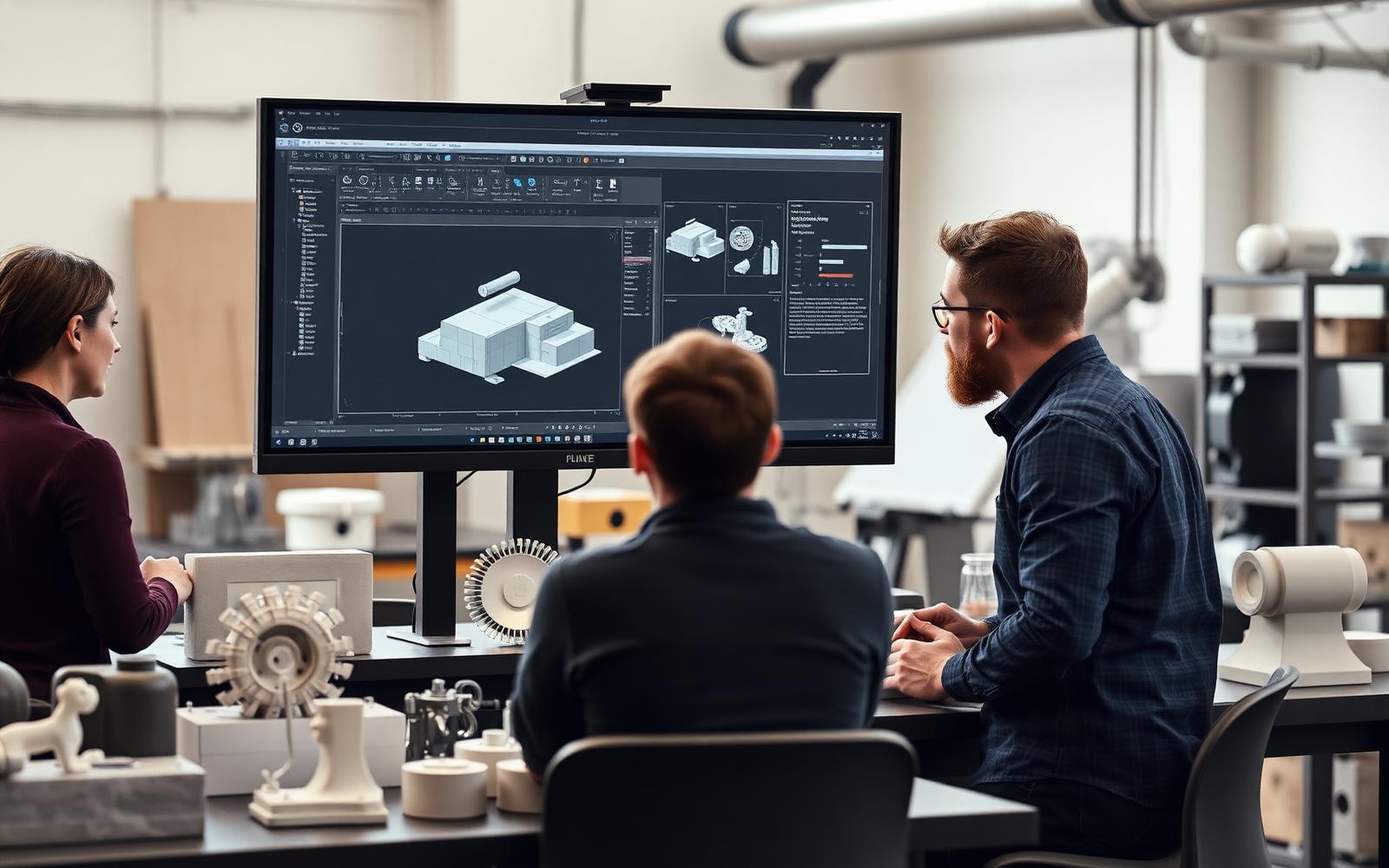
These product design and development companies use proven practices that help to integrate different departments and production processes. Over the years, they have established what makes each process advantageous, including concept design services. And on the flip side, they have been able to mitigate some of the challenges they faced using specific methods.
Hence, if you want to be successful with your product innovation and development, you should learn from their experience and practices. Then, decide which one works best for your company. In this article, we have identified five practices of successful product design and development companies.
Key Points
– To be successful with product innovation and development, you should learn from the experience and practices of successful product design companies, as well as concept design services.
– The four stage-gate procedures are to kill, go, hold, and rework.
– IPD considers all aspects of a new product from the beginning concurrently.
– Manufacturers must pay attention to eliminating everything else that does not contribute to that goal.
– Agile relies on cross-functional teams working in short periods called sprints.
Method 1: Stage-Gate Process for Product Design Company
Robert Cooper and Scott Edgar developed this method in the early 1980s. The process traditionally consists of six stages. These comprise discovery, scoping, business case, development, testing and validation, and product launch.
Upon completion of each stage, the development team examines the outcome of the previous stage. Next, they check the overall progress and outlook of the project. Then the product design and development company decides based on the data acquired in each stage.
Experts have explained the procedure used by the development team in four stages. These stages are to kill (basically kill the project), to go (proceed to the next stage), to hold (put the project in a hole for some time), and to rework (redo the job they have done in the previous stage).
The stage-gate process has quite a straightforward approach. Also, it is popular for fostering clarity, discipline, and constraints to the process. Conversely, this method can be slow, rigid, and even suppress creativity.
Nowadays, the stage-gate process is used by some of the largest corporations, such as Procter & Gamble, GE, PepsiCo, and Exxon.
Method 2: Integrated Product Development for Product Design and Development Company
This second method is based on concurrent engineering, popular in the 90s. Concurrent engineering was first coined in 1988 and is based on the waterfall method developed in the 1970s.
At the beginning of the 1990s, the automotive industry pioneered many concurrent engineering concepts and their implementation. Reference for Business sheds more light on concurrent engineering in this article.
IPD considers all the aspects related to a new product from the very beginning concurrently. These aspects include concept design, product design, manufacturability, assembly testing and validation, and even environmental concerns and recycling. This way, the product development team can identify the problems early in the process and address them in the beginning.
It will help to avoid costly mistakes and failures. As a result, the product development process is shorter, and the risk of failure is lower. However, the process requires clear and well-defined requirements from the very beginning.
It relies heavily on communication within cross-functional teams. Companies like Nestle, Harley-Davidson, NASA, and other top organizations currently use it.
Method 3: Lean Product Innovation for Products Design Company
Toyota is credited with building lean product innovation on the lean procedure and philosophy in the 1970s. The main idea of lean is to eliminate waste and create value for the customer. In the context of product development and innovation, it means developing the product that the customer wants and needs.
Essentially, the manufacturer has to pay attention to eliminating everything else that does not contribute to that goal. This includes unnecessary features, complex processes, and long development timelines.
Lean relies heavily on continuous learning and improvement. This means you learn from your past experiences and mistakes and implement the knowledge into future products. Lean product development is practiced by some of the largest and most successful companies, including Toyota, John Deere, Nike, and Intel, among others.
Method 4: Agile Product Development for Product Design and Development Company
Our fourth method requires developing the product in small increments quickly and responding to customer feedback in the process. Agile relies on cross-functional teams working in short periods called sprints.
Upon completion of each sprint, the team reviews the comments they got from their customers and the outcome of the previous stage. Then, they use these factors to decide how to go about the next stage. This way, the team can quickly respond to changing customer requirements and market conditions.
Agile product development has been known for being flexible and adaptable. It is also known for improving communication between team members. Some of the most well-known agile product development companies include Amazon, Facebook, and Google.
Method 5: Design Thinking for Products Design Company
It is a human-centered approach to problem-solving developed by Ideo in the 1990s. Interaction Design Foundation gave a thorough insight into the history of design thinking.
The main idea behind design thinking is to place the user at the center of the product development process or other processes like concept design service. Therefore, design thinking starts with understanding the users and their needs. After that, it is all about generating creative solutions to satisfy those needs.
A team comes up with as many solutions as possible that could work and then selects the best one based on user feedback. Design thinking has been shown to improve user experience and product quality. The most well-known companies that use design thinking are Apple, IBM, and SAP.
Method 6: Lean Startup for Products Design Company
It is a relatively new approach developed by Eric Reese in 2010. The main idea behind the lean startup is to develop the product quickly and inexpensively by starting with a minimum viable product. An MVP is the simplest version of the product that still satisfies the customer’s needs.
It allows testing and gathering feedback as quickly as possible. Then, based on user feedback, you can decide what to do with your product next.
The startup approach is about learning from your customers and adapting their feedback, even in your concept design. Dropbox, Airbnb, and Uber are some of the most well-known companies that practice lean startups.
Hottest Questions about Product Development Methods for Product Design Company
Check out these other questions about the best product development practices.
1. What does a product designer do?
Product designers are responsible for the user experience of a product. They optimize the solutions being proffered to end users. Additionally, they help brands make sustainable products for longer-term business needs.
2. What is the difference between agile scrum and sprint?
In companies that practice agile, scrum implements release every 30 days. Therefore, this case study can be referred to as 30 days sprint. Therefore, a sprint can be defined as the timeframe a scrum team uses to complete stipulated tasks.
3. Why hire a product design agency?
Hiring a product design company, just like hiring a concept design service, is important because of its profound understanding of product mechanics. Additionally, these agencies can think outside the box on different scenarios for using, testing, and validating a product. Every company stands a better chance of making its invention or brand memorable by employing a product design agency. Furthermore, they can improve customer satisfaction and productivity.
The Bottom Line
To make a name for your concept or business as a successful product design company, you should know the best practices of leading product development companies, as well as concept design companies or services. This article has identified the five proven ones.
By carefully applying these methods, you can change how your business operates. Consequentially, your company will start enjoying winning streaks.
More information on these best practices is available for you at LA NPDT. We are a reliable design agency that will make your product memorable and improve customer satisfaction. Furthermore, our cross-functional team will help your business become more productive.
What then are you waiting for? Contact us today if you are ready to transform your business through Lanpdt: schedule consultation la npdt or call directly at 318-243-5789.
Product Development Methods Comparison
Method | Key Characteristic |
|---|---|
Stage-Gate Process | Uses gates to evaluate progress between stages. |
Integrated Product Development (IPD) | Considers all product aspects concurrently from the start. |
Lean Product Innovation | Focuses on eliminating waste to create customer value. |
Agile Product Development | Develops products in short increments called sprints. |
Design Thinking | Human-centered approach to problem-solving. |
Choosing between product development methods
Method | Best when | Core mechanism | Failure mode |
|---|---|---|---|
Stage-gate | Capital commitments are large and irreversible | Formal gate criteria with kill authority | Becomes a paperwork ritual with no real kills |
Agile hardware | Requirements are unstable, tooling is far off | Short cycles on subsystems, frequent demos | Endless iteration with no design freeze |
Lean startup | Demand is unproven | Cheap tests before build spend | Learning stops once money is raised |
Set-based design | Several technical paths look viable | Carry options in parallel, eliminate late | Expensive if run past the decision point |
Design for Six Sigma | Variation drives quality complaints | Tolerance analysis and capability studies | Heavy for low-volume products |
Hybrid in practice
- Discovery. Lean. Spend on evidence, not geometry. Exit when the job to be done and target price are written down.
- Concept. Set-based. Carry three directions to physical models before eliminating any.
- Engineering. Agile cadence with two-week reviews, but a fixed requirement set.
- Validation. Stage-gate. Named test standards, pass criteria agreed before the test runs.
- Tooling and ramp. Stage-gate with formal change control and a costed change-order process.
Gate criteria worth enforcing
Gate | Advance if | Iterate if | Stop if |
|---|---|---|---|
Concept | Task success shown on physical models | Users succeed but slowly | No user prefers it to the status quo |
Design freeze | Cost model within 10% of target | Cost 10-25% over target | Cost over target by 25%+ with no lever left |
Validation | All named standards passed | One failure with a known fix | Repeat failures in the core function |
Tooling | DFM signed by moulder | Minor geometry queries open | Geometry still changing |
Launch | Pilot run yield above 95% | Yield 85-95% | Yield below 85% with unclear cause |
Filed under:EducationInspirationWords
Services related to this guide
- Product design servicesIndustrial design and CAD taken all the way to manufacturable files.
- Best industrial design firmsWhich studios take an idea from form to manufacturable hardware, and what they charge.
- Prototype designLooks-like, works-like or pre-production: what each proves and what it costs.
- Product development examplesReal projects we designed, prototyped and shipped.