Using 3D Printing Prototype As a Market Test for Products
Are you considering a 3D printing prototype for testing the market's response to your new product?
December 13, 20228 min read

Written by Ralph Hill, Mechanical & electrical systems, 3D manufacturing
Prototyping Engineer
Published December 13, 2022Updated September 2, 2026
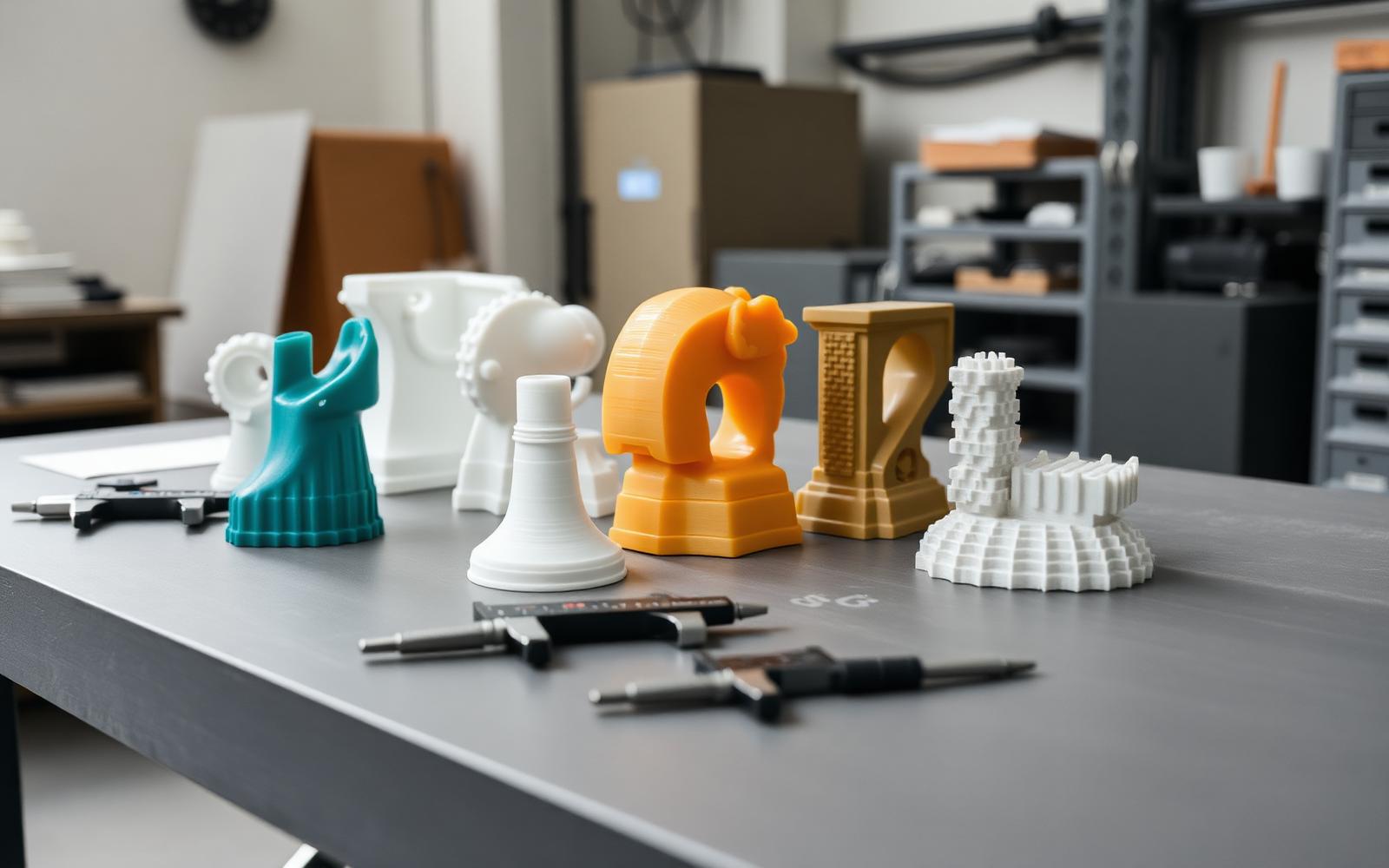
Manufacturing companies often use 3D printing as a prototyping tool. Hence, they could develop several product prototypes in a short time at a very low cost.
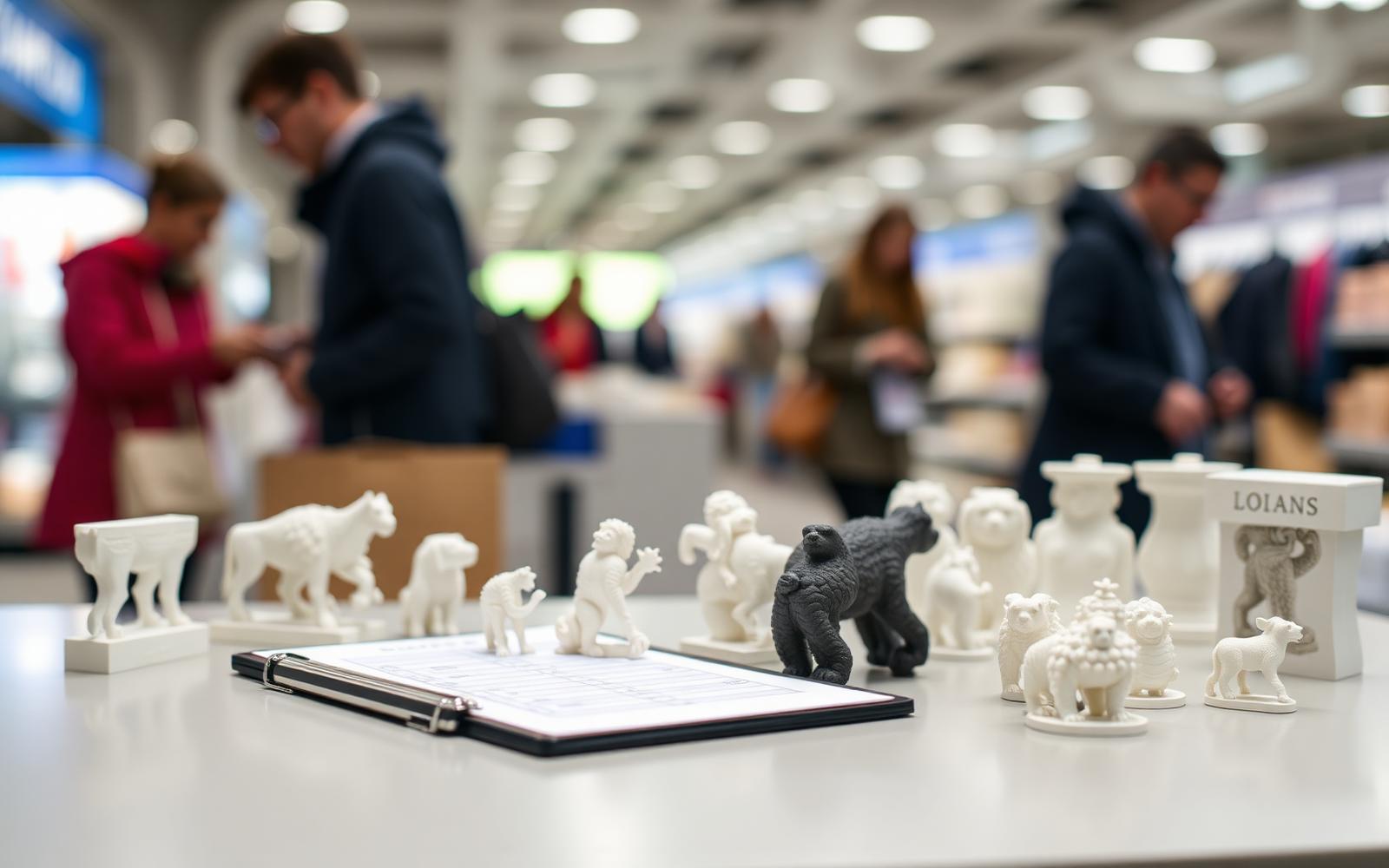
Similarly, it has been used in the medical sector for several years. For example, it is often used to create biological structures that look like natural ones for practical purposes. Additionally, it is used to print prosthetics and implants.
The 3D printing market generated a revenue of $6.7 billion before the tenth month of 2022. The report shared by IBISWorld has more insight into the growth of 3D printer manufacturing in the US. In addition, the website offers other vital statistical data.
With the growing application of 3D printing in clothing, education, manufacturing, aerospace, etc., your business may also want to consider it. Hence, we have put together intriguing subtopics on how to use 3D-printed prototypes.
Key Points
– Rapid prototyping is both time and cost-effective.
– In 2017, the first 3D-printed residential building in the world was completed in Russia.
– A company intending to use 3D printing to know if their machine can meet the needs of end users of their product.
– Some common examples of 3D production materials are plastic, nylon, metal, titanium, resin, etc.
– With the capacity to mimic any other product, there is likely a growing discharge of counterfeits.
How To Use Rapid Prototyping for New Product Development?
Rapid prototyping is a good method of creating product samples. Using a 3D printing prototype, you can try out different materials, colors, sizes, shapes, and more. Then, you can use it to design different concepts for a new product.
Rapid prototyping is both time and cost-effective. It takes only a few hours to make a feature of your product. If your company is under pressure to innovate for customers, rapid prototyping is a solution to ease the pressure.
The main aim of rapid prototyping is to have the right product in the market at the right time without incurring much cost. Furthermore, using additive layer manufacturing technologies gives you a competitive advantage over competitors using iterative, competitive, or parallel prototyping.
How Are 3D Printed Prototypes Used in Marketing?
There are many uses for 3D-printed prototypes in the market. For instance, Spritam levetiracetam was approved by FDA in 2015. At the time, it was the only 3D-printed drug to gain market approval.
Hence, 3D-printed prototypes can create new products in the market. In 2017, the first 3D-printed residential building in the world was completed in Russia. Many other producers are trying out 3D printing for their products.
Another use of 3D printed prototypes is easing companies into market acceptance of a product. When a new product is released, customers are often reluctant to jump at it. However, it can be financially risky for a company if its products still need to be accepted.
The way to get the best price for a product part is to make large production. Therefore, you can use 3D printing to lower the cost risk of producing a product that is not accepted in the market. In addition, some companies use 3D printing to test their product.
3D Printing Prototypes Testing Process
It is essential for a company intending to use 3D printing to know if their machine can meet the needs of end users of their product. Hence, they need to test the machine and materials they want.
Alongside the machine, this testing process will evaluate the material used and the dimensions that the machine can process. The five stages of 3D printing testing are Machine Characterization, Screening Test, Process Qualification, First Part Qualification, and Serial Production.
During the first stage, the company can identify whether the machine works. It is similar to test-driving a car before purchasing it. Then the second stage is testing the machine’s output to see if it meets the company’s expectations.
During the Process Qualification stage, you test if the machine runs smoothly and consistently. This is the core of the test. Hence, different materials are introduced to ensure that there is only a little deviation in the output.
At the penultimate stage, you can start printing real products. However, you are expected to start with only parts of a product. Then, the final stage is where you can print whole products.
The Serial Production stage is for ensuring quality control. Hence, a significantly low number of products are produced. It is also advised that some machine maintenance is introduced at this stage.
Reasons To Use 3D Printing Prototypes
The near-finished product of 3D printing is one of the major advantages of the method. Unlike many other methods of manufacturing that need cutting and shaping, only minimal surface treatment is needed before a production is ready for use.
Since there is no cutting and shaping, 3D printing helps to minimize waste. Only the material needed for production is used for the 3D print prototype. Hence, it saves material and production cost price.
i.materialise mentioned in one of its blog posts that 3D printing was primarily used for prototyping but is not used for production-ready pieces. The blog post released by the 3D printing service provider has other interesting facts about 3D printing.
Another advantage of 3D prototype printing is making strong and lightweight products. You can use any material, depending on the machine. Some common examples are plastic, nylon, metal, titanium, resin, etc.
3D print prototypes are environmentally friendly. Moreover, this method encourages the rampant use of renewable materials. Hence, many companies with renewable materials use 3D printing.
Hindrances To Using 3D Print Prototypes
The first and obvious limitation is that 3D print prototypes are only physical products. Hence, products that do not need customer approval before mass production do not need it. For this reason, software producers cannot use 3D printing for prototyping.
Aside from the limited use scope, most other limitations are industry-dependent. For instance, 3D printing will reduce manufacturing jobs. Therefore, it can prompt unionized actions against companies that favor it.
Another major limitation of 3D printing is being able to design a product from scratch. Hence, such companies need a 3D printing expert, team, or agency to create their product. And if measurement is incorrectly entered, it can cause design inaccuracy.
The last hindrance to 3D printing prototypes is copyright issues. Since it is a growing market with the capacity to mimic any other product, there is likely a growing discharge of counterfeits.
Top Questions About Using 3D Printing Prototype
More questions with insights into the 3D printing market.
The target market for 3D printing is every industry. However, hobbyists and home users are among the fastest-growing 3D printing target market populations. The reason is that individuals want to print game characters and small house products like spoons, key holders, etc. 3D printing is expected to be bigger, faster, and cheaper. In the future, 3D printing is expected to handle larger projects and more advanced materials. All industries are benefiting from 3D printing. However, industries like aerospace, automotive, manufacturing, robotics, education, etc., are presently at the forefront of the 3D printing market. Yes, hobbyists and home users make money selling 3D models. Similarly, prototyping companies have been raking in much money on their models.Who is the target market for 3D printing?
What is the future potential of 3D printing?
What industries benefit from 3D printing?
Is selling 3D models profitable?
Conclusion
Rapid prototyping is becoming more popular for its time and cost-effectiveness. 3D printing prototype is now being used to build very large structures and inventions that it has yet to be used for before.
There are several other advantages to a business employing 3D-printed prototypes. However, it can only serve some businesses because it is only for hardware products. Also, it exposes many industries to counterfeit production.
LA NPDT is a prototyping firm where you can get rapid prototyping services easily. We have an impressive team of designers, marketers, and manufacturing specialists.
Therefore, reach out to us for your prototyping and product manufacturing service. Kindly contact us via our website lanpdt.com or call directly at 318-243-5789.
Stages of 3D Printing Prototype Testing
Stage | Purpose |
|---|---|
Machine Characterization | Identify if the machine works |
Screening Test | Test the machine’s output |
Process Qualification | Test for smooth and consistent machine operation |
First Part Qualification | Print parts of a real product |
Serial Production | Ensure quality control with low volume production |
Running In-Home Testing of New Products With Printed Prototypes
In home testing of new products is the cheapest way to find out whether a concept survives contact with a real kitchen, garage or bathroom. 3D printed prototypes make it affordable, but only if the print process matches the question being asked and the panel is designed before the parts are shipped.
Process | Best for | Surface and strength | Cost per part | Lead time |
|---|---|---|---|---|
FDM | Bulky form checks, fixtures | Visible layers, anisotropic | $20-90 | 1-3 days |
SLA/DLP | Appearance and fine detail | Smooth, brittle, UV sensitive | $40-200 | 2-5 days |
SLS/MJF nylon | Functional in-home use | Tough, matte, isotropic enough | $80-400 | 3-7 days |
Polyjet multi-material | Overmold and gasket feel | Excellent look, low durability | $150-600 | 3-6 days |
Cast urethane | Small panels of 10-50 units | Near-production feel | $60-250 plus tooling | 2-3 weeks |
For a two-week in-home trial, SLS or MJF nylon is usually the right answer. It tolerates drops and dishwashing better than resin, and the matte finish stops testers from grading the product on print artifacts instead of the concept.
Panel Design and Kill Thresholds
Parameter | Recommended | Why |
|---|---|---|
Panel size | 12-25 households | Enough to see repeated failure modes, small enough to debrief each one |
Duration | 10-14 days | Covers the novelty drop-off that shows up around day 5 |
Segments | At least two distinct use contexts | Prevents a single household type from defining the product |
Data capture | Short daily log plus one recorded exit interview | Logs catch frequency; interviews catch reasons |
Purchase-intent question | Asked at price, with an open field for their number | Intent without a price is noise |
Kill threshold | Under 30% would buy at target price after 10 days | Forces a decision instead of another round |
What to Instrument
- Uses per day, self-reported in a one-tap log.
- Time to first successful use with no help from you.
- Number of times the product was put away and not retrieved.
- Any part that broke, loosened, stained or discolored.
- The workaround the household invented - this is usually the next feature.
- Whether they showed it to anyone else unprompted.
Printed prototypes cannot answer questions about injection-molded wall behavior, long-term fatigue or regulatory compliance. What they answer well is whether the product earns a place on the counter, and that question kills more concepts than manufacturing ever does.
Filed under:EducationInspirationWords
Services related to this guide
- Best prototyping companiesDevelopment firms, instant-quote bureaus and local shops — who fits which job.
- Free prototype cost calculatorFive to eight questions, an instant cost range for a first prototype.
- Prototype development companiesWhich firms take a sketch to a working prototype — and which only fabricate parts.
- Rapid prototypingWorking prototypes in days, from 3D printing to vacuum casting.