What is the Path from an Idea to the Production of a New Product?
Do ideas alone make the product? Not. Fine-tuning and implementation are also involved.
December 20, 202211 min read

Written by Konstantin Dolgan, Ph.D., NPDP
Founder & CEO, Product Development Engineer
Published December 20, 2022Updated September 2, 2026
Wondering how to manufacture a product idea? The path from a thought in your head to units on a pallet runs through a predictable set of stages: validating demand, locking requirements, designing and prototyping, proving the design, then selecting a manufacturer and paying for tooling. Below we walk that path in order, with the decisions and costs that show up at each step.
Many of us look forward to the ‘aha’ moment every day. However, the real job remains how to bring the light bulb idea into people’s hands physically.
Do you struggle with how to invent a product? Or do you just want to know more about the entire process of how to invent a product? Then make sure you read this article till its wrap-up.
What Is The Path From An Idea To The Production Of a New Product?
Before engaging the paths that lead to having to invent a product, it is important to consider what a product idea entails. This is because, without it, there would not be conversations about anything else in the entire product development process.
So, what is a product idea? It is the initial concept or plan for a new item that a company can produce and sell in a particular market. Usually, it outlays the purpose of the product as well as its features. Sometimes, the idea consists of the design elements that would go into it, such as the mechanical or engineering parts.
However, the movement from the light bulb moment to prototyping and then the final product is systematic. And anybody can pull it off with the right mindset, knowledge, and resources. The processes involved in how to invent include:
Product Development
This is perhaps the most important aspect of the whole process. And that is because it sets the ball of production rolling. And it all has to do with fine-tuning the initial product concept.
At this stage of how to invent a product, you are concerned with strategizing how the entire production process would go. And that includes the final process of production.
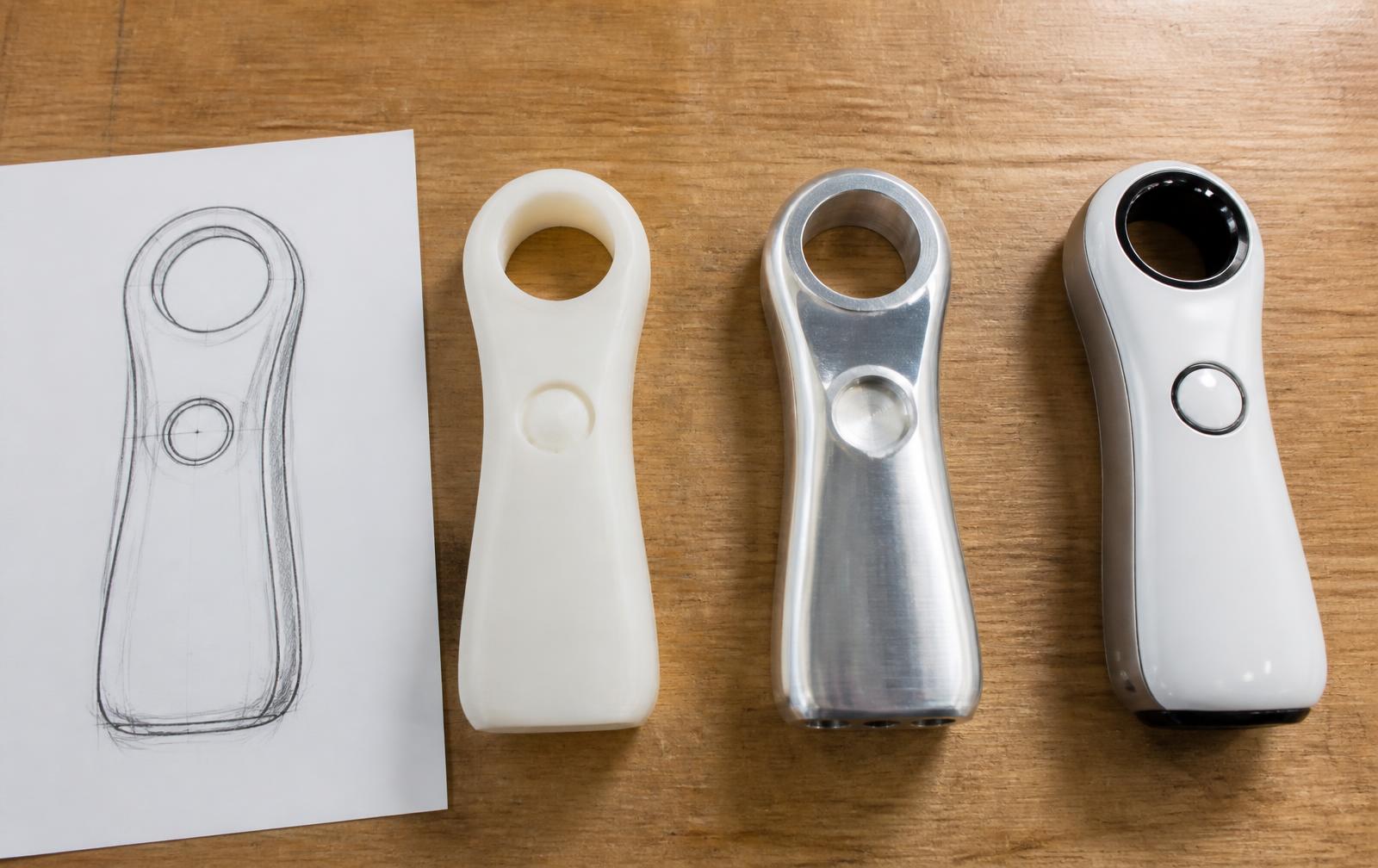
Here, you generally craft the design of the invention. A sketch of the entire product, the how-to-operate manual, the kinds of manufacturers that would work on it, the type of materials that would be used in the production, and so on. And inventor’s journal could be really helpful here as it contains a drawing grid, product development guidelines, and essential patent documents.
Patent Research
Your invention must be new, come from an inventive process, and has industrial applicability. Most inventors, however, miss it with the first requirement. So, you must do patent research to avoid issues.
Patenting your idea means that you are protecting it to enjoy exclusive rights over it as a business or individual. Thus, bad actors in the industry would not steal your product or invention idea and file for a patent before you.
Also, when you want to invent a product, you must do patent research so that you would not be infringing on a patent already in existence. The last thing you want on your hands is a court case because of your ‘invention’.
Market Research
Here is where you evaluate whether or not your product has viability in the market. And how best to do this than ask the market itself. Market research saves you from tons of expenses and unnecessary expectations.
Interact with your target market and check their opinion of your product. Do they see it as essential or important enough that they can pay for it? Or are there some things you can change in your approach or design that would make them more receptive to it?
These questions and many more are what market research helps you to achieve. You would be able to get premium opinions from your to-be end users and target market. And you would be able to make adjustments where necessary.
Prototyping
This stage involves the execution of the product prototype design. The latter is part of the things you would have noted during the strategy or product development phase. Thus, the details for producing this model are on ground, waiting to be implemented.
Building a prototype is very important because it helps you to see what the product looks like in 3D. Things move from sketch to concreteness, here. You can hire a professional prototype developer to help you with this phase if you are concerned about how to make an invention prototype.
Thus, you would be able to make necessary corrections to your model as fitting for final production. Also, here, you would be able to test the materials you envisioned for the project or examine a series of different options. In all, this is the testing stage before you move into full-blown manufacturing.
You should also note that you would need a prototype to convince most investors. It shows them that you are working with a viable product as a company seeking funding. What better way to determine the prospects of your invention than seeing it up close?
Production
Research and determine a manufacturing company that best suits your production needs. At this phase, it would be smart to also get suppliers, shipping companies, warehousing, etc. that can get the job done to your satisfaction.
What is done here is to simply start mass production of the final prototype. This features a model that has gone through refinements and other final touches.
Marketing
This is the last phase where people become aware of your product and how it works. This introduction to the public also comes with an invitation to use the invention and purchase it. That way, your target market would be able to enjoy the product and give you cash value in return.
You could hire a product development or marketing company to handle this part of the business for you. It helps you to focus on the production. It also helps you to perfect your craft while on the product journey.
Related video
Biggest Questions On What Is The Path From An Idea To The Production Of a New Product
The steps to invent a product is idea documentation, market research, prototyping, patenting, and marketing your invention. These processes flow from one to the other and are not simultaneous. Understanding this helps to effectively deliver a seamless product development process. The 7 stages involved in product development are idea generation, strategy & screening, prototyping, business plan development, market testing as well as the final phase which is the product launch. It does not take much to get a product idea, but creating the idea into a concrete product requires some intentional stages. And they include the ideation stage which revolves around the generation of a product idea. Then we have the other stages such as research, planning, prototyping, sourcing, and costing.How do you get a product from idea to production?
What are the 7 stages of a new product development process?
What is the process of creating a new product?
Conclusion
Have you got a product idea? Great! However, you must learn to develop it into a finished product. And how do you go about that? The procedures needed to invent product has been stated above. Engage them and see your idea come alive optimally.
Are you looking for a reputable company that would help you to scale your product idea from sketch to the factory? Then your search has ended! LA NPDT is a team of ever-ready hands and minds willing to take your product development to the next level.
We have many services available for you, including our flagship CAD models and PCB circuits, building prototypes, and a host of others. Reach out to us today through a direct call at 318-243-5789 or via lanpdt.com.
Three reasons why our clients love working with us:
If you ever thought of developing a new product, don’t wait any longer. Talk with one of our experts today.
- 3D (7)
- ecommerce (1)
- Education (230)
- Inspiration (121)
- Market Reports (4)
- Media (17)
- News (50)
- none (61)
- Stories (7)
- Tech (27)
- Tech Talk Podcast (31)
- Time Management (1)
- Uncategorized (109)
- Words (62)
Receive Pdp Example
Please submit your contact info to receive an example of a new product development plan.
Thank you for choosing LA New Product Development Team for your New Product development plan.
If you have any questions or need assistance with your order, please don’t hesitate to contact us.
Thank you for choosing LA New Product Development Team for your Prior Art Search.
Please fill out the form to submit your order.
Upon successful payment, you will receive an email with a Non-Disclosure Agreement (NDA) and a questionnaire regarding your product idea.
Your privacy and security are paramount to us, so rest assured that your information will be handled with the utmost confidentiality.
Step 1: Fill in your contact and billing details.
Step 2: Review your order summary.
Step 3: Submit payment.
After your payment is processed, please check your email for the NDA and questionnaire. Completing these documents promptly will allow us to start your Prior Art Search without delay.
If you have any questions or need assistance with your order, please don’t hesitate to contact us.
Thank you for choosing LA New Product Development Team for your Prior Art Search.
Please fill out the form to submit your order.
Upon successful payment, you will receive an email with a Non-Disclosure Agreement (NDA) and a questionnaire regarding your product idea.
Your privacy and security are paramount to us, so rest assured that your information will be handled with the utmost confidentiality.
Step 1: Fill in your contact and billing details.
Step 2: Review your order summary.
Step 3: Submit payment.
After your payment is processed, please check your email for the NDA and questionnaire. Completing these documents promptly will allow us to start your Prior Art Search without delay.
If you have any questions or need assistance with your order, please don’t hesitate to contact us.
Thank you for choosing LA New Product Development Team for your Prior Art Search.
Please fill out the form to submit your order.
Upon successful payment, you will receive an email with a Non-Disclosure Agreement (NDA) and a questionnaire regarding your product idea.
Your privacy and security are paramount to us, so rest assured that your information will be handled with the utmost confidentiality.
Step 1: Fill in your contact and billing details.
Step 2: Review your order summary.
Step 3: Submit payment.
After your payment is processed, please check your email for the NDA and questionnaire. Completing these documents promptly will allow us to start your Prior Art Search without delay.
If you have any questions or need assistance with your order, please don’t hesitate to contact us.
Path from Idea to New Product Production
Path from Idea to New Product Production
Stage | Purpose |
|---|---|
Product Development | Fine-tunes the initial product concept. |
Patent Research | Protects exclusive rights to the invention. |
Market Research | Evaluates product viability in the market. |
Prototyping | Creates a 3D model for testing. |
Production | Begins mass manufacturing of the final prototype. |
Marketing | Introduces the product to the public. |
Stage | Description |
|---|---|
Product Development | Fine-tuning the initial product concept and strategizing the production process. |
Patent Research | Protecting your idea to enjoy exclusive rights and avoid infringing existing patents. |
Market Research | Evaluating product viability and gathering feedback from the target market. |
Prototyping | Executing the product prototype design and testing materials before manufacturing. |
Production | Mass production of the final, refined prototype. |
Marketing | Introducing the product to the public and encouraging purchases. |
The six stages, with realistic cost and duration
The path from an idea to production is predictable. What varies is how much each stage costs for your specific product class and how many loops you run before the design is stable.
Stage | Purpose | Typical duration | Typical cost |
|---|---|---|---|
Concept and validation | Prove someone will pay | 4-8 weeks | $3,000-$25,000 |
Industrial design | Form, ergonomics, brand | 3-6 weeks | $5,000-$40,000 |
Engineering and CAD | Make it manufacturable and safe | 6-16 weeks | $15,000-$150,000 |
Prototyping and testing | Prove function and durability | 4-12 weeks | $5,000-$60,000 |
Tooling and first article | Cut moulds, approve samples | 8-16 weeks | $8,000-$150,000 |
Production and QC | Build, inspect, ship | 6-12 weeks | Unit cost x quantity |
Caption: cumulative timeline for a moderately complex consumer product is typically 12-24 months.
Tooling and minimum order quantity drive the whole budget
Manufacturing economics are dominated by two numbers: what the tool costs and how many units you must buy at once. Choosing the process determines both.
Process | Tooling cost | Typical MOQ | Per-unit economics |
|---|---|---|---|
3D printing | None | 1 | High per unit, no commitment |
Urethane casting | $500-$3,000 per tool | 25-100 | Bridge volumes |
Injection moulding (aluminium tool) | $3,000-$15,000 | 500-3,000 | Low per unit |
Injection moulding (steel tool) | $15,000-$80,000 | 5,000+ | Lowest per unit |
Sheet metal fabrication | $0-$5,000 | 50-500 | Moderate |
PCB assembly | $500-$5,000 setup | 100-1,000 | Component cost dominates |
Choosing a manufacturer
- Ask for three references in your product category and actually call them
- Confirm the factory owns the processes you need rather than subcontracting the critical one
- Verify certifications relevant to your market — ISO 9001 as a baseline, ISO 13485 for medical
- Request a costed quote broken into material, labour, overhead and tooling, not a single number
- Agree who owns the tooling in writing before any deposit is paid
- Insist on a first article inspection report against your drawings before mass production
- Budget for a third-party pre-shipment inspection on every run for the first year
The documents production actually needs
Document | Why the factory needs it | Consequence if missing |
|---|---|---|
2D drawings with tolerances | Defines what 'correct' means | Disputes over defects |
Bill of materials with approved vendors | Prevents substitution | Unapproved components ship |
Assembly work instructions | Consistency across shifts | Variable build quality |
Quality plan and AQL levels | Defines inspection sampling | No basis to reject a lot |
Packaging and labelling spec | Retail and carrier compliance | Rework at the warehouse |
Test procedure | Functional verification | Failures reach customers |
Launch-readiness checklist
- Design frozen and revision-controlled, with every change logged
- First article samples approved in writing against the drawings
- Required safety and EMC testing complete for every target market
- Packaging drop-tested at the shipped configuration, not the bare product
- Landed cost model complete including duty, freight and defect allowance
- Spare parts and service plan defined before the first unit ships
- Second-source identified for any single-source critical component
Where a partner shortens the path
Most delays come from the handoff between design and manufacturing. We compress that by running rapid prototyping and design for manufacturing in the same programme, so drawings, tolerances and supplier quotes are developed together rather than sequentially.
Frequently asked questions
How do I manufacture my product idea?
Validate demand, develop industrial design and engineering documentation, prototype and test, select a manufacturer and cut tooling, then run first articles before mass production. Skipping the documentation stage is the most common and most expensive mistake.
How much does it cost to manufacture a product idea?
For a moderately complex consumer product, expect $30,000 to $200,000 to reach a first production run, with engineering and tooling accounting for most of it. Simple fabricated products can be far less; regulated or electronic products considerably more.
How long does it take to go from idea to production?
Twelve to twenty-four months is typical. Tooling alone consumes eight to sixteen weeks, and each engineering change after the tool is cut adds weeks and cost.
Do I need a patent before contacting manufacturers?
File at least a provisional application before wide disclosure, and use a non-disclosure agreement with any factory you approach. A provisional is inexpensive and preserves your filing date while you negotiate. How to manufacture a product idea: the stage-by-stage path Every idea that reaches a store shelf passes the same gates. Knowing the cost and duration of each one prevents the two classic mistakes: tooling too early and prototyping forever.
Filed under:EducationInspirationWords
Services related to this guide
- Low-volume manufacturingFirst production runs without full injection-mould tooling.
- Best product development companiesHow the leading US firms compare, and which one fits your stage and budget.
- Product design servicesIndustrial design and CAD taken all the way to manufacturable files.
- Order a prototypeSend a part or an idea and get a build quote back.