UL Certification Cost: Testing, Timelines and How to Budget
What UL certification cost covers - testing, audits, follow-up service fees and retests - and how to budget the schedule around it.
March 9, 20216 min read

Written by Konstantin Dolgan, Ph.D., NPDP
Founder & CEO, Product Development Engineer
Published March 9, 2021Updated September 2, 2026
Certification is not a step at the end of the project - it is a set of constraints you either design to or pay to retrofit. Teams that pick their standards during concept design usually pass on the first submission. Teams that discover them after tooling spend the next quarter cutting new steel and re-testing.
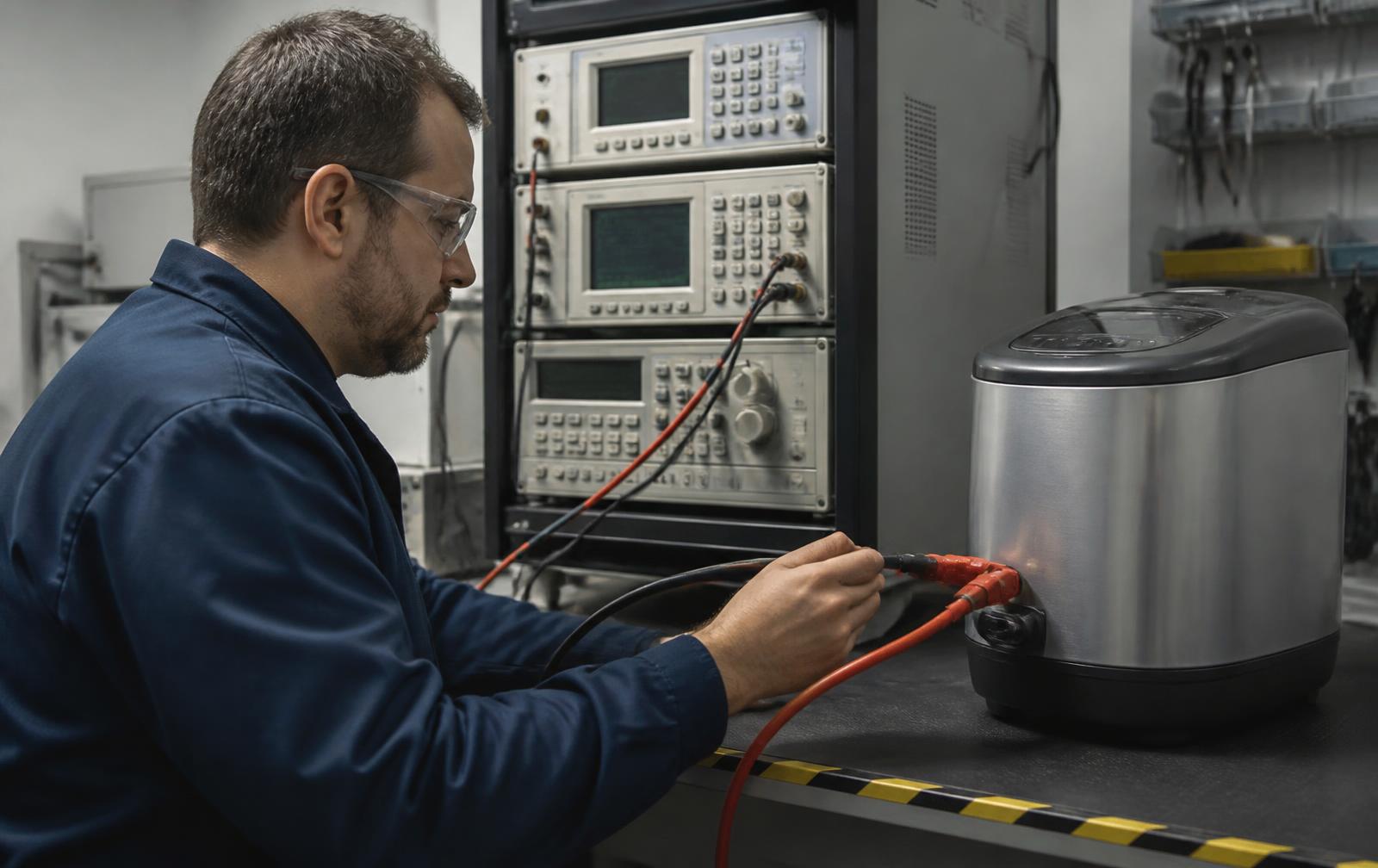
Which standards apply to your product
Product type | Typical US requirement | Typical EU requirement |
|---|---|---|
Children's products / toys | CPSIA, ASTM F963, tracking label | EN 71, CE mark |
Mains-powered electrical | UL or ETL listing (NRTL) | LVD + EN 60335 / 62368, CE |
Anything with a radio or digital circuit | FCC Part 15 (and Part 15C for radios) | RED (EN 300 328), CE |
Food-contact | FDA 21 CFR materials compliance | EC 1935/2004, EU 10/2011 |
Medical devices | FDA 510(k) or exempt class, ISO 13485 supplier | MDR, CE via notified body |
Pre-compliance vs accredited testing
- Pre-compliance is informal testing on an engineering build - a half day of EMC scans, a drop test, a flammability check. It costs $1,000 to $5,000 and its whole purpose is to find failures while a PCB respin is still cheap.
- Accredited testing is done at an ISO 17025 lab on production-representative units. This is the report a retailer, notified body or customs officer will accept.
- Never skip pre-compliance on an electronic product. Radiated emissions failures at the accredited lab typically cost 6 to 10 weeks and a board revision.
What certification costs
Scope | Typical cost | Lead time |
|---|---|---|
FCC Part 15B (unintentional radiator) | $3,000 - $7,000 | 2 - 3 weeks |
FCC Part 15C + Bluetooth/Wi-Fi module | $8,000 - $20,000 | 4 - 8 weeks |
UL/ETL listing, simple mains product | $10,000 - $30,000 plus annual factory inspections | 8 - 16 weeks |
CE self-declared (LVD + EMC) | $5,000 - $15,000 | 3 - 6 weeks |
CPSIA / ASTM F963 toy testing | $500 - $2,500 per SKU per material | 2 - 4 weeks |
The technical file nobody budgets for
A certificate is only as good as the file behind it: bill of materials with component certificates, schematics and layout, risk assessment, user manual and labelling artwork, and the declaration of conformity itself. Retailers and customs increasingly ask for the file, not the mark. Build it as you go - reconstructing it two years later from a disbanded team is the most expensive version of this task.
How to design for a first-pass approval
- Pick standards at concept stage and write them into the product requirements document.
- Select pre-certified modules for radios wherever possible - it removes the intentional-radiator test entirely.
- Design in the EMC basics early: ground plane continuity, shielded connectors, filtered power entry, room for ferrites.
- Freeze the safety-critical BOM. Substituting a power supply after certification invalidates the report.
- Book lab slots 8 weeks ahead - the queue, not the test, is usually the schedule risk.
Related reading: design for manufacturing, consumer electronics development and our product development consulting.
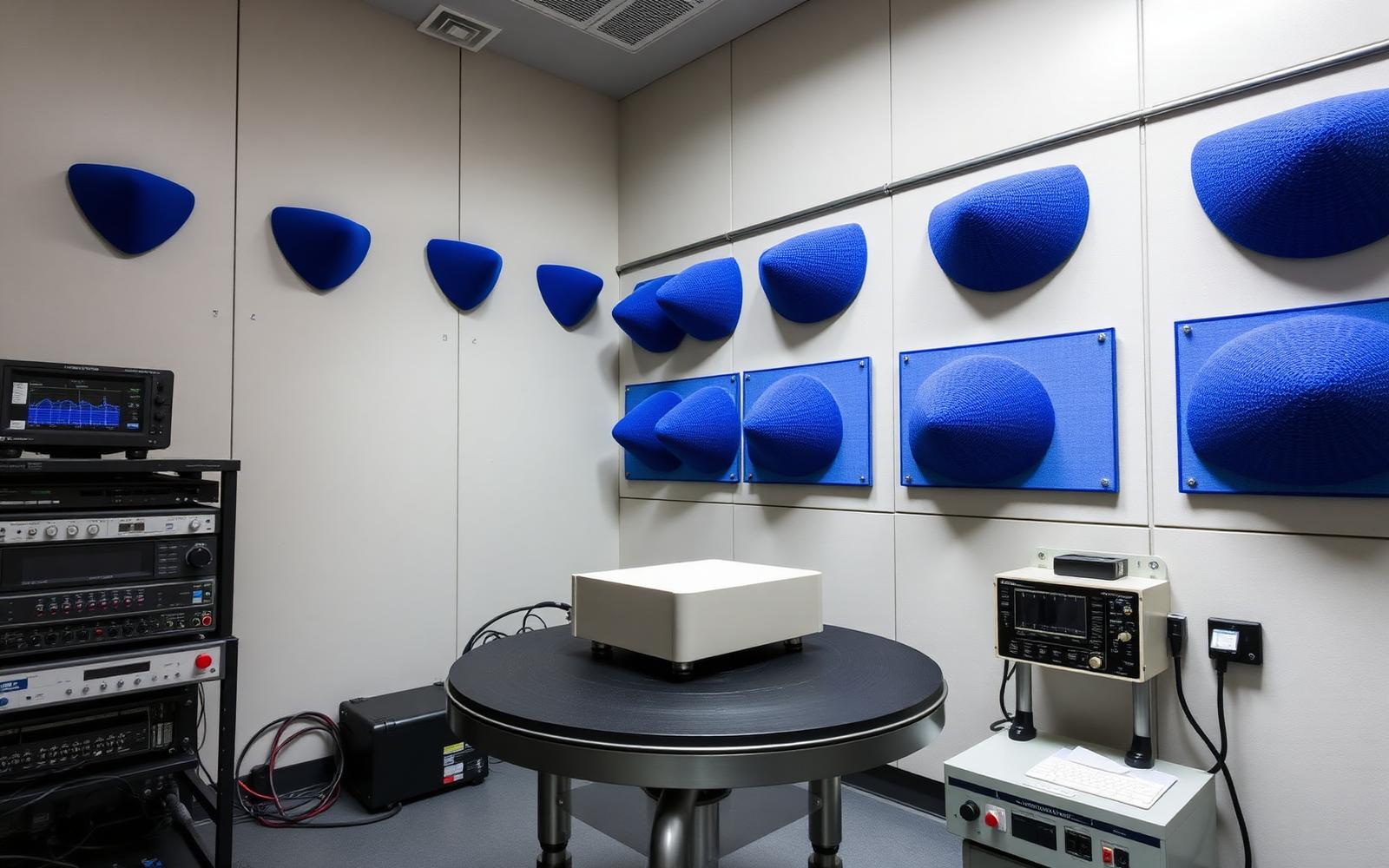
What drives certification cost up or down
Certification cost is a function of how many standards apply, how many configurations you submit, and how many times you fail. A simple low-voltage accessory can clear safety and EMC for a few thousand dollars. A mains-powered product with a wireless radio, a rechargeable battery and international markets can pass $40,000 once you add radio module testing, battery transport certification and country-specific marks.
The controllable variable is failure. Pre-compliance scanning at a local lab, typically $1,500 to $4,000 for a day of chamber time, catches emissions problems while the board can still be changed cheaply. Teams that skip pre-compliance and book the full scan first usually pay for the full scan twice.
Item | Typical cost | Typical duration | Notes |
|---|---|---|---|
Pre-compliance chamber day | $1,500-$4,000 | 1 day | Best money in the program |
Safety evaluation and testing | $5,000-$15,000 | 4-8 weeks | Depends on construction review |
EMC emissions and immunity | $4,000-$12,000 | 2-4 weeks | Radio adds cost |
Radio module certification | $3,000-$10,000 | 3-6 weeks | Lower if using a pre-certified module |
Follow-up factory inspections | $600-$1,200 per visit | Quarterly | Ongoing after listing |
Design decisions that reduce the bill
Most certification savings are engineered in months before a lab is booked. Using a pre-certified radio module transfers the intentional-radiator testing to the module vendor and leaves you with a much cheaper unintentional-radiator scan.
Choosing a recognized external power supply moves the hazardous mains work outside your product entirely. Keeping creepage and clearance distances generous means the construction review goes smoothly instead of triggering a board respin.
Document as you go. Labs need schematics, a bill of materials with component certificates, construction drawings, and the user manual with its warnings. Assembling that package after the fact routinely adds two weeks to a submission.
- Use a pre-certified radio module unless volume justifies your own certification.
- Specify a recognized external power supply to avoid mains-side safety scope.
- Collect component certificates during BOM selection, not at submission.
- Book pre-compliance before design freeze while fixes are cheap.
- Freeze the enclosure and cabling - both change EMC behavior.
- Plan a retest window in the schedule instead of hoping for a first-pass.
UL certification cost by product category
UL certification cost varies more with the standard than with the product's size. The figures below cover the test program itself; they exclude engineering time to fix failures, which is the item that most often blows a budget. Plan for at least one re-test cycle on a first-time product.
Product type | Applicable standard | Typical test cost | Duration |
|---|---|---|---|
Low-voltage accessory | UL 62368-1 | $6k–$15k | 4–8 weeks |
Mains-powered appliance | UL 60335 series | $12k–$30k | 8–14 weeks |
Lithium battery pack | UL 2054 / UL 62133-2 | $15k–$45k | 10–20 weeks |
Industrial control panel | UL 508A | $8k–$25k | 6–12 weeks |
LED luminaire | UL 1598 / UL 8750 | $10k–$28k | 8–14 weeks |
Medical electrical equipment | UL/IEC 60601-1 | $35k–$90k | 16–30 weeks |
Beyond the initial listing there are recurring costs: quarterly or semi-annual factory follow-up inspections, annual fees, and a re-evaluation whenever a critical component or the enclosure material changes. Budget roughly $2,000 to $6,000 per year to keep a listing active for a single-site, single-model product.
How to keep certification cost down
- Use recognized components. A UL-recognized power supply, connector or wire removes those items from your own test scope.
- Pick the standard before layout. Creepage and clearance requirements are cheap on paper and expensive on a finished board.
- Run a pre-scan. A day of EMC pre-compliance at a local lab typically costs under $3,000 and prevents a failed formal test.
- Freeze the enclosure material. Flammability rating is part of the listing; a resin change means a re-evaluation.
- Bundle model variants. A family listing covering several SKUs is far cheaper than separate submissions.
- Prepare the construction file. Complete drawings, BOM and spacing analysis reduce the lab's engineering hours.
We scope compliance alongside design so the test plan is written before the first board is fabricated — see our development services.
Key takeaways
- Budget certification as a range, not a line item, and include one retest.
- Pre-compliance testing is the cheapest insurance in the program.
- Pre-certified modules and recognized power supplies cut scope dramatically.
- Documentation delays cost as much time as technical failures.
- Certification is ongoing - factory inspections continue after listing.
Marks, markets and what they each require
Certification is market-specific. A US listing does not open Europe, and a CE marking does not satisfy a US retailer asking for an NRTL mark. Plan the market list before testing, because running one combined program is far cheaper than sequential submissions with separate sample builds and separate lab queues.
Market | Typical requirement | Who issues |
|---|---|---|
United States | NRTL listing, FCC for radios | Accredited lab / FCC filing |
Canada | cNRTL mark, ISED for radios | Accredited lab |
European Union | CE marking with EMC, LVD, RED | Self-declaration with test evidence |
United Kingdom | UKCA marking | Self-declaration with test evidence |
Australia / NZ | RCM mark | Supplier registration |
UL certification cost and how to budget for it
UL certification cost is rarely a single number. Budget for the initial evaluation, sample testing against the applicable standard, factory inspection to set up follow-up services, and the recurring quarterly inspection fee that keeps the mark valid.
A simple mains-powered accessory often lands in the low five figures; a product with a custom power supply, a battery, or a wireless module stacks additional standards on top. Design changes after submission restart the clock, so freeze the safety-critical architecture first.
- Use certified sub-assemblies. A recognised power supply removes an entire test scope.
- Book the lab early. Queue time, not test time, is what slips launch dates.
- Pre-scan before formal EMC. A half-day pre-compliance session is cheaper than a failed formal run.
- Budget the follow-up. Ongoing factory inspections are an annual operating cost.
- Freeze safety-critical parts. Swapping a connector or enclosure resin can trigger re-evaluation.
Work with LA NPDT: if you are moving from here to execution, start with our low-volume manufacturing or talk to us about design for manufacturing.
Frequently asked questions
What is product certification?
Product certification is the process of demonstrating that a product meets the safety, electromagnetic and material standards required in a target market, evidenced by accredited test reports, a technical file and a mark or declaration of conformity.
How much does product certification cost?
A simple unintentional-radiator electronic product runs $3,000 to $7,000. A mains-powered product needing UL or ETL listing runs $10,000 to $30,000 plus annual factory inspection fees. Toy and consumer goods testing is usually $500 to $2,500 per SKU per material.
How long does certification take?
Three to sixteen weeks depending on scope, plus lab queue time. Plan eight weeks of buffer before your ship date, and expect one retest cycle on any first-generation electronic product.
Is CE marking self-certified?
For most low-voltage and EMC scope products, yes - the manufacturer issues the declaration of conformity based on test evidence. Higher-risk categories such as medical devices and some machinery require a notified body.
Filed under:Education
Services related to this guide
- Product design servicesIndustrial design and CAD taken all the way to manufacturable files.
- Best industrial design firmsWhich studios take an idea from form to manufacturable hardware, and what they charge.
- Prototype designLooks-like, works-like or pre-production: what each proves and what it costs.
- Product development examplesReal projects we designed, prototyped and shipped.