The Transition From Prototype to Pilot Production: What Breaks and Why
“Creating a successful prototype is a major milestone…” – but it’s only one step in the broader product development journey. A prototype that performs flawlessly in a l
June 25, 202612 min read

Written by Konstantin Dolgan, Ph.D., NPDP
Founder & CEO, Product Development Engineer
Published June 25, 2026Updated September 2, 2026
Making a great prototype is a big win. Yet, it is just one step in the product development path. A model that works well in a lab may fail in pilot production. Teams often find new flaws when they try to repeat the process. Knowing what fails helps you avoid costly delays. It also makes the path to full-scale production much smoother.
The Role of Prototyping in Product Development
It's key to know what prototyping does during development. This helps us see why products struggle when they scale up.
Companies that make physical products need strong skills in new product development (NPD). This helps them stay competitive. Product lifecycles are now shorter. There is also high global pressure.
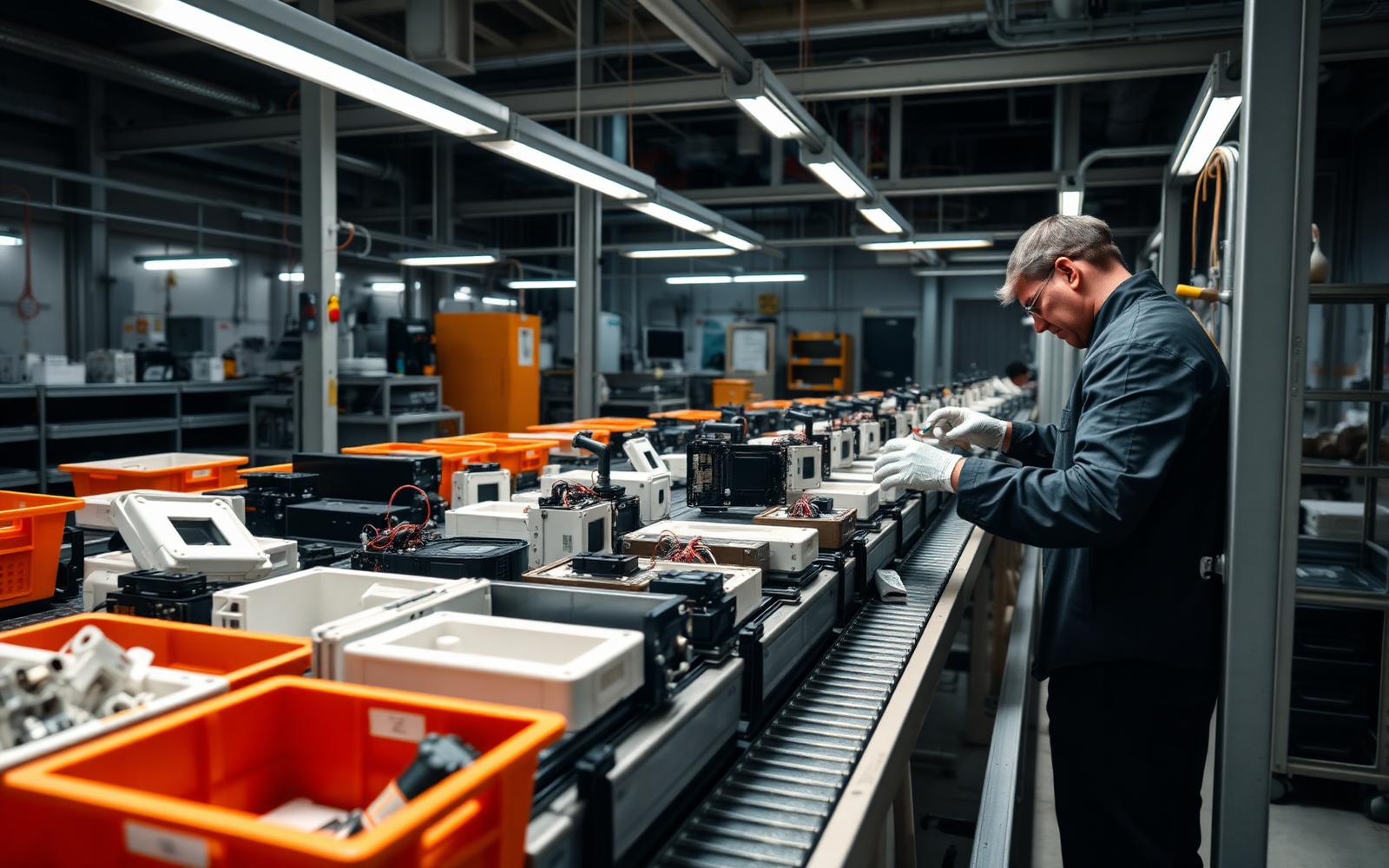
Prototyping creates physical models of a product. This acts as a bridge between design and manufacturing. Engineers use these models to check a design before they start full production.
Throughout the NPD cycle, companies typically create several prototype types:
- These are prototypes that prove a concept.
- These prototypes demonstrate a product.
- These prototypes show a process works.
- These prototypes confirm production methods.
Physical prototypes can cost a lot. They also take much time. But they lower development risk. They also check key ideas. More and more, companies use digital tools. They add simulations to physical builds.
This is different from software and HCI development. In those fields, prototypes are used all the time. For example, Agile methods focus on building things step-by-step. They use many prototypes to do this.
Prototypes work well. They make designs better. They also make things possible. This helps speed up new ideas. Prototypes help teams share thoughts. They aid in making choices. Teams learn during the whole process.
Prototypes serve many goals. Teams use cardboard mockups, functional models, digital twins, or simulations. This range of methods can cause doubt during the early stages of innovation. Bad plans for models can waste money and give low value.
Understanding the Prototype‑to‑Production Journey
Most products move through five stages before reaching the market:
- Concept Development
Teams define the product’s purpose, target users, performance requirements, and business goals. They also conduct feasibility studies and market research to validate technical and commercial viability.Design and Engineering
Engineers develop schematics, PCB layouts, firmware architecture, and mechanical components. Decisions made here determine up to 70–80% of total production costs, so manufacturability must be considered early.Prototyping and Testing
Teams build prototypes to validate functionality, performance, and usability. Iterative testing helps identify weaknesses before they become expensive production issues.Pre‑Production (Pilot Builds)
Manufacturers run small‑scale builds to simulate real production conditions, validating yields, tolerances, assembly repeatability, and quality procedures.Full Production
Once both the product and the manufacturing process are validated, production scales with controlled processes, traceability, and distribution planning.
A planned method reduces redesign work. It shortens the time needed. It also makes things more reliable over time.
The Prototyping Phases
- This is the Alpha Prototype.
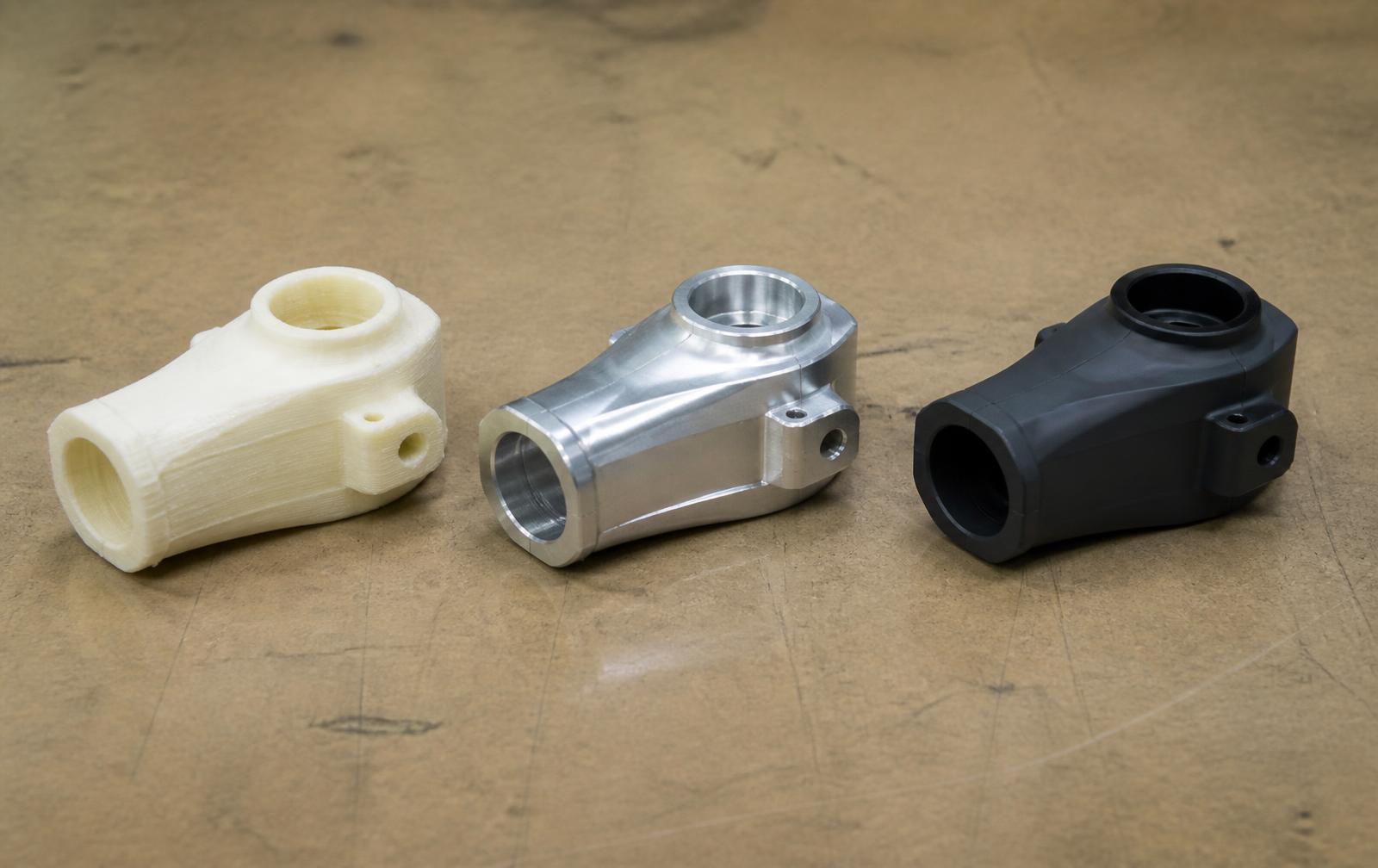
The first design proved the idea. Teams often use fast ways to build things. 3D printing is one way. This helps test core functions. It also checks high-risk tech.
- This is a beta prototype.
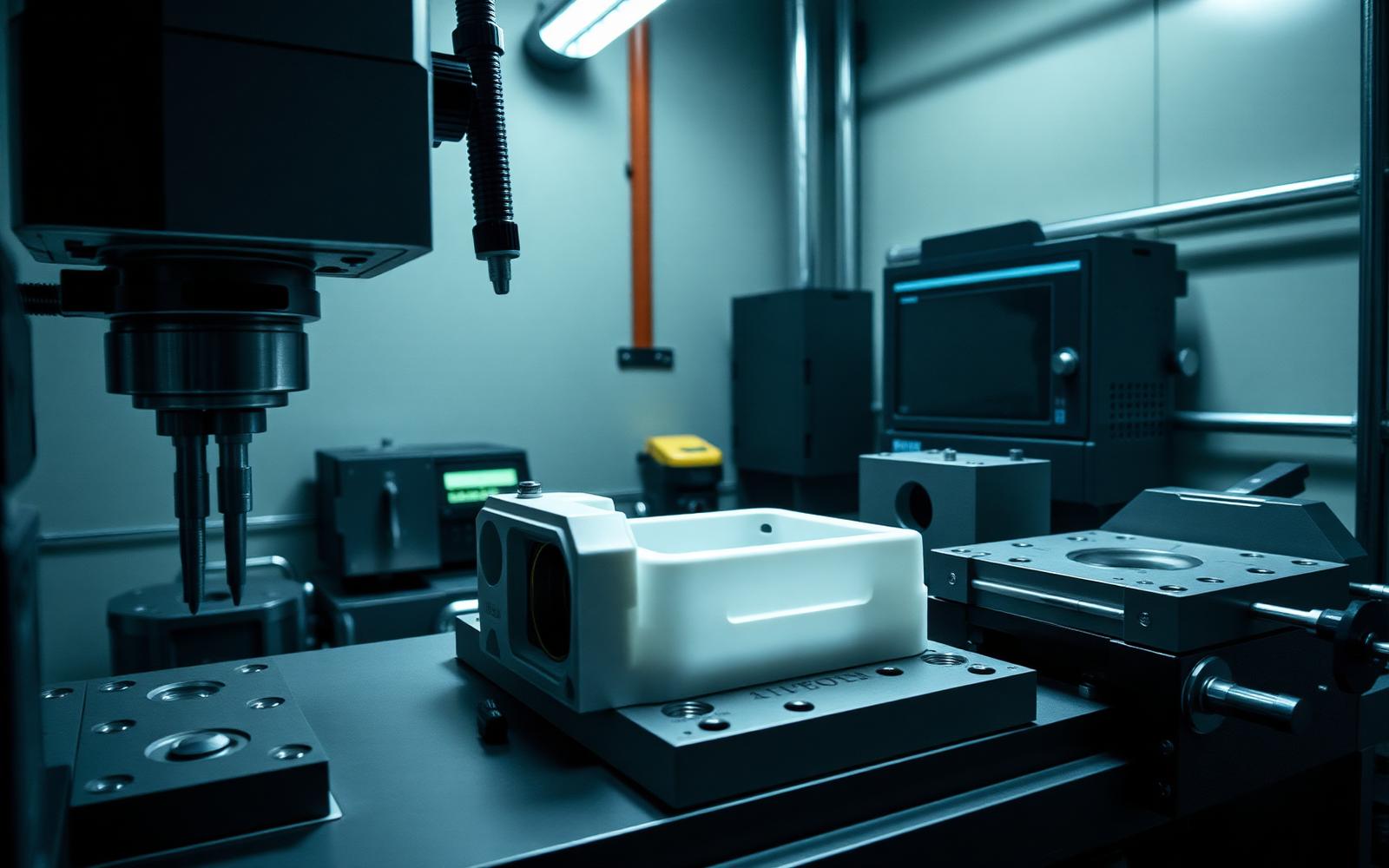
This version is better. It uses the correct materials. It looks like the final product. It helps check designs. It also helps with tests for rules and standards.
How to Move From Prototype to Production
You prove the idea first. Then, companies must make a working prototype. It needs to be easy to make. It must also sell well. Each industry has its own path. But most companies follow a similar plan.
Develop and Refine the Prototype
- We develop new ideas. These ideas come from customer needs, market chances, or existing concepts. Our team generates them.
- We design the product. This means going from simple sketches to detailed computer models. We also choose the right materials.
- We refine and test our designs. We use quick prototyping, especially 3D printing. This helps us check and improve them.
- The design is now final. We approve the prototype. It will be the main model for production.
Validate Market Demand
- Measure product-market fit. Use pilot programs or focus groups. Consider pre-sales or limited releases.
- Check manufacturing scalability. Make sure the design, materials, and assembly can handle more production.
Choose the Right Manufacturing Partner
- Look at the technical abilities.
- Check quality standards. For example, see ISO 9001.
- Evaluate how long things take. Also, check their reliability.
- Learn about how costs are put together.
- Ask for help with design for manufacturing (DFM) support.
Conduct Low‑Volume Production
- Choose how to make your product. Use CNC or additive manufacturing for early batches. Switch to injection molding for larger orders.
- Make a list of all materials needed. This is called a Bill of Materials (BOM). It helps keep things consistent.
- Set up a quality control system. Create steps for checking products. Also, keep records of these checks.
Optimize Before Scaling
- We will make design better. This includes dimensions, materials, ergonomics, and looks.
- We will improve our processes. This means making workflows and tools better.
- We need to strengthen our supply chain. We will add backup suppliers. We will also improve how we handle logistics.
Launch and Scale Production
When the product and process are final, companies boost production. They support it with marketing, distribution, and customer service.
Pilot Manufacturing Process
Before making many products, companies do pilot builds. They check the product itself. They also check the steps used to make it.
- Use better tools. Change from temporary tools to production-ready ones.
- Check the first item. Make sure it follows drawings and tolerances.
- Make processes better. Improve how work flows and where quality is checked.
- Confirm your suppliers. Test how reliable they are and if materials are consistent.
What Breaks During the Transition to Pilot Production?
Pilot production often shows problems. These problems were not clear during earlier testing. Engineering teams then face manufacturing issues. They find challenges with design, materials, processes, quality, and supply chains.
Design Issues Become Manufacturing Problems
Features that work in prototypes might be hard to make consistently at a larger scale. This can also be expensive. Common problems include:
- Components do not fit together consistently. This can cause issues.
- Putting things together takes a long time.
- Some parts need to be manually adjusted.
- The surface looks different or the size is not consistent.
DFM principles become essential at this stage.
Materials Behave Differently at Scale
Material‑related issues often emerge during pilot builds:
- Warping or deformation.
- Batch‑to‑batch variation.
- Long lead times or shortages.
- Higher scrap rates.
Teams may need to qualify alternative materials or work closely with suppliers.
Assembly Processes Reveal Hidden Bottlenecks
Manual assembly methods that work for prototypes often fail at scale:
- Setup takes a long time.
- The sequences are complex.
- There are challenges with ergonomics.
- Inspections are difficult.
Pilot builds help optimize workflows and tooling.
Quality Variations Become More Visible
Minor inconsistencies can become major quality concerns:
- Sizes or shapes are not right.
- Things do not look good.
- Parts do not work as they should.
- More work is needed. Parts must be thrown away.
Robust inspection and monitoring systems are essential.
Supply Chains Face Their First Real Test
Pilot production exposes operational risks:
- Key parts are hard to get. There are not enough components available.
- Delivery times are not dependable. We cannot rely on when items will arrive.
- Suppliers are having quality problems. Their products do not meet our standards.
- The cost of materials is increasing. We are paying more for raw goods.
Strong supplier relationships and backup sourcing improve resilience.
Documentation Gaps Slow Down Production
When building early versions, engineers often hold the knowledge. However, production needs clear, repeatable instructions. Without these, teams will face:
- Mistakes happen during assembly. These are assembly errors.
- Operators get confused. This leads to confusion for them.
- Training takes more time. It is a longer training process.
- The quality is not always the same. This means inconsistent quality.
Work instructions, BOMs, inspection procedures, and change records become critical.
Pilot Production Is Meant to Reveal Problems
These challenges are not failures. They are the goal of pilot production. Pilot runs help manufacturers to:
- Review and confirm designs. Check processes for accuracy. Ensure they are correct.
- Find areas that slow things down. Pinpoint any bottlenecks.
- Improve how work is done. Make tools work better for you.
- Assess potential suppliers. Choose the best ones.
- Make quality checks stronger. Improve control over product standards.
- Gain trust and certainty. This is important before expanding operations.
Lessons learned often decide if a product can move to full manufacturing.
Contact us today to learn how LA NPDT can assist in realizing your project.
Conclusion
Moving from a prototype to pilot production truly tests your design. Products often seem perfect during development. But they can face issues with materials and quality when they scale up. Supply chains also create challenges at this stage.
Treat pilot production as a learning step. Do not see it only as a path to mass production. This lowers risk. It also makes things work better. It builds a stronger base for success over time.
Fix issues early. Keep making the product and process better. This helps companies improve quality. They can launch products faster. It also makes a successful launch more likely.
Pilot production is not a barrier. Instead, it is the step that changes good prototypes. It makes them into products that can grow. They become reliable and ready for sale.
Subscribe
Dive deep into the dynamic world of new product development with LA NPDT Insights Blog.
Prototype Types and Their Purpose
Prototype Type | Purpose |
|---|---|
Proof-of-concept prototype | Validates core functionality and high-risk technologies |
Proof-of-product prototype | Verifies product design and performance |
Proof-of-process prototype | Validates manufacturing processes |
Proof-of-production prototype | Tests production methods and scalability |
Alpha Prototype | First iteration; tests core functionality, validates high-risk tech |
Beta Prototype | Refined version; supports design, regulatory, and compliance testing |
What Breaks Between Prototype and Pilot Production
Pilot production is where a design meets a process. Prototypes are built by the people who designed them, one at a time, with unlimited fitting. Pilot units are built by operators following a document, in sequence, at a takt time. Almost every failure at this stage traces to something that was true only because a designer was holding the part.
Failure mode | Why the prototype hid it | Detection in pilot | Fix |
|---|---|---|---|
Fit stack-up out of tolerance | Prototypes were hand fitted | First article dimensional report | Tolerance analysis and datum scheme rework |
Warp on molded housings | Machined prototypes do not warp | Cavity mapping across 30 shots | Wall thickness and gate location change |
Assembly sequence impossible | Designer knew the trick | Operator time study | Feature for tool access, poka-yoke |
Fastener strip-out | Careful torque by hand | Torque audit on the line | Boss redesign or thread insert |
Cable strain and pinch | Prototype cables were routed loosely | Vibration and drop test on pilot units | Routing channel and service loop |
Yield loss at test | No formal test in prototypes | Pass rate per station | Test fixture design and limits review |
Cosmetic rejects | One-off finishing | Defect Pareto from inspection | Texture spec and acceptance samples |
Pilot Build Metrics and Thresholds
Metric | Pilot target | Action if missed |
|---|---|---|
First pass yield | Above 85% | Root cause top two stations before ramp |
Cycle time per station | Within 20% of plan | Rebalance line or split station |
Dimensional Cpk on critical features | Above 1.33 | Tool rework before hard production |
Rework minutes per unit | Under 5 | Fix the design, not the operator |
Test fixture repeatability (GR&R) | Under 10% | Redo fixture before trusting yield data |
Documents That Must Exist Before the Pilot Runs
- Drawings are now released. They show important quality features.
- Work instructions include photos. They are for operators new to the product.
- There is an inspection plan. It specifies sample sizes and acceptance criteria.
- The test procedure has pass limits. It also explains what to do with failures.
- Packaging is approved. This approval is based on drop test results.
- A deviation log exists. It records all hand-fits during the pilot. This prevents them from being forgotten.
A pilot that produces good units but no data is a failed pilot. The purpose is not the units - it is the yield, the cycle times, the defect Pareto and the list of design changes that must land before hard tooling is committed.
Frequently asked questions
What is the role of prototyping in product development?
Prototyping creates physical models to bridge design and manufacturing. Engineers use these to check key design parts before full production. This step lowers risk and proves key ideas. Models boost performance and make innovation faster. They also help teams talk and make better choices.
What are the typical stages a product goes through before reaching the market?
Most products pass through five stages before launch. First, Concept Development sets the goal and needs. Then, Design and Engineering build the plans. Prototyping and Testing check how things work. Pre-Production uses small builds to test real conditions. Finally, Full Production scales the work with tight controls.
What is the difference between an Alpha and Beta prototype?
An Alpha prototype is the first version used to prove a concept. Teams often use 3D printing to test core functions and high-risk tech. A Beta prototype is more refined. It uses final materials and looks like the end product. It helps with design tests, rules, and safety checks. For how to plan and run that field trial, see hardware beta testing.
How can manufacturers move from a prototype to full production?
Firms should build and improve the prototype. They check market demand through pilot runs or small sales. Pick the right partner by checking their tech skills and quality norms. Low-volume runs help you keep quality and control. Refine the design and steps before you scale to full production.
Sources and standards
- ISO/ASTM 52900 additive manufacturing terminology provides standard definitions. It explains terms for additive manufacturing processes. A common understanding is created.
- NIST additive manufacturing research is ongoing. This research explores processes and materials. It supports 3D printing quality.
- USPTO — patent basics offers official guidance. This includes provisional and non-provisional filings. It helps with new product protection.
Why a working prototype proves less than teams expect
A prototype proves the design works once. The designer builds it by hand with picked parts. Pilot production asks if a new person can build it many times. They use instructions and random parts to meet a set time and yield. Most pilot failures are variation issues the prototype never faced.
Dimension | Prototype | Pilot production | What the change exposes |
|---|---|---|---|
Who builds it | The designer | A trained operator | Undocumented tribal knowledge |
Parts | Hand-selected, often reworked | Random draw from a lot | Tolerance stack-ups |
Process | Whatever worked | Written work instructions | Ambiguous or missing steps |
Quantity | 1-5 units | 50-500 units | Statistical failure modes |
Tooling | Soft or printed | Production or bridge tooling | Shrinkage, warp, gate marks |
Measure of success | It works | Yield, cycle time, cost | Process capability |
The failure modes that show up almost every time
Failure | Root cause | Where it appears | Prevention |
|---|---|---|---|
Parts no longer fit | Tolerance stack-up across a random lot | First 20 units | Worst-case stack analysis, GD&T |
Assembly takes twice the target time | Fastener access, no fixtures | Time study | Design for assembly review |
Intermittent electrical faults | Connector seating force and cable routing | Functional test | Strain relief, keyed connectors |
Cosmetic rejects | Gate marks, sink, colour drift | Visual inspection | Master samples, defined accept limits |
Test station bottleneck | Test takes longer than assembly | Line balance | Parallel test fixtures |
Yield drops on second lot | Supplier process shifted | Lot 2 onward | Incoming inspection, capability data |
Firmware flashing failures | Unreliable programming fixture | End of line | Pogo-pin fixture, retry logic |
Yield arithmetic that decides whether you can ship
Rolled throughput yield multiplies. This is why many good steps can lead to a bad result. Figure it out before you start. This makes the goal clear.
Step | First-pass yield | Cumulative |
|---|---|---|
Incoming inspection | 99% | 99.0% |
Sub-assembly | 97% | 96.0% |
Final assembly | 96% | 92.2% |
Functional test | 94% | 86.6% |
Cosmetic inspection | 97% | 84.0% |
Packaging | 99% | 83.2% |
An 83% rolled yield means one unit in six needs rework. At a pilot of 300 units that is 50 rework events, each consuming operator time nobody scheduled. The fix is rarely a single heroic improvement; it is finding the two worst steps and raising them a few points each.
What to document before the run
- Drawings were released. They included GD&T on all mating features. Overall dimensions were not the only focus.
- A bill of materials was created. It listed approved manufacturer part numbers. Critical items also had one qualified alternate.
- Work instructions included photographs for each step. They defined a torque for every fastener.
- A test plan named the pass criteria. It specified the fixture. It also described what happens to a failed unit.
- Cosmetic master samples were physically present at the line. They showed what to accept and reject.
- A deviation log was kept. Every change made during the run was captured. This prevented relying on memory.
- A packaging and labeling specification was provided. It included the drop test that the package must survive.
Pilot metrics worth tracking
Metric | Definition | Pilot target | Production target |
|---|---|---|---|
First-pass yield | Units passing with no rework | 85%+ | 97%+ |
Cycle time | Labour minutes per unit | Within 130% of model | At model |
Defect Pareto | Top 3 defects as % of all | Identified | Under control |
Cost variance | Actual vs quoted landed cost | Within 10% | Within 3% |
Rework rate | Units needing touch-up | Under 15% | Under 3% |
Line balance | Longest station vs average | Under 1.4x | Under 1.2x |
Pilot readiness checklist
- We finished worst-case tolerance stack analysis. This was done for every critical interface.
- We got and reviewed the first article inspection report. This was for every molded and machined part.
- Assembly fixtures were built and checked. They were not improvised on the day.
- Operators were trained using written instructions. The designer watched quietly.
- Test fixtures are able to perform their job. They are also compared against a known good unit.
- A second supplier is identified. This is for every critical part with only one source.
- We ran a time study on the first 10 units. The production line was rebalanced before continuing.
- There is a named owner for the deviation log. They review it daily during the production run.
Sizing the pilot
Product type | Suggested pilot quantity | Why |
|---|---|---|
Simple mechanical assembly | 50-100 | Enough to see tolerance variation |
Consumer electronics | 200-500 | Statistical view of test yield |
Medical or safety-critical | 100-300 plus validation lots | Process validation evidence |
Low-volume industrial | 20-50 | Volume never reaches statistical scale |
Pilot runs test the process, not the product. Treat each flaw as data about tools, steps, or tolerance. Do not just call them mistakes. Our design for manufacturing work and product development process find these facts. We do this before you buy final tools.
Frequently asked questions
What is pilot production?
Pilot production is a small, controlled run of 50 to 500 units. Staff build these using final parts, tools, and written steps. The goal is to check process, yield, and cost. It does not exist to prove the design works.
How many units should a pilot run include?
Build enough to see variation. Use 50-100 for simple mechanical builds. Use 200-500 for electronics to see clear yield data. Medical or safety goods need 100-300 plus extra test lots. Low-volume industrial goods often pilot with 20-50 units.
What usually breaks between prototype and pilot?
Parts may have tolerance stack-ups. Assembly steps might rely on hidden tricks. Cable routing issues often show up during mass handling. Cosmetic rejects start when you enforce limits. These variation problems never happen during the prototype phase.
What first-pass yield should a pilot achieve?
85% or better at pilot, with a path to 97% before volume. Because yields multiply across steps, six steps at 96-99% each land near 83% overall, so the practical work is raising the two worst stations rather than improving everything at once.
How long does a pilot run take?
The process takes four to eight weeks after parts arrive. You spend two weeks on fixtures and instructions. Then, you build batches for two weeks. Finally, you spend two weeks on analysis and testing fixes.
Can you skip pilot production and go straight to volume?
Only skip this for simple products or repeat designs. Skipping this step moves process problems into paid production. Low yields can ruin your budget. You may face high shipping costs and fail to meet customer goals.
Filed under:EducationUncategorized
Tagged:2025
Services related to this guide
- Best prototyping companiesDevelopment firms, instant-quote bureaus and local shops — who fits which job.
- Free prototype cost calculatorFive to eight questions, an instant cost range for a first prototype.
- Prototype development companiesWhich firms take a sketch to a working prototype — and which only fabricate parts.
- Rapid prototypingWorking prototypes in days, from 3D printing to vacuum casting.