Material Qualification Strategy: Reducing Risk Before Production
Modern manufacturing relies on raw materials that make it possible to produce the goods driving economic growth and improving everyday living standards. Companies depend on everyth
July 26, 202612 min read

Written by Onega Ulanova, IRCA Lead Auditor, MS Eng. & Tech. Management, Executive MBA
Co-Founder, Quality Management Executive & Lead Auditor
Published July 26, 2026Updated September 2, 2026
read 7 mins
Raw material qualification proves that new materials meet your cost and quality needs. Production starts only after you verify performance and supply. Global networks now source most modern parts. This complexity exposes firms to price shifts, bad parts, and supply breaks. You must treat this step as a vital task, not just paperwork. This keeps your launch on schedule.
Material qualification checks and approves raw materials before production begins. This makes sure materials meet all technical and legal rules. It also supports your long-term business goals. Early qualification cuts buying risks and helps suppliers perform better. It stops production breaks and builds a strong firm. This active step is key for Reducing Risk in modern supply chains.
Global supply chains now face more frequent breaks than ever. Disasters, wars, and shipping failures can stop your flow of goods. These events also make costs rise fast. Do not wait for a crisis to react. Firms must link buying choices to a smart risk plan. This shift helps you stay ahead of others. It also helps with Reducing Risk across your entire chain.
Supply Chain Risk Management
Risk management is the base for good buying and supplier checks. ISO 31000 says it is how a firm directs and controls risk. In buying, the goal is to spot breaks early. You must judge the results and act to stop money loss. Doing this keeps production running smoothly. It also keeps product quality high and improves your choices.
Start by finding risks and judging how likely they are to happen. Kaplan and Garrick (1981) say every risk study must ask three things. What can go wrong? How likely is it? What are the results? These questions lead to a full review instead of just using math. This view helps you see breaks before they happen. It helps with Reducing Risk in all buying tasks.
Some experts say risk is just probability times impact. This simple math often fails in the real world. A very likely event might cause only small harm. On the other hand, a rare event could be a total disaster.
Experts sort supply chain risks into three groups: hazard, control, and opportunity. Hazard risks cause bad results like supplier failure, theft, or quality defects. Control risks come from doubt in schedules or work performance.
Teams manage these by watching for changes and fixing them early. Opportunity risks mean taking chances for growth, such as buying new firms. Knowing all three helps teams see the full picture and keep a firm plan for Reducing Risk.
Supply Chain Vulnerability
Global trade has turned supply chains into vast webs of sites and routes. These webs cut costs but make firms more likely to face problems. A break in one spot can cause many others to fail at once. Because of this, firms must find weak spots before they can start plans to fix them.
Figure 1. Sources of risks within a supply chain (source – diva-portal.org )
Figure 1. Sources of risks within a supply chain (source –Diva-portal: FULLTEXT01)
Supply chain weakness shows how much a break hurts a firm. As chains get complex, firms face more risks from logjams and price shifts. These problems rarely happen alone. Firms must check for weak spots all the time instead of treating each case by itself.
A full check includes three steps. First, firms find threats across the whole chain. Next, they judge how likely a break is and what it will cost. Finally, they build plans to stop these events or lower the harm. This method builds strength and aids Reducing Risk across all work areas.
Supplier Qualification and Sourcing Strategy
Checking suppliers helps boost work and Reducing Risk before parts are made. Firms must look at more than just the price tag. They must check skills, quality systems, and money health. When firms pick the lowest price alone, they often hide risks that show up later during production.
Using more than one supplier makes a firm stronger. Research shows that firms have fewer breaks when they use many skilled vendors. This choice cuts the need for one source and helps lower costs and improve quality. Still, firms should not add too many vendors. Too many sources can make the work hard to manage and hurt trade bonds.
To find the right balance, teams must align sourcing with material value and supplier skills. They should also match long‑term goals. This method improves flexibility and helps with Reducing Risk in the buying process.
Raw Material Supply Risks
Raw materials are the core of every factory. Firms now use global networks to get them. Global sourcing cuts costs but adds risk. War, trade stops, laws, and shortages can block your supply. Teams must balance low costs with safe supply for steady results. This balance is key for Reducing Risk in sourcing.
Past research focused on making and shipping goods. Now, studies show that raw material risks matter just as much. Problems at the start of the chain cause big losses fast. Source locations and politics can stop the flow of goods. Firms should plan for material needs early rather than treating them as a small task.
Critical Raw Materials (CRMs) show this problem well. They power green energy, electric cars, and new tech. Most CRMs come from just a few countries. This creates weak spots in the supply chain. High demand and global tension increase the pressure. Teams must watch CRM markets to help with Reducing Risk in global sourcing.
Contact us today to learn how LA NPDT can assist in realizing your project.
Contact us today to learn how LA NPDT can assist in realizing your project.
Raw Material Risk Assessment
Good buying needs a deep view of how markets affect a firm. Many firms know that price shifts are a big challenge. Yet few check these risks in a clear way. Most teams act only after a crisis happens. This leads to more doubt and higher costs.
Research shows three main blocks to good risk checks. First, many firms do not know the forces that set prices. Teams often track prices without looking at politics or tech. Without this view, firms cannot guess price moves. They also struggle to win better deals.
Second, teams often lack full view of their supply chains. They know direct buys but lack data on raw materials in parts from lower tiers. This gap stops teams from guessing total risk from price swings. Also, many firms miss the time gap between market shifts and cost changes. This makes budget planning much harder.
Third, firms often lack the skills to turn market data into good plans. Without strong math skills, firms struggle to predict markets or weigh sourcing choices. They also fail to set up real risk plans. Building these skills is a must for Reducing Risk. It also helps you make better long-term choices.
Raw Material Risk Mitigation
Firms need a set plan to handle buying doubt instead of just reacting. Research shows four linked steps that build supply strength. These steps also help in Reducing Risk across the whole chain.
The first step focuses on tracking market shifts. Buying teams must find what drives prices, like supply, demand, and fuel costs. They should also watch shipping, world events, and green rules. Build smart systems to get fast facts on trends. Regular checks help you predict better and make smarter plans.
The second step builds clear views across the whole chain. Find where key raw materials sit in your final goods. Look at materials bought through many layers of suppliers. This wide view helps teams judge total risk beyond direct buys. Use price indices to track trends and guess future costs. Learn if suppliers eat cost hikes or pass them to you. These steps boost visibility and help in Reducing Risk.
The third step creates strong plans for groups and contracts. A good group plan helps you simplify goods and study cost drivers. It also builds better ties with suppliers. A smart contract plan picks the best price terms for current markets. Linking these plans helps keep supply moving. It also helps with Reducing Risk by cutting your exposure to price swings.
Hedging Strategies
Firms may face price risks even after they build strong ties and better contracts. Financial hedging serves as a vital part of a complete plan. Hedging does not replace good work. It helps by keeping costs steady and protecting against market swings.
Figure 2. Hedging strategies (source – www.kearney.com/documents )
Figure 2. Hedging strategies (source –Kearney: 4fd64c38 4fc1 562d 677e 7c772e5978f4)
Firms can use futures, options, or swaps to offset price shifts. Leaders should only start hedging once they know their goals and risk tolerance. Hedging cannot stop every risk. It does help with budgets and helps in Reducing Risk globally. Teams should see hedging as a core tool, not a separate task.
Strategic Framework for Material Qualification
Good material qualification involves more than just lab tests or picks. Teams must link buying, engineering, and quality into one group. This bond builds supply chain strength. This method helps firms see trouble early instead of just reacting to it.
Objective | Mitigation Strategy | Core Benefit |
|---|---|---|
Price Stability | Financial Hedging & Long-term Fixed Contracts | Locks in predictable material pricing. |
Supply Continuity | Supplier Diversification & Dual Sourcing | Minimizes dependence on single vendors or regions. |
Defect Prevention | Strict Incoming Quality Control (QC) & Inspection | Blocks sub-par materials before manufacturing. |
Process Transparency | Integrated ERP Systems & Real-time Tracking | Eliminates communication gaps and tracking errors. |
Four goals help improve results and support Reducing Risk in the supply chain. First, use long-term contracts and hedging to keep prices steady. Stable prices help budgets and protect against market swings.
Second, pick many suppliers and sites to keep goods flowing. This mix builds grit during tough times. Third, protect quality through strict tests and monitoring.
Finding flaws early cuts waste and makes customers happy. Last, use ERP systems and tools to see the whole chain. Better views help teams spot risks fast and continue Reducing Risk in all tasks.
Conclusion
Material qualification is a smart process. It makes your supply chain strong. It gives you steady access to high-quality raw materials.
Good buying means you must spot risks and check suppliers. You should track markets and know your raw material needs to cut risk. Using many suppliers and clear tracking helps you make better choices.
It also stops gaps in your supply. A four-step plan helps teams stay ahead. First, learn the market.
Next, make things clear. Then, use good buying plans and use hedging when needed. This method helps you keep supply moving, save money, and stay strong.
Subscribe
Dive deep into the dynamic world of new product development with LA NPDT Insights Blog.
Recent Posts
Geopolitical Risk in New Product Development

Component Lifecycle Management: Designing for Obsolescence
Material Qualification Strategy: Reducing Risk Before Production
Bridging Digital and Physical Prototyping
Systems Thinking in Hardware Development
You used Chatgpt to develop a product idea. Now what?
Subscribe
Dive deep into the dynamic world of new product development with LA NPDT Insights Blog.
Recent Posts
Geopolitical Risk in New Product Development
Component Lifecycle Management: Designing for Obsolescence
Material Qualification Strategy: Reducing Risk Before Production
Bridging Digital and Physical Prototyping
Systems Thinking in Hardware Development
You used Chatgpt to develop a product idea. Now what?
Material qualification checklist
- Write the property specification before sourcing, with numeric limits and the test method for each property, not just a material family name.
- Obtain a full material datasheet and certificate of analysis for the exact grade and supplier lot you intend to use in production.
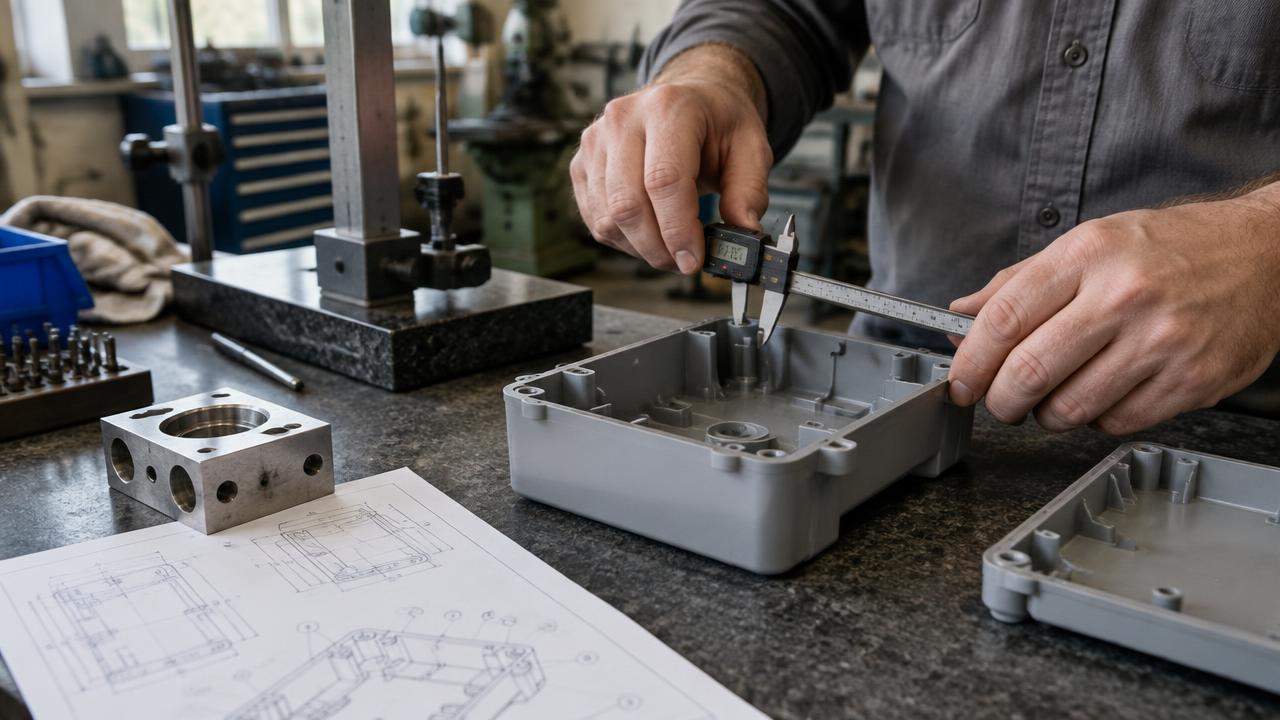
- Test the processed material, not the pellet. Moulding, machining and printing all change mechanical properties, sometimes by tens of percent.
- Run environmental conditioning covering the temperature, humidity, UV and chemical exposure the product will actually see across its service life.
- Check regulatory status early: RoHS, REACH, food contact, biocompatibility or flammability ratings as applicable to the market.
- Qualify a second source for any material on the critical path, and confirm it meets the same specification rather than assuming equivalence.
- Fix the lot-traceability chain so a field failure can be traced back to a specific material batch.
- Record the qualification package as a controlled document; undocumented testing has to be repeated when the supplier or the auditor changes.
Qualification is part of being ready for work. It is not a separate task. It works with design for manufacturing. It also feeds into low volume manufacturing pilots. The team sets the scope during mechanical engineering when they define needs.
Frequently asked questions
What is raw material qualification?
This process proves that a specific material from a specific supplier meets your needs. It must show the method works repeatably. Qualifying a generic grade tells you very little. The same polymer from two suppliers can have different fillers or moisture traits. These differences can change how your part performs.
How long does material qualification take?
Most products take four to twelve weeks for this work. Aging and conditioning tests take more time than mechanical tests. Regulated products with long-term needs can take six months or more. Qualification often starts after the design freeze. This makes it the critical path for your tooling schedule.
Can I change material after production starts?
You can change resins, but it costs a lot. A new resin shrinks differently, so you may need to fix the tool. This change voids old test data. You must repeat all tests and certification. Plan your second source during the first phase instead. Testing two grades together saves money and cuts supply chain risk.
What a qualification actually tests
Material qualification ensures your part survives real-world use. A datasheet only shows how a test bar works in a lab. Your real part has weld lines and wall thickness shifts. It has residual stress and might sit in a hot car. The test matrix below helps close that gap.
Test | What it catches | Typical sample size | Cost | Lead time |
|---|---|---|---|---|
Certificate of analysis review | Wrong grade, wrong lot, missing traceability | Every lot | $0 | Same day |
Melt flow / viscosity check | Regrind content, contamination, drying failures | 3 per lot | $150-$400 | 2-3 days |
Tensile and flexural on moulded bars | Grade substitution, filler variance | 5-10 specimens | $400-$1,200 | 1-2 weeks |
Impact at low temperature | Brittle failure in cold shipping and use | 5-10 specimens | $400-$900 | 1-2 weeks |
Accelerated UV / weathering | Yellowing, chalking, surface embrittlement | 3-6 parts | $1,500-$6,000 | 4-12 weeks |
Chemical and cleaner compatibility | Stress cracking from user cleaning agents | 6-12 parts | $800-$3,000 | 2-4 weeks |
Dimensional stability after conditioning | Warp and shrink drift between lots | 10-30 parts | $500-$2,000 | 2-3 weeks |
Regulatory (food contact, biocompatibility, flame) | Non-compliance discovered at launch | Per standard | $3,000-$40,000 | 6-20 weeks |
Caption: indicative US costs. The bottom two rows drive schedule, so start them the week the material is selected, not the month before tooling.
Qualify the supplier, not just the material
A good material from a bad supply chain is not truly qualified. Two lots from different firms can act differently. A distributor might swap sources without notice. This is a common cause of low yields. Fix the source in your spec. List the maker, grade, color, and drying method. Require a written notice for any change.
The substitutions that quietly fail
- A cheaper resin at the same nominal grade but with different filler content — passes tensile, fails impact at 0 degrees C.
- Regrind added above the specified percentage — parts look identical and lose a third of their impact strength.
- A colour concentrate change that alters UV performance and crystallinity.
- A different aluminium temper meeting the same alloy designation but with different fatigue behaviour.
- An adhesive reformulated for VOC compliance whose bond strength on your substrate was never re-tested.
- A fastener plating change that introduces galvanic corrosion against the mating part.
Documentation to hold before the first production run
- Material specification naming manufacturer, grade, colour, regrind limit and drying conditions.
- Certificate of analysis for every incoming lot, retained for the product's warranty period.
- Qualification test report with the test standard, sample size and pass criteria stated.
- Supplier change-notification agreement covering source, formulation and process.
- Retained samples from the qualification lot, stored for comparison against future lots.
- First-article inspection on parts moulded from the qualified material, not from a substitute.
You choose and qualify materials during the engineering phase. These choices link to your tolerance and process needs. This work is part of our product engineering service. Moving to a proven supply chain is part of design for manufacturing.
Qualification depth by risk class
Not every material needs a full qualification campaign. Match the test depth to what failure costs, then write the resulting evidence into the specification so a second source has to clear the same bar.
Risk class | Typical parts | Minimum evidence | Lead time | Cost range |
|---|---|---|---|---|
Cosmetic only | Trim, non-structural covers | Color and gloss match, UV exposure sample | 2–3 weeks | $1k–$4k |
Structural, non-safety | Housings, brackets | Tensile, impact at temperature extremes, 3 lots | 5–8 weeks | $6k–$20k |
Sealing and fluid contact | Gaskets, tubing | Compression set, chemical compatibility, aging | 8–14 weeks | $15k–$45k |
Safety or regulated | Load-bearing, medical or food contact | Full standard test suite, biocompatibility or food contact certification | 12–26 weeks | $35k–$150k |
Second-source readiness checklist
- Specification calls out properties and test methods, never a single trade name alone.
- Retain samples from the qualified lot stored with the test report.
- Incoming inspection plan that can actually detect a substituted resin or alloy.
- Written supplier obligation to notify before any formulation change.
- One alternate grade pre-tested to the same protocol before you need it.
Frequently asked questions
What is raw material qualification?
This process proves a specific material and grade from a supplier meets your needs. It tests your part geometry and process, going beyond the supplier's datasheet.
How long does material qualification take?
Checking mechanical traits takes two to four weeks. Tests for weather or rules, like food contact or fire, take six to twenty weeks. You should start testing the same week you pick a material.
How much does it cost to qualify a material?
Tests for consumer products usually cost $2,000 to $10,000. Costs reach $40,000 or more for regulatory certification. This is a small fraction of the cost to fix problems after tooling.
Can I substitute a material after production has started?
Only switch materials after re-running qualification tests and checking dimensions on new parts. Substitutions often change impact strength, shrink, and UV behavior even if tensile numbers match.
Filed under:EducationUncategorized
Tagged:2025
Services related to this guide
- Best prototyping companiesDevelopment firms, instant-quote bureaus and local shops — who fits which job.
- Free prototype cost calculatorFive to eight questions, an instant cost range for a first prototype.
- Prototype development companiesWhich firms take a sketch to a working prototype — and which only fabricate parts.
- Rapid prototypingWorking prototypes in days, from 3D printing to vacuum casting.