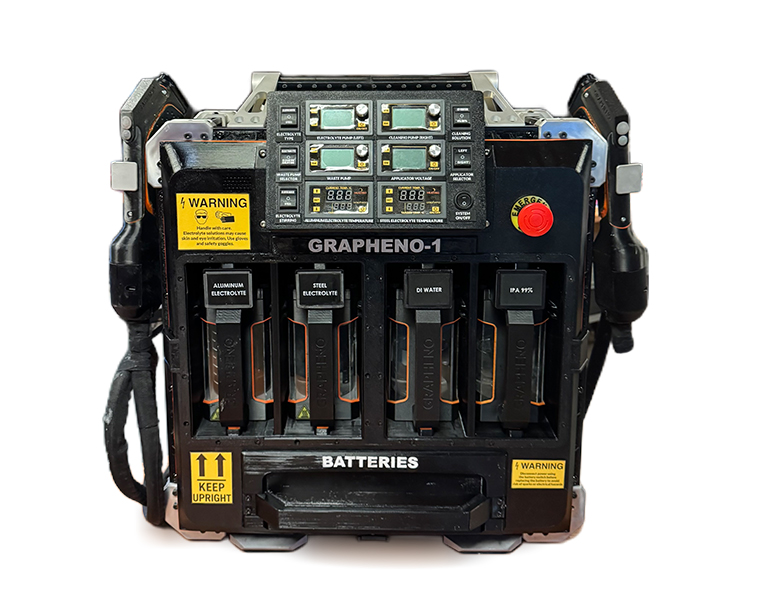
SBIR-Driven Development of a Field-Deployable Electrochemical Repair System
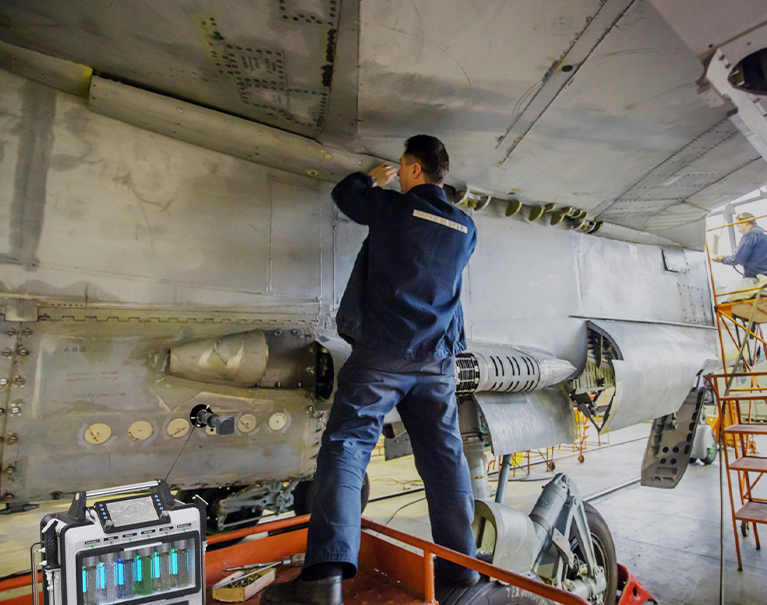
Fatigue-related failures account for nearly 90% of metallic structural failures and cost the U.S. economy an estimated 4% of GDP annually. Grapheno-1 was developed to confront this challenge directly.
Why Fatigue Cracks Are a National-Scale Engineering Problem
Fatigue cracking is one of the most persistent and dangerous failure mechanisms in metallic structures, particularly in aerospace, defense, transportation, and critical infrastructure. Even small cracks can propagate under cyclic loading, leading to catastrophic failures, grounded assets, and unplanned downtime.
Traditional mitigation methods often rely on crack removal, drilling, shot peening, or full component replacement. These approaches are invasive, costly, and frequently require taking assets out of service. What has long been missing is a portable, field-deployable solution capable of reliably arresting crack growth in place, extending service life without removing material or replacing parts.
“Stopping crack growth early can save entire systems.”
From SBIR Concept Formulation to Funded Program
From SBIR Concept Formulation to Funded Program
Grapheno engaged LA New Product Development Team at the pre-award SBIR stage, during the formulation of a proposal focused on electrochemical fatigue crack treatment.
At that point, Grapheno had a strong scientific foundation and laboratory-validated electrochemical methods, but needed a technically feasible, system-level product concept that SBIR reviewers could evaluate as executable.
From Concept to Clinically Reliable Hardware
Based on scan data, our team designed multiple trial lens holder configurations, each tailored to specific VR headsets used by Virtual Vision. Designs were optimized for ergonomics, minimal visual obstruction, and ease of lens insertion and removal.
We produced functional prototypes using 3D printing, tested them in real clinical workflows, and iterated based on feedback from doctors and the Virtual Vision team.
This ensured the holders were intuitive, durable, and comfortable for patients. Once validated, the designs were prepared for manufacturing.
LA NPDT played a central role in shaping the Grapheno-1 concept by:
Translating electrochemical research into a field-deployable system architecture
Defining realistic use cases, operator workflows, and maintenance scenarios
Establishing a credible development, prototyping, and validation plan
Aligning system design decisions with SBIR evaluation criteria and transition expectations
This work directly supported the proposal narrative and helped demonstrate that the technology could move beyond the lab and into real operational environments.
“Winning an SBIR contract requires more than science; it requires a realistic, technically feasible path to development, deployment, commercialization, and beyond.”
”
Engineering an SBIR-Ready, Field-Deployable System
Following the SBIR award, LA NPDT became the primary design, engineering, and prototyping partner for Grapheno-1. Our responsibility was to execute the concept defined during the proposal phase and transform it into a working system capable of supporting testing, demonstration, and program milestones.
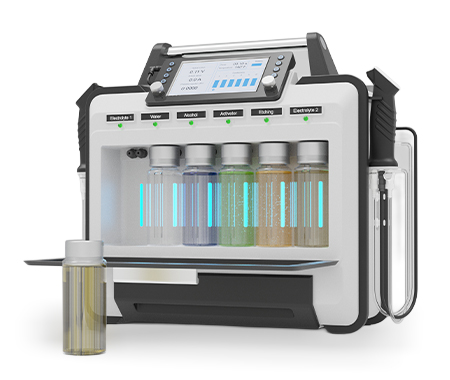
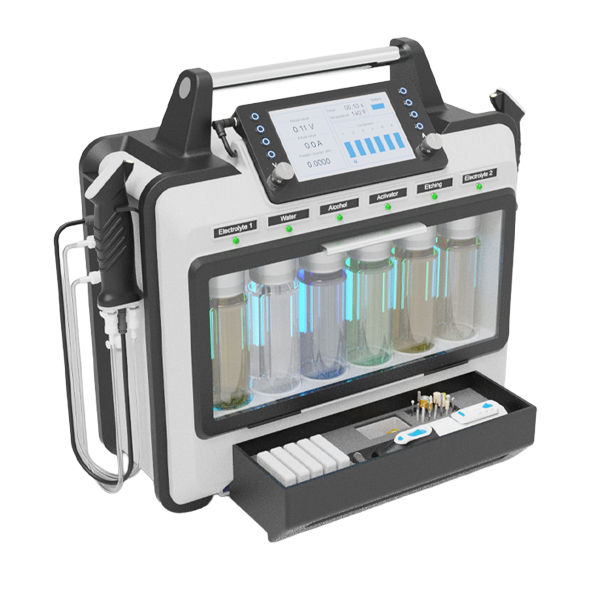
Grapheno-1 was engineered as a self-contained electrochemical treatment platform, with design priorities that included:
Portability for field and depot environments
Repeatable, controlled treatment conditions
Robustness under real maintenance constraints
Clear operator interaction and process consistency
Reliable for long-term deployment
This phase moved the program from conceptual feasibility to physical implementation.
“SBIR success depends on execution, not just innovation.”
Mechanical, Electrical, and System-Level Design
Execution
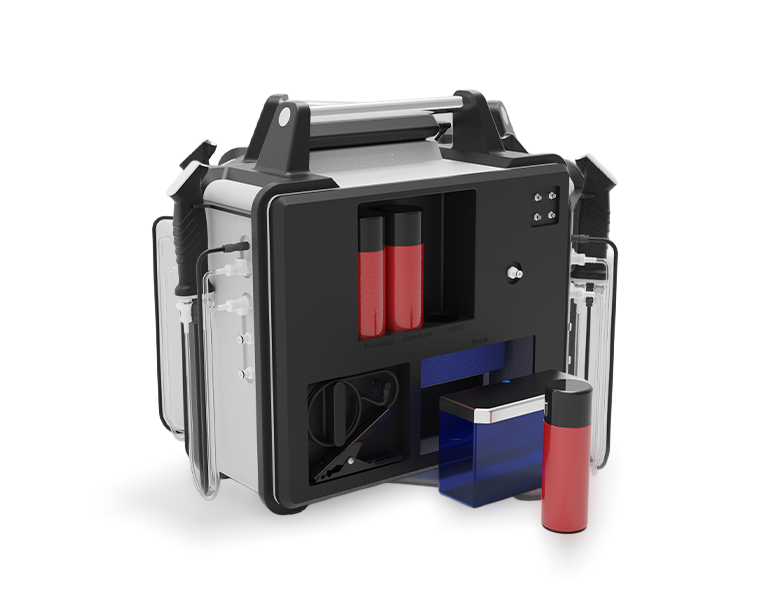
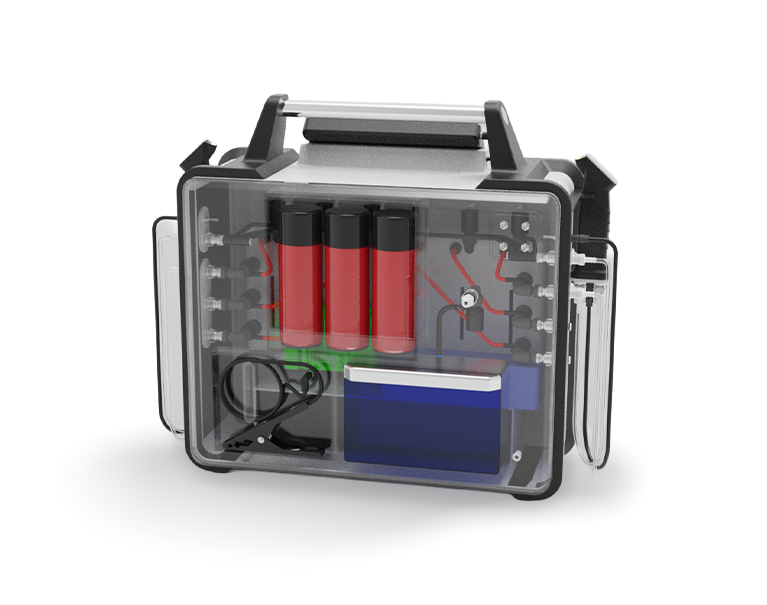
Grapheno-1 required tight integration across mechanical, electrical, and system-level engineering disciplines. LA NPDT led the design and integration of:
Structural housings and internal mounting frameworks
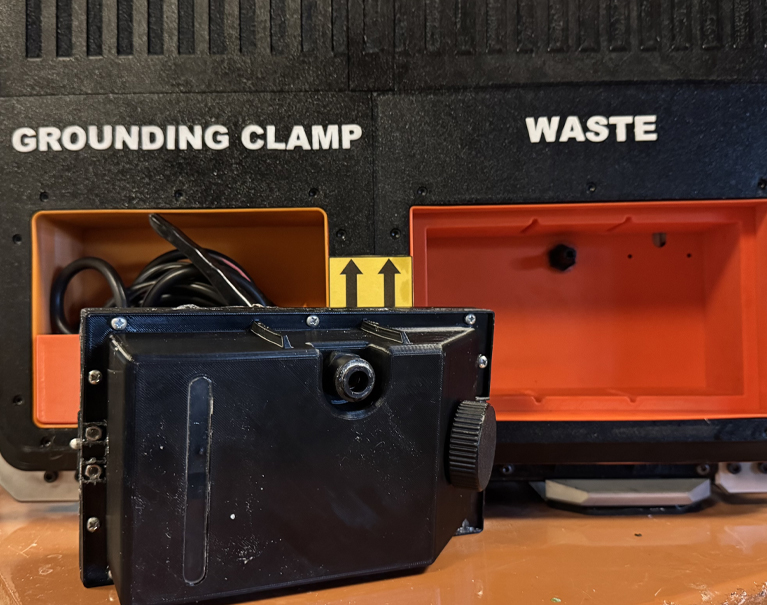
Interfaces for electrolyte delivery and applicator integration
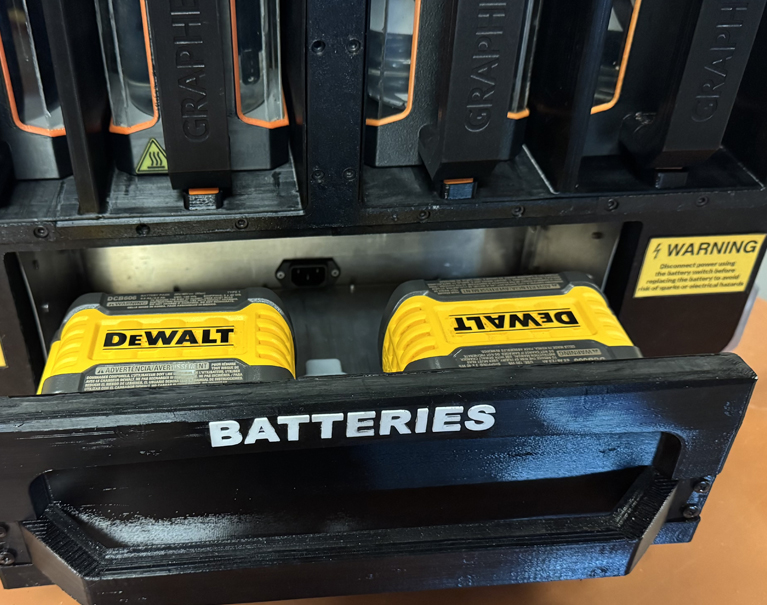
Power architecture, battery integration, and electrical distribution
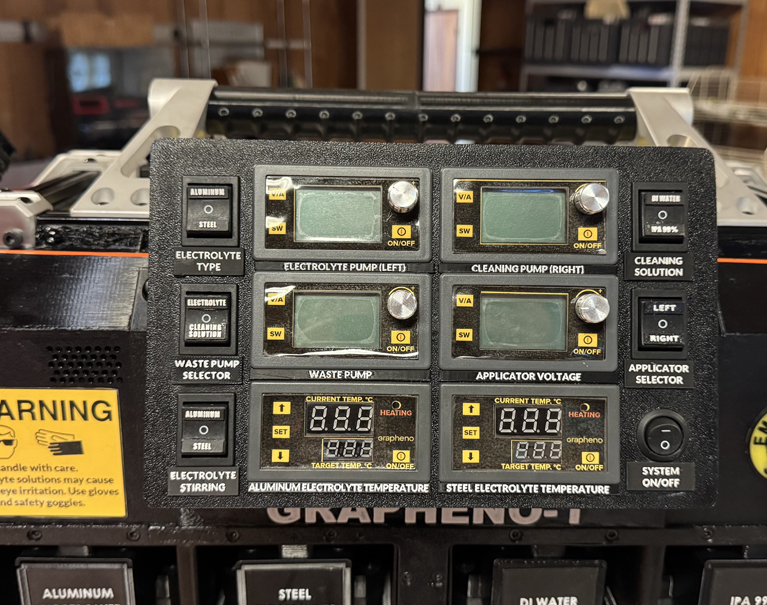
Physical controls and user-interface components
Reliable for long-term deployment
Design decisions emphasized repeatability, reliability, and future scalability. The system was engineered not just to demonstrate feasibility, but to serve as a foundation for follow-on SBIR phases and eventual commercialization.
“Consistency is what turns a lab process into a deployable system.”
Prototype Fabrication and System Integration
LA NPDT fabricated the Grapheno-1 prototype, producing custom mechanical components, assembling electrical subsystems, and integrating everything into a fully functional unit. This phase included:
CNC-machined and fabricated custom components
Prototype housings and internal assemblies
Electrical wiring, system bring-up, and integration
Fit checks and functional verification
The completed prototype provided a tangible demonstration that the SBIR concept could be built, operated, and evaluated as a real system.
“A prototype is proof that anSBIR concept can be built.”
Bridging SBIR Research and Real-World Deployment
Grapheno-1 represents a critical bridge between laboratory research and operational maintenance technology. By combining Grapheno’s electrochemical treatment expertise with LA NPDT’s product development and engineering capabilities, the project advanced from research into a deployable, testable system.
The prototype enabled:
Demonstration of treatment repeatability
Evaluation of technician workflows and usability
A clear foundation for Phase II development and scaling
This approach aligns directly with the core intent of SBIR programs, reducing technical risk while accelerating transition toward real-world application.
“SBIR programs succeed when research meets engineering.”
Services Provided for Grapheno-1 (SBIR-Focused)
SBIR Concept Development & System Architecture
Supported pre-award SBIR concept formulation by defining a realistic, field-deployable system architecture.
Mechanical Design & Engineering
Designed enclosures, structures, and layouts suitable for portable field operation.
Electrical Design & Integration
Developed power architecture and electrical systems required for controlled electrochemical treatment.
Prototype Fabrication & Assembly
Fabricated custom components and assembled a fully functional SBIR prototype.
System Integration & Validation Support
Integrated subsystems and supported early testing and demonstration activities.
Ongoing SBIR Technical Collaboration
Provided continued engineering support as the system evolved through program milestones.
Impact: Addressing One of the Costliest Failure Modes in Engineering
Grapheno-1 introduces a new approach to fatigue crack management by focusing on arresting crack growth rather than removing material or replacing components.
This approach has the potential to significantly reduce maintenance costs, extend asset life, and improve safety across aerospace, defense, transportation, and industrial infrastructure.
Equally important, this project demonstrates how an SBIR-focused partnership can move advanced science toward deployable capability. For companies pursuing SBIR funding, Grapheno-1 illustrates how LA NPDT helps bridge the gap between proposal-stage concepts and working prototypes.
“Engineering is what turns SBIR ideas into deployable technology.”
A Trusted
SBIR Design and Prototyping Partner
Grapheno-1 exemplifies LA New Product Development Team’s role as a strategic SBIR partner, supporting companies from early concept formulation through engineering execution and prototyping.
If you are preparing an SBIR proposal or need a technically credible partner to develop and prototype your concept, we’re ready to help.
CONTACT US
Contact LA New Product Development Team to discuss your SBIR project and explore how we can support your concept from proposal to prototype and beyond.
LA New Product Development Team (LA NPDT) specializes in early-stage innovation, from idea generation and product discovery to concept design, prototyping, and manufacturing support.
LA NPDT partners with startups, entrepreneurs, and growing businesses to turn raw ideas into well-defined, market-ready solutions.
Thank you for choosing LA New Product Development Team for your Prior Art Search.
Please fill out the form to submit your order.
Upon successful payment, you will receive an email with a Non-Disclosure Agreement (NDA) and a questionnaire regarding your product idea.
Your privacy and security are paramount to us, so rest assured that your information will be handled with the utmost confidentiality.
Step 1: Fill in your contact and billing details. Step 2: Review your order summary. Step 3: Submit payment.
After your payment is processed, please check your email for the NDA and questionnaire. Completing these documents promptly will allow us to start your Prior Art Search without delay.
If you have any questions or need assistance with your order, please don’t hesitate to contact us.
Thank you for choosing LA New Product Development Team for your Prior Art Search.
Please fill out the form to submit your order.
Upon successful payment, you will receive an email with a Non-Disclosure Agreement (NDA) and a questionnaire regarding your product idea.
Your privacy and security are paramount to us, so rest assured that your information will be handled with the utmost confidentiality.
Step 1: Fill in your contact and billing details. Step 2: Review your order summary. Step 3: Submit payment.
After your payment is processed, please check your email for the NDA and questionnaire. Completing these documents promptly will allow us to start your Prior Art Search without delay.
If you have any questions or need assistance with your order, please don’t hesitate to contact us.
Thank you for choosing LA New Product Development Team for your Prior Art Search.
Please fill out the form to submit your order.
Upon successful payment, you will receive an email with a Non-Disclosure Agreement (NDA) and a questionnaire regarding your product idea.
Your privacy and security are paramount to us, so rest assured that your information will be handled with the utmost confidentiality.
Step 1: Fill in your contact and billing details. Step 2: Review your order summary. Step 3: Submit payment.
After your payment is processed, please check your email for the NDA and questionnaire. Completing these documents promptly will allow us to start your Prior Art Search without delay.
If you have any questions or need assistance with your order, please don’t hesitate to contact us.