
Market research firms for serious product development
What is a market research firm in product development?
We validate demand, price, and positioning - then turn the findings into a manufacturable product under one roof. Research that survives the trip from slide deck to shelf.
A market research firm studies the people, prices, and competition surrounding a product before it is built. In product development, that work scopes the feature set, sets the price target, and protects every dollar that follows in engineering, tooling, and inventory.
We are not a slide-deck shop. We are product engineers who research.
Most market research firms hand you a 60-page report and disappear. The findings are interesting. The product never gets built. Or worse, it gets built by a separate team that ignores the research entirely.
LA NPDT runs research the way an engineering team needs it - tight segments, sharp price tests, and a feature list that maps directly to the BOM. Then we go build the thing.
You get a finding, a spec, and a prototype - in that order, by the same team.
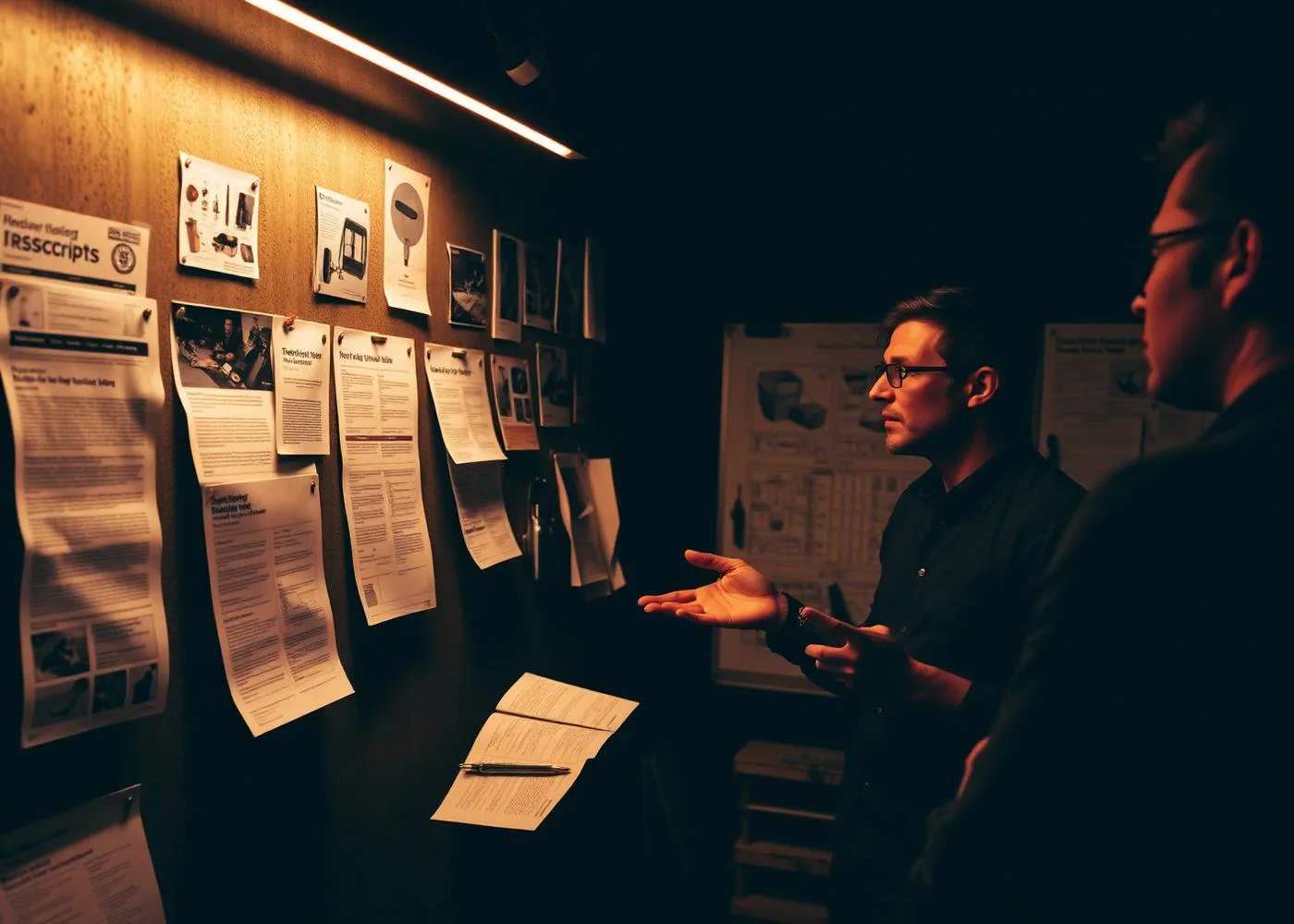
Built for teams whose research has to become a real product
Our market research engagements support clients across the product lifecycle - from a single concept test to full discovery, validation, and engineering hand-off.
 Startup founders
Need to validate the idea before raising, then ship a product that matches the pitch.
- Concept validation
- Price-point testing
- Investor-ready positioning
- Engineering-aligned findings
 Inventors
Have an invention and need an honest read on whether buyers exist before tooling money is spent.
- Buyer interviews
- Willingness-to-pay tests
- Competitive scan
- Go / no-go recommendation
 Companies
Need segmentation, repositioning, or a new SKU validated before the engineering and tooling commitment.
- Segmentation studies
- SKU rationalization
- Concept testing
- NDA-grade IP handling
 Funded teams
Need post-raise validation that the product roadmap aligns with the buyers the deck promised.
- Roadmap validation
- Pricing strategy
- Launch positioning
- Milestone-based delivery
Research that survives the engineering meeting
The fastest way to waste a research budget is to commission a study that no engineer will read. The fastest way to waste a tooling budget is to skip the study entirely. We do both jobs, on the same team, so the findings actually shape the part.
- Buyer interviews scoped against the exact segment, not "consumers in general"
- Concept tests run on real renders or prototypes, not stock illustrations
- Price tests calibrated to BOM cost so the answer is actionable
- Competitive teardowns that include manufacturability, not just feature lists
- Findings translated into a one-page engineering spec, not a 60-page PDF
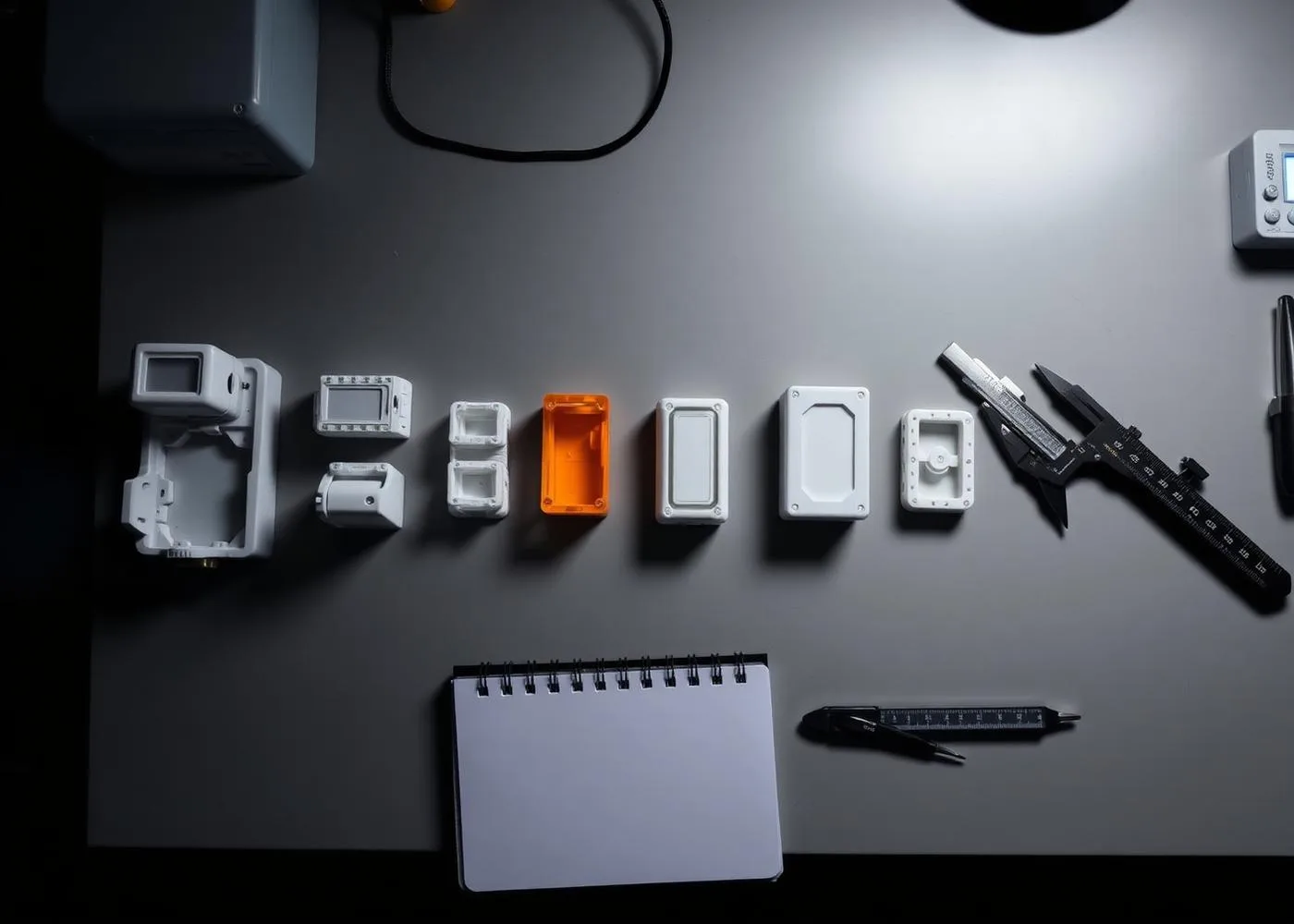
Everything under one roof - research to manufacturing
The handoff between research and engineering is where most products die. We remove the handoff. The team that interviews your buyer is in the room when the mechanical engineer scopes the part.
- Mechanical design tied to the segment's real use case
- Electrical and firmware scoped to the price point the market accepted
- In-house prototyping for live concept tests
- DFM and short-run manufacturing inside the same studio
Have a concept that needs an honest read?
Tell us what you're trying to build. We'll tell you whether the market wants it and what it should cost.
Our market research and validation process
A repeatable path from a hypothesis to a manufacturable product. Each step ends with a decision so you control scope, cost, and timeline. Click any step to expand.
01 · Intake & hypothesis+
Define the question before the study.
We start by sharpening the actual question - is this a demand problem, a price problem, or a positioning problem - because the wrong question produces an expensive answer.
Deliverable: Hypothesis brief and study plan.
02 · Buyer interviews+
Talk to the people who would actually buy.
Targeted 30-45 minute interviews with the exact segment - not a generic consumer panel. We run them in-house so the engineering team hears the answers raw.
Deliverable: Interview transcripts and themes.
03 · Concept & price testing+
Test against real artifacts.
We test the concept against renders or working prototypes at multiple price points so the answer is calibrated to what the product can actually cost to make.
Deliverable: Concept and price-elasticity readout.
04 · Competitive teardown+
Manufacturability included.
We tear down competing products on a workbench - not just a feature spreadsheet - so we understand what they cost to build, not only what they cost to buy.
Deliverable: Teardown report with BOM estimates.
05 · Engineering spec+
Translate findings into a buildable scope.
Findings become a one-page spec the engineering team can quote against - target price, must-have features, kill criteria, and the segment the product is for.
Deliverable: Single-page product spec.
06 · Prototype & validate+
Close the loop with the same buyers.
We build a working prototype and put it back in front of the same buyers we interviewed - because the only research that matters is the one that survives contact with a real object.
Deliverable: Validated prototype, decision to proceed.
Research the product you intend to ship - not the product you wish the market wanted.
Strategic thinking before strategic spending
Before any tooling is cut, we ask whether the product as scoped will actually sell. Most concepts shrink, sharpen, or shift segments after the first round of buyer interviews - and that is the point. Cheap kills are the goal of this phase.
That alignment is what separates a hopeful launch from a defensible one. Every feature on the spec earns its place because a buyer paid for it - in dollars or in feedback.
Validation tied to real prototypes
Because the same team researches, designs, and prototypes, every finding is tested against a part that exists or is on its way. No more research that lives in a drawer.
- Concepts re-tested as the prototype evolves
- Price tests updated against the real BOM, not estimates
- Feature trade-offs put back to buyers before they are cut
- Final spec validated against the people who said they would buy
Traditional research firm vs LA NPDT
| Area | Traditional research firm | LA NPDT |
|---|---|---|
| Output | PDF report and slide deck | Engineering spec and working prototype |
| Sample | Generic consumer panel | Targeted buyer segment |
| Price testing | Abstract willingness-to-pay | Calibrated to real BOM cost |
| Competitive scan | Feature spreadsheet | Physical teardown with cost estimates |
| Hand-off to engineering | Throw it over the wall | Same team, same room |
| Outcome | Insights | A product that ships |
Swipe the table sideways to see every column.
One team. One brief. The research and the part are the same project.
Research that actually shipped a product
Words from founders, inventors, and product leads who used our research and engineering to launch with confidence.
- K. Alvarez
Founder — Consumer hardware startup
They killed our original concept in week two and saved us six months. The product we ended up shipping was the one their interviews uncovered, and it sold out the first run.
- M. Chen
VP Product — Smart home OEM
We had three research firms quote us. LA NPDT was the only one that asked what the part would cost to make before they wrote the survey. The price test came back actionable, not academic.
- S. Patel
Co-founder — Medical device startup
The segmentation work paid for itself in one investor meeting. Having a real buyer profile - and a prototype tested against it - closed the round.
- J. Brennan
Director of Product — Industrial equipment manufacturer
Their teardown of our top three competitors gave us the cost target we should have set a year earlier. We re-scoped the SKU and shipped at the right price.
Research that closes rounds and campaigns
An opinion is not validation. But a tight segment, a tested price, and a competitive teardown - paired with a working prototype - is the artifact that closes investors and converts backers.
- Investor decks built on segmentation and price-elasticity data
- Crowdfunding pages with positioning the audience already accepted
- Sales pages anchored to the buyer language we recorded
- Pricing strategy backed by real BOM and real willingness-to-pay
Pitching? Bring research an investor can defend.
- 2015
- Operating since
- 1,000+
- Products developed
- One team
- Research → ship
- In-house
- Interviews · CAD · MFG
What good market research actually gets you
Done right, research compresses the path from idea to revenue - kills bad ideas cheaply and gives the survivors a defensible launch.
- Faster decisions
A tight segment and a tested price closes scope debates in days that would take months of guessing.
- Lower risk
Cheap kills before tooling. Bad ideas get terminated for the cost of a study, not the cost of a mold.
- Scale-ready
Findings flow into the spec, the spec into the BOM, the BOM into production - one continuous chain.
Related reading on product research
Field notes from the studio - how we run interviews, price tests, and teardowns when there's a real product on the line.
Validation · 6 min read
When to kill a product idea (and how to do it cheaply)Read articleMost concepts that fail in tooling could have died in a $5,000 study. Here is how we structure go / no-go decisions before the engineering bill grows.
Pricing · 8 min read
Price testing without lying to yourselfRead articleWillingness-to-pay surveys are notorious for inflating numbers. The fix is calibrating against a real BOM and a real prototype the buyer can hold.
Competition · 7 min read
What a real competitive teardown looks likeRead articleFeature spreadsheets are theater. We open the box, weigh the part, estimate the BOM, and tell you where the cost actually lives.

Inside the studio - on video
Short walk-throughs of the work that turns research into a manufacturable product.
From buyer interview to working prototype in 6 weeks
How a single round of buyer interviews became a feature spec, a BOM target, and a working prototype - in six weeks, under one roof.
Frequently asked questions about market research firms
What does a market research firm do for product development?+
A market research firm validates whether a product idea has demand, who would buy it, what they would pay, and how it should be positioned. In product development, that intelligence drives feature scope, price target, and the engineering trade-offs that follow.
How is LA NPDT different from a traditional market research firm?+
Traditional firms hand you a slide deck. We translate research into a manufacturable product. Findings flow directly into specs, BOM, and DFM decisions, so the data you paid for actually shapes the part that ships.
Do you run user interviews and surveys in-house?+
Yes. We run targeted interviews, concept tests, and quantitative surveys against the exact buyer segment for the product, then carry that signal into engineering meetings - not into a separate report no one opens.
Can you research a market before we have a prototype?+
That is the right time to do it. Pre-prototype research scopes the product, kills bad assumptions cheaply, and protects your tooling budget. We then build the prototype against what the market actually said, not what the founder hoped.
How long does the research and validation phase take?+
Lightweight concept validation is 2-3 weeks. A full discovery, segmentation, and price-test cycle runs 5-8 weeks. Both feed straight into the engineering kickoff so the program never stalls waiting for findings.
Do you help with investor and crowdfunding pages?+
Yes. The same research that shapes the product also shapes the pitch - segments, pain points, willingness-to-pay, and competitive positioning - paired with engineering-grade renders so investors and backers see something defensible.
Get research that ends in a product, not a PDF
If you need market research that actually shapes the part, the next step is a tight study tied to an engineering plan. LA NPDT delivers both under one roof.
Tell us what you're trying to build
Send the brief. We'll come back with a study plan, a prototype path, and an honest read on whether the market wants it.
What founders say after working with us
“This company is awesome. I run a medical device company and we required a number of accessories to be designed and built for our medical device. They delivered a polished design and printed the accessories on time using high-quality materials. I continue to work with them for all of our material needs.”
 Matteo ZiffFounder, Virtual Vision
“I highly recommend the LA New Product Development Team for any of your new product development needs. From the development of my concept to the actual prototype, the process was seamless. I especially loved the quick responsiveness, and I received regular updates during every stage, so I was never left wondering how things were going. The steps were clearly outlined, along with estimated costs.”
 Dr. Sharada DamarajuFounder, Dignity & Empowerment
“Partnering with LA NPDT to bring LEIA to life was a game-changer. Their blend of market analysis, design expertise, prototyping, and manufacturing streamlined my vision into a tangible solution. For medical professionals with a product idea, there's no team I'd recommend more.”
 Dr. Elena DolganFounder, LEIA Cup
Three reasons why our clients love working with us:
- 1
We solve problems. Coming up with creative solutions focused on achieving your goals is our everyday routine.
- 2
Get it all done at one place. We are a "one-stop shop" for developing, prototyping, manufacturing, and marketing new products.
- 3
You always know what to expect. No hourly charges. We are paid for the results.
If you ever thought of developing a new product, don’t wait any longer. Talk with one of our experts today.
Tell us about your product
Send us the idea, the drawing or the problem. We reply within one business day with the next practical step.
Prefer a scoped estimate? Request a quote