


Over recent decades, a wide range of approaches to effectively manage product engineering has emerged. However, the majority of these methods have been developed within high-volume sectors, such as automotive manufacturing. Meanwhile, product engineering continues to be a complex endeavor, and the nature of low-volume industries makes it challenging to apply these approaches within their specific environments. In addition, the average age of existing product engineering models is 24 years, highlighting the need for more modern product architecture perspectives.
Simultaneously, globalization, deregulation, increasingly demanding customers, and advancements in information and transportation technologies are intensifying the complexity of designing and managing supply chains, as well as new product development (NPD) processes. As a result, an increasing number of high-tech companies (e.g., consumer electronics, automotive electronics, and elevator manufacturing firms) have adopted innovative approaches to managing their NPD, production, and supply chain operations. In particular, to reduce NPD cycle times, rapidly introduce multiple product models and variants at lower costs, and release successive generations of products with enhanced performance, these companies are focusing on modular product architecture development as a central NPD strategy.
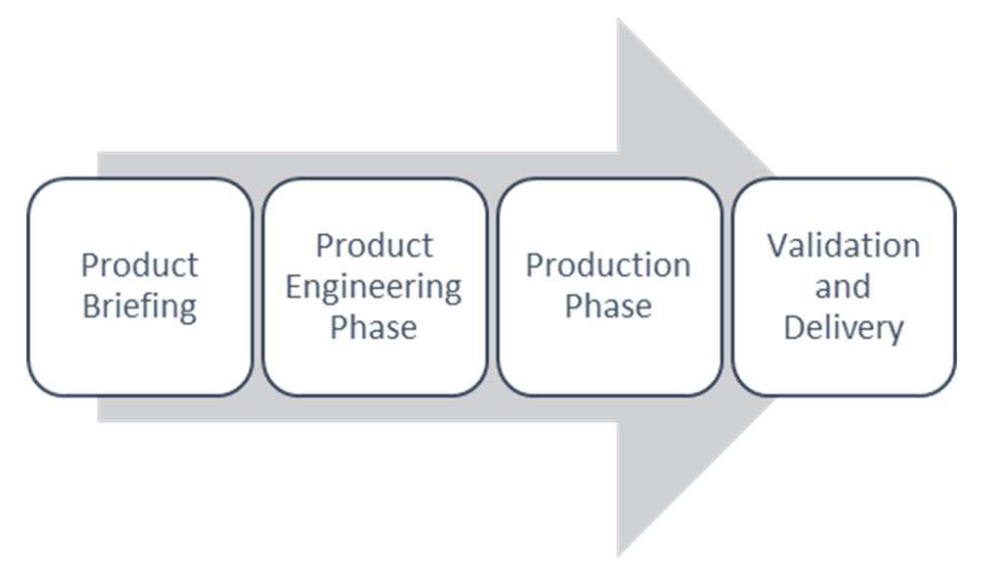
Figure 1. Process Flow for the delivery of a new product (source – www.sciencedirect.com/science/article)
Foundations of System Design
At its essence, product architecture refers to the organization of a product’s functional elements into distinct physical components, including the mapping of functions to components and the definition of interfaces between interacting elements. In simpler terms, it provides a systematic framework for structuring complex systems.
More precisely, its objective is to define the fundamental physical building blocks of a product in terms of both their functions and their interactions with other parts of the system. Product architecture is typically determined during the product development lifecycle, most often at the system-level design stage – after core technological principles have been established but before detailed component and subsystem design begins.
From an alternative viewpoint, product engineering can also be interpreted as an information-processing activity. In this context, it encompasses:
- Information gathering
- Generation
- Analysis and interpretation
- Conversion and transformation
- Dissemination and transfer
Collectively, these activities are organized and directed by product architecture decisions.
Why Structure Matters in Design
At a fundamental level, the significance of product architecture can be outlined as follows:
- It is determined early and guides design decisions
- It affects manufacturing costs
- It shapes product evolution over time
- It influences the structure of engineering teams
- It underpins scalable product architecture strategies
Taken as a whole, product architecture establishes the functional requirements of a product system, links these requirements to physical components or subsystems, and defines how these elements interact. Nevertheless, despite extensive research in this area, the full implications for organizations – and the strategic importance of product architecture – remain insufficiently defined.
Modularity and System Flexibility
In general terms, product architectures range from modular to integral configurations. Notably, modular product architectures function as adaptable platforms that support a wide variety of product configurations. As a result, companies can realize cost efficiencies through economies of scale, including shared components, optimized inventory, and streamlined logistics, while also accelerating the introduction of technologically advanced products.
In practical terms, product modifications occur for several reasons, such as:
- Upgrades
- Additions or extensions
- Adaptation to new contexts
- Wear and degradation
- Consumption
- Flexibility in usage
- Reusability
Crucially, a well-structured product architecture allows organizations to limit the extent of physical changes needed to achieve functional modifications. Therefore, variations in products are often implemented through modular architectures, where adjustments in one component do not trigger changes in others.
Role of Interfaces in Complex Systems
Equally significant, interfaces play a vital role in system design. Interfaces represent the connections between components, modules, and subsystems within a product architecture. In this framework, interface specifications define the rules governing interactions across all elements of a technological system.
Importantly, the development and standardization of interfaces have a profound influence on establishing global industry standards (e.g., GSM, TDMA, and AMP). For example, in consumer electronics, interface specifications at the NPD stage typically include:
- Manufacturing tolerance requirements
- Frequency operating ranges
- Heat dissipation limits
- Electrical requirements (voltage and current)
- Physical enclosure dimensions
Together, these factors are essential for creating a resilient and effective product architecture.
Key Decisions in System Design
From a strategic perspective, architectural choices are closely associated with product planning and concept development. These decisions typically involve:
- Product Change (e.g., copier toner, camera lenses)
- Product Variety (e.g., computers, automobiles)
- Standardization (e.g., motors, bearings, fasteners)
- Performance (e.g., racing bikes, fighter planes)
- Manufacturing Cost (e.g., disk drives, razors)
- Project Management (e.g., team capacity, skill sets)
- System Engineering (e.g., decomposition, integration)
More broadly, transitioning a product from initial concept to market delivery requires decisions across three main domains:
- Product
- Process
- Supply chain
These decisions are both strategic and operational in nature and are influenced by factors such as component complexity, standardization, and modularity – all of which are closely linked to product architecture.
Over the long term, key decisions include:
- Developing engineering capabilities
- Selecting locations for development centers
- Forming strategic partnerships
At the project level, considerations include:
- Product functionality
- Product diversity
- Material selection
- Design aesthetics
In addition, organizational decisions involve:
- Team size and configuration
- Cross-functional collaboration
- Planning methodologies and tools
Interestingly, the structure of a product often reflects the structure of the organization that designs it, consistent with Conway’s Law in product architecture contexts. While this alignment can enhance efficiency in stable environments, it may hinder adaptability in more dynamic settings.
Organizational Implications
Building on this idea, specific product characteristics have a direct impact on organizational design. The size, composition, and structure of teams are frequently determined by the structure of the product itself.
Indeed, it has been widely observed that engineering organizations tend to replicate the architecture of the products they develop. On one side, this alignment improves operational efficiency. On the other hand, it can limit flexibility in rapidly evolving environments. Consequently, product architecture serves as a critical strategic tool for balancing efficiency with adaptability.
Scaling Systems and Organizations
- Scalability methodology
Shifting focus to scalability, the early phases of projects are often identified as inadequately managed. Research suggests that a variety of factors influence the most suitable project approach, particularly the level of integration required across functions and disciplines [1].
Furthermore, product engineering cannot be fully understood from a single-disciplinary perspective. Multiple interrelated sub-processes occur concurrently, led by different organizational functions and typically coordinated through a shared product architecture.
As a result, this approach departs from traditional linear process models. Rather than relying on sequential handovers, functions contribute based on the value they provide. In doing so, organizations adopt a more adaptable and scalable product architecture framework.
- Who needs scalability
More broadly, any organization experiencing growth will eventually need to scale its systems, structures, and processes. Historically, scalability challenges have influenced industries ranging from aviation and defense to banking and data center operations.
In particular, scalability in manufacturing systems can:
- Enhance system design and operational efficiency
- Enable innovative production paradigms
- Contribute to sustainability and societal well-being
Within this framework, robust product architecture acts as a fundamental enabler of scalable systems.
Beyond purely technical aspects, scalability can also be interpreted as a mechanism for increasing value when wider societal considerations are included.
Product Development Flow and Execution
Once a project has been approved, organizations generally follow a structured sequence of steps:
- Market Analysis
- Solution Development
- Engineering and Design
- Validation
- Production
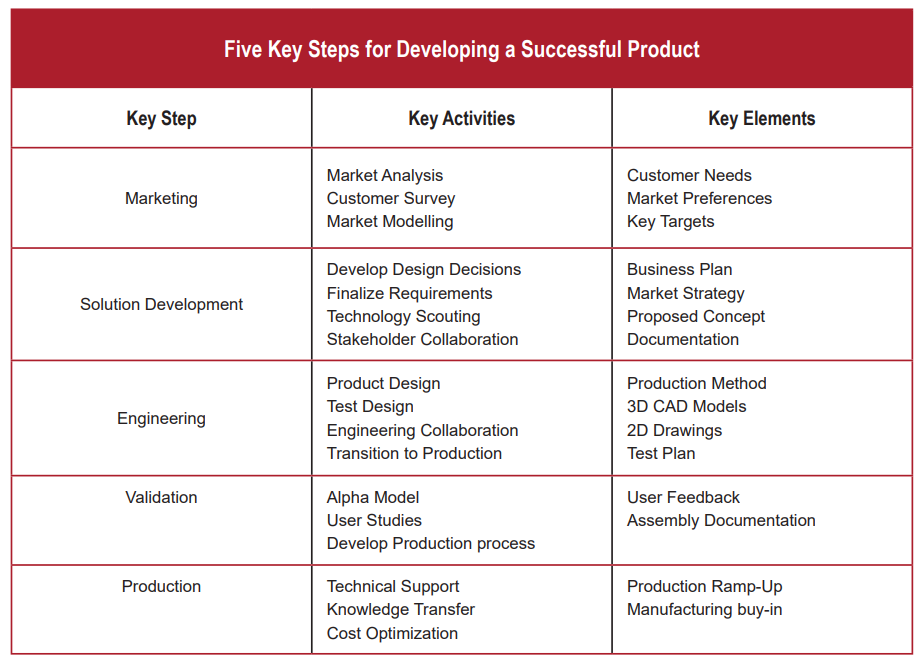
Figure 2. Five Key Steps for Developing a Successful Product (source – www.boston-engineering.com/wp-content)
Contact us today to learn how LA NPDT can assist in realizing your project.
By adhering to these stages, maintaining discipline, fostering effective communication, and keeping customer requirements central to the design process, organizations can significantly enhance outcomes. Moreover, aligning execution with product architecture further increases the probability of delivering successful products.
Principles for Effective Engineering Teams
At the organizational level, scalable engineering teams depend on well-defined core principles. These principles shape how teams function and evolve:
- Consistency in decision-making
Core principles establish a clear framework for decision-making and ensure alignment with shared objectives, particularly when defining and refining product architecture. - Improved collaboration and communication
They provide a common language across teams, thereby minimizing misunderstandings and enhancing efficiency. - Accelerated onboarding
They enable new engineers to quickly grasp expectations, reducing ramp-up time and helping them understand the existing product architecture. - Increased autonomy
They empower engineers to make independent decisions while remaining aligned with organizational goals and architectural guidelines.
- Consistency in decision-making
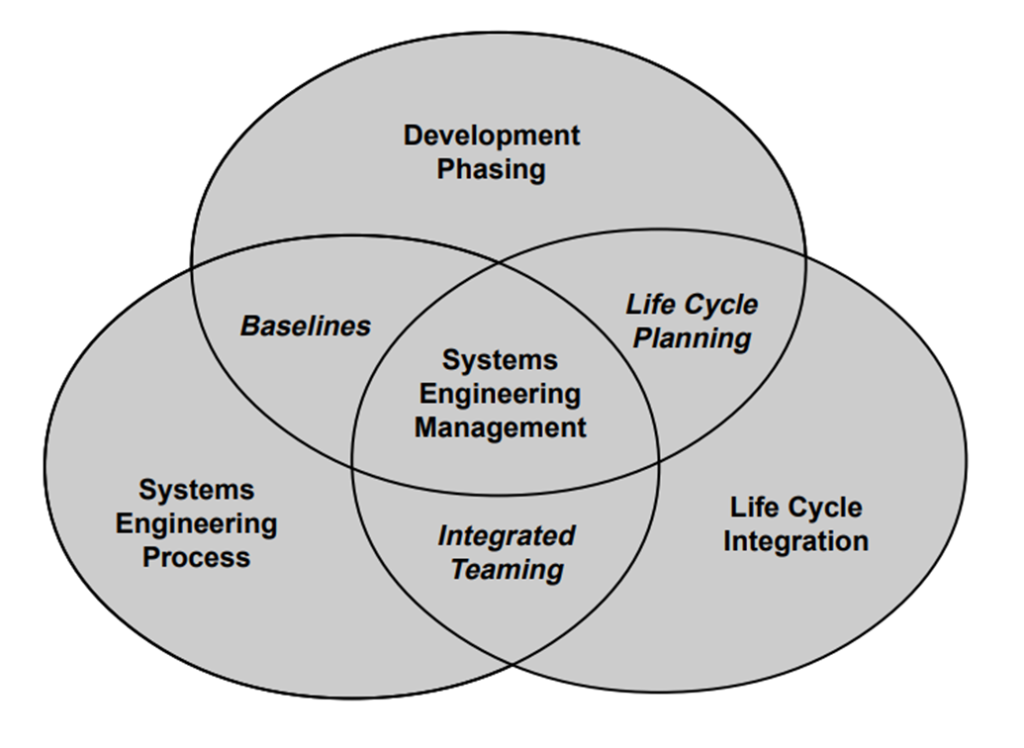
Figure 3. Three Activities of Systems Engineering Management (source – ocw.mit.edu)
Benefits of Early Architectural Definition
Importantly, while product architecture can result from a decomposition process, it can also act as the starting point for development. Increasingly, organizations are defining product architecture prior to initiating development activities.
This approach offers several advantages:
- Stability: Interfaces limit the impact of changes and support parallel development
- Communication: Reduces coordination effort and enhances documentation
- Learning organization: Facilitates knowledge reuse, though it may constrain radical innovation
- Commonality and variety: Supports flexible product configurations
- Reuse and upgrading: Enables incremental improvements
- Competitive control: Provides strategic positioning and market influence


