Product Architecture Fundamentals: Establishing the Basis for Scalable Engineering
In industrial manufacturing settings, where production depends on detailed product development, delivery timelines to customers are significantly influenced by the duration of the
April 6, 202611 min read

Written by Konstantin Dolgan, Ph.D., NPDP
Founder & CEO, Product Development Engineer
Published April 6, 2026Updated September 2, 2026
In industry, fast delivery depends on how you develop your products. The development phase often takes a lot of time to finish. You can cut lead times by improving your product development process. Strong product architecture principles help reach this goal.
Many ways to manage product engineering have appeared over the last few decades. Most methods were made for high-volume sectors like car making. Product engineering is still hard to do well. Low-volume industries find it tough to use these old methods in their work. The average age of current engineering models is 24 years. This shows we need new ways to look at product architecture.
At the same time, supply chains are getting harder to design and run. This is because of global changes, fewer rules, and demanding customers. Also, new tech for info and transport adds to this problem. This also affects new product development (NPD) processes.
So, many high-tech companies now use new ways to manage their work. This includes firms in consumer electronics, car electronics, and elevator making. They use these methods for NPD, production, and supply chain tasks.
These companies focus on modular product architecture. This is a key NPD plan. It helps them cut NPD cycle times. They can quickly launch many product models and types at lower costs. They also release better product versions one after another.
Figure1. Process Flow for the delivery of a new product (source –Sciencedirect: S2212827121005990)
Foundations of System Design
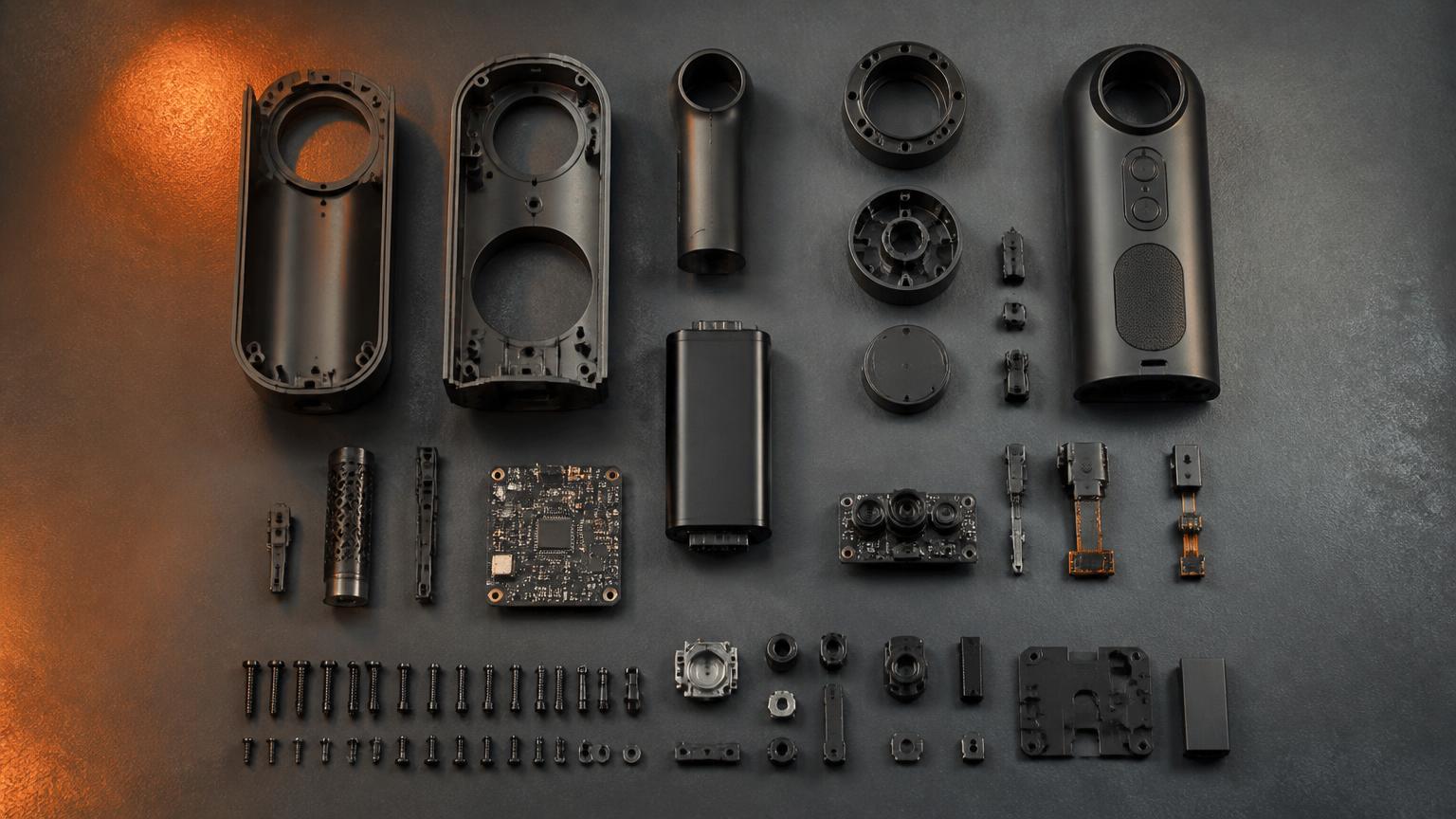
Product architecture organizes a product’s functions into physical parts. It maps each task to a part and defines how they connect. In simple terms, it is a system for building complex tools.
It defines the basic physical blocks of a product and how they act. You usually pick this during the product development lifecycle. This happens at the system-level design stage. You do this after picking the tech but before detailed design starts.
From another view, product engineering is an information processing task. In this area, it includes:
- Gather information. This is the first step.
- Make or produce something. This is the generation phase.
- Carefully study and explain data. This helps us understand it.
- Change something from one form to another. This is conversion or transformation.
- Share or spread information widely. This is how data moves around.
Product architecture decisions organize and direct these activities.
Why Structure Matters in Design
At a basic level, product architecture matters for these reasons:
- It is decided early in the process. It helps guide design choices.
- It impacts how much it costs to make.
- It helps products change and grow over time.
- It changes how engineering teams are set up.
- It forms the base for product plans that can grow.
Product architecture links what a system must do to its physical parts. It also defines how these pieces work together. Much research exists on this topic today. Yet, the strategic value for teams is still not fully clear.
Modularity and System Flexibility
Product designs range from modular to integral types. Modular designs act as flexible platforms. They support many product versions. Firms save money through shared parts and better stock levels. This helps them launch new tech products faster.
In practical terms, product modifications occur for several reasons, such as:
- Making things better.
- Adding new parts or extending existing ones.
- Changing to fit new situations.
- Things wearing out or breaking down.
- Using things up.
- How easily something can be used in different ways.
- Using something again.
Good design lets firms change a product without many physical shifts. Modular setups allow for small changes. You can adjust one part without changing others. This keeps the rest of the system stable.
Role of Interfaces in Complex Systems
Interfaces are vital in system design. They connect parts and modules within a product. These specs set the rules for how each piece works together. They guide all parts of a tech system.
Standard interfaces help set global rules like GSM, TDMA, and AMP. In electronics, these specs start at the NPD stage. They often include these points:
- Consider manufacturing tolerance needs.
- Check frequency operating ranges.
- Note heat dissipation limits.
- Understand electrical requirements. These include voltage and current.
- Review physical enclosure dimensions.
These factors are crucial. They help create a strong product architecture.
Key Decisions in System Design
From a planning view, architectural choices link closely to product plans and concept growth. These decisions usually involve:
- Product changes include items like copier toner or camera lenses. These are often updated.
- Product variety covers many goods. Examples are computers and automobiles.
- Standardization means using common parts. Motors, bearings, and fasteners are good examples.
- Performance relates to how well something works. Think of racing bikes or fighter planes.
- Manufacturing cost is about making items cheaply. Disk drives and razors are examples.
- Project management involves many aspects. Team capacity and skill sets are key parts.
- System engineering focuses on design and function. This includes decomposition and integration.
Moving a product from idea to market needs decisions. These decisions fall into three main areas:
- Product
- Process
- Supply chain
These choices are both strategic and operational. Factors like part complexity and modularity shape them. These points link directly to the product design. They affect how the firm works.
Over the long term, key decisions include:
- We are developing new engineering skills. We are building our team's abilities.
- We are choosing where to build our new development centers. This includes selecting the best locations.
- We are creating important partnerships. These are strategic alliances with other organizations.
At the project level, considerations include:
- This is about how the product works.
- This covers the variety of products we offer.
- We carefully choose our materials.
- This focuses on the beauty of the design.
In addition, organizational decisions involve:
- Understand the size and setup of your team.
- Work together across different groups.
- Learn about planning methods and helpful tools.
A product structure often reflects the team that built it. This follows Conway’s Law. This link helps in stable markets. However, it can make it hard to adapt in fast-changing fields.
Organizational Implications
Product traits change how you design your team. The product structure often sets the size, makeup, and layout of your groups.
Teams often copy the design of the goods they build. This link helps work move faster. Yet, it can make it hard to change in fast markets. Use product design as a tool to balance speed with change.
Scaling Systems and Organizations
- This is a method for scalability.
Early project stages often lack good management. Studies show many factors pick the best project path. The need to link different teams is a key part of this choice [1].
You cannot look at product work from just one angle. Many small steps happen at once. Different teams lead these steps and use a shared design to stay in sync.
This method moves away from old, straight-line models. Teams do not wait for handovers. They join in when they add value. This helps firms build a design that scales well.
- Who needs scalability.
Growing firms must scale their tools, setups, and tasks. Past scale issues have hit many fields. These include flight, defense, banks, and data hubs.
In particular, scalability in manufacturing systems can:
- Improve how systems are designed and how they operate. This makes them more efficient.
- Allow new and creative ways of producing things.
- Help the environment and the well-being of society.
Within this framework, strong product design helps create systems that can grow.
More than just technical matters, scalability can also help increase value. This happens when we consider wider societal issues.
Product Development Flow and Execution
After a project gets approved, organizations usually follow a set plan.
- We analyze the market.
- We develop solutions.
- We handle engineering and design.
- We perform validation.
- We manage production.
Contact us today to learn how LA NPDT can assist in realizing your project.
Follow these stages and maintain discipline. Talk clearly and keep customer needs first. This helps teams get much better results. Link your work to the product architecture. This makes success more likely.
Principles for Effective Engineering Teams
At the company level, engineering teams need good core principles. These principles help teams work well. They also help teams grow.
- Consistency in decision-making
Core principles establish a clear framework for decision-making and ensure alignment with shared objectives, particularly when defining and refining product architecture.Improved collaboration and communication
They provide a common language across teams, thereby minimizing misunderstandings and enhancing efficiency.Accelerated onboarding
They enable new engineers to quickly grasp expectations, reducing ramp-up time and helping them understand the existing product architecture.Increased autonomy
They empower engineers to make independent decisions while remaining aligned with organizational goals and architectural guidelines.
Figure 3. Three Activities of Systems Engineering Management (source –Mit: 6128a102c1a9b6dbd30f2fb18c12aa64 sefguide 01 01)
Benefits of Early Architectural Definition
Architecture can come from breaking down a design. It can also be the first step. More firms now define the architecture before they start work.
This approach offers several advantages:
- Stability: Interfaces lessen the impact of changes. They also support development that happens at the same time.
- Communication: It lowers the effort needed for coordination. It also improves documentation.
- Learning organization: This helps reuse knowledge. However, it might limit very new ideas.
- Commonality and variety: It supports many different product setups. These setups can be changed easily.
- Reuse and upgrading: This allows for small, steady improvements. You can reuse parts and upgrade easily.
- Competitive control: It helps with strategic placement. This gives you influence in the market.
Conclusion
In short, many products need multiple suppliers. Each supplier has special skills. So, product architecture design must consider how this affects:
- Understand the company's organizational structure.
- Learn about new product development processes.
- Explore how knowledge is managed.
Standardization helps with outsourcing. Non-core functions can be sent outside. Core technologies stay inside the company. The organization's product architecture guides them.
Looking forward, modern markets are characterized by:
- Customers have more diverse needs now. This means a wider range of preferences.
- Products have shorter life cycles. They become obsolete more quickly.
Early design choices have a huge impact. Teams should show these effects to the whole value chain. To do this, you must use the product architecture concept well.
Subscribe
Dive deep into the dynamic world of new product development with LA NPDT Insights Blog.
Product Engineering as an Information-Processing Activity
Activity | Description |
|---|---|
Information Gathering | Collecting relevant data and insights. |
Generation | Creating new information or concepts. |
Analysis and Interpretation | Examining data to understand meaning. |
Conversion and Transformation | Changing information into a usable format. |
Dissemination and Transfer | Sharing information with relevant parties. |
Choosing a Product Architecture Before the First CAD File
Product architecture is the decision about which functions live in which physical chunks and how those chunks talk to each other. It is made early, usually implicitly, and it sets the ceiling on how cheaply the product can be built, how fast variants can ship and how painful field service will be. The table below compares the three patterns we see in consumer and industrial hardware.
Architecture | Tooling cost | Variant cost | Service | Best fit |
|---|---|---|---|---|
Integral (one welded or bonded assembly) | Lowest part count, highest tool complexity | High - new variant means new tools | Replace whole unit | Single high-volume SKU, thin margins |
Modular slot (fixed interfaces, swappable modules) | Medium | Low - swap one module | Field replaceable | Product families, 3+ SKUs |
Bus architecture (common backbone, plug-in functions) | Higher up front | Lowest per variant | Best | Platforms with a multi-year roadmap |
Sectional (repeated identical chunks) | Low per chunk | Scale by count | Good | Racks, lighting, storage systems |
Interface Rules That Keep a Platform Alive
- Create the interface control document. Do this before module owners begin CAD work. Include mechanical datums, connector part numbers, and pinouts. Also specify power budgets, thermal limits, and firmware versions.
- Give each interface a tolerance budget. Do not use nominal dimensions. Stack-ups are where modular products often fail during pilot runs.
- Freeze interfaces slower than modules. A platform with connectors that change each revision is not a true platform.
- Assign one owner to each interface. This person signs off on both sides of the boundary.
- Test a module against the oldest supported backbone revision. Do not test it only against the newest version.
The economic reason is clear. Integrated designs have the lowest unit cost for the first product. Modular designs save money and time for the second, third, and fourth products. If you plan to launch more than two products in three years, choosing a modular approach often pays off. It does so even before the second product is released.
Frequently asked questions
What is product architecture?
Product architecture groups functions into physical parts. It maps functions to parts and sets how they connect. This system organizes complex items. It defines the main building blocks based on their roles and how they work together.
When is product architecture determined during development?
Teams usually set the architecture during the design cycle. This happens at the system-level stage. It comes after picking the tech but before detailed design. It creates a base for engineering that scales.
Why is product architecture important?
Product architecture matters because it guides early design choices. It changes build costs and how the product grows. It shapes how teams work and supports growth plans. This sets what the product must do and how parts interact.
What is the role of interfaces in product architecture?
Interfaces are key to system design. They link components, modules, and subsystems. Interface rules show how a tech system should work. These standards can shape global industries. Examples include GSM, TDMA, and AMP.
How do modular product architectures benefit companies?
Modular product designs work as flexible platforms. They support many different product types. This helps firms save money through scale. It means shared parts, better inventory, and simple logistics. These designs also launch new tech faster with fewer physical changes.
Architecture decides cost before design does
Product architecture maps functions to physical parts. It also defines the interfaces between them. You choose this in the first weeks of a program. It then limits every step. It sets your variant count and helps you fix old parts. It even defines your assembly line and final unit cost.
Dimension | Modular architecture | Integral architecture |
|---|---|---|
Unit cost at high volume | Higher — interfaces, connectors, fasteners | Lower — parts combined and optimised |
Variant creation cost | Low — swap a module | High — often a new design |
Time to first product | Faster with reusable modules | Slower, more coupled design work |
Serviceability and repair | Strong | Weak |
Size and mass | Larger | Smaller and lighter |
Supply chain flexibility | High — second-source per module | Low — a change ripples |
Best fit | Product families, B2B, long service life | Single high-volume consumer SKU |
The decisions that constitute an architecture
- Which functions live in which physical chunk, and which functions are deliberately shared.
- Where the interfaces sit, and how tightly they are specified.
- What is common across the planned product family and what is allowed to vary.
- Where the product will absorb change — component obsolescence, regional certification, feature tiers.
- Which subsystem owns thermal, structural and EMC responsibility at each boundary.
- What the assembly sequence implies about fixturing, test points and rework access.
Common architecture mistakes
Mistake | Consequence | When it surfaces |
|---|---|---|
Architecture inherited from the prototype | Cost and assembly problems baked in | Design for manufacturing |
Interfaces defined after subsystem design | Rework across two or three vendors | Integration build |
No planned variation point | Every new SKU is a new development program | Second product |
Single-sourced module with a proprietary interface | Obsolescence becomes a redesign | Year two to three |
Over-modularisation on a consumer SKU | Unit cost uncompetitive at volume | Cost-down review |
Architecture review checklist
- The mapping of functions to modules is drawn. This is agreed upon before detailed design starts.
- Every interface has an owner. It also has a specification and a test.
- The planned product family is sketched against the architecture. This includes variants you have not yet funded.
- Each module has a reliable second source. Or, it has a clear plan for moving to a new source.
- Thermal, structural, and EMC budgets are set for each module. The margin for these budgets is also stated.
- The architecture was checked against the target unit cost. This was for real production volume, not just for prototypes.
Architecture work belongs at the start of a program with your needs. This is why we run it inside discovery. We then move it into product engineering before we detail any subsystem.
Frequently asked questions
What is product architecture?
This task maps a product's functions to physical modules. It also defines the links between those modules. It sets your strategy for variants and unit costs. It also defines how you service the product and how it handles change.
What is the difference between modular and integral architecture?
Modular design maps one function to one part with clean links. This helps with variants, service, and supply needs. Integral design puts functions into shared parts. This leads to lower costs, smaller sizes, and lower mass at high volume.
When should product architecture be decided?
Do this in the first weeks. It comes right after requirements. It is also before subsystem design. Changing the architecture later means redesigning interfaces. This affects many subsystems. It usually impacts multiple vendors.
How does architecture affect manufacturing cost?
It sets part counts, fasteners, and connectors. It fixes the build order and test plan. These factors drive the unit cost. Most cost-cut plans face limits from old design choices.
Filed under:EducationUncategorized
Tagged:2025
Services related to this guide
- Product design servicesIndustrial design and CAD taken all the way to manufacturable files.
- Rapid prototypingWorking prototypes in days, from 3D printing to vacuum casting.
- Electronic design servicesSchematic, PCB layout, firmware and bring-up, through to production handoff.
- Product development examplesReal projects we designed, prototyped and shipped.