
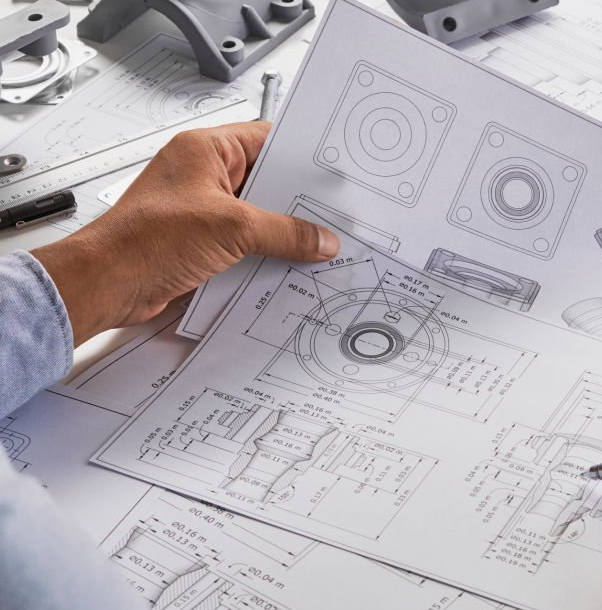

Design for Manufacturability (DFM) refers to the capability to create components and products that are simpler – and therefore more economical – to produce. At its foundation, DFM ensures that products are not only functional but also practical to manufacture at scale.
Expectations, organizational culture, and mindset strongly influence a company’s capabilities. Historically, product engineers often assumed they had adequate manufacturing expertise, even though many had limited exposure to real production environments. The dominant belief was that Engineering designs the product and Manufacturing builds it, regardless of complexity. This separation proved ineffective.
When collaboration with manufacturing engineers, factory technicians, and assembly operators was suggested as a way to enhance product designs, resistance sometimes appeared. Some engineers believed they were already considering process knowledge. Experience has shown, however, that genuine cross‑functional cooperation leads to superior outcomes.
The Philosophy and Importance of DFM
The philosophy behind DFM promotes designing products that can be produced easily and in the required quantities – products with high manufacturability. Depending on the industry and technologies involved, DFM efforts may focus on fabrication, assembly, process yield, product testing, packaging, or environmental sustainability.
DFM emphasizes improved communication and integration between product designers and process engineers. This is supported by tools such as computer‑aided engineering systems, process‑planning software, shared design databases, group‑technology systems, and advanced digital communication platforms.
The importance of DFM is highlighted by cost data: roughly 70% of a product’s manufacturing cost – materials, processing, and assembly – is determined by design choices, while only about 20% is influenced by production decisions such as machine selection or process planning.
Manufacturability Defined
Manufacturability describes how effectively a product can be produced given its design, cost constraints, and distribution requirements. Challenges may involve one or more of these factors.
Key Manufacturability Dimensions
- Overall Feasibility
A design may specify a routing or process sequence that simply cannot be executed as defined. - Sustainability
Regulations on carbon emissions and rising consumer expectations are driving sustainability initiatives. Early design and manufacturability decisions play a decisive role in determining a product’s environmental footprint. - Excess Cost
Once a design is finalized, the required manufacturing process becomes essentially fixed. Designers therefore need tools to estimate and model manufacturing cost outcomes during the design phase, not after release.
What Is Design for Manufacturability?
Design for manufacturability, or design for manufacturing (DFM), is the engineering practice of designing products to maximize manufacturing efficiency and minimize production cost while still meeting form, fit, and function requirements.
That said, effective DFM relies on a range of analyses tailored to different products and production methods. These may include tolerance analysis, cooling‑time analysis for molded components, material selection, or machine selection. Given the diversity of manufacturing processes, DFM plays a crucial role in ensuring product quality and manufacturability while keeping costs controlled throughout the development lifecycle.
DFM also establishes quality standards related to manufacturability, such as material and component consistency, efficient assembly processes, and reduced part counts. The early design phase is the most influential stage for applying DFM, leading to better design decisions, fewer redesign cycles, fewer supply‑chain disruptions, faster time to market, and substantial cost savings.
Typical DFM Activities
- Comparing design alternatives to identify the option with the fewest manufacturability challenges and lowest production cost.
- Identifying design features that unnecessarily introduce extra manufacturing steps or hinder sustainability goals.
- Understanding why a design receives higher‑than‑expected cost estimates from suppliers.
- Preventing manufacturability issues from emerging late in the design cycle and delaying product launches.
Historically, DFM analysis was constrained by computational limitations. Today, digital manufacturing simulation tools enable deep manufacturability modeling that was once impractical.
DfMA Tools and Supporting Systems
Design for Manufacturing and Assembly (DfMA) tools are widely used to shorten time to market and reduce development risk. These tools replace the isolated designer model with cross‑functional development teams that integrate multiple disciplines.
This approach encourages knowledge sharing throughout the product development cycle and allows concerns and feedback to be addressed early, when design changes are less expensive and easier to implement.
The DFM Process Lifecycle
The DFM process typically follows a structured sequence:
- Conceptual Design – Generate initial ideas while considering basic manufacturing feasibility.
- Process Selection – Identify appropriate manufacturing methods based on production volume, material, and complexity.
- Detailed Design – Refine the design with specific manufacturing constraints such as tool access and mold parting lines.
- Prototyping and Validation – Build and test prototypes to evaluate manufacturability.
- Feedback and Iteration – Integrate manufacturing feedback to enhance the design.
- Production Release – Finalize the design for full‑scale manufacturing.

Figure 1. Product Quality Planning’s DfMA framework (Source – constructioninnovationhub.org.uk)
Contact us today to learn how LA NPDT can assist in realizing your project.
Purpose and Evolution of DfMA
As a comprehensive methodology, DfMA serves two main purposes:
- Supporting concurrent engineering studies to simplify product structures, reduce manufacturing and assembly costs, and quantify improvements.
- Providing a benchmarking framework to evaluate competitors’ products and assess manufacturing and assembly difficulty.
Thus, DfMA emerged in response to intense market pressure for higher‑quality products at lower cost. Traditional development approaches often relied on small design teams with limited manufacturing exposure, resulting in excessive part counts, complex assemblies, and unnecessary rework. In some cases, up to 30% of development effort was wasted on redesign.
To address these issues, organizations began involving marketing, suppliers, customers, manufacturing, and process experts early in development. DfMA offered a structured way to understand and measure the impact of design decisions.
Key Benefits of DFM
- Early design decisions determine up to 80% of a product’s environmental impact over its lifecycle. DFM identifies manufacturability and sustainability risks before production.
- Advanced DFM tools provide actionable recommendations – not just warnings – allowing small design adjustments to prevent major issues.
- For existing products, DFM can uncover opportunities to reduce cost and CO₂ emissions without sacrificing performance.
- For companies that outsource manufacturing, in‑house DFM analysis accelerates development by reducing reliance on supplier feedback cycles.
Core Principles of Design for Manufacturability
- Manufacturing Process Choice
Production‑process selection strongly influences cost structure and carbon footprint. A robust DFM strategy evaluates alternative processes across cost, logistics, and sustainability dimensions.
- Design Choices Reflecting Manufacturing Reality
Manufacturing cost‑modeling tools identify drivers of excess cost, such as unnecessary weight, transportation expense, or labor‑intensive processes.
- Smart and Modular Component Selection
Using off‑the‑shelf or shared components can greatly simplify manufacturing without compromising function. DFM enables direct comparison between standard and custom components.
- Requirement‑Driven Tolerances and Specifications
Over‑specifying materials or tolerances can force the use of unnecessarily expensive processes. DFM supports optimization based on functional needs and cost targets.
- Tooling Considerations
Tooling requirements can dominate total manufacturing cost. In some cases, a slightly higher part cost reduces overall expense by avoiding additional tooling or production lines. Additive manufacturing is one example where higher upfront cost can reduce lifetime cost and environmental impact.
- Compliance and Testing
In regulated industries, compliance and testing costs must be incorporated into manufacturability analysis, especially as environmental regulations become more stringent.
DFM and Cross‑Functional Collaboration
DFM strengthens collaboration across organizations by:
- Enabling meaningful input to design engineering from other functions.
- Bringing together diverse knowledge to expand design alternatives.
- Identifying downstream manufacturing and customer‑use issues early.
- Reducing problems associated with organizational handoffs.
Practical Steps to Implement DFM
- Incorporate DFM Early
The earlier manufacturability and sustainability are considered, the greater the opportunity for improvement. Once tooling begins, redesign options become limited. Advanced software enables deep analysis without slowing development.
- Enable Cooperative Product Development
Whether manufacturing is internal or outsourced, DFM acts as a collaborative bridge between designers, manufacturers, and suppliers, supporting early issue resolution and sustainability alignment.
- Integrate With Broader Cost Modeling
Manufacturability is closely tied to weight, size, material utilization, tooling, labor, and overhead. Effective DFM must be integrated into a comprehensive manufacturing‑cost modeling strategy.
The Role of Integrated Design Teams
The most important element of Design for Manufacturability is a fully integrated, multidisciplinary product‑development team. Collaboration ensures that engineering solutions are manufacturable, cost‑effective, and aligned with user needs.
Accordingly, such teams may include representatives from product management, quality, design engineering, regulatory, packaging, purchasing, calibration, prototyping, post‑market support, and suppliers. Critical customer requirements, lifecycle costs, and time‑to‑market considerations must be established early to avoid costly rework.


