End of Life Strategy – Designing for Recycling and Reuse
Design for Recycling reframes product development by embedding end-of-life considerations from the earliest design stages, ensuring products can be easily disassembled, sorted, and reprocessed within existing recycling systems. By aligning designers with waste and recycling stakeholders and treating waste streams as future resources, products can both enter and originate from circular material flows. Ultimately, because most recycling outcomes are determined during design, this approach is essential for shifting from a linear economy to a truly circular one.
January 8, 20268 min read

Written by Konstantin Dolgan, Ph.D., NPDP
Founder & CEO, Product Development Engineer
Published January 8, 2026Updated September 2, 2026
In a full circular economy, production uses only recycled materials instead of new ones. To reach this goal, products must be easy to take apart. Their parts must be fully recyclable. This shift requires a deep redesign of all products. You must plan for the end of life at the start of work. Many groups have created Design for Recycling guides for plastics and polymers.
Recycling chains often do not match the products they must process. Many products do not fit into their planned recycling paths. Work between designers and recycling teams stays low. This gap happens because talk is weak. Also, the time between design and final waste treatment is very long.
Contact us today to learn how LA NPDT can assist in realizing your project.
You must connect the design phase and the end-of-life phase. Designers must make products for and from waste processes. Use Design for Recycling to pick materials and assembly methods. At the same time, recycling teams must change their methods. Figure 1 shows how designers and waste teams can work together.
Figure 1. Ways designers and end-of-life groups can work together.
Rethinking Materials Through Waste Streams
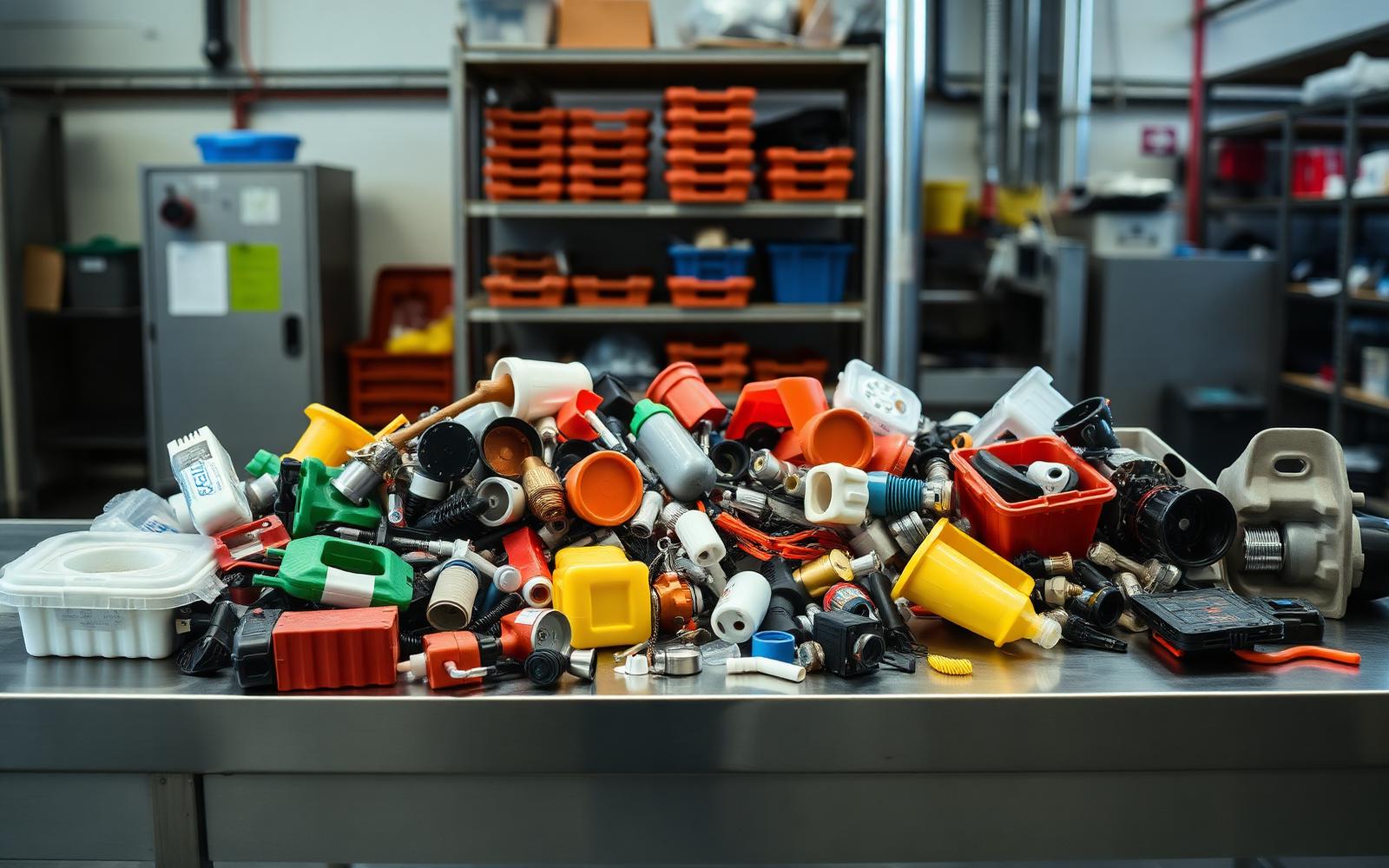
Making new materials starts with a look at city waste. Construction waste like glass, brick, and cement is a major stream. Other streams include plastic, paper, and old tools. You can use Design for Recycling rules to check these streams. They may become new resources for your work.
After you find waste streams, you must find ways to reuse them. New tools now turn waste into fresh materials very fast. Design for Recycling makes sure these materials go back to production. This helps you avoid making any new waste.
Using local waste materials has benefits. It reduces transport effects. It also helps local circular economies. This way, we can effectively close production and consumption loops.
Figure 2. Easy-to-follow design principles (Source –Giz: 06%20Design%20for%20recycling barrierefrei)
Upstream and Downstream Waste Strategies
Waste management strategies fall into two categories:
- Upstream efforts prevent waste. These include Design for Recycling. They influence how things are designed and made.
- Downstream efforts handle waste. They also manage recycling processes.
Early design steps shape the product. They do this before it becomes waste. These steps offer the best chance for a circular cycle. Design for Recycling puts end-of-life needs into early choices. Recyclability includes materials. It also covers collection, sorting, and industrial skills.
Designers should think about a product's waste stream. They should consider if it can be recycled well now.
Benefits of Design for Recycling
- This makes sorting and handling waste easier.
- It creates excellent recycled materials.
- Landfill use is reduced, and environmental leakage decreases.
- A steady supply of secondary raw materials is guaranteed.
Also, Design for Reuse helps Design for Recycling. It gets the most value from materials, energy, and human effort.
Recycling needs to fit existing waste systems. In Germany, packaging can be recycled. It must meet rules for how it is collected and sorted. It also needs to work with factory methods and materials. These rules are part of Design for Recycling principles.
Understanding Recyclability
When we design for recycling, we pick materials and make design choices. These choices help us make things more recyclable.
In a narrow view, recyclability means a large process can turn scrap into new output. A broader view looks at if people actually recycle the materials in real life.
This broader view includes:
- Use separate ways to collect items.
- Sort items well. Do this based on what they are made of.
- Take apart items with many materials easily.
High recyclability needs mono-material streams. It also requires few impurities. These are key rules for Design for Recycling.
The Waste Hierarchy
To maximize environmental benefits, this is the waste hierarchy to follow:
- We focus on reducing and reusing materials. Recycling them is also important. This is supported by our Design for Recycling approach. We also use organic recycling. Energy recovery is another key step.
Material recycling is good. It keeps materials valuable. We prefer this kind of recycling. Design for Recycling helps us do it.
Figure 4.Waste hierarchy
Uniting Two Worlds
Thus, circular design involves two complementary approaches:
- This is design for recycling. It makes sure products can be recycled well.
- This is design from recycling. It uses recycled materials to make new products.
When considering the full lifecycle, two interconnected “worlds” emerge:
- Product Development World.
Designers, engineers, makers, and buyers work together. They make products that look good and work well. Design for Recycling helps these products fit into circular systems.
- Material Recovery World.
Cities, waste collectors, and recyclers get value from old items. This work gets better. It is better when products follow Design for Recycling rules.
Circular Development Levels
Consequently, both design‑for and design‑from recycling operate at two levels:
- This covers the product level. It includes overall assembly, functionality, and aesthetics.
- This covers the part level. It includes individual components, materials, and functions.
Always consider production limits. This is true no matter the level. These limits include how things are made. Also, check if they work with Design for Recycling.
Design for Recycling
This method focuses on product build and how teams collect and sort it later. Parts should be easy to split and free of toxins. Design them to fit current recycling paths. You may then add recycled plastics based on your goals and budget.
Design from Recycling
This method often means you must redesign parts to use recycled plastic. The drop-in method swaps old materials for recycled ones in current products. This helps firms learn without spending too much. You can also design new products using recycled materials from the start.
This method helps in two ways. It shows the worth of circular materials. This supports Design for Recycling.
Conclusion
Recycling is a design method that helps the circular economy. It improves how you make choices during product development. It uses Design for Recycling to fix bad features. It also uses Design from Recycling to check if you can use old materials.
Waste is growing, so circular design is now vital. Design choices fix 80 to 90 percent of recycling outcomes. Design for Recycling is a key way to help the circular economy.
Designers can create truly recyclable products by knowing how waste systems work. Shifting from a linear model to a circular economy depends on material quality. Firms must use a design style focused on recycling. This makes sure all parts can enter the value chain again.
Subscribe
Dive deep into the dynamic world of new product development with LA NPDT Insights Blog.
Waste Management Strategies
Strategy Category | Primary Focus |
|---|---|
Upstream Measures | Prevent waste by influencing product design and manufacturing |
Downstream Measures | Address waste handling and recycling |
Design for Recycling | Integrates end-of-life considerations into early design decisions |
Material choices ranked by real recovery odds
Recycling design fails at the start during material choice. A part that is never recovered adds cost but no green value. This table shows what real recovery streams in North America and Europe process today. Use this list to choose your housing resin.
Material | Recovery reality | Design guidance |
|---|---|---|
Steel and aluminum | Widely recovered, strong scrap value | Prefer for structural parts; avoid bonded dissimilar-metal joints |
PP and HDPE | Accepted in most streams | Good default for housings; keep colorants light and consistent |
PET | Well established for packaging, weaker for durable parts | Avoid multilayer barriers when a monolayer will do |
ABS and PC/ABS | Recovered mainly through commercial electronics streams | Mark clearly, avoid painted or chrome finishes |
Glass-filled and mineral-filled compounds | Downcycled at best | Use only where stiffness genuinely requires it |
Multi-material laminates and overmolds | Effectively unrecoverable | Replace with mechanical fasteners or single-material living hinges |
Thermoset elastomers | Not recyclable in practice | Substitute TPE where duty cycle permits |
Disassembly review checklist
- Disassemble the main material groups in under two minutes. Use only standard tools for this. Period.
- Limit fastener types to two. Do not mix screws, adhesive, and snap fits on one joint.
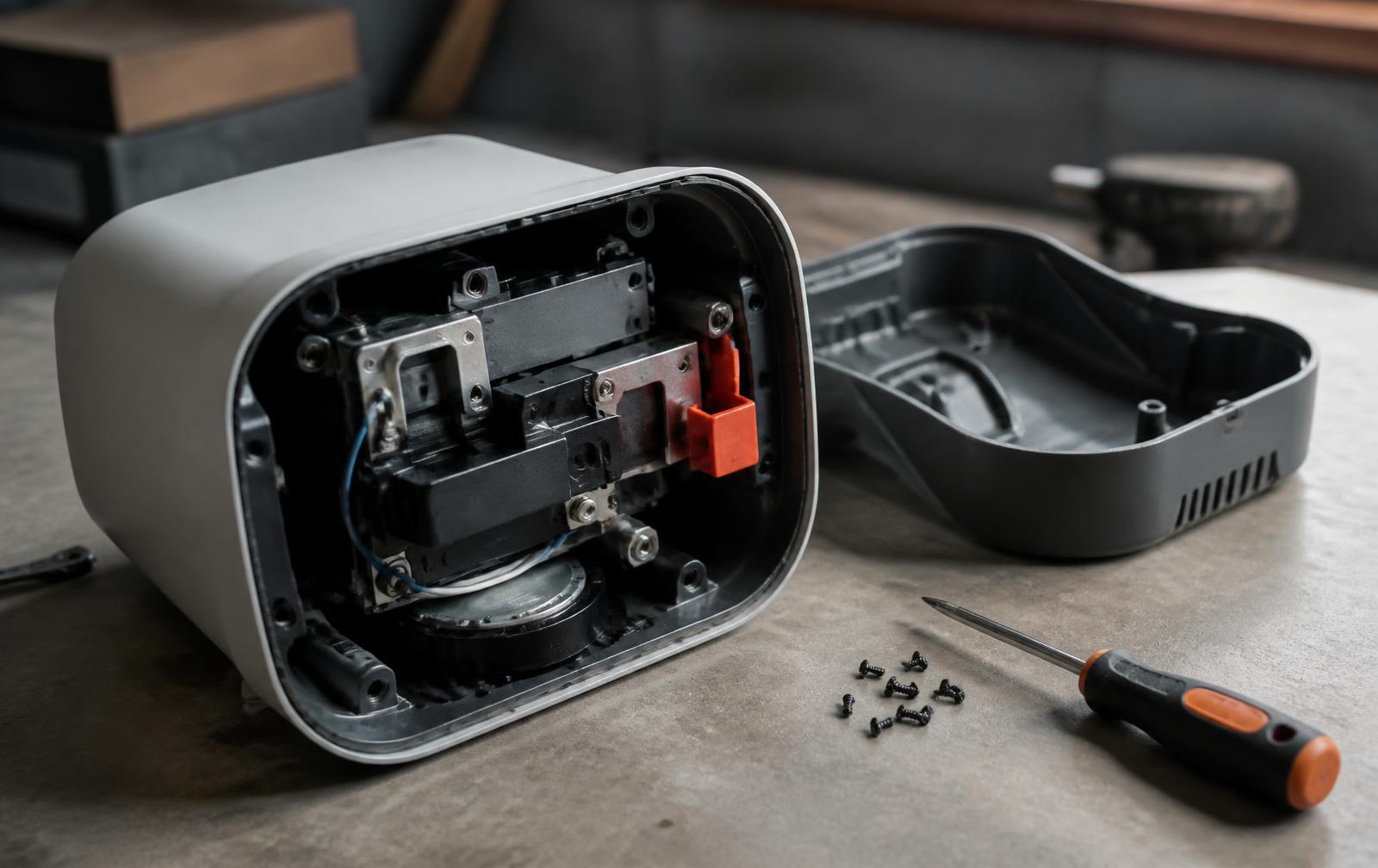
- If present, the battery must be removable. No heat should be needed. Do not damage the housing.
- Keep adhesives away from connections between different materials. Period.
- Mold resin identification codes into parts over 20 grams. Place them where visible after opening.
- Avoid painted, plated, or in-mold-decorated surfaces. This applies to parts for closed-loop recovery.
- Document the planned teardown steps. Ship this information with the service manual.
- Confirm the teardown steps with a physical test. Time this test before the design is final.
A timed teardown during the prototype stage adds the most value. It turns a vague goal into a list of joints to fix. These changes stay cheap early in the process.
Regulatory pressure to plan for
- Producer responsibility fees are increasing. They now depend on how recyclable your packaging and products are.
- New right-to-repair rules are emerging. These encourage removable batteries, available parts, and easy, non-destructive opening.
- Recycled content goals require certified post-consumer materials. This impacts color and tolerance capabilities.
- Digital product passports are becoming standard. This means material details must be structured data, not just a PDF.
- Substance restriction lists update rapidly. Faster than tooling cycles, in fact. Always have an alternate resin approved and ready.
It is cheaper to design for these rules early. Retrofitting costs more. For example, changing a housing to remove an overmold costs a tooling revision. This happens before launch. Then, a full requalification is needed afterward.
Building the business case for end-of-life design
End-of-life plans are easier to fund as cost avoidance. This works better than calling it a green plan. Three points usually make the case.
First, producer fees and packaging levies are rising in many markets. A design that is easy to recover cuts a recurring cost. Second, single-material builds and fewer fastener types cut labor.
They also lower repair time. This helps unit costs and service margins right away. Third, stores now require recycled content in contracts.
Products must handle resin variation to avoid late, costly changes. Put these three facts in your cost sheet. The talk then stops being about ideas.
These design changes are usually small. Remove an overmold or use one screw size. Move a label from an in-mold decoration to a tag.
Choose a resin your largest market can process. These steps do not need new tools and pass any cost review.

Frequently asked questions
What is Design for Recycling?
Design for Recycling adds end-of-life plans to product growth. It guides material choices and assembly methods. This makes products easy to take apart and recycle. This method stops waste by changing design steps before a product is thrown away.
How does Design for Recycling benefit a circular economy?
Design for Recycling helps products move to a circular economy. It makes sorting easy. This gives high-quality materials. This method cuts down on landfill waste. It also helps give a steady supply of raw materials for making new things.
What is the difference between Design for Recycling and Design from Recycling?
Design for Recycling makes sure products can be recycled. It focuses on material choice and product shape to allow future reuse. Design from Recycling uses recycled materials in new products. Both paths work together for circular design. They link product builds with ways to get materials back.
What factors determine a product's recyclability?
A factory must be able to turn scrap into new items for something to be recyclable. The items also need to be recycled in the real world. This means they must be picked up separately and sorted well. Multi-part items should be easy to take apart. High recyclability often requires a single type of material and little waste.
How does Design for Recycling connect to the waste hierarchy?
Design for Recycling mainly aids material recycling. This is a key step in the waste list after reducing and reusing. It helps keep the most material value during the recycling stage. By guiding design and material choices, this method makes sure products work well for material recycling.
Filed under:EducationUncategorized
Tagged:2025
Services related to this guide
- Product design servicesIndustrial design and CAD taken all the way to manufacturable files.
- Best industrial design firmsWhich studios take an idea from form to manufacturable hardware, and what they charge.
- Prototype designLooks-like, works-like or pre-production: what each proves and what it costs.
- Product development examplesReal projects we designed, prototyped and shipped.