Product Engineering Company: What They Do, What They Cost, How to Pick One
A product engineering company turns a product idea into a manufacturable design. Here is the full scope, the cost of each stage, and how to tell a real team from a sales deck.
April 23, 20266 min read

Written by Konstantin Dolgan, Ph.D., NPDP
Founder & CEO, Product Development Engineer
Published April 23, 2026Updated September 2, 2026
A product engineering company is the team that converts an idea, a sketch or a rough prototype into a design a factory can build repeatably at a known cost. That is a narrower promise than "innovation partner" and a much more useful one. The work is measurable: released CAD, schematics, firmware, a bill of materials, test data and production files. If a prospective partner cannot describe their deliverables in those terms, they are selling something else.

What a product engineering company actually does
- Requirements and architecture. Translating "it should do X" into numbers a designer can hit: loads, duty cycle, battery life, ingress protection, environment, cost target, applicable standards.
- Mechanical design. Parametric CAD, tolerance stacks, material and process selection, structural and thermal analysis, and a released drawing package.
- Electronics. Schematic capture, PCB layout, component selection with second sources, power budgeting, EMC-aware routing and bring-up of the first boards.
- Embedded firmware. Drivers, control loops, connectivity, secure update paths, and the diagnostics that make field failures explainable.
- Design for manufacturing. Re-working the design around the chosen process — moulding, casting, sheet metal, machining — plus assembly sequence and fixturing.
- Test and validation. A test plan tied to the requirements, environmental and life testing, and the evidence pack a certification body or a customer will ask for.
What it costs, stage by stage
Stage | Typical duration | Typical cost | Deliverable |
|---|---|---|---|
Architecture and requirements | 2-5 weeks | $8k-$25k | Specification, risk register, cost model |
Detailed design | 8-20 weeks | $60k-$180k | Released CAD, schematics, firmware baseline |
Prototype rounds | 3-8 weeks each | $15k-$60k | Working units and test results |
Design for manufacturing | 4-10 weeks | $25k-$80k | Production drawings, BOM, assembly instructions |
Validation and certification support | 6-16 weeks | $20k-$120k | Test reports and submission package |
Simple mechanical products sit near the bottom of every range. Connected devices with custom electronics, an app and regulated testing sit above the top. Our prototype cost calculator gives a first estimate for the build phases, and the consulting page covers phased engagements.
Product engineering company vs design studio vs contract manufacturer
Partner type | Strongest at | Weakest at | Best used when |
|---|---|---|---|
Design studio | Form, brand, user experience | Tolerances, electronics, production reality | The product is defined and needs to look and feel right |
Product engineering company | Making it work and making it buildable | Volume production capacity | You need a design released to manufacturing |
Contract manufacturer | Building at volume | Original design, unbiased cost decisions | The design is stable and you are buying units |
How to evaluate one before you sign
- Ask for products you can buy today. Renderings prove nothing. Shipped products prove a team survived tooling, certification and yield.
- Ask who does the work. The engineers named in the proposal should be the ones in your reviews. Bait-and-switch staffing is the most common complaint in this industry.
- Confirm you own the native files. Not STEP exports — the editable CAD, schematics and source. Otherwise your next change is a captive purchase.
- Check that unit cost is tracked from week one. A design that hits every requirement and misses the cost target is a failed project.
- Insist on phase gates. A fixed-scope first phase with a real deliverable lets both sides exit cheaply if the fit is wrong.
Usage data belongs in this process too. Instrumented prototypes and early field units tell you which features are used, which never are, and where the product is being abused — the cheapest requirements input available before design for manufacturing locks the design.
Engagement models and what each really costs
Product engineering firms sell time in three shapes, and the shape matters more than the hourly rate. Fixed-price work prices your uncertainty into the quote; time-and-materials moves that risk to you; a dedicated team is a staffing arrangement wearing a services contract.
Model | Typical structure | Blended rate / cost | Fits when |
|---|---|---|---|
Fixed-price phase | Defined scope, milestone payments | 10–30% premium built in | Scope is genuinely stable |
Time and materials | Monthly invoicing against hours | $110–$220/hr US | Scope will move, and you can steer weekly |
Dedicated team | Named engineers, monthly retainer | $18k–$45k per engineer-month | 12+ months of continuous work |
Advisory / fractional | Senior review, no execution | $4k–$15k per month | You have a team but no hardware experience |
Offshore delivery | Remote team, local coordinator | $35–$90/hr | Well-specified, low-ambiguity work |
Diligence questions worth asking before you sign
- Who exactly works on this — names, seniority, allocation percentage — and what happens when they are pulled onto another account?
- Show me a design history file or engineering release package from a shipped product, redacted as needed.
- How do you handle change orders, and what does a typical program's change history look like?
- Who owns the IP, background IP and any tooling paid for under this contract?
- Which manufacturing partners do you work with, and do you take a margin on their work?
- What does your handoff package contain, and can another firm pick it up cold?
Red flags
- A fixed price for a program with undefined requirements — the money comes back as change orders.
- No manufacturing engineer in the proposed team for a product that will be molded or assembled at volume.
- Portfolio images that are all renderings and no production units.
- Reluctance to name the individuals doing the work.
- Ambiguous IP language, or tooling ownership left unstated.
- No stated verification plan — testing described as 'we will validate as we go'.
What a healthy program looks like month to month
Weekly working sessions with open questions listed in advance, a shared issue log that both sides edit, a phase gate with a named approver at each stage transition, and monthly cost tracking against the original estimate with variances explained. If reporting is a slide deck rather than an issue log, you are buying reassurance rather than engineering.
If you are comparing firms, our consulting and development services pages spell out how we scope, staff and hand off programs.
Frequently asked questions
What does a product engineering company do?
It takes a product concept through requirements, mechanical and electronic design, firmware, prototyping, design for manufacturing and validation, ending with a released package a factory can build: CAD, drawings, schematics, bill of materials, assembly instructions and test reports.
How much does it cost to hire a product engineering company?
Most engagements start with an $8k-$25k architecture phase. A full path from concept to production-ready design commonly runs $120k-$400k for a straightforward product and considerably more for connected or regulated devices. Hourly rates in the US typically fall between $110 and $200 depending on discipline.
Is a product engineering company different from a product design firm?
Yes. Design firms own appearance, ergonomics and user experience. Engineering companies own function, tolerances, electronics, firmware and manufacturability. Some firms do both; when they do not, the handoff between them is where most schedule slips originate.
How product engineering companies structure an engagement
A credible product engineering company sells phases, not hours. Discovery converts an idea into a requirements document and a risk register. Architecture picks the technologies and proves the risky ones on a bench before any enclosure exists.
Detailed design produces CAD, schematics, firmware and a bill of materials. Validation runs the tests that the requirements demanded. Transfer hands a documented package to a factory and stays through pilot production.
The reason the phasing matters is cash. Each gate is a place where you can stop, change direction or change vendors with a usable artifact in hand. Engagements sold as a single lump sum with one delivery date remove that option and correlate strongly with programs that quietly double in cost.
Phase costs for a connected consumer device
Phase | Typical cost | Duration | Gate deliverable |
|---|---|---|---|
Discovery | $6k-$25k | 3-5 weeks | Requirements and risk register |
Architecture and de-risking | $15k-$60k | 4-10 weeks | Breadboard proving hard functions |
Detailed design | $60k-$180k | 10-20 weeks | CAD, schematics, firmware, BOM |
Validation and compliance | $25k-$90k | 6-14 weeks | Test reports, EMC and safety files |
Production transfer | $15k-$50k | 4-10 weeks | Golden sample, work instructions |
Mechanical-only products typically run 40-60% of these figures. Products with a regulated pathway - medical, automotive, aviation - run 1.5x to 4x because documentation and testing dominate.
What to verify before you sign
- A named requirements document as deliverable one, with acceptance criteria you can read.
- In-house or contracted test capability: chamber, EMC pre-scan, drop and life testing.
- Firmware and electrical work under the same roof as mechanical, or a written interface plan if not.
- A risk register that is updated weekly and visible to you.
- Change-order policy in writing, with a threshold below which small changes are absorbed.
- References from a program that reached mass production, not just a prototype.
- Clear assignment of IP and delivery of native source files at each gate.
Key takeaways
- Buy phases with gates so you keep the option to stop or switch.
- De-risk the hard function on a bench before spending money on industrial design.
- Regulated products cost multiples of consumer products for documentation, not engineering hours.
Need engineering on your product?
Send us the concept, the constraints and the cost target. We will come back with a phased scope and a real number.
What a product engineering company does with behaviour data
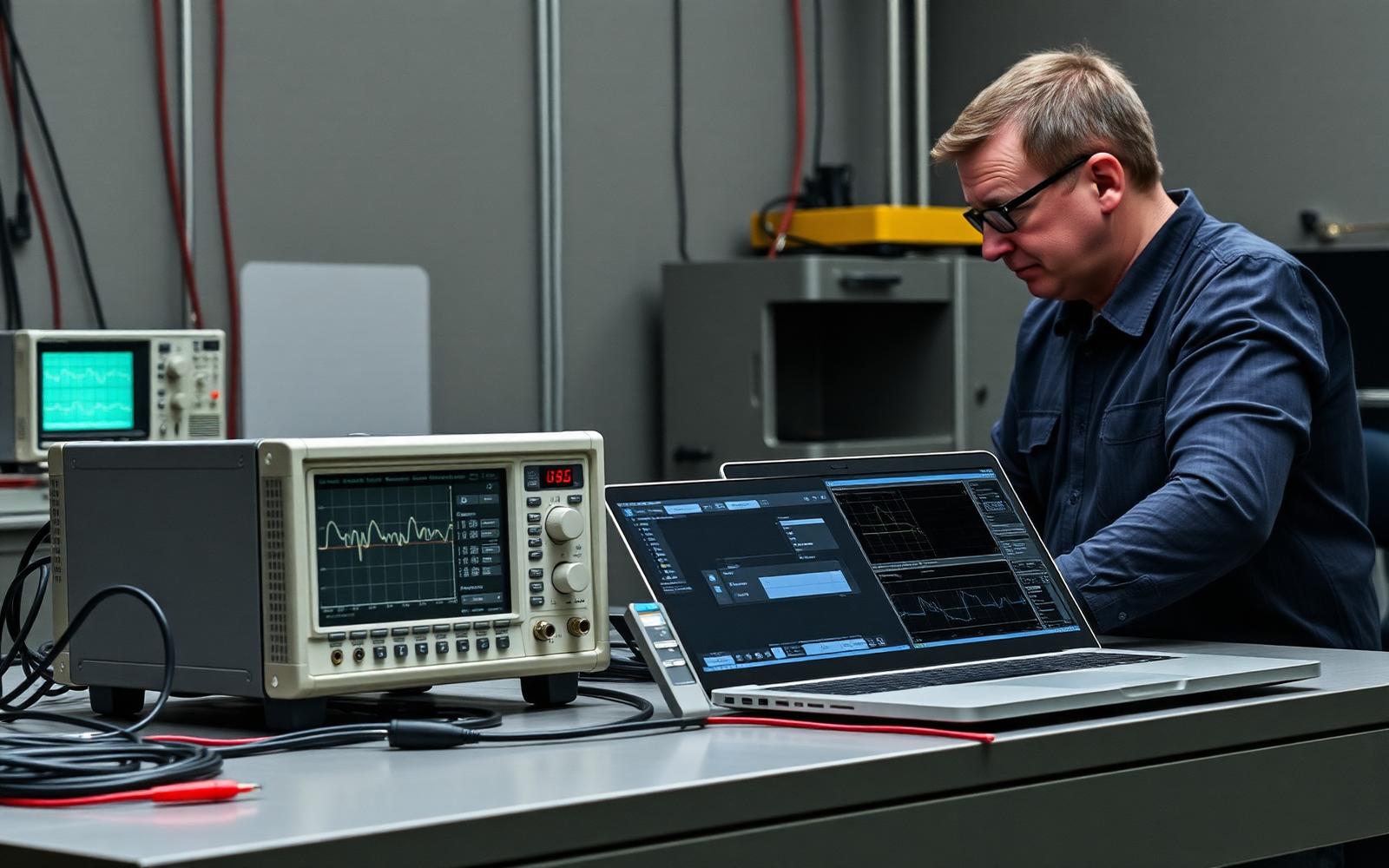
Instrumented products generate far more data than most teams act on. The discipline is to decide, before launch, which three questions the telemetry exists to answer: how the product is actually used, where it degrades, and which failure modes precede a return.
A product engineering company earns its fee by turning those streams into engineering change orders rather than dashboards. That means agreeing on sampling rates, storage cost per device per year, and a privacy posture that survives legal review before a single sensor ships.
- Instrument the hypothesis, not the device. Log what would change a design decision, then stop.
- Tie telemetry to returns. Pair field data with RMA teardowns to confirm the failure story.
- Budget the bytes. Cellular payloads and cloud retention are recurring COGS, not a fixed cost.
- Anonymise at the edge. Strip identifiers on-device so the data pipeline stays low-risk.
- Close the loop quarterly. Field insight that never reaches a drawing is an expense, not an asset.
Work with LA NPDT: if you are moving from here to execution, start with our product development consulting or talk to us about end-to-end product development.
Filed under:EducationUncategorized
Tagged:2025
Services related to this guide
- Product design servicesIndustrial design and CAD taken all the way to manufacturable files.
- Rapid prototypingWorking prototypes in days, from 3D printing to vacuum casting.
- Electronic design servicesSchematic, PCB layout, firmware and bring-up, through to production handoff.
- Product development examplesReal projects we designed, prototyped and shipped.