Mastering the Investor Pitch: Essential Steps to Make Your Product Concept Stand Out
Learn how to deliver a compelling investor pitch that stands out. Our guide covers essential steps—from defining the problem to showcasing your team's expertise—to help secure investor confidence and bring your product to life.
October 7, 20247 min read

Written by Yelena Rymbayeva, MPhil Communication & Media Studies, BTech Quality Control
Marketing & Product Leader, Technology Commercialization
Published October 7, 2024Updated September 2, 2026
In today’s world of startups and innovative solutions, attracting investors is a crucial step in launching and scaling any product. But to grab an investor’s attention, you need a pitch that not only tells your product’s story but also shows its potential. And a key part of that pitch is product design—how your product looks, how it’s used, and how well it meets the needs of your target audience.
1. Clearly define the problem your product solves
Before showing your concept to an investor, make sure you clearly articulate the problem you’re solving. Investors aren’t just looking for something that looks cool—they’re looking for solutions that can either disrupt the market or create a new product category.
Here are a few questions to help you hone in on the problem:
- What’s the issue?
- Who does it affect?
- Why does solving it matter?
Answering these questions will not only help investors understand the value of your product but also highlight the importance of a professionalproduct design, which ensures that the problem is solved in a user-friendly and intuitive way.
2. Create a visually compelling concept
Investors don’t just make decisions based on numbers—they rely heavily on what they see. Your product needs to look professional, even at the concept stage. This is where a strongproduct design servicecomes in. A well-executed design can not only impress investors but also show them that you’ve thought about how the product will look and function in real life.
Product designplays several key roles in presenting your concept:
- Attractiveness:The design should grab attention and make a strong first impression.
- Clarity:Investors should immediately understand how your product works, thanks to an intuitive interface and clear user flows.
- Value:The visual elements should highlight what makes your product unique, showcasing its value and competitive edge.
3. Show the path from idea to finished product
Investors don’t just want to see an idea—they need to see a clear path from concept to finished product. That means you’ll need to show how you plan to execute.Product developmentstarts with a thoughtful design, and this is exactly what you should highlight during your investor meeting.
Your pitch should cover these key points:
- Market and user research:Show that you understand your market and are building a product that meets a genuine demand.
- Design decisions:Present how the product will look, how users will interact with it, and what problems it will solve.
- Development stages:Lay out the stages from prototype to launch, including timelines, budget, and key metrics.
A solidproduct designplan at every step shows investors that you’re serious about development and that you intend to deliver a high-quality product.
4. Calculate costs and return on investment
Investors are always concerned about how much they need to invest and when they’ll see a return. Your concept should include a breakdown of development costs and projections for revenue and profitability. Here’s where professional product design also makes a big difference: a well-designed product has a better chance of succeeding in the market, which ties directly to ROI.
5. Leverage prototypes and visual mockups
Thanks to modern technology, you can create interactive prototypes that allow investors to experience your product even before it’s fully developed. Whether it’s through animations, 3D models, or physical prototypes, being able to showcase a tangible version of your idea is a game-changer.
A professionalproduct design serviceprovided by a company specializing inproduct developmentincludes creating such prototypes. This allows investors to actually see your product in action, understand its functionality, and visualize how it will resonate with end users.
6. Highlight your team and expertise
A great product is built not just on a solid idea but on the team behind it. It’s important to present the experts who will bring the product to life. Here, theproduct design serviceplays a crucial role.
The more experienced and skilled your team is, the more confidence investors will have in your project. They need to see that you’ve got the right people who know how to execute design and follow through to the final product launch.
Conclusion: Why Product Design Is the Key to Success
Investors are looking for products that not only solve problems but also look like they’re ready to become part of users’ daily lives. Companies specializing in product development play a vital role here, offering product design services that help bring successful products to market.
When you’re selling a product design service, you’re not just selling a pretty picture—you’re offering a process that significantly boosts your chances of market success. If your design inspires confidence and your pitch clearly explains how the product solves a problem, you’ll be more likely to secure not only funding but also strategic backing for future growth.
Turn your concept into a reality with professional support—and watch how investors get on board!
Subscribe
Dive deep into the dynamic world of new product development with LA NPDT Insights Blog.
Key Elements for an Effective Investor Product Pitch
Pitch Element | Purpose in Pitch |
|---|---|
Problem Definition | Shows market need, potential for disruption |
Visually Compelling Concept | Grabs attention, clarifies functionality, highlights value |
Development Path | Outlines execution from idea to launch |
Costs & ROI | Addresses investment needs and profitability projections |
Prototypes & Mockups | Allows investors to experience product functionality |
Team & Expertise | Builds confidence in execution capabilities |
What hardware investors ask that software investors do not
Pitching a physical product means answering a second set of questions on top of market and team. Unit economics, tooling capital and lead times are where hardware pitches usually fall apart, and they fall apart in diligence rather than in the room — so put the numbers on the slides.

Question | What they are testing | What a good answer contains |
|---|---|---|
What is your landed unit cost? | Whether margin exists | BOM, assembly, freight, duty — at a stated volume |
What does tooling cost and when is it spent? | Capital timing | Tool list, cost, and the milestone that triggers it |
What is your lead time from PO to delivery? | Working capital cycle | Component lead times and MOQ constraints |
What certifications apply? | Hidden schedule risk | Named standards, lab quotes, timelines |
What has been physically built? | Technical risk retired | Prototype photos and test results, not renders |
Who manufactures it? | Execution credibility | Named partner or shortlist with quotes |
The slide order that works for a physical product
- Problem, with evidence from real users rather than a market-size chart.
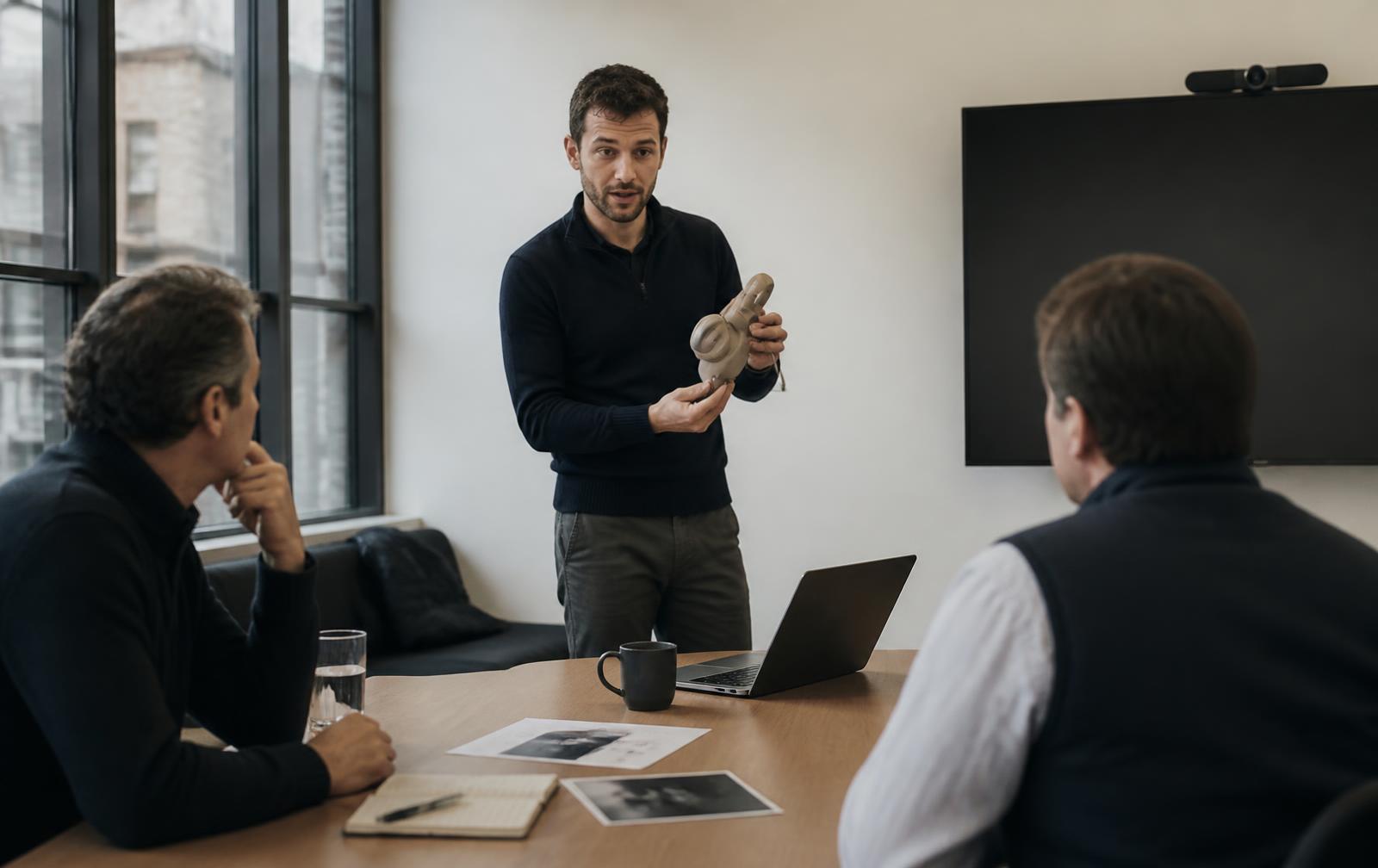
- The product — a photo of the actual prototype in a hand, early.
- Why now: a cost, component or regulatory change that makes this possible today.
- Traction: preorders, LOIs, pilot customers, or test results if pre-revenue.
- Unit economics: landed cost, wholesale, retail, gross margin at two volumes.
- Path to production: tooling plan, manufacturing partner, timeline with gates.
- Team, with the hardware execution gap named and how you cover it.
- The ask, tied to specific milestones the money buys.
Prototype strategy for the pitch itself
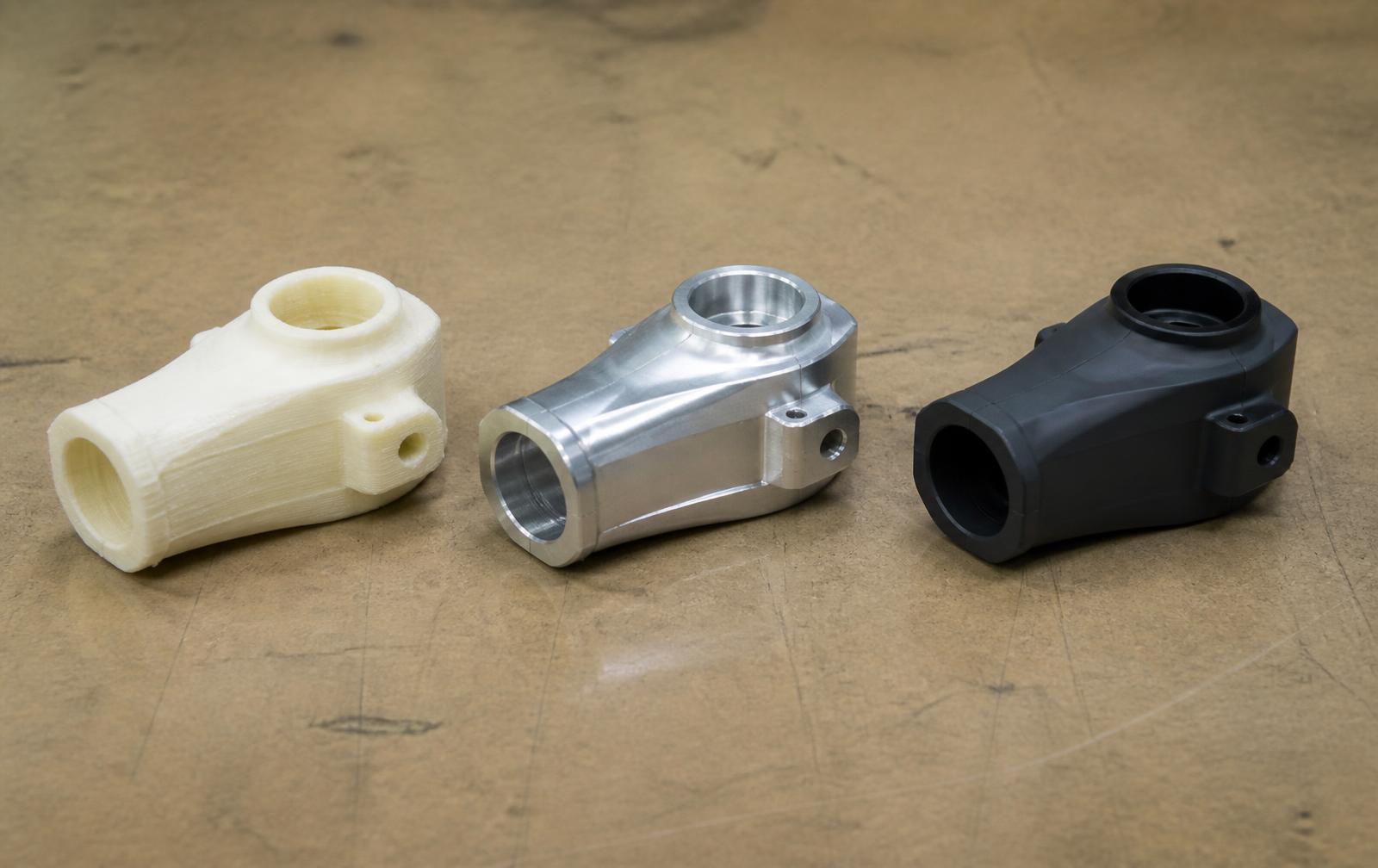
A working prototype changes the conversation more than any slide, but it does not have to be the production design. Investors read a physical object as proof that the team can execute; a fragile printed model with a rehearsed demo often outperforms a polished render. If the working version is ugly, bring both: the functional rig that proves it works and an appearance model that shows where it is going.
Numbers to have ready when they are not on a slide
Metric | Why it comes up |
|---|---|
Gross margin at 1k, 10k and 50k units | Tests whether you understand volume breaks |
Tooling and NRE total to production | Sizes the round |
Cash conversion cycle in days | Hardware dies of working capital, not demand |
Customer acquisition cost and channel plan | Retail, DTC and distribution have different math |
Warranty and return rate assumption | Signals whether reliability was considered |
Common reasons hardware pitches stall
- Cost estimates built from prototype quotes rather than volume quotes.
- No named manufacturing partner and no evidence anyone has quoted the design.
- Certification treated as a line item at the end instead of a schedule driver.
- A roadmap of five products before the first one is tooled.
- Renderings presented as if they were built hardware.
We help founders build the engineering and cost case behind a raise — see product development consulting and rapid prototyping.
Frequently asked questions
What is the primary role of product design in an investor pitch?
Product design helps make a strong first impression on investors. It visually demonstrates how a product looks and functions, clarifies its features, and showcases its unique value. A professional design indicates that developers have considered the product's real-world appearance and user interaction, which builds investor confidence.
How does articulating the problem help secure investment for a product concept?
Clearly defining the problem your product solves is crucial because investors seek solutions that can disrupt markets or create new product categories. Answering who the issue affects and why solving it matters highlights the product's value. This also underscores the importance of a professional product design, ensuring a user-friendly solution.
Why are prototypes and visual mockups important for an investor pitch?
Prototypes and visual mockups allow investors to experience the product before full development. These tangible versions, which can include animations, 3D models, or physical prototypes, help investors understand the product's functionality and visualize its appeal to end users. This can be a game-changer for showcasing an idea.
What key information should a product pitch include regarding its development path?
A product pitch should show a clear path from concept to finished product. This includes demonstrating market and user research, presenting design decisions for user interaction, and outlining development stages. It should cover prototypes to launch, including timelines, budgets, and key metrics. This demonstrates seriousness about high-quality product delivery.
Sources and standards
- USPTO — patent basics — Official guidance on provisional and non-provisional filings for new products.
- NIST Manufacturing Extension Partnership — Federal program supporting US small and mid-size manufacturers.
- ISO 9001 quality management — The quality-system standard most contract manufacturers are audited against.
Preparing to pitch a physical product and need the cost and manufacturing case to hold up?
How to Pitch to Investors When You Are Selling Hardware
Hardware pitches are judged on a different axis than software pitches. The investor is underwriting tooling, inventory, lead times, and the possibility that a physical unit fails in a customer home. What earns a second meeting is evidence that you understand those risks in specific, numerical terms and have a plan for retiring them in a defined order.
The Slide Sequence That Survives Scrutiny
Bring the Prototype, and Know Its Limits
A working prototype in the room changes the conversation more than any slide. It also invites hard questions, so be explicit about what stage it represents: looks-like, works-like, or production-intent. Claiming production readiness for a 3D-printed appearance model is the fastest way to lose credibility, while candidly stating that the works-like unit validates the mechanism and the next build validates cost usually increases it.
Numbers You Must Be Able to Defend Cold
- Landed unit cost at your first production volume and at ten times that volume.
- Tooling investment required and its amortization assumption.
- Lead time from purchase order to delivered inventory.
- Gross margin at each channel price point, after fees and freight.
- Cash required to reach the next de-risking milestone, with a named milestone.
- Failure rate assumption and the warranty reserve derived from it.
Answering the Hard Questions
Expect to be asked what happens if a competitor copies the design, why the incumbent has not already solved this, and what breaks first at scale. The correct answer is never a dismissal. Name the risk, quantify it, and describe the evidence you will gather next. Investors are not looking for founders without risk; they are looking for founders who can see risk clearly enough to price and sequence it.
After the Meeting
- Send the deck, a short summary, and answers to any question you could not answer live within 24 hours.
- Keep a monthly update list including investors who passed; many first checks come from second conversations.
- Report against the milestones you named, including the ones you missed and why.
- Track which objections recur across meetings and fix the underlying weakness, not the slide.
Consistency between meetings does more for a raise than polish within one. A founder who reports honestly for six months has demonstrated the exact behavior an investor is betting on.
Filed under:EducationUncategorized
Tagged:2024
Services related to this guide
- Product design servicesIndustrial design and CAD taken all the way to manufacturable files.
- Best industrial design firmsWhich studios take an idea from form to manufacturable hardware, and what they charge.
- Prototype designLooks-like, works-like or pre-production: what each proves and what it costs.
- Product development examplesReal projects we designed, prototyped and shipped.