Medical device prototyping: the steps, the cost and the paperwork
What it takes to prototype a Class I or Class II device, how design controls change the work, and realistic cost and timing before you spend anything.
August 29, 20262 min read

Written by Konstantin Dolgan, Ph.D., NPDP
Founder & CEO, Product Development Engineer
Published August 29, 2026
A medical device prototype costs roughly $15,000 to $80,000 to reach a testable unit, and the difference from consumer hardware is not the engineering, it is the documentation. Every design decision has to be traceable to a requirement, and every requirement has to be verified. Teams that skip that early usually rebuild the whole file later.
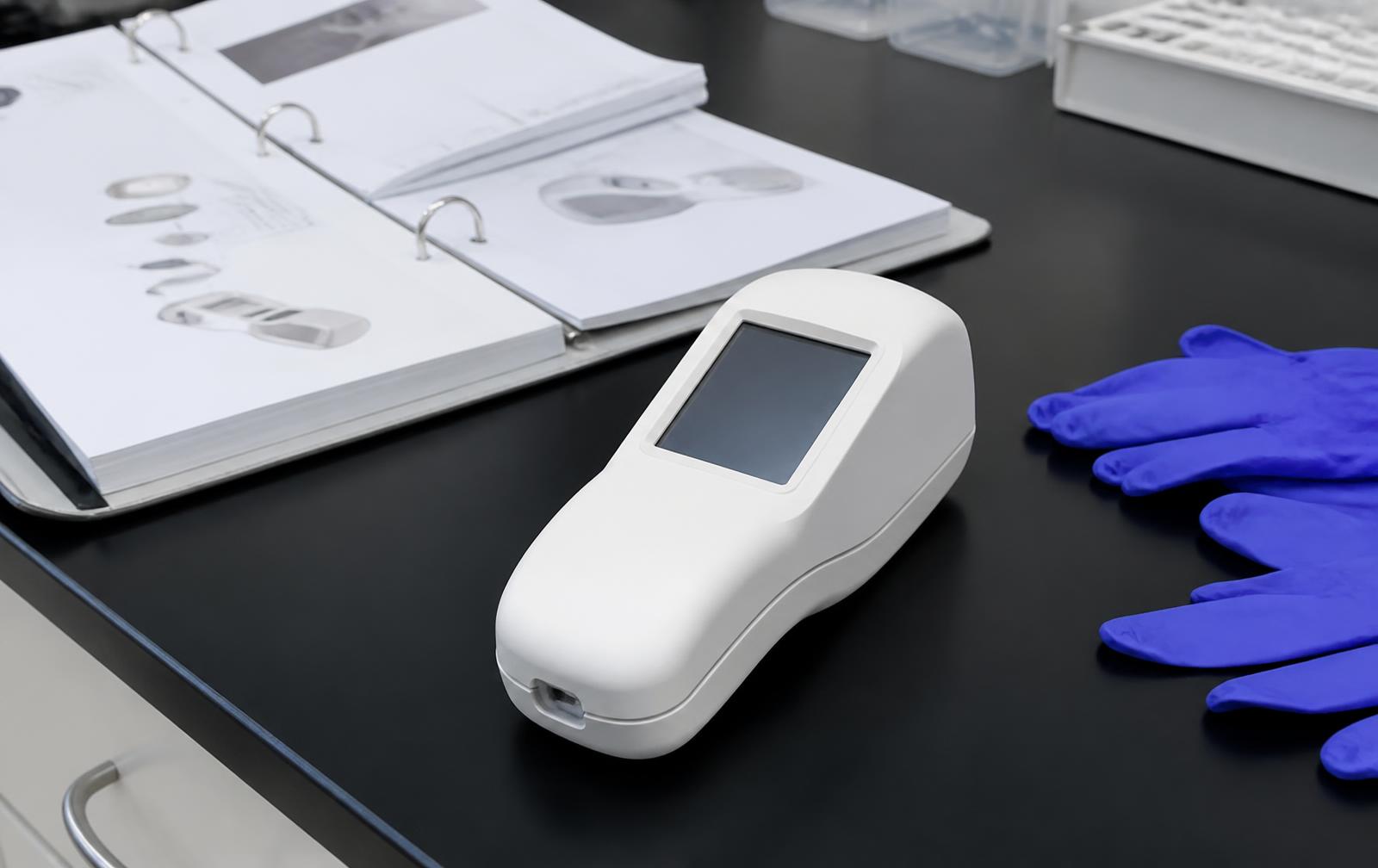
What are the stages of a medical device prototype?
Stage | Purpose | Typical time | Typical cost |
|---|---|---|---|
Proof of principle | Show the core mechanism or measurement works at all | 2 - 6 weeks | $5,000 - $20,000 |
Form study | Size, grip, controls, user handling | 2 - 4 weeks | $3,000 - $12,000 |
Alpha, works-like and looks-like | One unit that does both, for internal testing | 6 - 12 weeks | $20,000 - $70,000 |
Verification build | 10 - 30 units built to a controlled process for testing | 8 - 16 weeks | $40,000 - $150,000 |
How do design controls change prototyping?
Under 21 CFR 820.30 and ISO 13485, a device needs user needs, design inputs, design outputs, verification and validation, all linked. In practice that means every prototype iteration should answer a written question rather than satisfy curiosity. You are allowed to explore freely before the design history file opens, but the moment you intend to sell the device, the record has to explain how you got here.
- Write user needs before the first prototype, even in one page.
- Keep a dated build log for every unit, with what changed and why.
- Record what you tested and what the result was, including failures.
- Choose biocompatible materials early if the device contacts skin or tissue, since ISO 10993 testing is slow.
- Decide the class and pathway before tooling, since 510(k) predicate choice can change requirements.
Class I versus Class II: what changes
Class I (most low risk devices) | Class II (most 510(k) devices) | |
|---|---|---|
Typical pathway | Often exempt, registration and listing | 510(k) premarket notification |
Design controls | Required for some, good practice for all | Required |
Testing burden | Basic safety and labeling | Bench verification, biocompatibility, sometimes clinical |
Time to market | 6 - 12 months | 12 - 30 months |
Prototype budget | $15,000 - $60,000 | $60,000 - $300,000 |
Who should build a medical prototype?
A general prototyping shop can make the parts. What they usually cannot supply is the requirement traceability, the risk analysis under ISO 14971, and the judgment about which shortcuts will and will not survive a submission. If your device is Class II, engage someone who has been through the process before you commit to a mechanism.
Frequently asked questions
How much does a medical device prototype cost?
Early looks-like models commonly run a few thousand dollars, functional works-like prototypes run roughly $15,000 to $60,000, and a design-controlled, verification-ready build runs higher depending on class, electronics and sterilization needs.
Do I need design controls for a first prototype?
Not for the very first sketch model, but you should start writing user needs and design inputs early. Retrofitting a design history file after the fact is far more expensive than keeping records from the first functional build.
Can a general prototype shop build a medical device?
It can make the parts. What it usually cannot supply is biocompatible material selection, documentation traceability and a design history file, which is what an FDA submission actually asks for.
Where LA NPDT fits?
We design and build medical device prototypes with design-control documentation from the first sketch, and hand off a package a regulatory consultant can work with. See medical device prototyping , medical device product development , or our medical equipment case study . Proof from our own work: LEIA is a body-contact product where material choice and validation drove the schedule as much as the geometry did.
Services related to this guide
- Medical device design companiesWhich firms fit Class I, II and III — and what design controls really cost.
- Product design servicesIndustrial design and CAD taken all the way to manufacturable files.
- Rapid prototypingWorking prototypes in days, from 3D printing to vacuum casting.
- Product development examplesReal projects we designed, prototyped and shipped.