Food, beverage and kitchen product development services
What does food and beverage product development cover?
CPG product development for food and beverage brands: the containers, dispensers, kitchen tools and food-contact equipment around the product, engineered for food-safe materials, retail shelves and real production volumes.
Food and beverage product development covers the hardware side of CPG: containers, closures, dispensers, kitchen tools and food-contact equipment. Everything that touches food must use FDA-compliant materials under 21 CFR 174-179, and closure design drives both leak performance and tooling cost more than any other decision.
Food and beverage product development, on the hardware side, is the design and engineering of everything that touches, holds, dispenses, prepares or presents the food: bottles and closures, kitchen and serving tools, food-contact machinery, and the retail packaging the product ships in.
We are not a food scientist and we do not formulate recipes. We build the physical product around the formula - and for most CPG brands that hardware is where the margin, the shelf presence and the manufacturing risk actually live.
The distinction matters because the two disciplines constrain each other. A viscosity decision changes a dispenser. A hot-fill process rules out a resin. A shelf-life claim decides whether a closure needs a liner.

Certified B Corp
Independently verified standards of social and environmental performance.

FDA-registered facility
Registered for device work, with the process discipline that comes with it.
- years developing physical products
- 10+years developing physical products
- projects taken from idea to build
- 1,000+projects taken from idea to build
- design, prototyping and short-run production
- In-housedesign, prototyping and short-run production
Food-contact hardware, from a lunchbox to a pizza robot
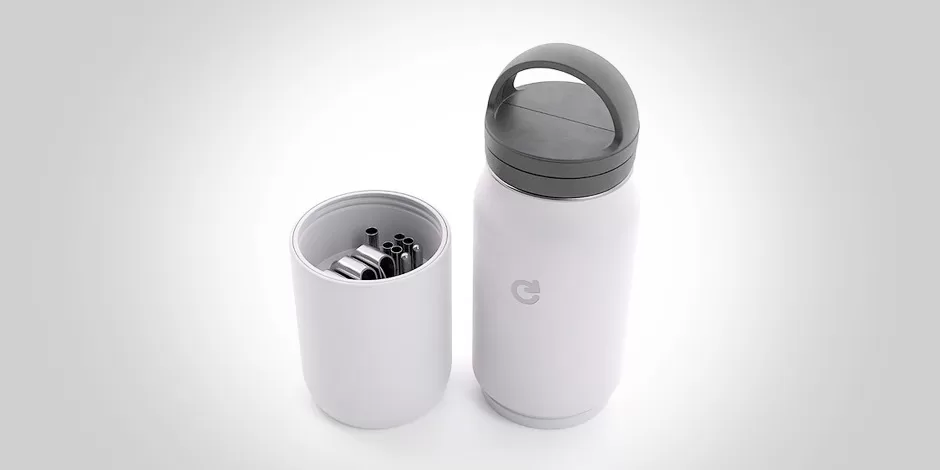
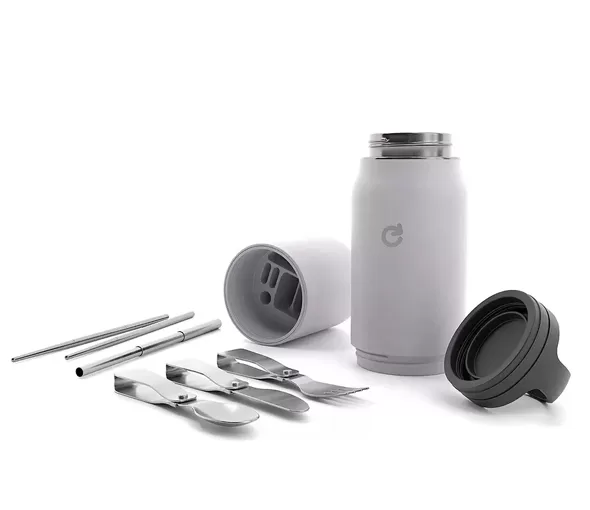
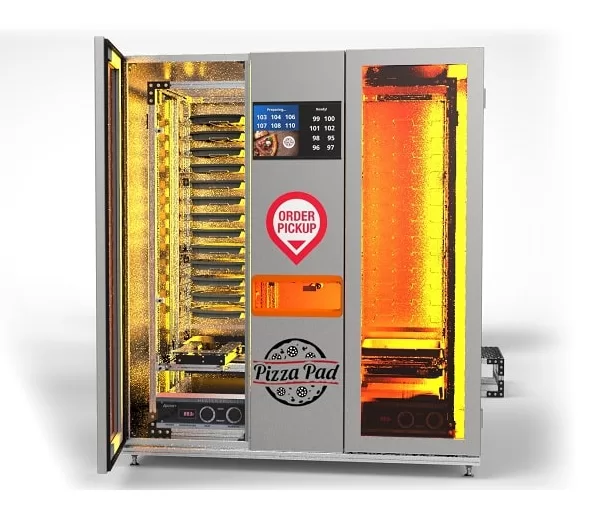
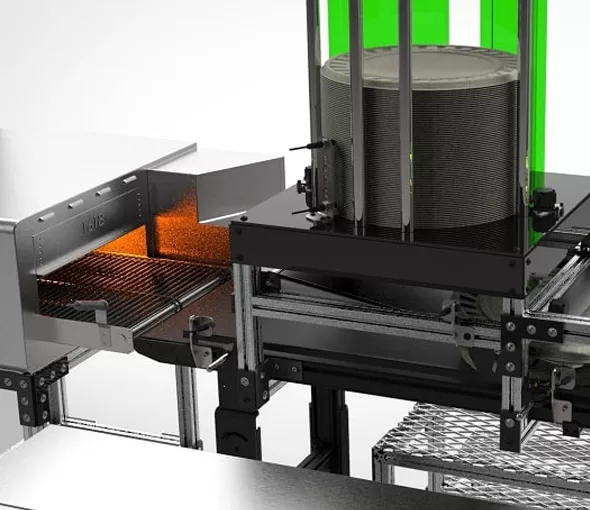
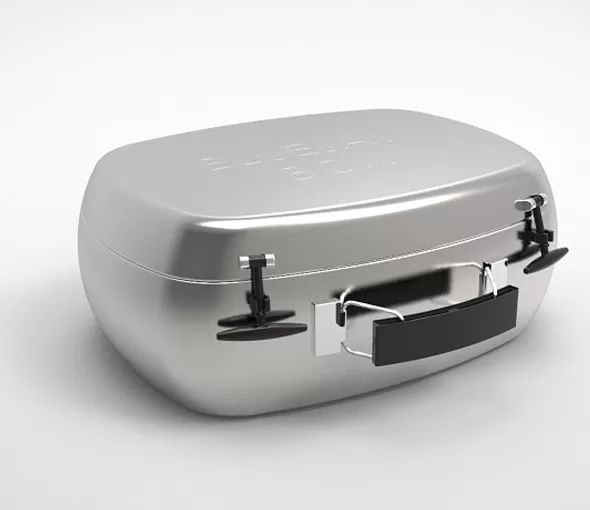
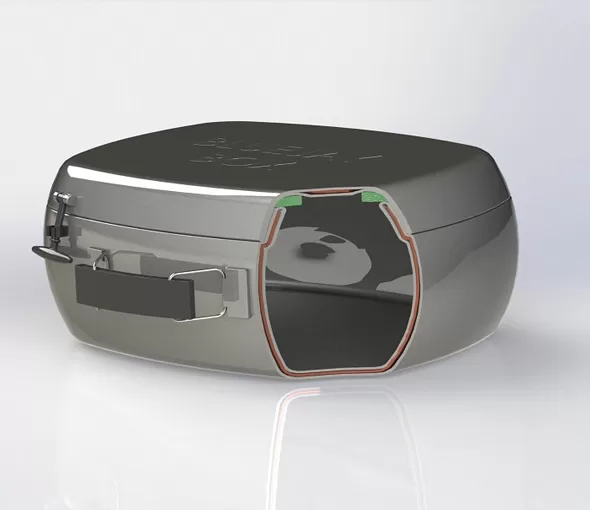
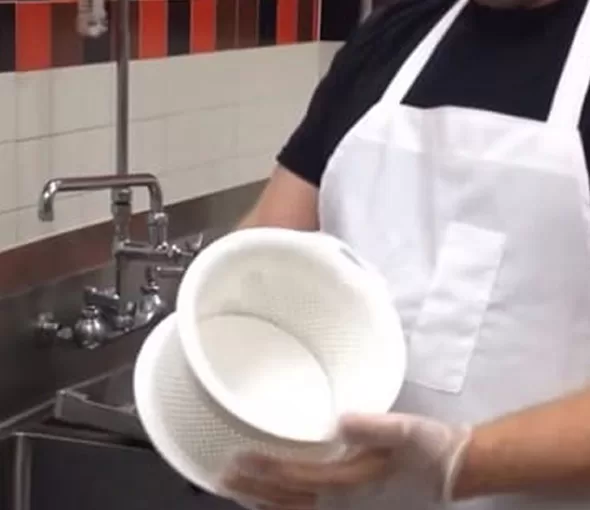
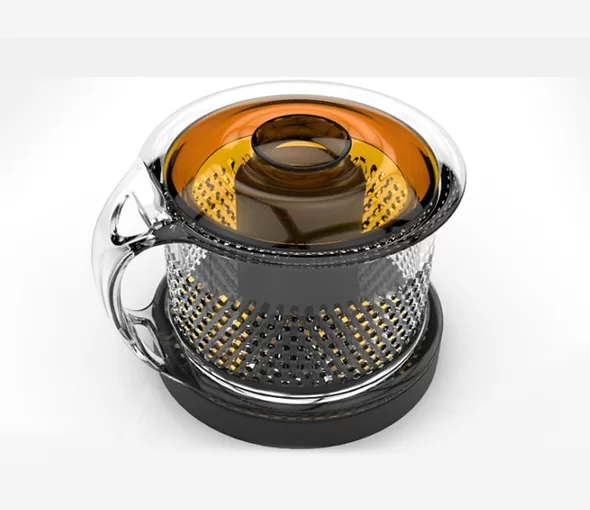
Our food and beverage work runs the full range. The Evera Bottle is an award-winning sustainable beverage container that eliminated 2,267 pounds of waste. The BARS automated pizza machine is a full food-contact production machine we designed and built. We have developed a can strainer for a tuna press, lunchbox and food-storage products, kitchen tools, retail food packaging and food brand identity work.
As a CPG product development partner we work the way food brands need: fast physical iterations you can put in a buyer's hands, honest per-unit cost modelling, and a manufacturing plan that survives a first purchase order rather than a pilot batch.
Food-contact compliance is designed in from the first material shortlist - FDA 21 CFR food-contact status, NSF where the equipment demands it, and cleanability that a real kitchen or plant can actually execute.
What makes food and beverage hardware different
Every constraint in this category comes back to two things: what the food does to the material, and what the cleaning does to both.
- Food-contact materials are a short list
FDA 21 CFR compliant resins, food-grade silicones and specific stainless grades are the palette. Colorants, additives and adhesives all have to clear the same bar.
- Cleanability is a geometry problem
Crevices, blind pockets and captured fasteners become bacteria traps and warranty claims. Dishwasher, washdown or CIP cleaning each impose different draft, radius and sealing rules.
- Thermal cycling breaks the wrong plastics
Hot fill, freezing, microwave and dishwasher exposure all attack polymers differently. The use case has to be defined before the resin is picked.
- Shelf presence competes at arm's length
Retail food is chosen in seconds. Structural packaging, closure feel and how the product photographs are commercial decisions, not decoration.
- Sustainability claims must survive scrutiny
Recyclable, refillable and reduced-material claims have to hold up in a real waste stream, not just in a deck. We size the claim to what the design actually does.
- Unit cost is measured in cents
At CPG volumes a two-cent part change is a real annual number. Cavitation, wall thickness and closure choice get modelled while the design is still soft.
Food and beverage capabilities in-house
| Capability | What it covers | Typical output |
|---|---|---|
| Container and closure design | Bottles, jars, caps, liners, dispensing and pour behavior | Design CAD, functional samples |
| Kitchen and housewares tools | Grip, mechanism, materials, dishwasher and thermal validation | Working prototypes and DFM package |
| Food-contact equipment | Food-safe machines, washdown design, NSF-aware detailing | Machine design, build and commissioning |
| Retail and structural packaging | Shelf impact, dielines, protection, unboxing | Print-ready packaging and physical mockups |
| Sustainable material strategy | Material reduction, mono-material design, refill systems | Options with cost and waste modelling |
| Prototyping and pilot runs | Appearance models, functional samples, first production | Buyer-ready samples, pilot quantities |
Swipe the table sideways to see every column.
How a food or beverage hardware program runs

Fast physical iterations first, because in this category a sample in hand is worth more than a rendering.
01 · Product and shelf definition+
Where it sits, who buys it, what it competes with, what it can cost.
- Category and shelf audit
- Target landed cost per unit
- Use-case and cleaning requirements
- Compliance scope defined
02 · Concept and material shortlist+
Concepts developed against food-contact material reality from day one.
- Concept directions and sketch models
- Food-contact material shortlist
- Process route options: injection, blow mold, thermoform
- Early cost per unit
03 · Functional prototyping+
Real samples: pour, seal, grip, clean, freeze, heat.
- Functional prototypes in candidate materials
- Pour, seal and leak testing
- Dishwasher and thermal cycling
- Buyer and focus sample builds
04 · Engineering and tooling prep+
The design is made manufacturable and the tool strategy locked.
- Production CAD with draft and DFM
- Tool layout and cavitation plan
- Supplier quoting and selection
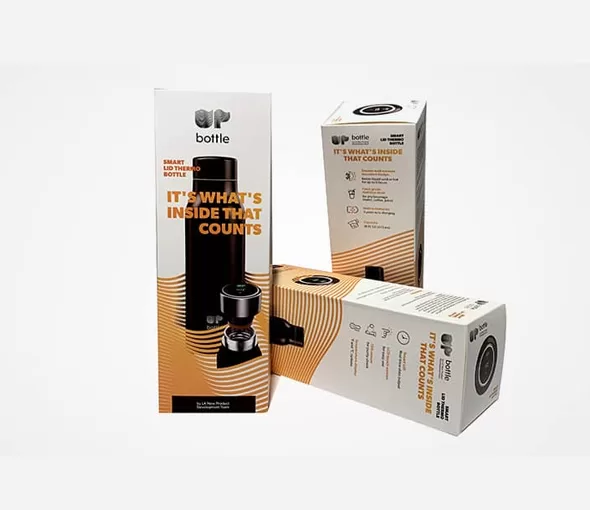
- Packaging and label integration
05 · Pilot and launch+
First runs, retail packaging, and the fixes a first run always reveals
- Pilot production run
- Retail packaging and shipper testing
- Line-side issue resolution
- Cost-down for volume ramp
Why the hardware decides the margin
In food and beverage the formula gets the attention and the container quietly sets the economics. Resin choice, closure supplier, cavitation and shipper efficiency together typically move landed cost more than any ingredient decision available to you.
They also decide whether a retail buyer says yes. A closure that leaks in a shipper, a bottle that does not stand on a shelf, or a pack that costs an extra cent per unit to fill are the reasons good products stall after the first order.
Food brands lose money on geometry they never questioned. We question it while it is still cheap to change.
Frequently asked questions about food and beverage product development
Do you formulate food or beverages?+
No. We develop the physical product and packaging around your formula - containers, closures, tools, dispensing and food-contact equipment - and work alongside your food scientist or co-packer.
How do you handle food-safe material selection?+
We shortlist FDA 21 CFR compliant resins, food-grade silicones and appropriate stainless grades against your thermal, cleaning and shelf-life requirements, and confirm compliance documentation with the supplier before tooling.
Can you design equipment for a commercial kitchen or plant?+
Yes. We design and build food-contact machines and equipment with washdown, sanitation and NSF-aware detailing, including the controls.
What does a bottle or closure program cost?+
Design and engineering through functional samples commonly runs in the tens of thousands; injection or blow-mold tooling is a separate capital item that depends on cavitation and volume. We model both before you commit.
Can you do sustainable packaging that is actually recyclable?+
We design toward mono-material construction, material reduction and refill where the category allows it, and we will tell you when a claim will not survive the real waste stream.
Can you produce first runs for a retail launch?+
Yes. Our short-run manufacturing handles pilot quantities and bridge production while volume tooling comes online.
Bring us the product your formula needs to live in
Send us the use case, the target retail price and your volume expectation. We will come back with concepts and a per-unit cost you can plan against.
Food-contact rules and what they cost you
Material choice on a food-contact part is a regulatory decision first and a cost decision second. These are the constraints we design to.
| Standard or rule | What it requires | What it changes in the design |
|---|---|---|
| 21 CFR 174-179 | FDA food-contact substance regulations: only listed or cleared materials and additives may touch food. | Limits resins to food-grade PP, PET, HDPE, Tritan, silicone or 304/316 stainless. |
| NSF/ANSI 51 | Food equipment materials standard for commercial equipment. | Required by most commercial kitchen buyers; adds certification cost per material. |
| FDA Food Code — cleanability | Smooth, non-absorbent, cleanable surfaces with no dead spots. | Bans sharp internal corners; sets minimum radii and drainage angles. |
| Prop 65 (California) | Warning requirements for listed substances. | Affects colorants, plated finishes and some elastomers. |
| Torque and leak testing | Closure removal torque and inverted leak performance. | Sets thread profile, liner material and neck finish choice. |
Container and closure development costs
Bottles and closures live or die on tooling. Using a stock neck finish instead of a custom one is usually the single biggest saving available.
| Item | Process | Notes | Typical cost |
|---|---|---|---|
| Container concept + CAD | Industrial design, volumetric CAD, label geometry | Fill volume, headspace, top-load strength | $3,500 – $12,000 |
| Prototype bottles | SLA clear resin or CNC acrylic, 5–25 pieces | Shelf presence, grip, photo and pitch use | $900 – $4,000 |
| Stock closure adaptation | Design to an existing neck finish (e.g. 38-400) | No closure tooling at all — fastest path | $0 tooling |
| Custom closure tooling | Single-cavity aluminum, then multi-cavity steel | Only worth it above roughly 250k units/yr | $12,000 – $60,000 |
| Blow mold (PET/HDPE) | Single-cavity unit tool, then production cavitation | Cavitation follows your annual volume | $8,000 – $45,000 |
| Kitchen tool / gadget tooling | Family mold, food-grade PP with overmolded TPE grip | Overmold adds a second shot and roughly 30% tool cost | $15,000 – $70,000 |
Ranges are what comparable projects have actually cost here, not list prices. Every project is quoted stage by stage, so you approve the next step with real numbers in front of you. See the prototype cost calculator for a first estimate on your own part.
A beverage container we designed and proved
A sustainable beverage container from concept through award-winning execution: structural design for top-load and drop, a material path that stayed food-safe and recyclable, prototypes that photographed like production, and a tooling plan the client could quote.
Read the Evera Bottle — award-winning sustainable container case study
Food and beverage hardware questions
Do you formulate the food or beverage itself?
No. We develop the hardware — containers, closures, dispensers, tools and food-contact equipment — and work alongside your formulator or co-packer so the package matches fill temperature, viscosity, shelf life and line speed.
How do I keep bottle tooling costs down?
Use a standard neck finish so you can buy stock closures, keep the body a single parting line, avoid deep undercuts in labels panels, and start with single-cavity bridge tooling. That combination routinely saves $30,000 or more versus a fully custom package.
What materials are actually food safe?
Food-grade PP, HDPE, PET, Tritan copolyester, platinum-cure silicone, and 304 or 316 stainless are the workhorses. Each has to be a food-contact-cleared grade under 21 CFR, which is a supplier documentation question as much as a resin question.
Can you design for a co-packer's existing line?
Yes, and it saves the most money. We take the co-packer's neck finish, capping torque, fill line and case-pack dimensions as hard inputs, then design the package inside them so no line change is needed.
Standards and regulations we work to
Other industries we build for
Personal Care
Beauty, grooming and personal hygiene products, from formula-adjacent hardware to packaging.
Pet Products
Pet care, feeding, comfort and interactive toy products developed end to end.
Sports & Fitness
Training aids, outdoor gear, wearables and equipment built for real use in the field.
Product Packaging
Retail-ready structural and graphic packaging that protects the product and sells it.
IoT & Consumer
Connected consumer devices: electronics, enclosures, firmware and the app that drives them.
Medical Devices
Class I and Class II devices, diagnostics and patient-safety hardware developed to the pathway.
Industrial Equipment
Custom machines, automation and commercial equipment engineered and built in-house.
Toys & Games
Play patterns, mechanisms and pitch-ready prototypes for toy and game inventors.
Home & Housewares
Cleaning tools, storage, organization and home hardware engineered to a shelf price.
Baby & Juvenile
Feeding, sleep, travel and nursery products designed around juvenile safety standards.
Outdoor & Hunting
Hunting, camping, marine and recreation gear built for weather, abuse and field use.
Funded Startups & Grants
SBIR Phase I and II prototypes and investor-ready hardware for funded teams.
SBIR & Grant-Funded Projects
Concept design, feasibility work and proof-of-concept prototyping for SBIR, STTR and other federal grant applicants.
What founders say after working with us
“Konstantin has been so amazing and his entire team is A+. I researched and interviewed many product development companies across the country and ultimately decided on LA NPDT... and I'm so glad I did. The attention to detail and overall effort has been exactly what I needed and then some. If you are looking for a company to help you bring your product to life, look no further!”
 William EvansCEO, Burple
“This company is awesome. I run a medical device company and we required a number of accessories to be designed and built for our medical device. They delivered a polished design and printed the accessories on time using high-quality materials. I continue to work with them for all of our material needs.”
 Matteo ZiffFounder, Virtual Vision
“I highly recommend the LA New Product Development Team for any of your new product development needs. From the development of my concept to the actual prototype, the process was seamless. I especially loved the quick responsiveness, and I received regular updates during every stage, so I was never left wondering how things were going. The steps were clearly outlined, along with estimated costs.”
 Dr. Sharada DamarajuFounder, Dignity & Empowerment
Three reasons founders keep working with us
- 1
One team from sketch to shipped parts. Industrial design, mechanical and electrical engineering, prototyping and manufacturing sit under one roof, so nothing is lost in a handoff.
- 2
You own the work. Native CAD, drawings and source files are yours at the end of every phase — no lock-in, no re-buying your own design later.
- 3
Fixed scope, fixed price. Every phase is quoted up front with a deliverable list and a date. No hourly meters, no surprise invoices.
If you ever thought of developing a new product, don’t wait any longer. Talk with one of our experts today.
Tell us about your product
Send us the idea, the drawing or the problem. We reply within one business day with the next practical step.
Ready to scope the work? Start your product · Request a quote