Toy product development services and game manufacturing
What is toy product development?
Toy product development from idea to shelf: play-pattern definition, industrial design, mechanism engineering, ASTM F963 and CPSIA-aware material choices, prototypes for licensing pitches, and tooling for production.
Toy product development turns a play idea into a testable, sellable product: play-pattern definition, mechanism design, safety-driven part design, prototypes children can actually handle, and a factory package. In the US, anything sold for children under 14 must pass ASTM F963 and be certified under the CPSIA before it ships.
Toy product development is the process of turning a play idea into a safe, manufacturable, price-competitive product: defining the play pattern and age grade, designing the form and mechanism, engineering to children's-product safety standards, prototyping for buyer and licensing pitches, and tooling for volume production.
Two constraints dominate the category and both arrive early. The first is safety - children's products in the US are regulated under CPSIA and tested to ASTM F963, which governs small parts, sharp edges, mechanical hazards and material chemistry. The second is price. Toy retail price points are brutally fixed, and a design that cannot hit its landed cost never leaves the sample stage.

Certified B Corp
Independently verified standards of social and environmental performance.

FDA-registered facility
Registered for device work, with the process discipline that comes with it.
- years developing physical products
- 10+years developing physical products
- projects taken from idea to build
- 1,000+projects taken from idea to build
- design, prototyping and short-run production
- In-housedesign, prototyping and short-run production
Prototypes that win licensing meetings, and engineering that survives tooling

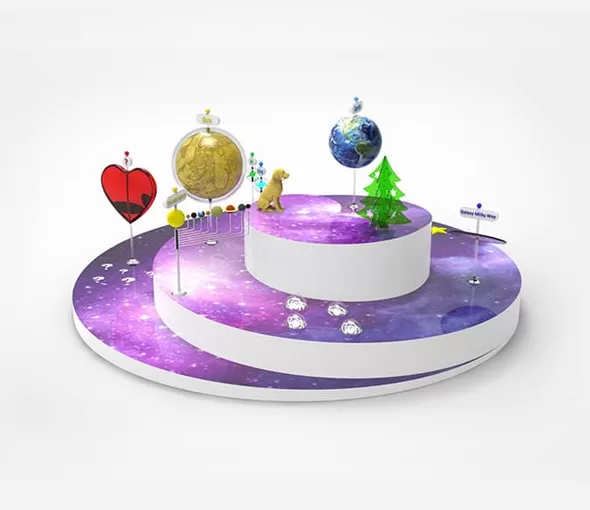
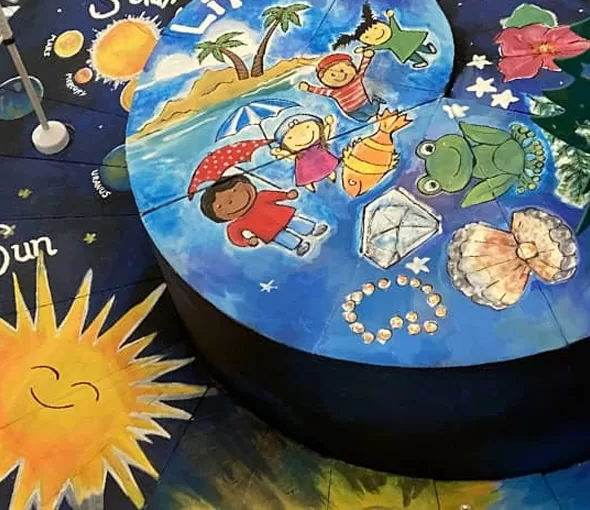
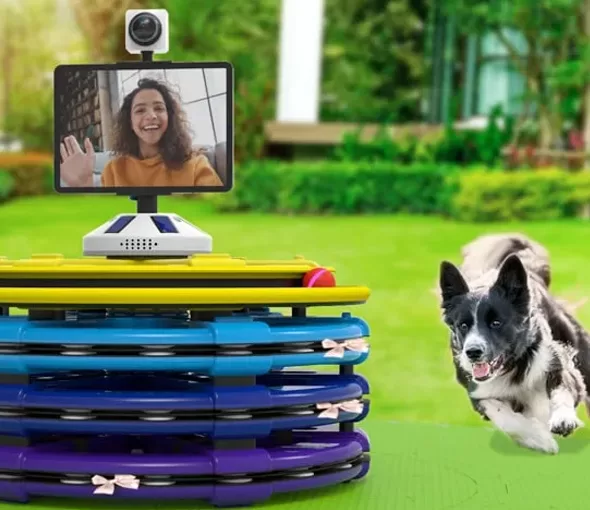
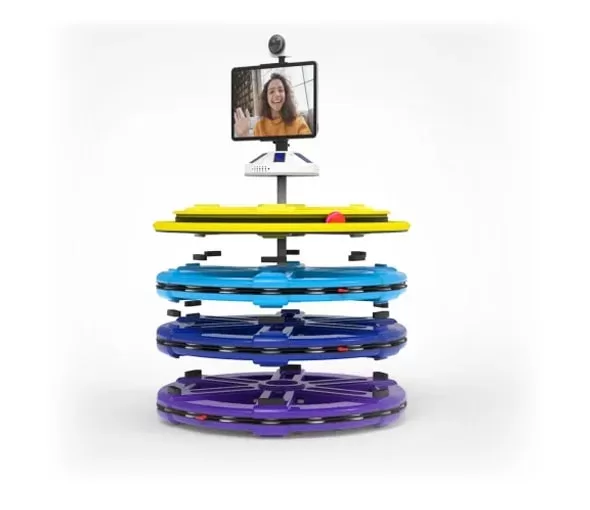
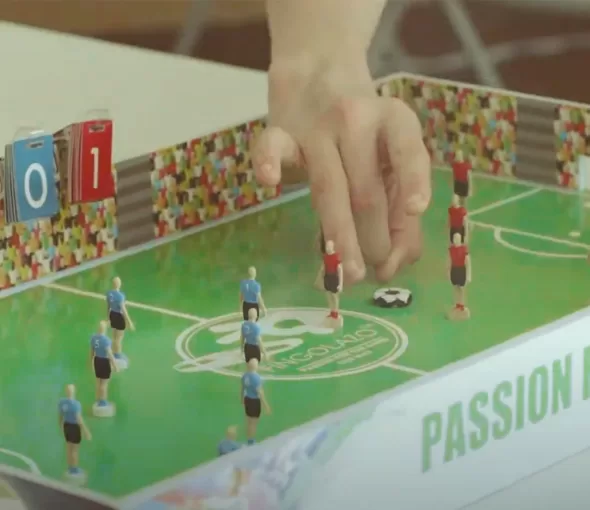
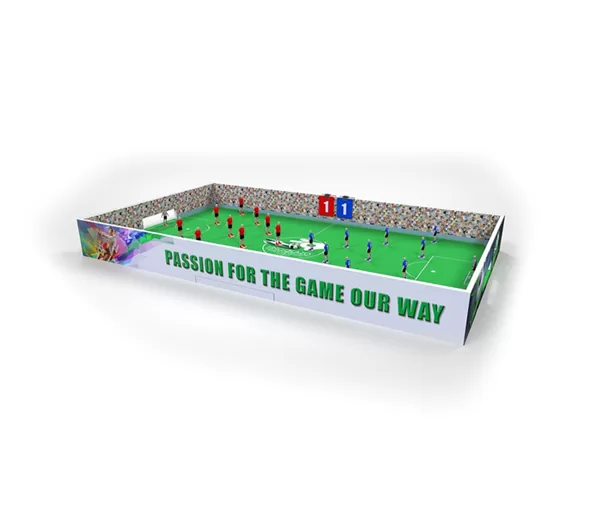
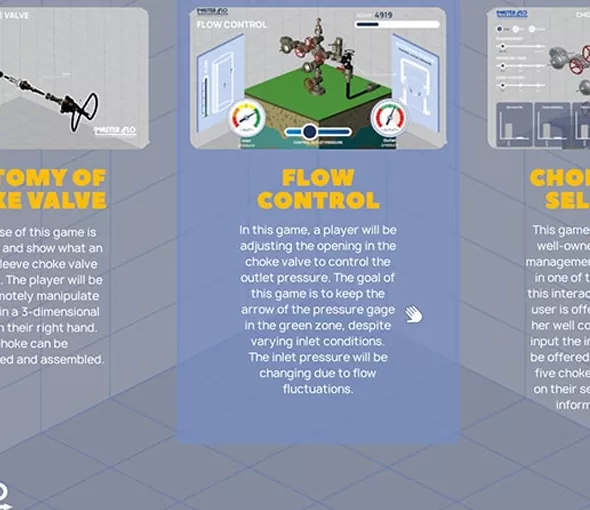
Our toy and game work includes the Stardust and You toy prototype now featured at the Tellus Science Museum, board game development, tabletop and game components built for Master Flo Games, children's toy design programs and interactive pet toys. The T-Rex tape cutter we engineered went on to be licensed to ShurTech - the same path many toy inventors are trying to walk.
For an inventor, the deliverable is usually a pitch-ready prototype:: something that demonstrates the play pattern convincingly in a fifteen-minute meeting, backed by enough engineering that a licensee's team believes it can be made.
For a brand or startup, the deliverable is a production package: DFM'd CAD, material specs chosen with safety testing in mind, tooling strategy and a factory-ready BOM.
What makes toys and games hard to develop
A toy has to be cheap, safe, durable, and genuinely fun - and those four pull against each other constantly.
- Safety standards shape the geometry
ASTM F963 and CPSIA drive small-parts rules, edge and point limits, tension and torque testing, and chemical content. Age grading changes all of it, and an age grade chosen for marketing reasons can invalidate a mechanism.
- Retail price points are fixed
A $19.99 toy has a landed cost target that leaves almost no slack. Part count, material, decoration and packaging all get engineered to the penny.
- Play pattern is the product
Mechanisms, sounds and features only matter if the core loop is fun in the first thirty seconds. Prototypes exist to test that, early and cheaply.
- Durability under abuse testing
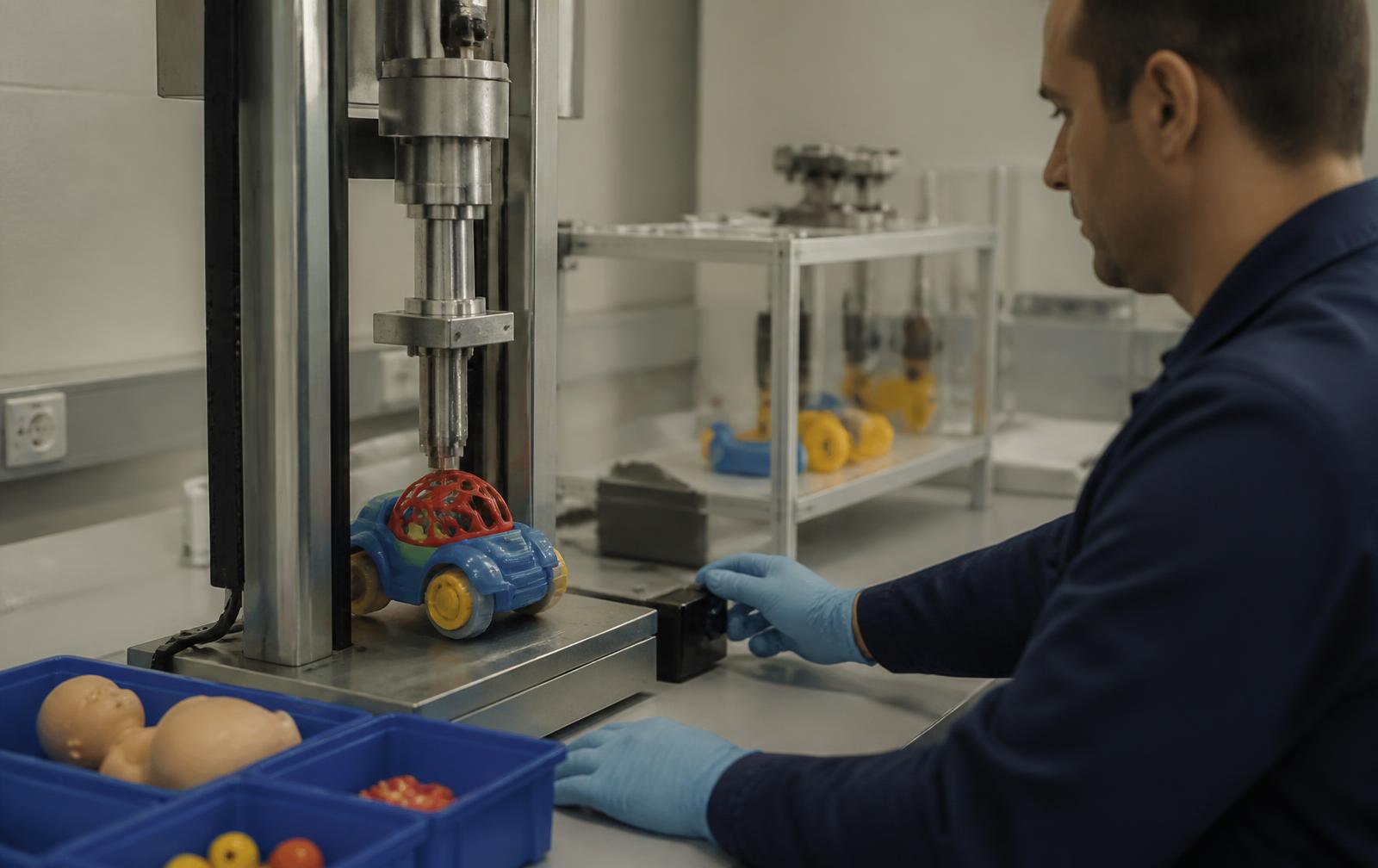
Drop, tension, torque and compression tests simulate a child who is genuinely trying to break it. Living hinges, snap fits and small protrusions are common failure points.
- Packaging is half the sell
Toys are bought off a peg or a shelf, often by a parent. Window, trial features and try-me packaging are part of the product design, not an afterthought.
- Licensing needs different evidence
A licensee wants a play demo, a claimed price point and a plausible manufacturing story. A startup going direct needs tooling, compliance testing and inventory. The paths diverge early.
Toy and game development capabilities
| Capability | What it covers | Typical output |
|---|---|---|
| Play-pattern and concept design | Core loop, age grade, feature set, character and form | Concept sketches and play mockups |
| Mechanism engineering | Snap fits, linkages, sound, motion, electronics where needed | Working mechanism prototypes |
| Safety-aware material selection | CPSIA and ASTM F963 informed material and finish choices | Material specs and test plan |
| Soft goods and plush | Pattern, fill, stitching, safety of attached features | Sewn samples and factory tech pack |
| Pitch prototypes | Appearance and functional models for licensing meetings | Presentation-quality demo units |
| Tooling and production | DFM, tool layout, factory sourcing, first-article review | Production package and pilot units |
Swipe the table sideways to see every column.
How a toy program runs

Play first, cost second, tooling last.
01 · Play definition+
Age grade, play pattern and price point agreed before design starts.
- Age grade and safety scope
- Play pattern definition
- Target retail and landed cost
- Competitive shelf audit
02 · Concept and quick mockups+
Rough, fast models to prove the toy is actually fun.
- Multiple concept directions
- Low-fidelity play mockups
- Play testing with target age
- Direction selected
03 · Prototype development+
A convincing unit for pitching, testing or funding.
- Appearance and functional prototypes
- Mechanism validation
- Decoration and color studies
- Pitch or crowdfunding assets
04 · Engineering for safety and cost+
The design is made both compliant and affordable.
- DFM CAD and part consolidation
- ASTM F963 hazard review
- Material and finish specification
- Landed cost model
05 · Tooling and launch+
Factory selection, tooling and first-article approval.
- Tool layout and sourcing
- First-article inspection
- Third-party safety testing coordination
- Packaging and pilot production
Why the prototype decides everything in this category
Toy licensing meetings are short and unsentimental. The inventors who get deals are the ones who can put a working demonstration on the table, name a price point, and answer "can it be made for that?" without flinching.
The same prototype does double duty if you go direct: it is the crowdfunding video, the trade-show sample and the engineering baseline. Money spent making it convincing is rarely wasted.
Nobody licenses a rendering. They license the thirty seconds where the toy does the thing.
Frequently asked questions about toy product development
How much does it cost to develop a toy?+
A pitch-ready prototype for a licensing meeting often runs in the single-digit thousands to low tens of thousands depending on mechanism complexity. A full program through tooling and compliance testing is substantially more, driven mostly by tool count.
Do you help with toy safety testing?+
We design to CPSIA and ASTM F963 requirements and prepare the test plan and materials documentation, then coordinate with an accredited third-party lab that performs the certification testing.
Can you help me license my toy idea to a company?+
We build the prototype and supporting materials that licensing meetings require. We are not an agent, but we routinely prepare inventors for those meetings and have had client products licensed to major brands.
Can you develop plush and soft goods?+
Yes. Pattern development, materials, safety of attached parts and factory tech packs for sewn products are all in scope.
How long does toy development take?+
A pitch prototype is commonly four to ten weeks. A full program to production usually runs six to twelve months including tooling and safety testing.
Can you hit a specific retail price?+
We work backward from it. Tell us the shelf price and we will tell you what part count, materials and decoration that budget actually allows before we design.
Let's find out if your toy is fun and affordable
Describe the play pattern and the shelf price you have in mind. We will tell you what is buildable inside that number.
The safety rules that shape a toy design
Toy geometry is decided by regulation long before it is decided by styling. These are the ones we design against from the first sketch, because retrofitting them after tooling is what kills toy budgets.
| Standard or rule | What it requires | What it changes in the design |
|---|---|---|
| ASTM F963-23 | Mandatory US toy safety standard: small parts, sharp edges, impact, torque and tension tests, sound pressure, magnets. | Sets minimum wall thickness, joint pull strength and how a battery door must latch. |
| 16 CFR 1501 (small parts) | No component that fits the small-parts cylinder may detach under test for ages under 3. | Drives fastener choice, ultrasonic welding instead of screws, and captive part design. |
| 16 CFR 1303 (lead paint) | 90 ppm lead limit in surface coatings. | Restricts the paint and pad-print inks we can specify on a colored part. |
| CPSIA certification | Third-party lab testing plus a Children's Product Certificate before import. | Adds two to four weeks and roughly $1,500 to $6,000 per SKU depending on component count. |
| ASTM F963 sound / battery clauses | Sound pressure limits and secured, tool-opened battery compartments. | Fixes the speaker port area and the screw-boss layout in the housing. |
How toy prototypes get built, and what they cost
A toy has to survive being handled by a child before it is worth tooling. We build in rounds, and each round answers one question.
| Round | How it is built | What it proves | Typical cost |
|---|---|---|---|
| Play model | SLA/FDM print, hand-finished, no working mechanism | Scale, grip and whether the play pattern reads at a glance | $900 – $2,500 |
| Mechanism rig | Printed housing with real gears, springs, motor and switch | That the action works and survives repeat cycling | $2,500 – $7,000 |
| Looks-like / works-like | Painted SLA shell, ABS-equivalent resin, electronics inside | Retailer and licensing pitches, video, kid testing | $4,000 – $12,000 |
| Pre-tooling package | CAD with draft, uniform 2.0–2.5 mm walls, parting lines set | That the toy can be molded in ABS or PP at the target price | $6,000 – $18,000 |
| Bridge tooling | Aluminum molds, 500–3,000 units | Real retail packouts and safety-lab submission samples | $8,000 – $30,000 |
Ranges are what comparable projects have actually cost here, not list prices. Every project is quoted stage by stage, so you approve the next step with real numbers in front of you. See the prototype cost calculator for a first estimate on your own part.
A toy we took from idea to pitch-ready
The inventor arrived with a play concept and no engineering. We defined the mechanism, kept every element above the small-parts limit, printed and finished a presentation-grade model, and shot it for the pitch. The same route runs through our board-game and interactive-toy projects.
Toy development questions we get asked
Do I need ASTM F963 testing before I pitch a toy company?
No. Licensing pitches need a working model and a clear play pattern. Full ASTM F963 and CPSIA testing is required before you sell or import product yourself, so we design to the standard from the start but only pay for lab testing when a real production run is scheduled.
What does it cost to develop a toy from idea to production-ready?
A single-mechanism toy typically runs $12,000 to $45,000 through engineering and prototypes, plus $8,000 to $30,000 for bridge tooling or $20,000 to $80,000 for steel production tooling depending on part count and cavity layout.
Can you design around the small-parts rule?
Yes, and it is mostly a design decision, not a testing decision: captive fasteners, ultrasonically welded housings, oversized accessories, and pull-tested joints. We test critical joints with a torque and tension rig on the prototype before the CAD is frozen.
Should I license the toy or manufacture it myself?
Licensing needs a persuasive working prototype, a sell sheet and clean IP; manufacturing needs tooling capital, CPSIA certification and inventory. Most independent inventors we work with pitch first, and only tool if no licensee bites within a season.
Standards and regulations we work to
Other industries we build for
Personal Care
Beauty, grooming and personal hygiene products, from formula-adjacent hardware to packaging.
Pet Products
Pet care, feeding, comfort and interactive toy products developed end to end.
Sports & Fitness
Training aids, outdoor gear, wearables and equipment built for real use in the field.
Product Packaging
Retail-ready structural and graphic packaging that protects the product and sells it.
IoT & Consumer
Connected consumer devices: electronics, enclosures, firmware and the app that drives them.
Medical Devices
Class I and Class II devices, diagnostics and patient-safety hardware developed to the pathway.
Industrial Equipment
Custom machines, automation and commercial equipment engineered and built in-house.
Food & Beverage
Containers, closures, kitchen tools and food-contact equipment for CPG brands.
Home & Housewares
Cleaning tools, storage, organization and home hardware engineered to a shelf price.
Baby & Juvenile
Feeding, sleep, travel and nursery products designed around juvenile safety standards.
Outdoor & Hunting
Hunting, camping, marine and recreation gear built for weather, abuse and field use.
Funded Startups & Grants
SBIR Phase I and II prototypes and investor-ready hardware for funded teams.
SBIR & Grant-Funded Projects
Concept design, feasibility work and proof-of-concept prototyping for SBIR, STTR and other federal grant applicants.
What founders say after working with us
“Konstantin has been so amazing and his entire team is A+. I researched and interviewed many product development companies across the country and ultimately decided on LA NPDT... and I'm so glad I did. The attention to detail and overall effort has been exactly what I needed and then some. If you are looking for a company to help you bring your product to life, look no further!”
 William EvansCEO, Burple
“This company is awesome. I run a medical device company and we required a number of accessories to be designed and built for our medical device. They delivered a polished design and printed the accessories on time using high-quality materials. I continue to work with them for all of our material needs.”
 Matteo ZiffFounder, Virtual Vision
“I highly recommend the LA New Product Development Team for any of your new product development needs. From the development of my concept to the actual prototype, the process was seamless. I especially loved the quick responsiveness, and I received regular updates during every stage, so I was never left wondering how things were going. The steps were clearly outlined, along with estimated costs.”
 Dr. Sharada DamarajuFounder, Dignity & Empowerment
Three reasons founders keep working with us
- 1
One team from sketch to shipped parts. Industrial design, mechanical and electrical engineering, prototyping and manufacturing sit under one roof, so nothing is lost in a handoff.
- 2
You own the work. Native CAD, drawings and source files are yours at the end of every phase — no lock-in, no re-buying your own design later.
- 3
Fixed scope, fixed price. Every phase is quoted up front with a deliverable list and a date. No hourly meters, no surprise invoices.
If you ever thought of developing a new product, don’t wait any longer. Talk with one of our experts today.
Tell us about your product
Send us the idea, the drawing or the problem. We reply within one business day with the next practical step.
Ready to scope the work? Start your product · Request a quote