Outdoor gear and hunting product development
What is outdoor gear product development?
Outdoor product development for gear brands and inventors: hunting accessories, camping and recreation equipment, marine and powersports products - engineered for weather, abuse and users who will not tolerate a part that fails in the field.
Outdoor and hunting product development is engineering for weather, UV, abrasion and rough handling. LANPDT specifies UV-stabilized and glass-filled resins, seals to a real IP rating, runs salt-fog and thermal cycling where it matters, and builds field-testable prototypes hunters and anglers can abuse before you commit to tooling.
Outdoor gear product development is the design and engineering of equipment intended for field use - hunting, camping, fishing, marine, powersports and recreation - where UV exposure, temperature swings, water, mud, impact and long service life drive material and mechanism decisions.
The design constraint that separates this category from ordinary consumer goods is that a failure is not an inconvenience. A latch that breaks at a trailhead, on a stand, or twenty miles offshore is a product the customer will never buy again and will tell people about.

Certified B Corp
Independently verified standards of social and environmental performance.

FDA-registered facility
Registered for device work, with the process discipline that comes with it.
- years developing physical products
- 10+years developing physical products
- projects taken from idea to build
- 1,000+projects taken from idea to build
- design, prototyping and short-run production
- In-housedesign, prototyping and short-run production
Gear built for people who will actually use it hard

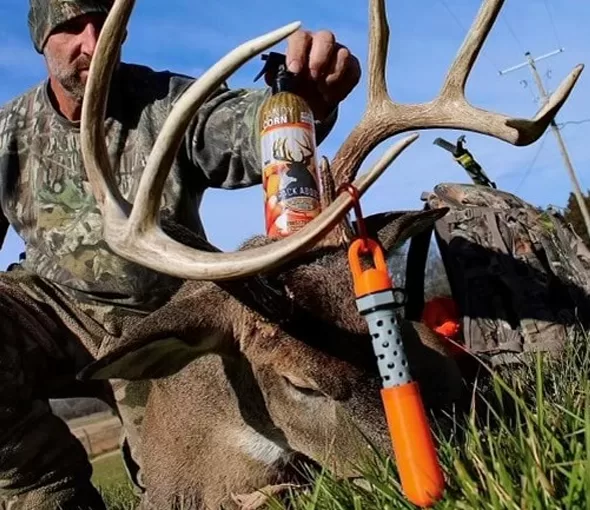
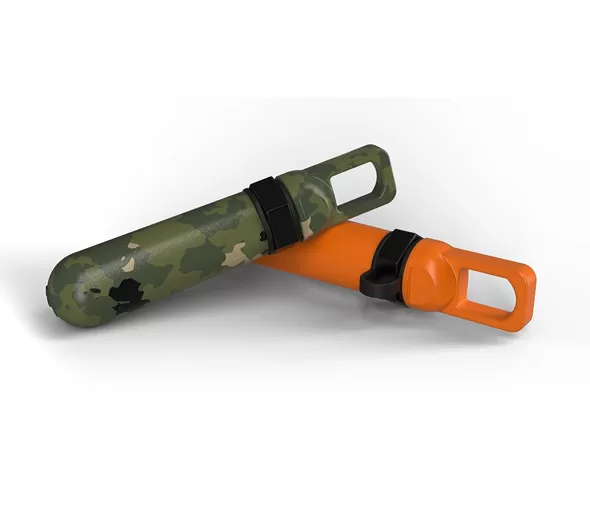
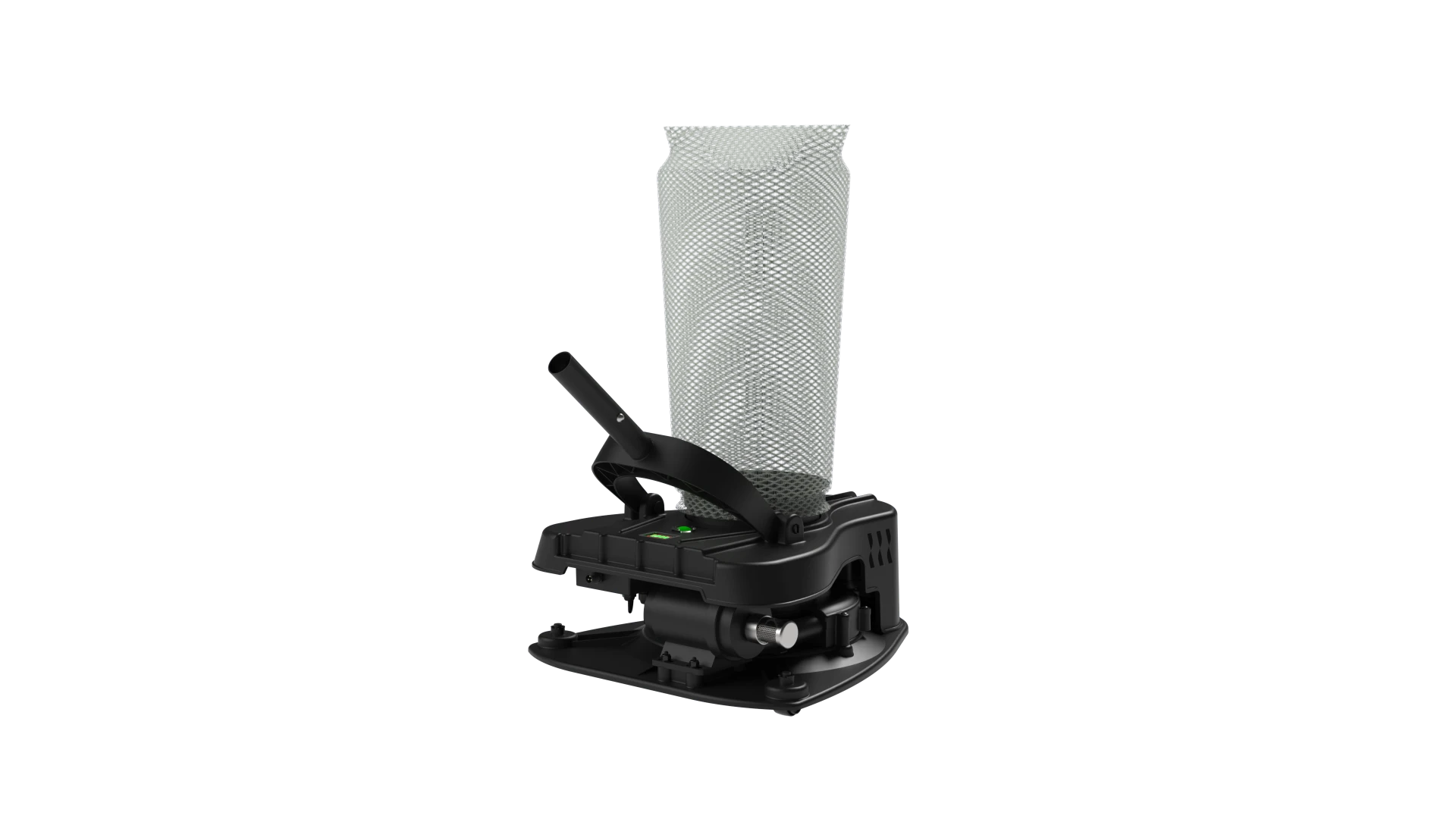
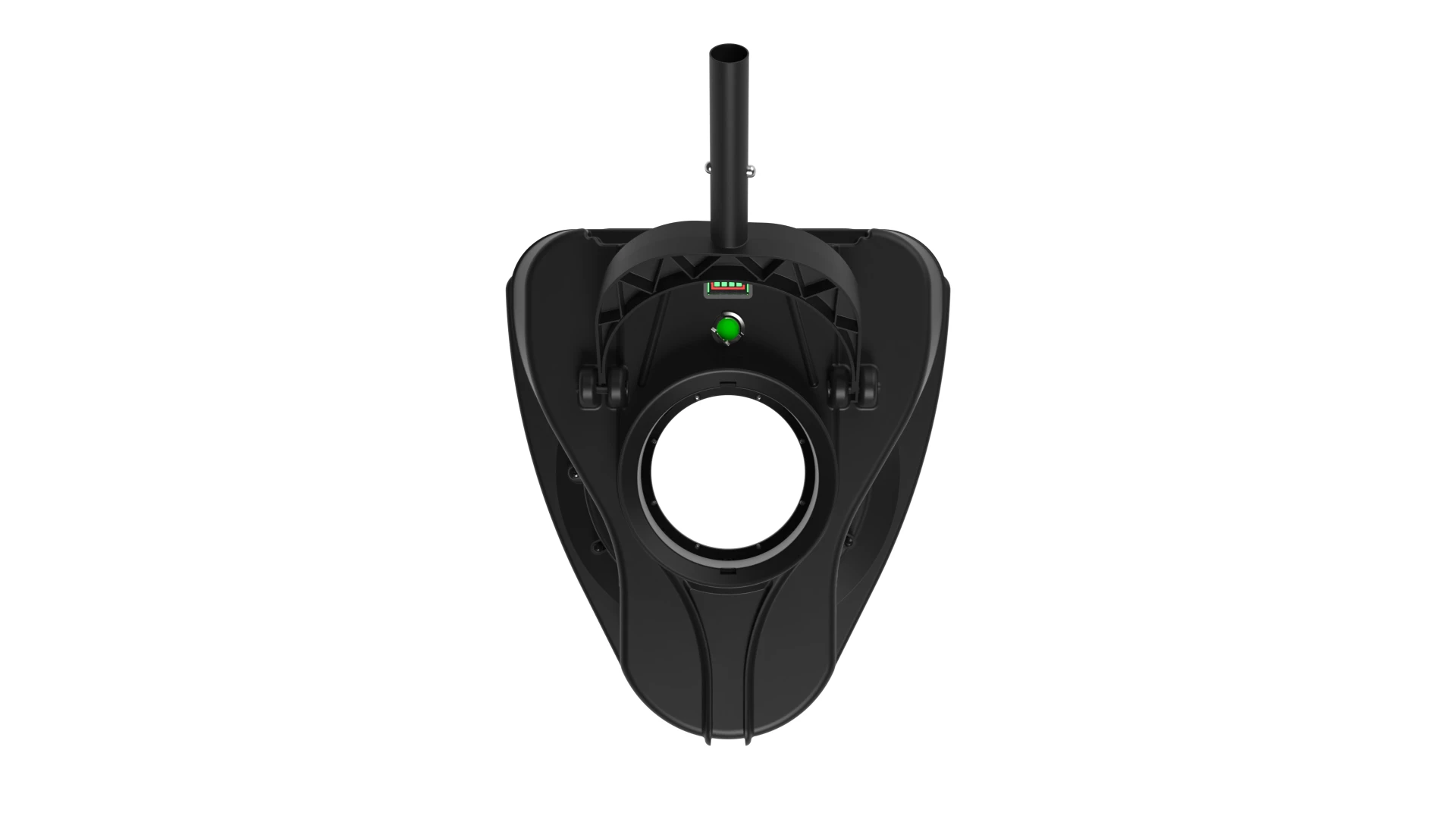
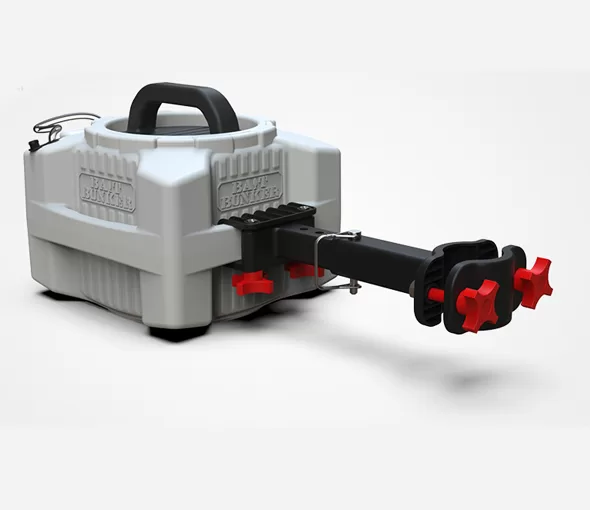
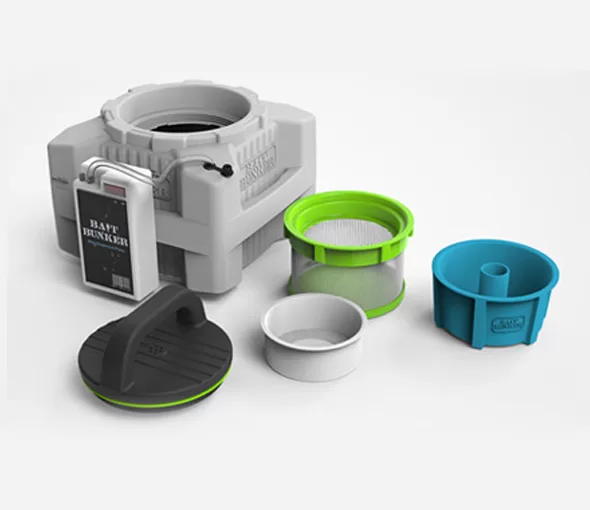
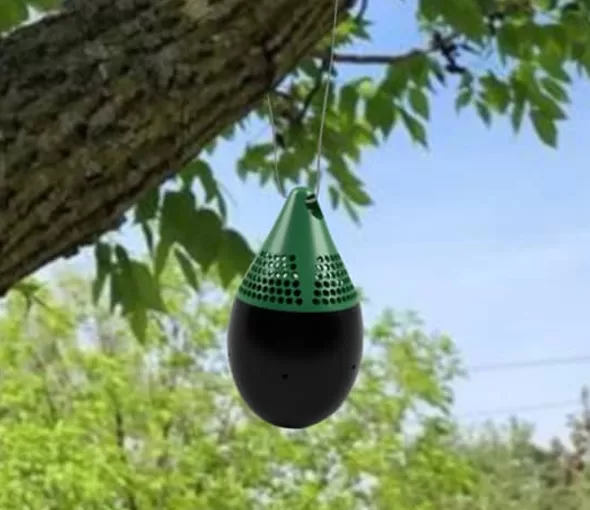
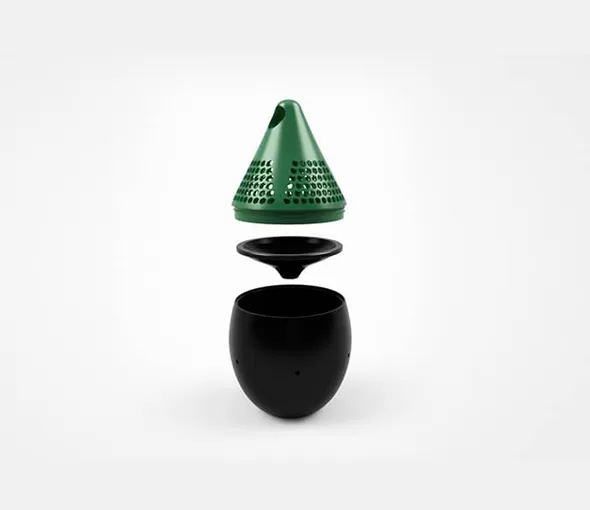
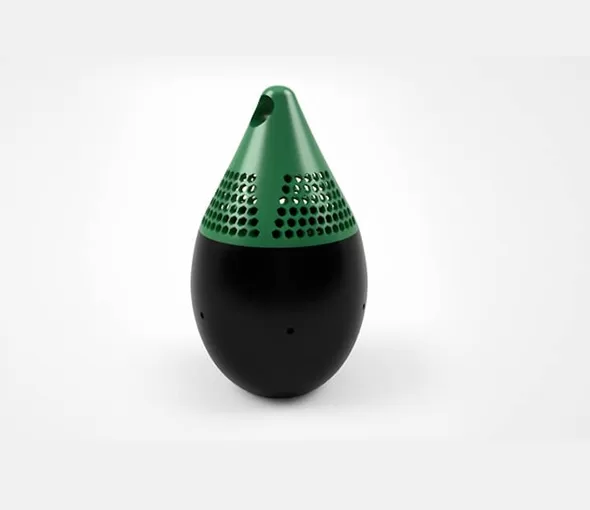
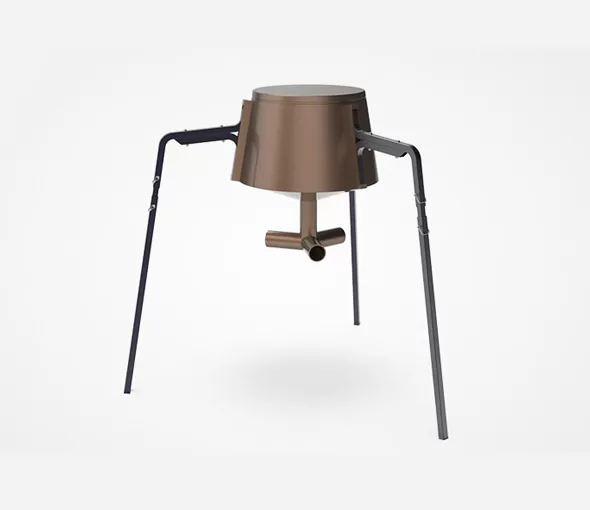
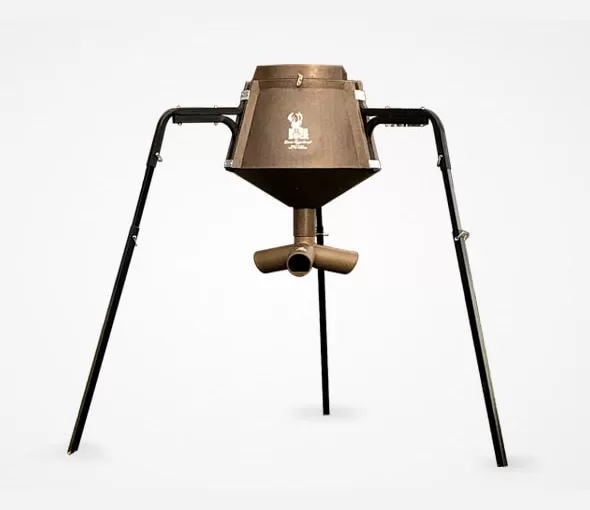
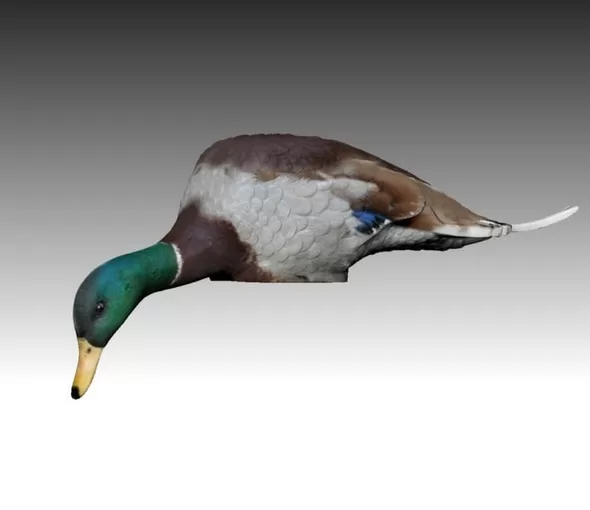
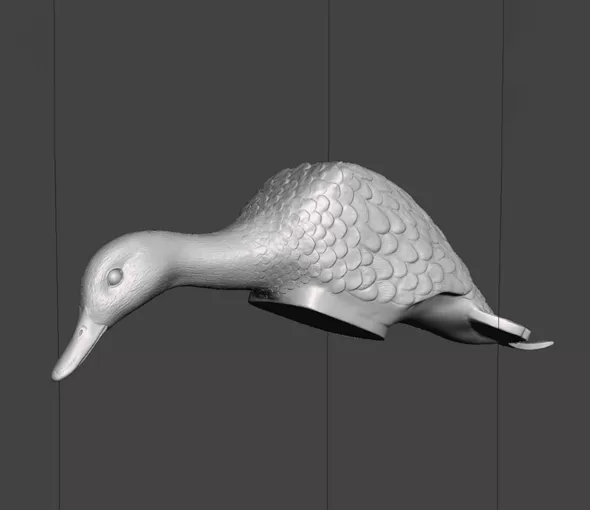
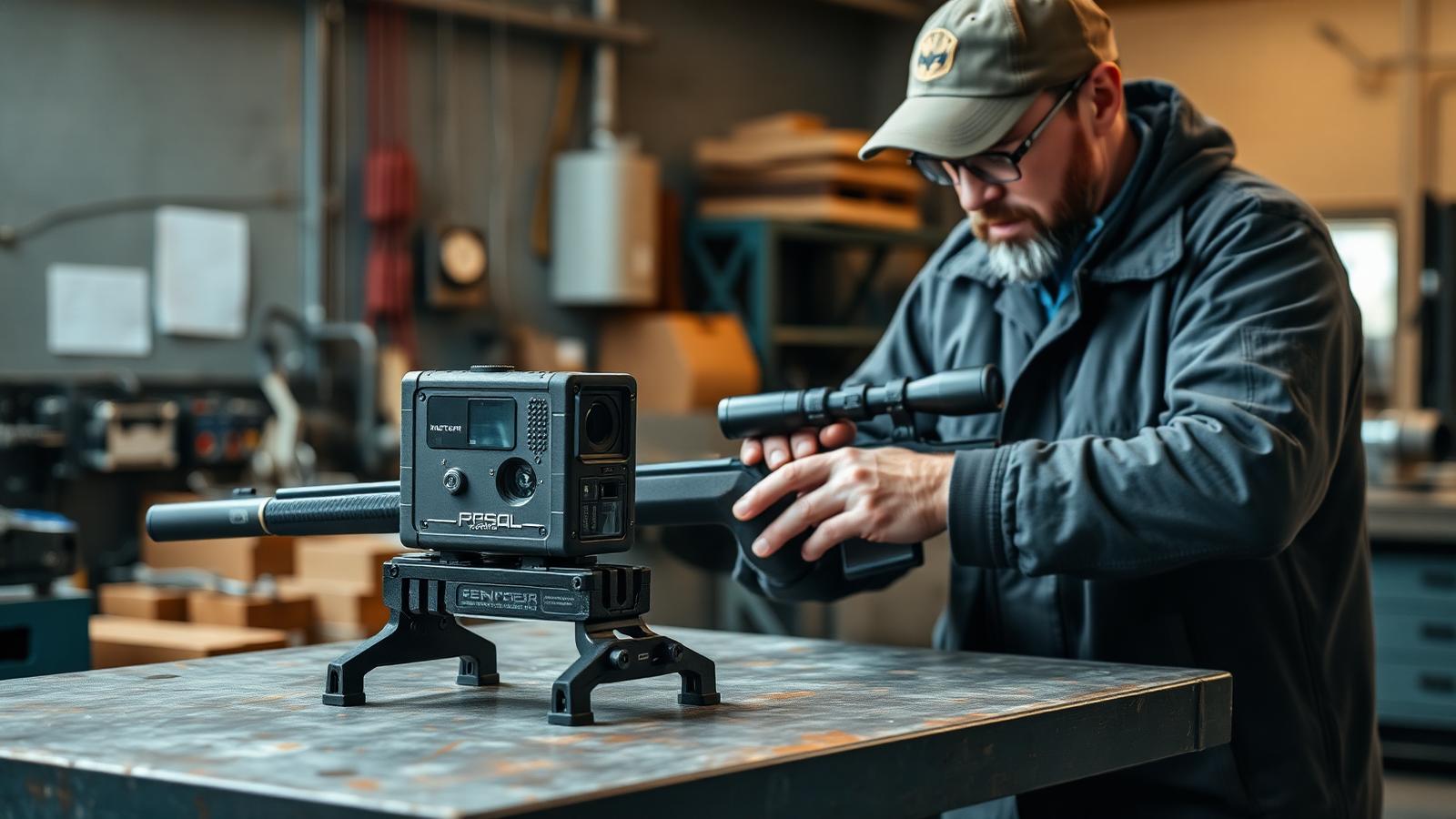
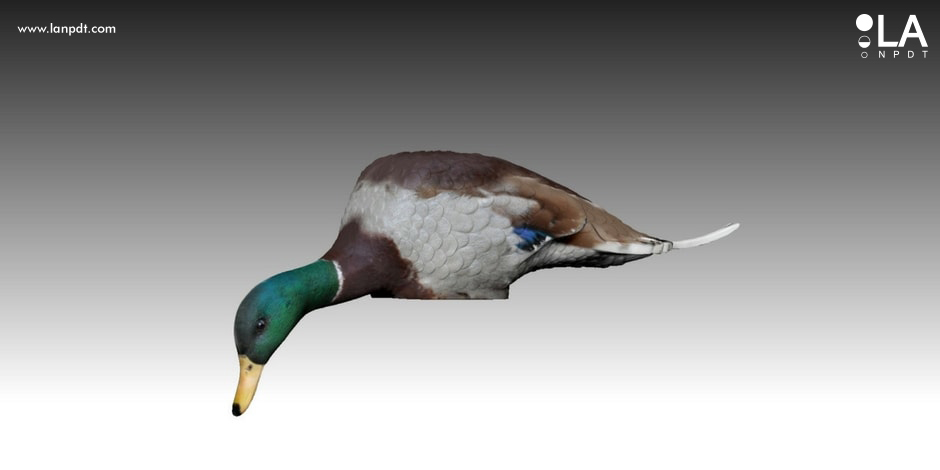
Our outdoor and recreation work includes the Droptine scent dispenser for deer hunting, hunting product prototyping and manufacturing, the Mojo Outdoors duck decoy, the Bait Bunker, the UP Trap outdoor mosquito trap and motorcycle apparel hardware.
Material selection is where most of the engineering value lands: UV-stable polymers, glass-filled nylons, anodized and coated aluminum, corrosion-appropriate stainless, and fasteners chosen for the environment rather than the catalog price.
We prototype in the target materials early and test the way the customer will - cold, wet, loaded and dirty - because outdoor gear failures are almost never visible in a clean shop.
What field use does to a product
Everything that is forgiving indoors becomes a failure mode outside.
- UV destroys the wrong plastics
Months of sun turns unstabilized polymers chalky and brittle. UV-stable resins and pigments have to be specified up front, and accelerated weathering tested.
- Temperature cycling loosens everything
Freeze-thaw cycles change clearances, embrittle plastics, and back fasteners out. Tolerance stacks need to hold across the full field temperature range.
- Corrosion is chemistry, not paint
Salt spray, dissimilar metal contact and galvanic pairing eat hardware. Marine use raises the bar again on every fastener and finish.
- Water ingress and sealing
Gaskets, drainage and IP-rated sealing on anything electronic. Water that gets in must have a way out.
- Impact, drop and load
Gear gets dropped, kicked, stood on and strapped to trucks. Ribbing, wall thickness and glass-filled materials are engineering answers to abuse.
- Weight and pack volume
Every ounce carried is scrutinized. Strength-to-weight and how the product packs down are competitive features, not nice-to-haves.
Outdoor and rugged product capabilities
| Capability | What it covers | Typical output |
|---|---|---|
| Field research and requirements | Real use conditions, failure modes, competitive teardown | Requirements and environmental spec |
| Industrial design | Form, grip, camo and color strategy, brand fit | Concepts and appearance models |
| Rugged mechanical engineering | Load paths, impact resistance, sealing, fasteners | Production CAD, FEA where load matters |
| Material and finish engineering | UV stability, corrosion, coatings, glass-filled resins | Material spec and test plan |
| Environmental testing | Weathering, thermal cycling, salt spray, drop and load | Test results and design changes |
| Prototyping and short runs | Field-test units, dealer samples, launch inventory | Real-material prototypes and pilot runs |
Swipe the table sideways to see every column.
How an outdoor gear program runs
Field conditions defined first, then materials, then form.
01 · Field requirements+
We define the environment before the product.
- Use conditions: temperature, UV, water, load
- Failure modes from competitive teardown
- Weight and pack targets
- Price point and dealer channel
02 · Concept and material strategy+
Concepts built around materials that survive the spec.
- Concept directions
- UV, corrosion and impact material shortlist
- Mechanism and sealing approach
- Direction selected
03 · Field-test prototypes+
Prototypes in target materials, tested outdoors.
- Functional prototypes in real materials
- Field testing with actual users
- Thermal, water and load trials
- Design refinement
04 · Engineering and validation+
The design is finished and proven against the environment.
- Production CAD and DFM
- Accelerated weathering and salt spray where relevant
- Drop and load testing
- Tooling strategy
05 · Production and launch+
Tooling, first articles and dealer-ready inventory.
- Tool layout and sourcing
- First-article inspection
- Packaging for dealer and e-commerce
- Pilot and bridge production
Reputation is the whole moat
Outdoor buyers are informed, loyal and merciless. Word of mouth in hunting, marine and camping communities decides brands, and a single systemic field failure can end a product line.
That cuts both ways. Gear that holds up gets recommended for years with no marketing spend, which is why the money spent on materials engineering and field testing in this category pays back better than in almost any other.
Outdoor gear is tested by the customer whether you test it first or not. Better to find the failure in our shop.
Frequently asked questions about outdoor product development
How much does outdoor gear development cost?+
Accessories and single-mechanism products commonly run in the tens of thousands through engineering and prototyping. Complex assemblies with electronics or sealing requirements cost more. Tooling is a separate capital item.
How do you choose materials for outdoor use?+
We start from the environmental spec - UV hours, temperature range, water and salt exposure, impact and load - and shortlist UV-stable resins, glass-filled nylons, appropriate aluminum and stainless grades, then validate with accelerated testing.
Can you develop hunting and shooting accessories?+
Yes. Hunting and shooting accessories, mounts, supports and field gear are a regular part of our outdoor work.
Do you handle marine products?+
Yes, with corrosion and galvanic compatibility treated as primary design constraints rather than finishing details.
Can you do environmental and durability testing?+
We run functional, thermal, water and load testing in-house and coordinate accredited salt-spray and accelerated weathering testing where certification-grade data is needed.
How long does an outdoor product take?+
Four to nine months from concept to production is typical, with field testing seasons occasionally being the schedule constraint rather than engineering.
Tell us where it has to survive
Describe the field conditions, the user and the price point. We will engineer gear that comes back from the trip intact.
Environmental testing that separates gear from toys
Outdoor products fail in the field, not on the bench. These are the tests we design toward and, where the product justifies it, run.
| Standard or rule | What it requires | What it changes in the design |
|---|---|---|
| IP54 / IP67 (IEC 60529) | Dust and water ingress ratings — splash-resistant versus temporarily submersible. | Drives gasket groove design, vent membranes and battery door sealing. |
| ASTM B117 salt fog | 24 to 500 hours of salt spray on metal parts and finishes. | Rules out plain steel hardware; pushes 316 stainless, anodized aluminum or coated fasteners. |
| ASTM G154 / QUV | Accelerated UV weathering on polymers. | Requires UV-stabilized ASA, HDPE or glass-filled nylon instead of raw ABS. |
| Cold-temperature impact | Drop and impact testing at -20 °F. | Excludes brittle resins; favors PP copolymer, nylon and TPE overmolds. |
| Field abrasion and cycle life | Repeated latch, hinge and trigger cycling. | Sets living-hinge material and mechanism duty cycle targets. |
Materials and cost bands for outdoor gear
Material selection is where outdoor products win. These are the choices we make most often and what they add to unit cost.
| Choice | Where it is used | Why | Cost effect |
|---|---|---|---|
| UV-stabilized ASA | Exposed housings, mounts, feeders | Holds color and impact after seasons in the sun | +5–12% over ABS |
| 30% glass-filled nylon | Load-bearing brackets, legs, arms | Stiffness and creep resistance under load and heat | +10–20% over PP |
| 316 stainless hardware | Marine and coastal exposure | Survives salt fog where 304 pits | +$0.40–$2.00 per fastener |
| Overmolded TPE grip | Handles, gloved-use controls | Grip when wet or gloved | +$0.60–$2.50 per part, +30% tool cost |
| Gasketed enclosure | Electronics: trail cameras, dispensers, sensors | Reaches IP67 without a potted assembly | +$1.50–$6.00 per unit |
| Field prototype round | SLS nylon or bridge-tooled parts, 10–50 units | A real season of testing before tooling | $5,000 – $20,000 |
Ranges are what comparable projects have actually cost here, not list prices. Every project is quoted stage by stage, so you approve the next step with real numbers in front of you. See the prototype cost calculator for a first estimate on your own part.
A hunting product we engineered and field-proved
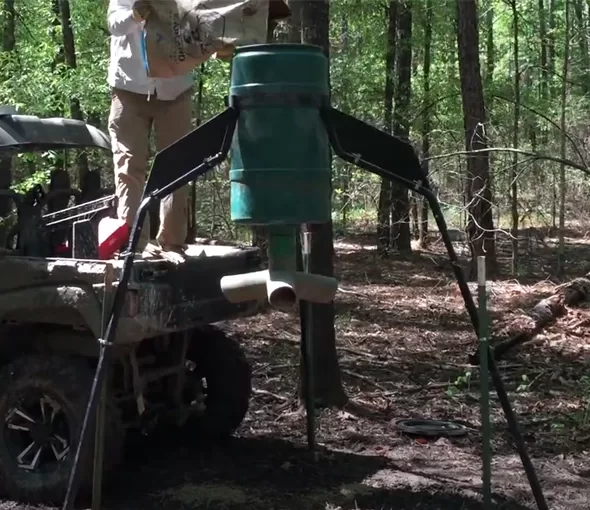
An inventor's deer-hunting concept engineered into a sealed, weather-tolerant dispenser: mechanism design, sealing strategy, printed field prototypes, and a manufacturable package. Our deer feeder legs and UP Trap projects took the same path from field sketch to production part.
Outdoor and hunting product questions
How do I get a real waterproof rating without over-engineering?
Decide honestly between IP54 and IP67. Splash resistance needs a labyrinth seal and a drainage path; submersion needs a compressed O-ring in a proper groove, a vent membrane for pressure changes, and a sealed battery door. IP67 typically adds $1.50 to $6.00 per unit.
What does it cost to develop an outdoor product?
A mechanical outdoor product usually runs $15,000 to $50,000 through engineering and field prototypes. Add electronics and the range moves to $35,000 to $120,000. Injection tooling for a sealed two-part housing typically lands between $18,000 and $60,000.
Can you test in real field conditions?
We build durable prototypes intended to be used, not displayed, and we plan a field season around them. Formal salt fog, UV and cold-impact testing runs at an outside lab when the product's warranty or retail buyer requires documented results.
Do hunting products need any certification?
Most do not carry mandatory federal certification, but anything with wireless electronics needs FCC Part 15, marine products often follow NMMA guidance, and state wildlife regulations can restrict features like electronic calls or bait dispensers. We flag the applicable rules during feasibility.
Standards and regulations we work to
Other industries we build for
Personal Care
Beauty, grooming and personal hygiene products, from formula-adjacent hardware to packaging.
Pet Products
Pet care, feeding, comfort and interactive toy products developed end to end.
Sports & Fitness
Training aids, outdoor gear, wearables and equipment built for real use in the field.
Product Packaging
Retail-ready structural and graphic packaging that protects the product and sells it.
IoT & Consumer
Connected consumer devices: electronics, enclosures, firmware and the app that drives them.
Medical Devices
Class I and Class II devices, diagnostics and patient-safety hardware developed to the pathway.
Industrial Equipment
Custom machines, automation and commercial equipment engineered and built in-house.
Food & Beverage
Containers, closures, kitchen tools and food-contact equipment for CPG brands.
Toys & Games
Play patterns, mechanisms and pitch-ready prototypes for toy and game inventors.
Home & Housewares
Cleaning tools, storage, organization and home hardware engineered to a shelf price.
Baby & Juvenile
Feeding, sleep, travel and nursery products designed around juvenile safety standards.
Funded Startups & Grants
SBIR Phase I and II prototypes and investor-ready hardware for funded teams.
SBIR & Grant-Funded Projects
Concept design, feasibility work and proof-of-concept prototyping for SBIR, STTR and other federal grant applicants.
What founders say after working with us
“Konstantin has been so amazing and his entire team is A+. I researched and interviewed many product development companies across the country and ultimately decided on LA NPDT... and I'm so glad I did. The attention to detail and overall effort has been exactly what I needed and then some. If you are looking for a company to help you bring your product to life, look no further!”
 William EvansCEO, Burple
“This company is awesome. I run a medical device company and we required a number of accessories to be designed and built for our medical device. They delivered a polished design and printed the accessories on time using high-quality materials. I continue to work with them for all of our material needs.”
 Matteo ZiffFounder, Virtual Vision
“I highly recommend the LA New Product Development Team for any of your new product development needs. From the development of my concept to the actual prototype, the process was seamless. I especially loved the quick responsiveness, and I received regular updates during every stage, so I was never left wondering how things were going. The steps were clearly outlined, along with estimated costs.”
 Dr. Sharada DamarajuFounder, Dignity & Empowerment
Three reasons founders keep working with us
- 1
One team from sketch to shipped parts. Industrial design, mechanical and electrical engineering, prototyping and manufacturing sit under one roof, so nothing is lost in a handoff.
- 2
You own the work. Native CAD, drawings and source files are yours at the end of every phase — no lock-in, no re-buying your own design later.
- 3
Fixed scope, fixed price. Every phase is quoted up front with a deliverable list and a date. No hourly meters, no surprise invoices.
If you ever thought of developing a new product, don’t wait any longer. Talk with one of our experts today.
Tell us about your product
Send us the idea, the drawing or the problem. We reply within one business day with the next practical step.
Ready to scope the work? Start your product · Request a quote